








 Posted 06/19/2025 8:45 pm


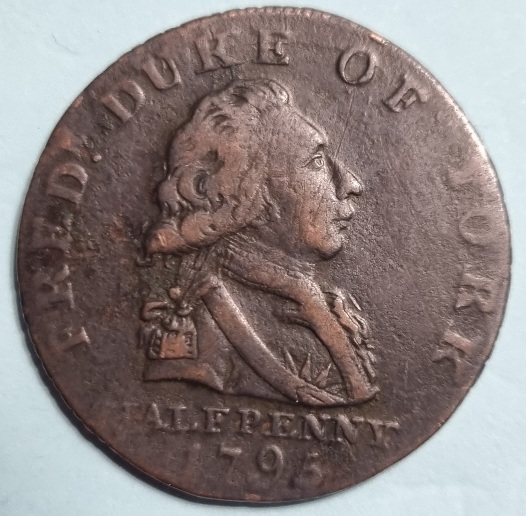
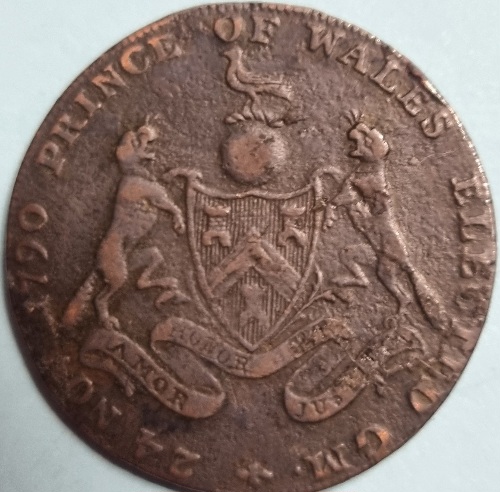
It is indeed a mule, but not an unrecorded mule. The token-makers of the late 1700s deliberately made all kinds of "mules", for sale to collectors. Here's the example in the British Museum collection. It's listed in the Dalton & Hamer catalogue as Middlesex 373.
The "1790" side is from a Freemason token, originally struck in 1794 - note it says "elected GM", with "GM" being short for Grand Master, and the coat of arms is that of the Grand Lodge of England. Numista example, D&H 369 to 372 (there are several varieties).
The "Fred Duke of York" design is from the "national series" of tokens, with the sailing ship and "Wooden Walls of Old England" design. Numista example, D&H Middlesex 985.
The "1790" side is from a Freemason token, originally struck in 1794 - note it says "elected GM", with "GM" being short for Grand Master, and the coat of arms is that of the Grand Lodge of England. Numista example, D&H 369 to 372 (there are several varieties).
The "Fred Duke of York" design is from the "national series" of tokens, with the sailing ship and "Wooden Walls of Old England" design. Numista example, D&H Middlesex 985.
Don't say "infinitely" when you mean "very"; otherwise, you'll have no word left when you want to talk about something really infinite. - C. S. Lewis


