One of the most iconic buildings in the United States ("US") - Independence Hall in Philadelphia, Pennsylvania - was the subject (along with its associated neighboring buildings) of a pair of commemorative coin proposals in the 103rd Congress. The bill was first introduced in the House of Representatives ("House") by Thomas M. Foglietta (D-PA) in April 1993; a similar bill was introduced in the Senate by Harris Wofford (D-PA) in July 1993.
Indepence Hall - Philadelphia, PA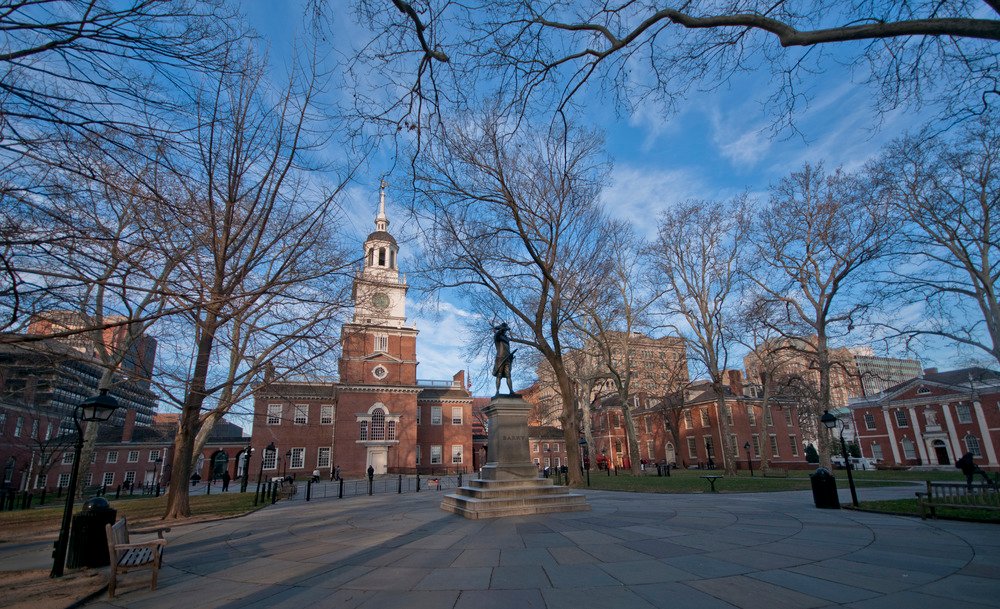
Each of the bills sought the striking of a Silver Dollar to commemorate "the acceptance of the responsibility of the Federal Government for the care and maintenance of the historic buildings in which the United States of America and its Government were created."
Each of the bills sought up to 1 million Silver Dollars.
A "Findings" section presented the background and rationale for the coin:
The Congress makes the following findings:
(1) Two hundred years ago, in 1793, George Washington was sworn in to his second term as President of the United States of America in the Senate chamber of Congress Hall in Philadelphia, Pennsylvania;
(2) For 150 years, the historic buildings in Philadelphia, Pennsylvania, known as Congress Hall, the Old City Hall, and Independence Hall (which housed the Liberty Bell, the symbol of the heritage of free people in the United States) were under the occasional care of local government units.
(3) Later, the Federal Government, through the National Park Service, assumed responsibility for the preservation and maintenance of these and other related historic sites for present and future generations of Americans.
(4) In recent years, financial exigencies and the increased responsibilities of the National Park Service have prevented the Federal Government from meeting the capital needs of these historic sites.
(5) The minting and issuance of a United States coin is an appropriate way to commemorate these historic buildings and to aid in funding their necessary maintenance and preservation.Each of the bills sought a coin design that was "emblematic of the shrines of liberty and shall show the Liberty Bell on one side and the Independence Hall on the other"; the designs were also to include the standard US coin inscriptions.
Mock-up of Potential Design for Indepence Hall Silver Dollar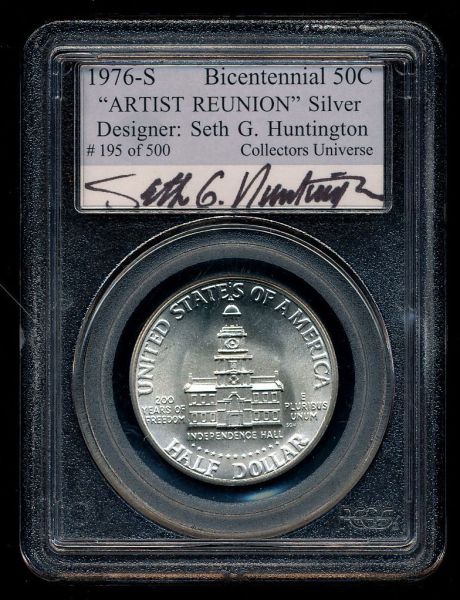
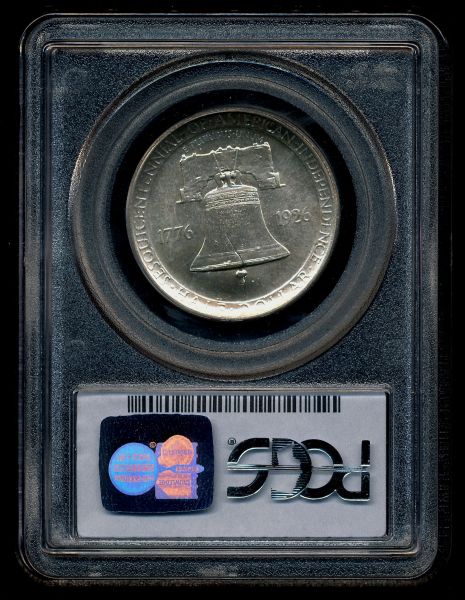
The coin's designs were to be selected by the Secretary of the Treasury, after consultation with the Commission of Fine Arts. The Citizens Commemorative Advisory Committee ("CCCAC") was to serve in a review capacity.
The coins were to be struck in Calendar Year 1994 and feature the corresponding date. The Silver Dollars were to be struck in Proof and Uncirculated versions.
The Issue Price of the Silver Dollar - either version - was to include a surcharge of $7, with the collected surcharges being paid using a split distribution model:
- 50% to the Federal Treasury to help reduce the National Debt, and
- 50% to the the Independence Hall Preservation Fund, to be used to:
(A) create an endowment fund to finance capital improvements in Independence National Historic Park;
(B) fund projects of capital replacement in buildings in Independence National Historic Park; and
(C) fund projects "deemed appropriate by the Directors of the fund to foster and increase the respect and admiration of visitors to Independence National Historic Park."
The House bill was referred to the House Committee on Banking, Finance and Urban Affairs, with a further referral to its Subcommittee on Consumer Credit and Insurance. The Senate bill was referred to the Senate Committee on Banking, Housing, and Urban Affairs. Neither bill was reported out of Committee or considered further.
The effort was given another chance in the Senate in October 1994 (103rd Congress, Second Session) with the inclusion of a modified version of the original bills' provisions in the Commemorative Coin Moratorium Act of 1994. (You can read more about the details of this bill here:
What If? 1994 104th Congress Moratorium.
The Moratorium bill reproduced the Findings of the standalone bills, reduced the maximum mintage of the Silver Dollars to 500,000 (from 1 million), and maintained the Independence Hall / Liberty Bell design specifications. It also continued to vest the power of design selection in the Secretary of the Treasury in consultation with the Commission of Fine Arts.
While the CCCAC continued to be listed in a review role, the new bill gave the role more "teeth." In the Moratorium bill, the Secretary was not allowed to strike any of the Silver Dollars until the the CCCAC reported its recommendation in support of striking the coins - if the CCCAC didn't approve, there would be no coins!
The Moatorium bill updated the production date to Calendar Year 1998 and specified that the coins were to bear the same year.
The $7 per coin surcharge remained from the original bills, but the surcharge distribution model was changed. No longer were surcharge funds to go towards reducing the National Debt; all collected surcharges were to be paid to the Independence Hall Preservation Fund for the same objectives as outlined above.
The Moratorium bill was referred to the Senate Committee on Banking, but was not reported out or considered further.
With that, the Independence Hall Silver Dollar received its third strike and was off to the dugout.
Note: The National Park Service, the manager of Independence National Historical Park, does a reasonably good job of preserving and maintaining Independence Hall, Congress Hall, the Old City Hall and the surrounding Park areas, but it regularly faces a backlog of maintenance and upgrade tasks, as well as staffing shortages - nearly all related to funding. Money raised from this Independence Hall coin program would definitely have helped. I would have been a supporter! To get ready for 2026 and the US Semi-Quincentennial, the Independence National Historical Park is undergoing significant preservation, restoration and maintenance projects.For other of my posts about commemorative coins and medals, see:
Commems Collection.







 Posted 09/10/2025 9:27 pm





