The United States ("US") Congress, when authorizing funds for the construction of the US Government Building at the Louisiana Purchase Exposition ("LPE") and its subsequent exhibits/displays, also authorized 250,000 Gold Dollars for the LPE Company for its use as a money-raising souvenir of the LPE. A total of 250,000 Gold Dollars were authorized; the mintage was ultimately split 50/50 with half depicting Thomas Jefferson (US President at the time of the Purchase) and half presenting William McKinley (US President who signed the legislation that authorized Federal engagement in the LPE Centennial celebrations).
For more details about Congress and the coins, see
1903/04 Louisiana Purchase Exposition.
The US Mint at Philadelphia struck the authorized 250,000 gold coins in two batches: December 1902 and January 1903; it delivered them to the LPE Company soon after - well ahead of the originally-planned LPE opening in April 1903. Due to a variety of delays, however, the LPE did not open until April 30, 1904. As a result, initial coin sales were made to collectors and through numismatic channels (e.g., coin dealers) vs. fair visitors.
Early reports (August 1903) indicated that initial sales were slower than expected - just several thousand examples - and a consensus was building that sales would never exhaust the LPE Company's supply - even with the energetic promotion by Farran Zerbe, the coin dealer/LPE concessionaire/advocate for the gold coins on behalf of the LPE Company.
In August 1903, Zerbe went on the record with an idea aimed at supporting coin sales:
"The history of the sale and remainders of the fourth commemorative coin is yet to be made. This little coin is a gem as a keepsake, but is too small for a pocket piece. That the exposition companies will maintain the price at $3 there is no doubt.but that they will sell them all is doubted by every numismatist of the country. What of those not sold? If the exposition company will officially announce that in the event of all not being sold, the remainder, at the close of the exposition, will be returned to the mint for recoinage into other coins, it will facilitate the sale, encourage their purchase and assure the purchaser the protection that he has never enjoyed in the purchase of any other commemorative coin. With this provision I predict a successful sale for the Louisiana Dollar." (
St. Louis Post-Dispatch, August 30, 1903)
Unfortunately for Zerbe, no official announcement was made by the LPE Company and sales remained disappointing throughout the 1904 LPE season (April 30, 1904 - December 1, 1904).
Zerbe continued to sell the coins after the close of the LPE, with bulk lots being sold to coin dealers (including B. Max Mehl) at reduced prices. Many coins remained unsold for years after, however, leading to circa 1914-16 when approximately 215,000 of the coins were returned to the Mint to be melted (leaving an estimated total net mintage of 35,000); Zerbe is reported to have held some inventory back from the Mint's melting pots.
A formal statement of a planned melting (Zerbe's suggestion) by the LPE Company may have indeed spurred additional coin sales. Instead, the issue floundered, taking years to sell limited numbers of remaining coins (often at prices lower than the $3 issue price) and years for the coin's marketplace pricing to recover. Maybe Zerbe was on to something!
1903 Louisiana Purchase Exposition - Jefferson Type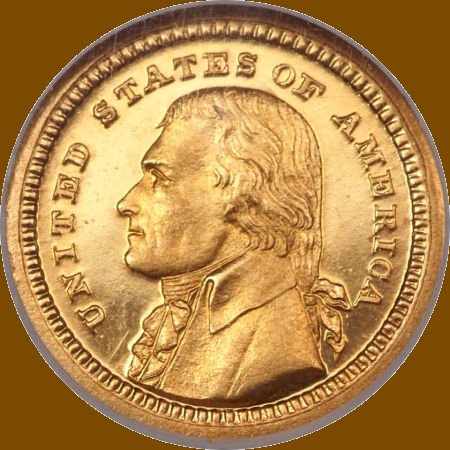
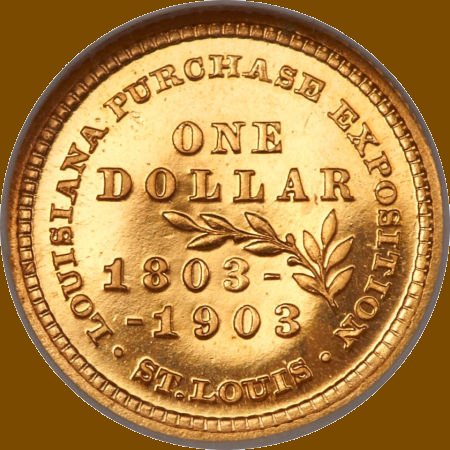 1903 Louisiana Purchase Exposition - McKinley Type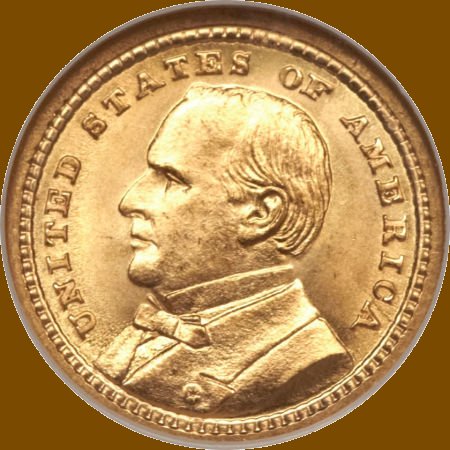
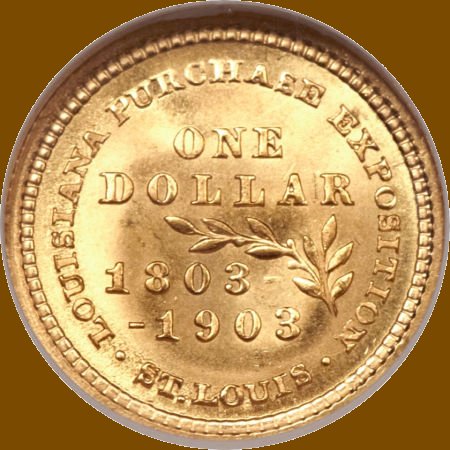
For other of my posts about commemorative coins and medals, including more about the LPE and its gold dollars, see:
Commems Collection






 Posted 10/29/2025 1:09 pm





