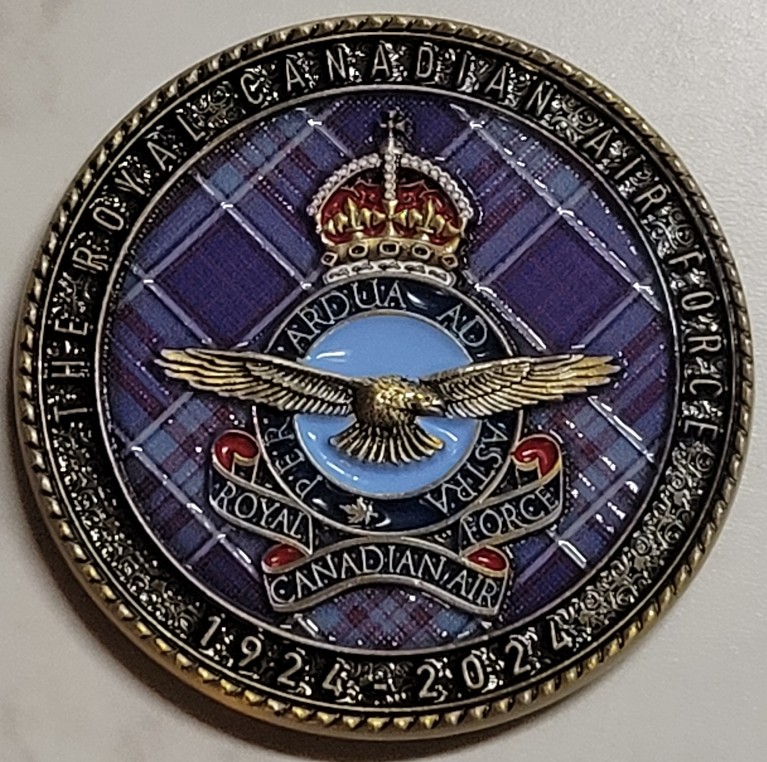
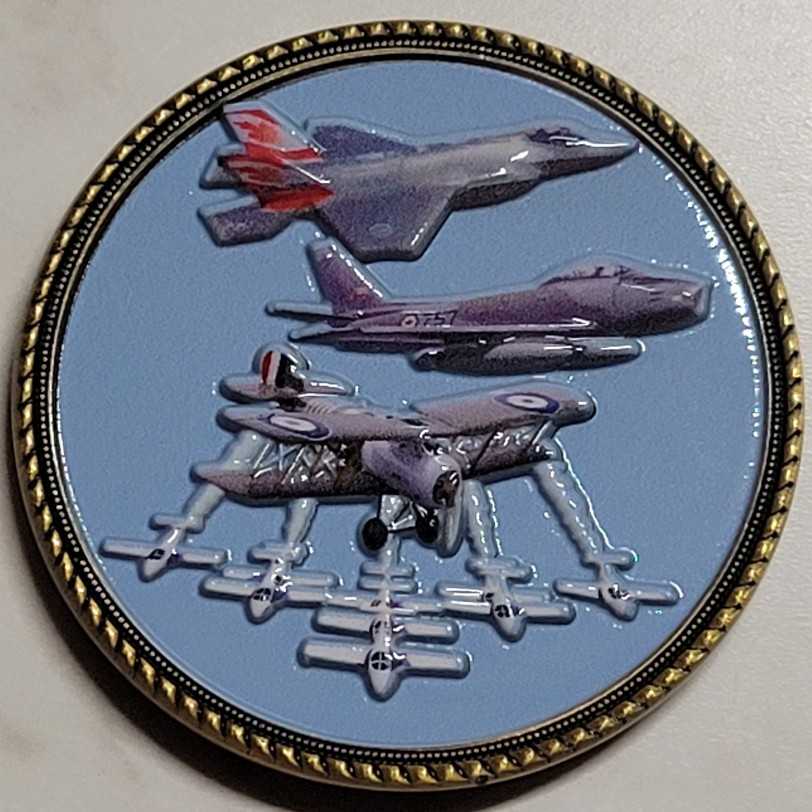
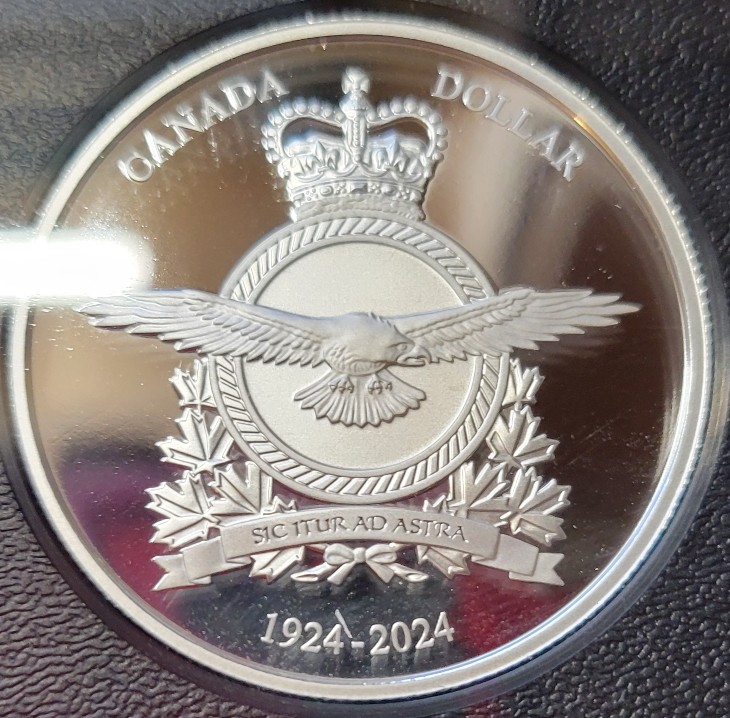
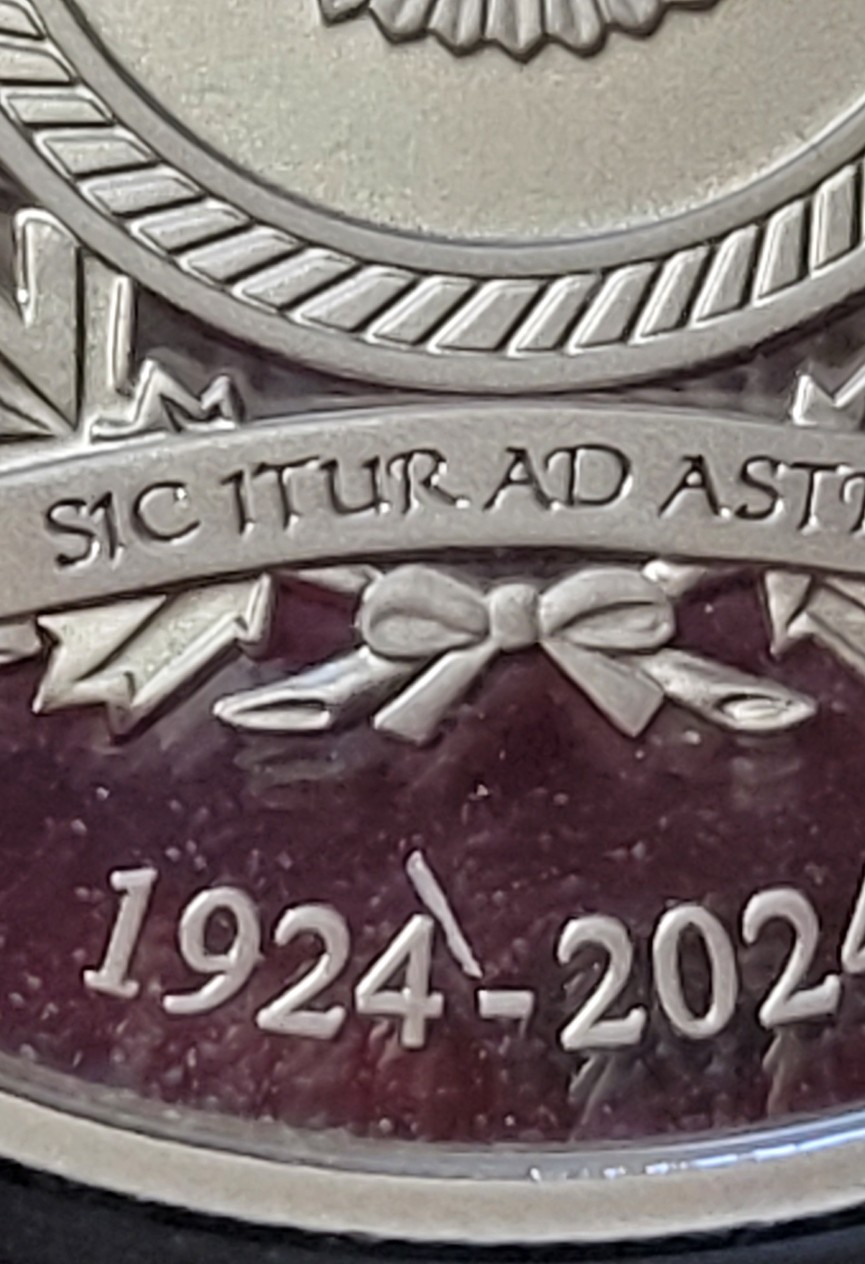
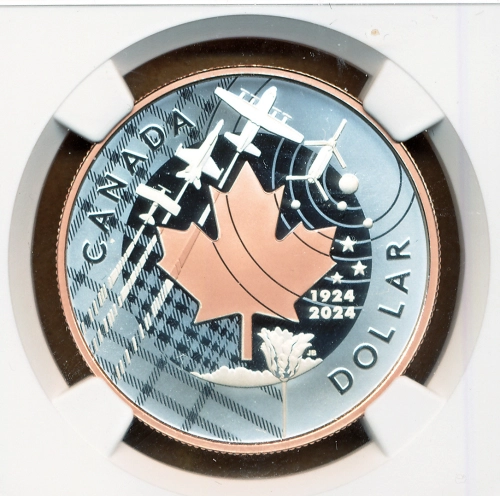
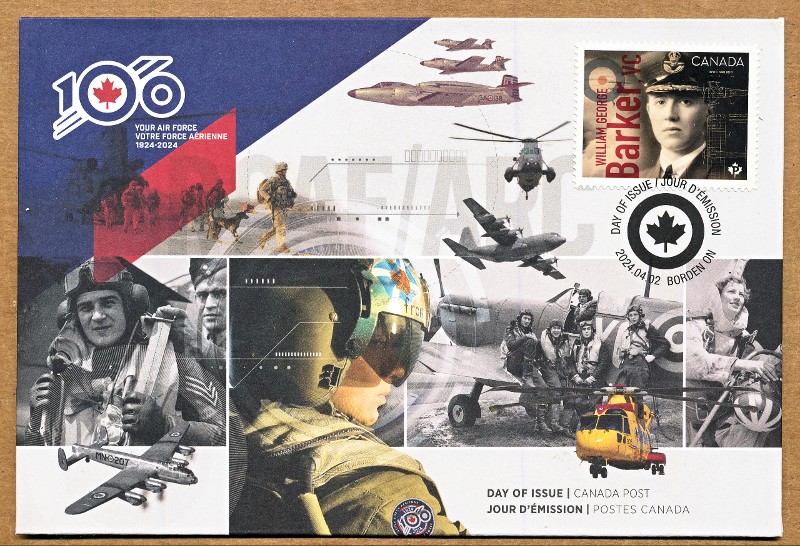
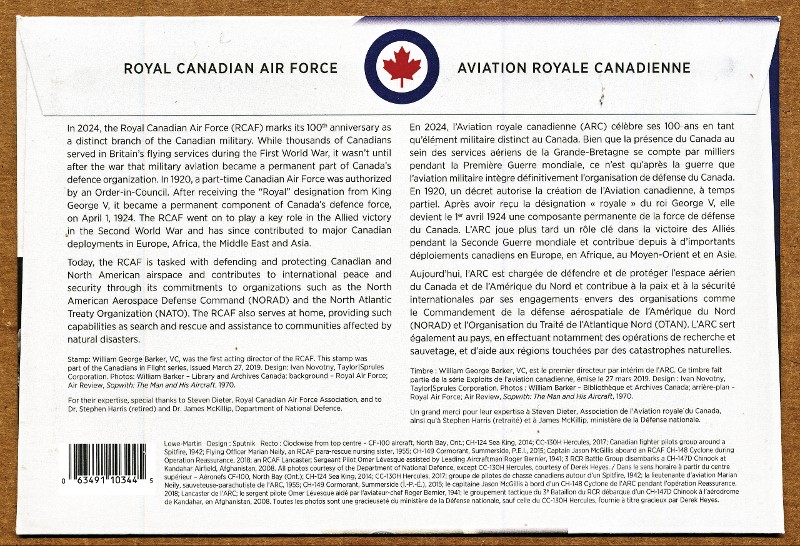
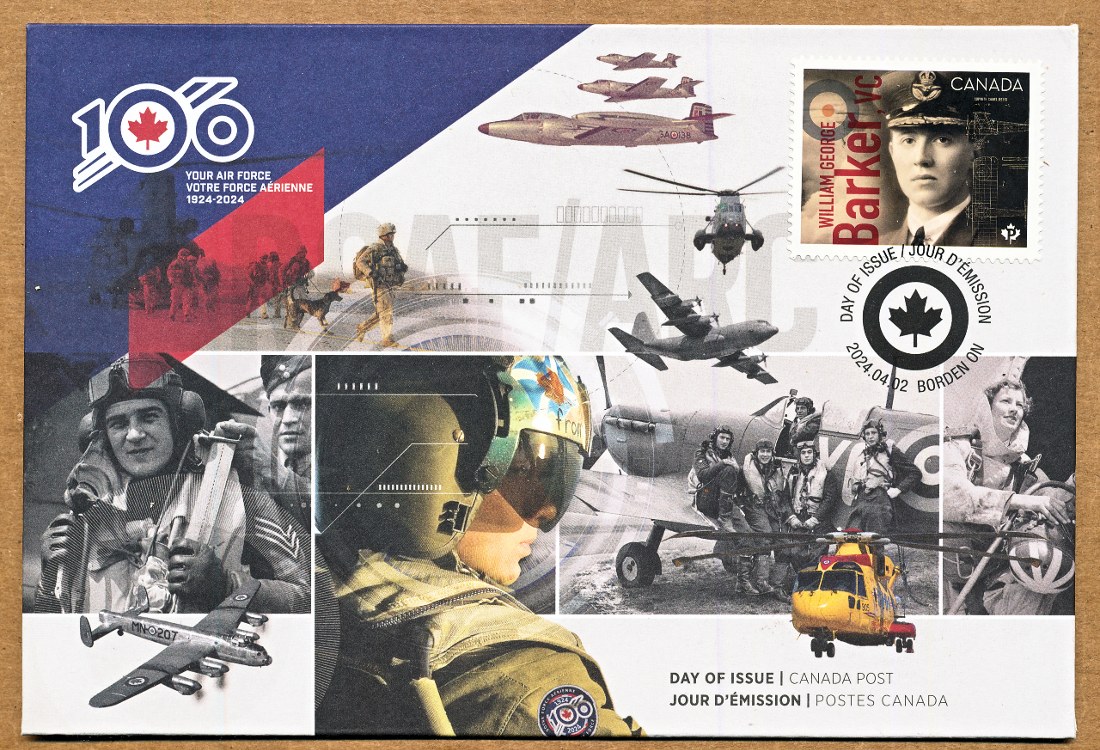
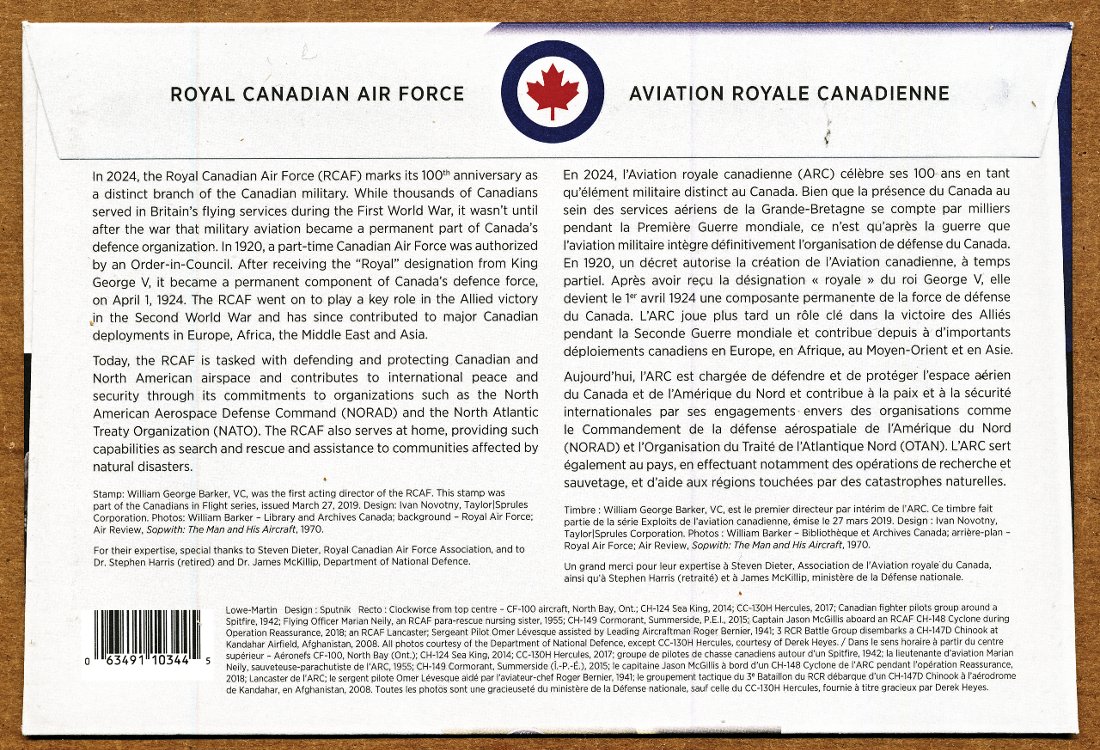
The Royal Canadian Mint's annual Regular Edition commemorative Silver Dollar ("SD") for 2024 celebrated the 100th Anniversary of the establishment of the Royal Canadian Air Force ("RCAF") on April 1, 1924.
RCAF Centennial Logo (Image Credit: Government of Canada. Fair Dealing, Education.)
The RCAF had multiple predecessors, with some being small, somewhat tentative steps toward a true "Air Force" and others having a non-combat focus.
An early step toward Canada's Air Force began in 1914, following the start of World War I, with the formation of the Canadian Aviation Corps on September 16, 1914. It was a one plane (Burgess-Dunne BD floatplane), two pilot, one mechanic organization. Unfortunately, the Corps' plane was damaged while being shipped to the United Kingdom from Canada and never flew in combat. The Corps was short-lived, being disbanded in May 1915.
An interim step followed, with the formation of the Royal Air Corps Canada in 1917; it was renamed Royal Air Force Canada in 1918 (after the British Royal Flying Corps was renamed the Royal Air Force). The organization was a training organization - for both pilots and ground teams. -
The Air Corps was superseded in 1920 by the formation of the Canadian Air Force. It was viewed as a peacetime aviation air force with civilian and military roles.
In 1924, King George V granted the Canadian Air Force the "Royal" designation and the "Royal Canadian Air Force ("RCAF") was born (April 1, 1924). So, in actuality, the RCAF centennial was more about the 100th Anniversary of a name re-designation of an existing force vs. creation of an entirely new force. Nonetheless, the Mint (and the RCAF) is correct in considering 2024 the centennial year for the full-time military branch.
The coin's obverse features a left-facing portrait of King Charles III; it was designed by Canadian artist Steven Rosati.
The commemorative reverse design of the SD is the work of freelance artist Jason Bouwman. Bouwman has not recently worked much with the Mint, but was responsible for several designs of the Mint's circulation as well as collector coins in the past (circa 2008-2012). His past efforts include several designs for the "Olympic Golden Moments" series of circulating 25-cent coins, the 2008
RCM Centennial Proof SD (one of my favorites!) and the 2009 Centennial of Flight in Canada SD.
2008 RCM Centennial Proof Silver Dollar - Reverse Desiggn by Jason Bouwman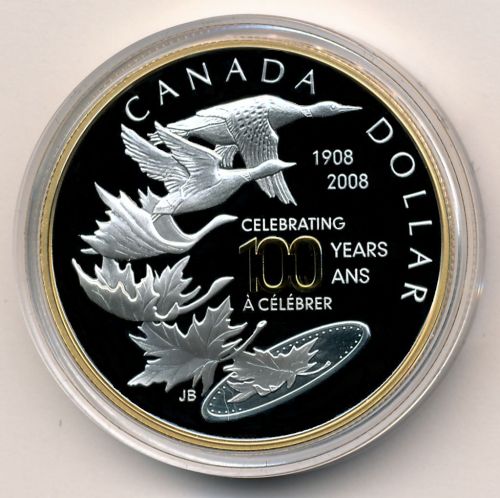
The 2024 RCAF SD had a maximum mintage of 35,000 - final, audited sales figures are not yet available (as of the date of this post). At launch, it had an Issue Price of $69.95 (CAD). The SD weighs 23.17 grams and has a diameter of 36.07 millimeters ("mm").
A selectively gold-plated version of the design is available in the Mint's 2024 Fine Silver Proof Set, which also includes silver versions of Canada's circulating denominations (5-cents to $2); gold plating is added to the $1 and $2 coins to create a similar appearance to that seen on the circulating versions of the coins. The Issue Price of the Fine Silver Proof Set was $234.95 (CAD).
The core/background of the reverse design is the RCAF Roundel which (in full colour) features an outer ring of blue, a white inner circle and a red Canadian Maple Leaf at its center. The Roundel was adapted from the British Rondel (which features a red circle at its center). The British Rondel was used on Canadian planes beginning in 1920 and was continued into the 1940s. In 1940, Canada was authorized to incorporate the Maple Leaf vs. a Circle at the center of the Rondel. In 1946, RCAF planes switched to the Maple Leaf Rondel, and continue to display it to the present.
Streaking across the sky/foreground in the design's upper left quadrant (in a southwest to north east direction) are seen three planes of the RCAF:
At top, just above the Maple Leaf is a Lockheed CC-130 Hercules, a plane primarily used for search and rescue operations, though it can also be used as a troop carrier. The Hercules' inclusion is meant to represent the RCAF's overall aircraft fleet.
Just behind (to the left) of the Hercules is seen the CF-188 Hornet, a multi-role fighter aircraft. It is used for for a variety of missions, including air defence, air superiority, ground attack, tactical support and training (among others). The Hornet represents the RCAF's fighter planes.
At the far left, is a DH-82C Tiger Mot, a training plane flown by thousands of Commonwealth pilots during training exercises. The plane was built in Canada by de Havilland in Toronto. The Tiger Mot is a nod to the RCAF's early history.
The contrails of the three planes extend down into the depiction of the RCAF Tartan. The RCAF Tartan originated in 1942, when Group Captain Elmer G. Fullerton decided he wanted to celebrate his Scottish heritage by developing an original Tartan pattern. Within a year, the Tartan had been elevated to "Official Tartan" of the RCAF. (For details on the Tartan origin story, see
The RCAF tartan: The World's First Air Force Tartan.
To the right of the Hercules is seen a CH-147 Chinnook helicopter. The Chinook is a multi-mission helicopter that can be used to transport equipment as well as personnel, based on mission requirements. Its presence within the design represents the RCAF's helicopter fleet.
To the right of the Chinnook (and below it), are found planets and orbital rings. They are meant to represent the future of the RCAF and its expansion to include a role in space operations.
Below the space elements are seen the dual dates of "1924" and "2024" to highlight the RCAF's centennial "bookends."
The design is anchored by a Flaming Parrot Tulip which symbolizes the RCAF's search and rescue operations - an important component of the RCAF's overall mission.
2024 RCAF Centennial Silver Dollar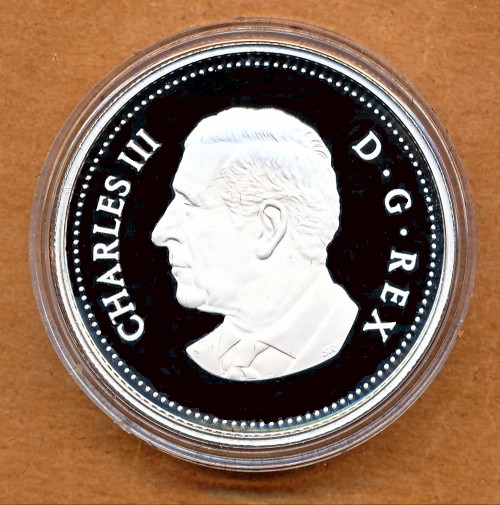
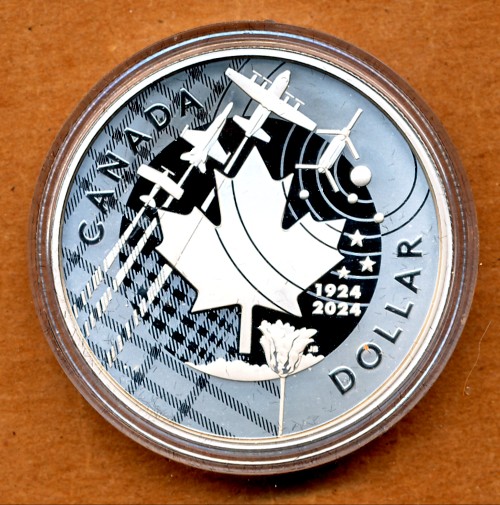
The SD's commemorative design is certainly rich in symbolism!
For other of my posts about commemorative coins and medals, including more about Canadian coinage, see:
Commems Collection






 Posted 11/24/2025 5:31 pm





 . Leaf to a loon. Stunning design.