| Author |
 Replies: 20 / Views: 1,570 Replies: 20 / Views: 1,570 |
|
Valued Member
United States
106 Posts |
Hi, as an Italian in part, I love to collect high grade Italian coins. Preferably, graded by PCGS or NGC. Today, I have designed a thread for knowledge and show, (and historical questions) that will entertain my love for Italian coins from the 1300's-1500s and 1700's - 1799. Recently, I found a lovely 1798 20 Grana PCGS MS63 that is blast white in color, silver in nature, and struck beautifully. This is the first coin I would like to show out of "the newtraffic vault". Casanova died alone before these 1798 Twenty Grana's were released, but I do have a few coins that were issued during his lifetime that I would love to post later. I love old Italian history, as it puts me to bed at night. I encourage you to post your goodies too, but let's start with the first coin This coin features Ferdinand I of the Two Sicilies, who was an important figure in Italy during that era. Ferdinand was the King of the Two Sicilies, a kingdom that included Naples and Sicily, and he played a key role in maintaining stability and influence in southern Italy amidst the turbulent political landscape of the late 18th century. His presence on this coin highlights his significance as a ruler who symbolized Italian sovereignty and regional power during a transformative period in history. I look forward to sharing more of these fascinating coins and their stories! 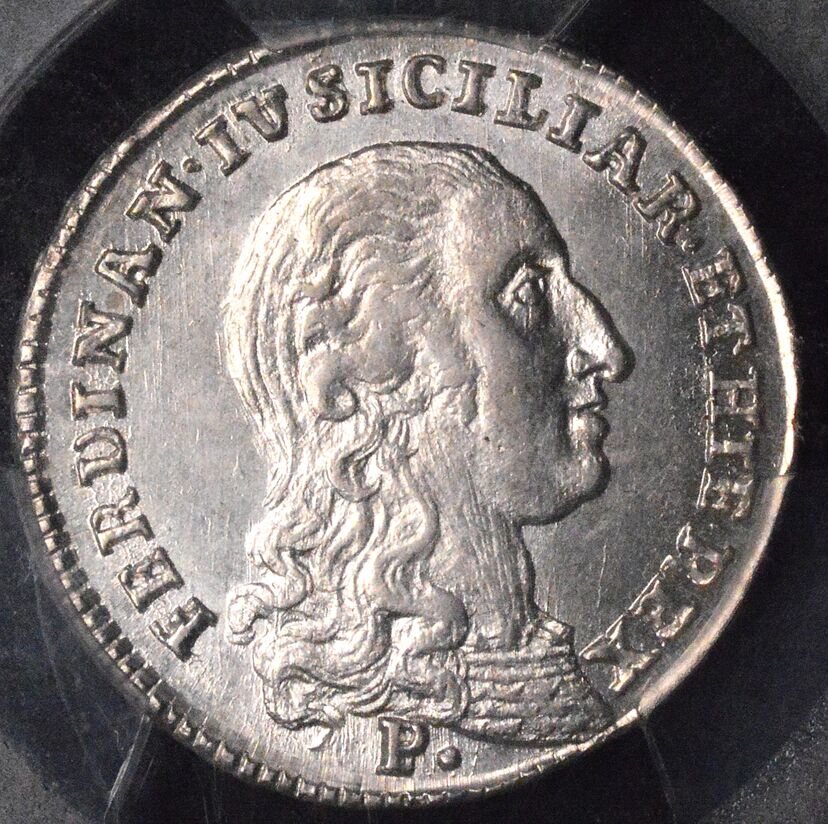 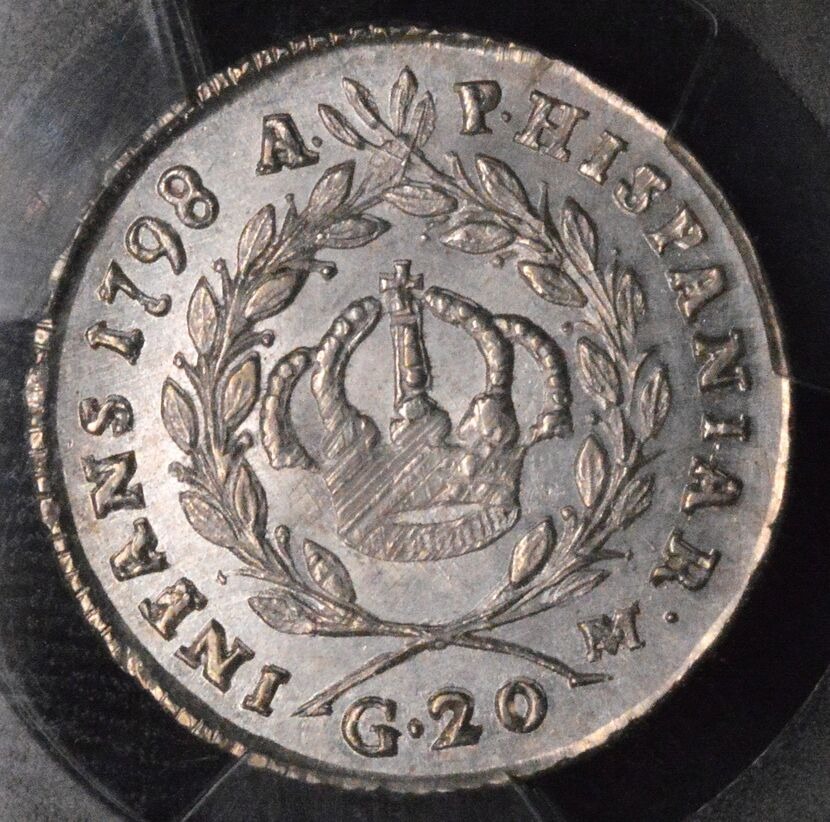 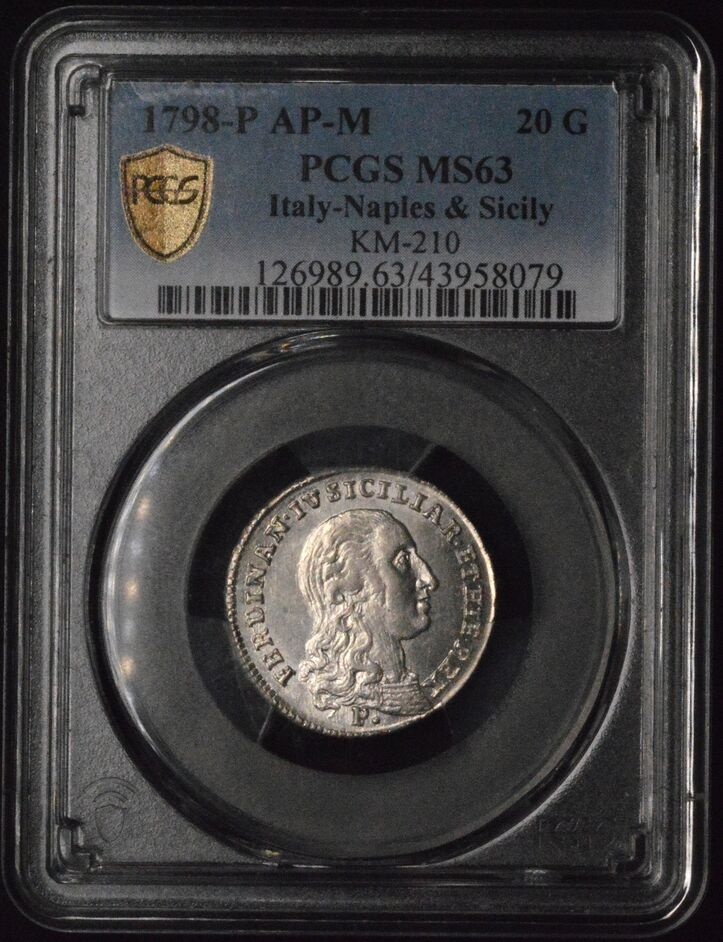 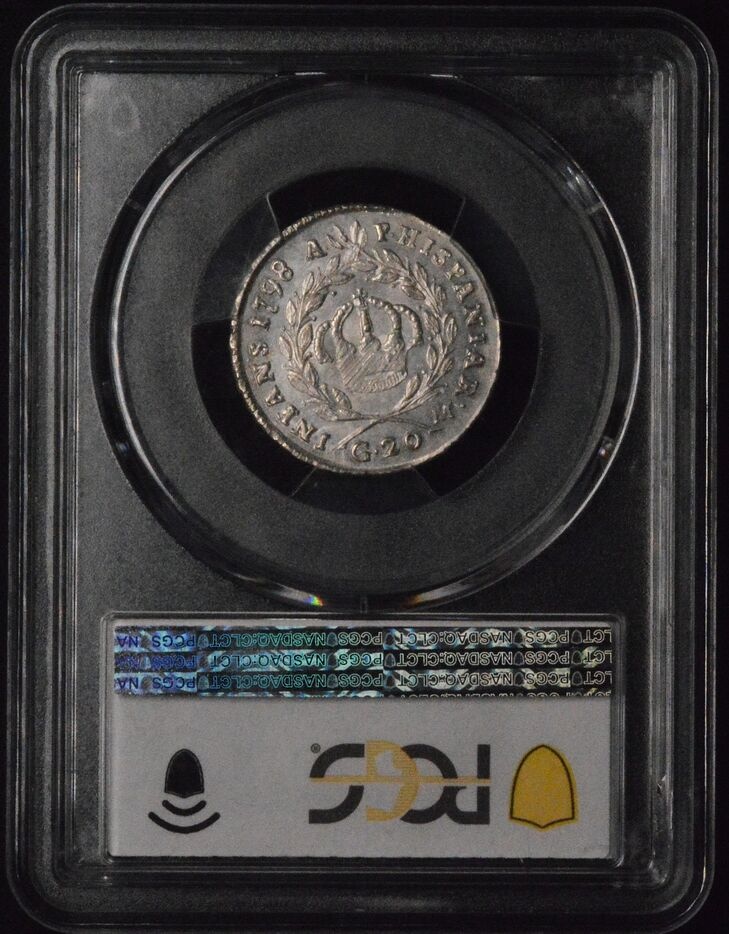 Edited by newtraffic2
11/28/2025 01:23 am
|
|
|
|
Valued Member
 United States
106 Posts |
|
|
Pillar of the Community
 United States
8062 Posts |
|
|
Pillar of the Community
United States
1776 Posts |
KM#210 motifs and design The obverse presents a classical facing right bust of Ferdinand, the legend FERDINAN. IV. SICILIAR. REX P. encircling the portrait and a small letter P beneath the bust. That composition is deliberately formal: the laureate, flowing haired portrait projects dynastic continuity and personal sovereignty, while the abbreviated Latin legend compresses his Neapolitan and Sicilian titles into the compact, authoritative formula typical of Bourbon issues. The small letter at the base functions as a control or mint/assayer mark and helps specialists place the die and issue within the KM#210 variety.
The reverse motif centers on the crowned Bourbon shield set within a laurel wreath, with denomination and date usually arranged around or beneath the arms. The crown and shield together assert monarchical legitimacy and territorial claim; the laurel wreath is a classical emblem of victory and civic order, signaling the restored Bourbon regime after the Napoleonic disruptions. As KM#210, this coin is both a circulating silver piece and a piece of political messaging: its imagery reassures subjects of the king's rightful rule while serving the practical purpose of everyday commerce in southern Italy.
Edited by colonialjohn
11/28/2025 11:04 pm
|
|
Valued Member
Italy
290 Posts |
Fascinating coin and great thread! Will look forward for more Italian coins!  I'm also working on an "Italy throughout history" set, so we might be pals as far as this endeavour  By the way, doesn't the obverse of this Ferdinand IV coin kinda reminds you the American flowing hair design?  This coin is also call a "Tarì" (1 tarì = 20 grana = 2 carlini = 1/6 piastra)  |
|
Valued Member
United States
106 Posts |
Thanks for all the compliments toward this great piece! Going to veer back two years and show you this 1796 120 Grana NGC AU58! I don't have the budget at all to get high grade 1750's Italy yet, nor do I plan to unless a deal came across my table. Same King Ferdinand I. He will be on most of the coins I post here with the exception of the very elusive Carlo III 1753 120 Grana. That will come toward the end of my 2025 collection. I plan to do 1798, 1796, 1786, and go backward sort of. There will be a reason which you hopefully will see in the thread as to why I am going later earlier, not earlier later. Main reason is preference. I prefer the older generation Grana's personally. 10 years made a difference between the design of the 1796 to the 1786. I prefer the later! 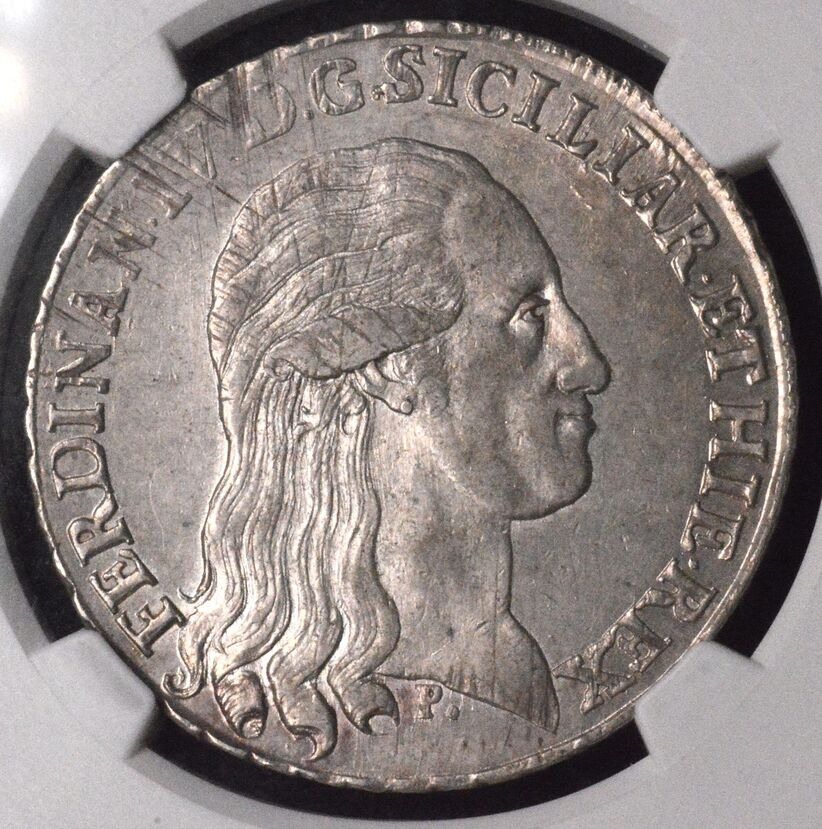 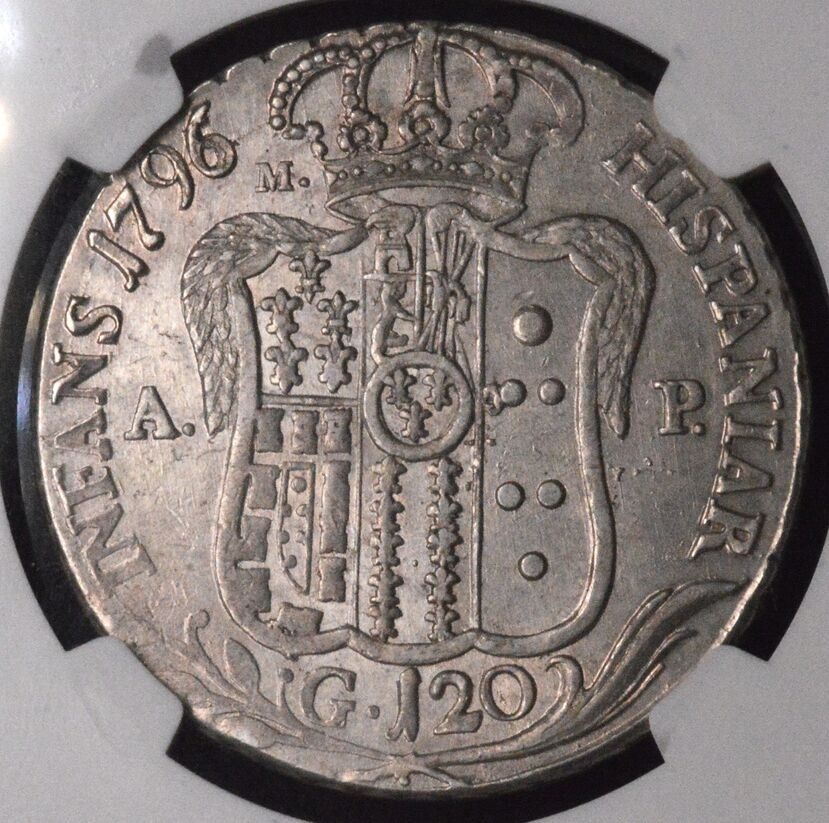 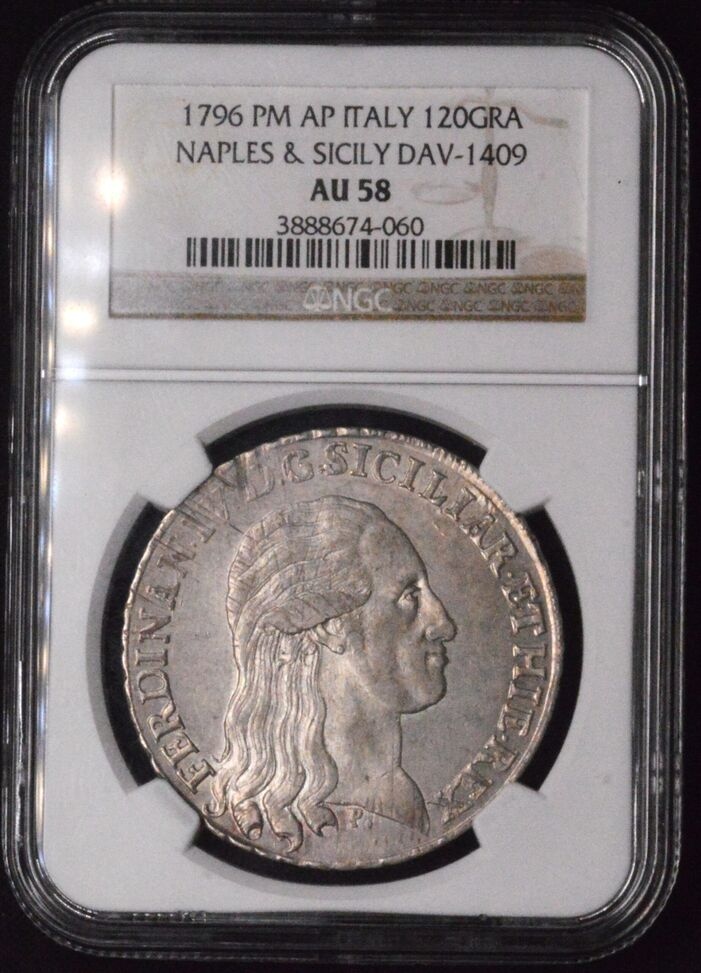 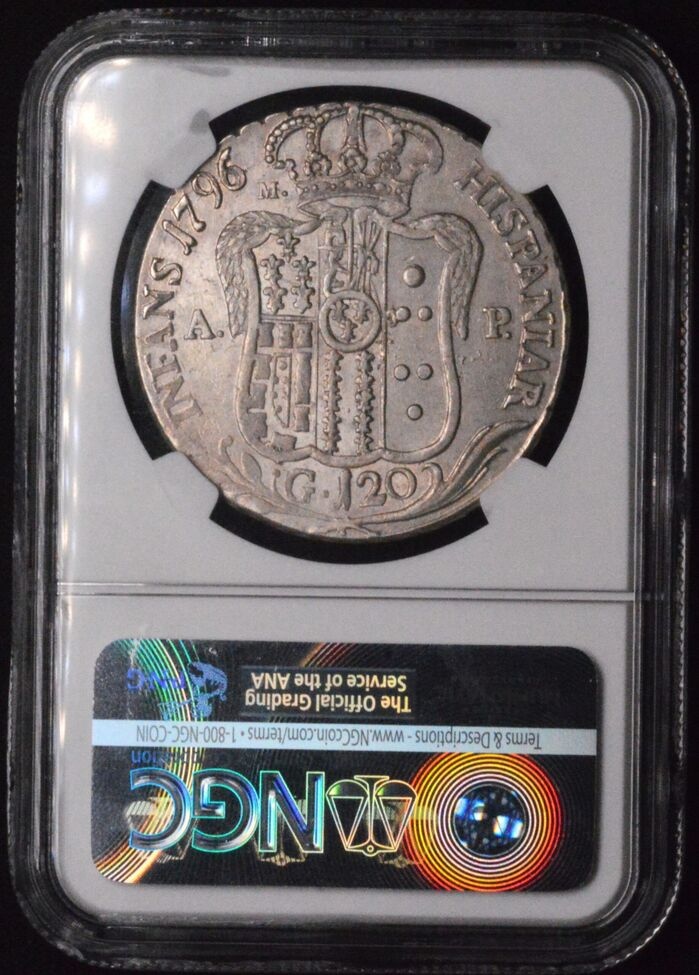 Edited by newtraffic2
11/29/2025 5:10 pm
|
|
Valued Member
Italy
290 Posts |
Awesome 120 Grana!  Keep 'em coming!  By the way, for both these coins the ruler is Ferdinand IV, probably a typo in your messages!  |
|
Pillar of the Community
United States
8062 Posts |
Quote:
Test cuts on the obverse (I missed those from the online picture I bought it from), These are not test cuts. They are file marks to adjust the weight of the coin into the correct range, also called "adjustment marks." Part of the minting process, so there is no adverse effect on the grade. Quote:
By the way, for both these coins the ruler is Ferdinand IV, probably a typo Yes and no. This guy was King Ferdinand IV of Naples (that's the yes part) but also King Ferdinand III of Sicily at this point in time, and later was King Ferdinand I of the Two Sicilies 1816-1825. Take your pick . I've got coins over about 650 years of (pre-)Italian history, too. In the 1790s I 've got a couple of coins of the Duchy of Parma and Piacenza that were ruled by Ferdinand's cousin, who (confusingly) was Duke Ferdinand I of Parma. There were WAAAAYYY too many Ferdinands in 17th-18th c. European history. Edited by tdziemia
11/29/2025 4:03 pm
|
|
Valued Member
Italy
290 Posts |
Quote:
This guy was King Ferdinand IV of Naples (that's the yes part) but also King Ferdinand III of Sicily at this point in time, and later was King Ferdinand I of the Two Sicilies 1816-1825. Thanks for pointing this out tdziemia! Indeed! I believe these two coins are catalogued under the Kingdom of Naples (I guess because they bear Ferdinand IV on the observe?). Though indeed he was king of both Naples and Sicily at that time so PCGS/NGC have that on the label. Probably correct to either call him IV or III for coins between 1796-1798. Indeed though, the history of the pre-unitary states of Italy is nuts! |
|
Valued Member
United States
106 Posts |
I meant to edit out the test cuts. I noticed that after I wrote this paragraph, thank you, you got to that point faster than I could get back and change it!
Thanks!
Edited by newtraffic2
11/30/2025 03:33 am
|
|
Pillar of the Community
United States
8062 Posts |
My 1790s contribution is this 1793 20 soldi form the Duchy of Parma and Piacenza struck under Duke Ferdinand I. Obv: FERD I H I D G PAR PL VAST D (Ferdinand I, Infante of Spain and by God's grace Duke of Parma, Piacenza and Guastalla) Rev: S THOMAS APOST PAR PROT (Saint Thomas the Apostle, Protector of Parma) 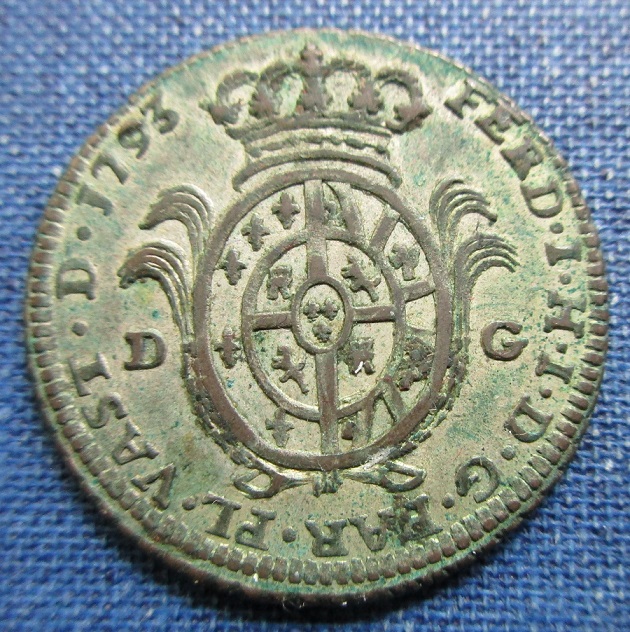 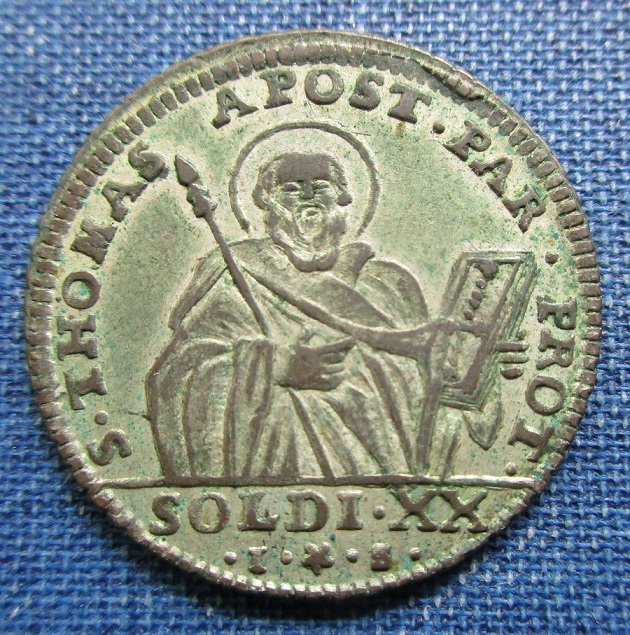 The Duchy of Parma was created in 1545 by Pope Paul III from land that had been won in battle from the Duchy of Milan in 1512 by a predecessor, Pope Julius II ("The Warrior Pope"). Pope Paul gave the duchy to his illegitimate son, Pier Luigi Farnese. The duchy grew in size, and eventually passed to the Bourbons in 1731 when Antonio Farnese died without a legitimate heir. Ferdinand was the third Bourbom ruler. |
|
Valued Member
United States
106 Posts |
Very nice! Have a few Soldi's too! Yours are better... Didn't have a budget for that series Nonetheless, very nice! Here is one of my first Granas. It is a 1786 120 Grana (Big Coin like the last example posted) It again features my controversial king, who was effective in ways and ineffective in others. Overall, I love the time period, more than the King per se. This is a circulated example and as the years go back, the grades will lower. I cannot afford MS examples pre 1790 at the moment. I plan to buy more circulated as that is what is affordable and it has so much history as it was touched by so many hands! 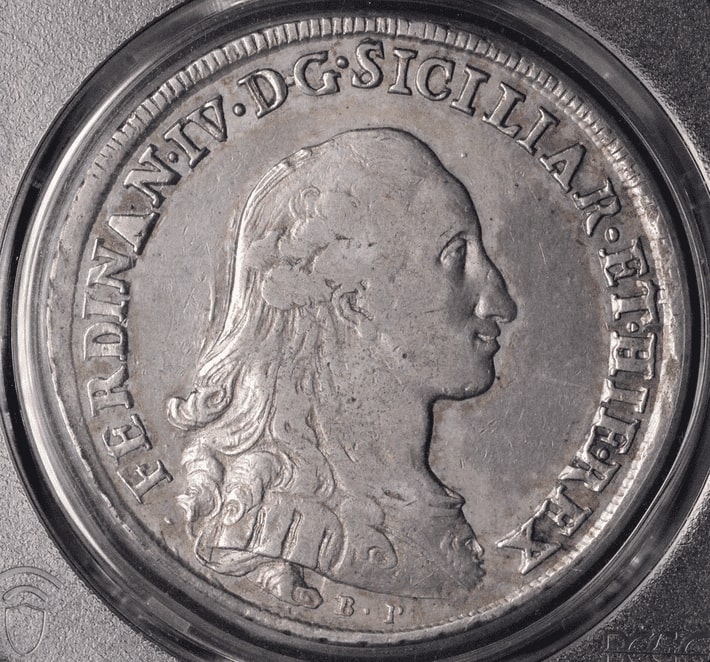 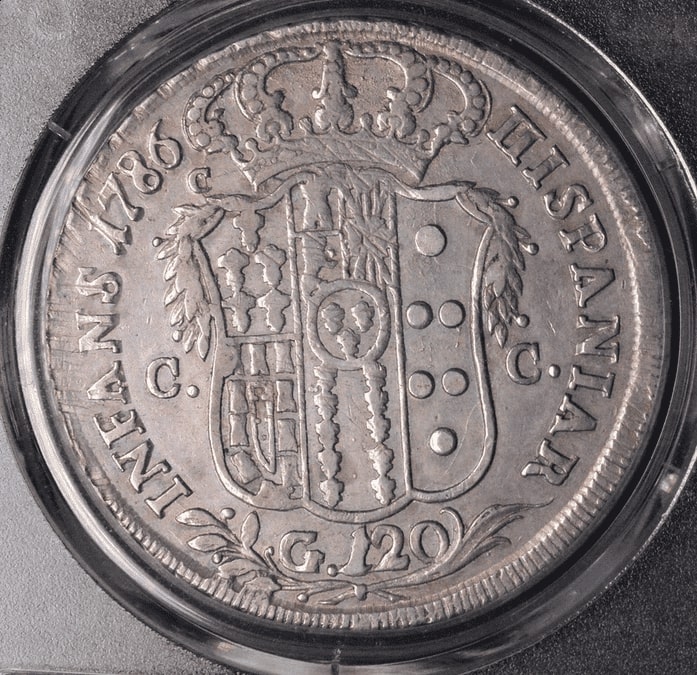 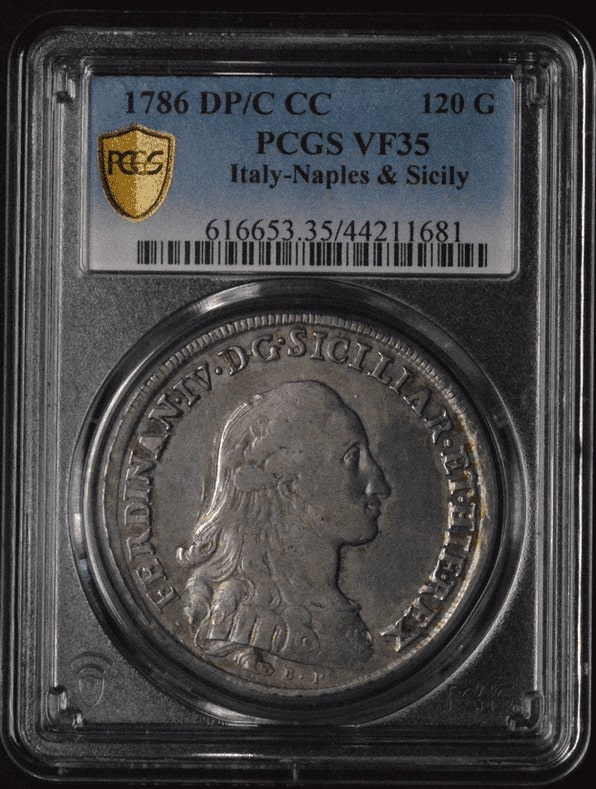 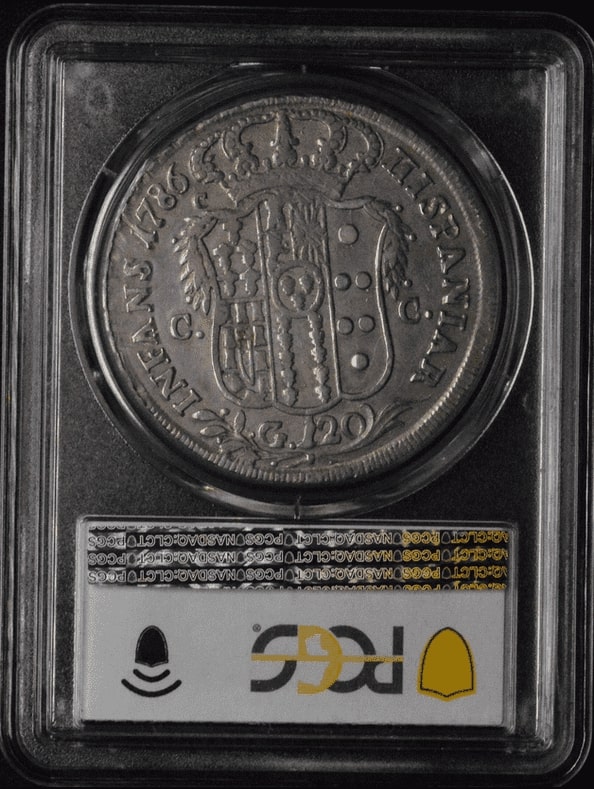 The 1786 120 Grana coin from Italy features a detailed portrait of King Ferdinand, who reigned during that period. The obverse side displays a finely engraved bust of Ferdinand in profile, facing right. The portrait captures his regal features, with a prominent nose, detailed facial features, and a laurel wreath or crown adorning his head, symbolizing his royal authority. Surrounding the portrait are inscriptions with the king's name and titles, often in Latin or Italian, along with the year 1786. The reverse side typically features the coat of arms or a national emblem, accompanied by decorative elements such as floral motifs, scrollwork, or a crown. The coin's edge may be inscribed with additional details or be plain, depending on the minting style. Made of silver, the coin measures approximately a specific diameter (commonly around 40-50mm) and has a weight consistent with its denomination, reflecting the craftsmanship and minting standards of late 18th-century Italy. Its intricate design and historical significance make it a prized piece for collectors and enthusiasts. Edited by newtraffic2
11/30/2025 03:35 am
|
|
Valued Member
United States
106 Posts |
I have a few other threads to make. Another one soon with my Beauiful italian medieval era coin collection. It's a short starter set, but the coins will definitely impress. Grossos mainly. 1798 20 Grana Low Grade VG. This coin inspired me to get the 20 Grana in MS63. 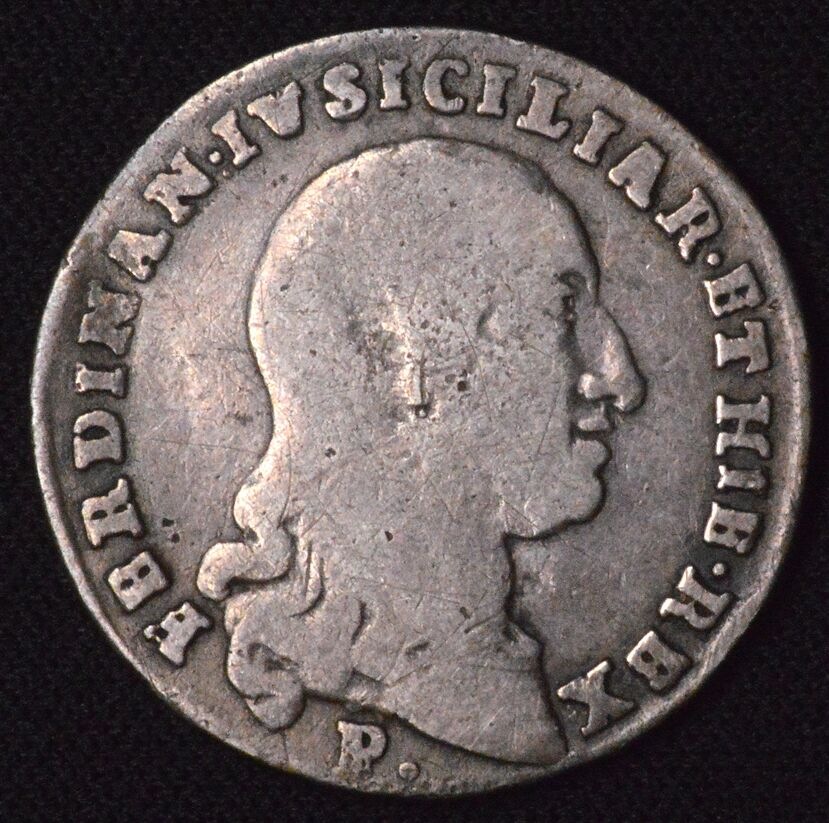 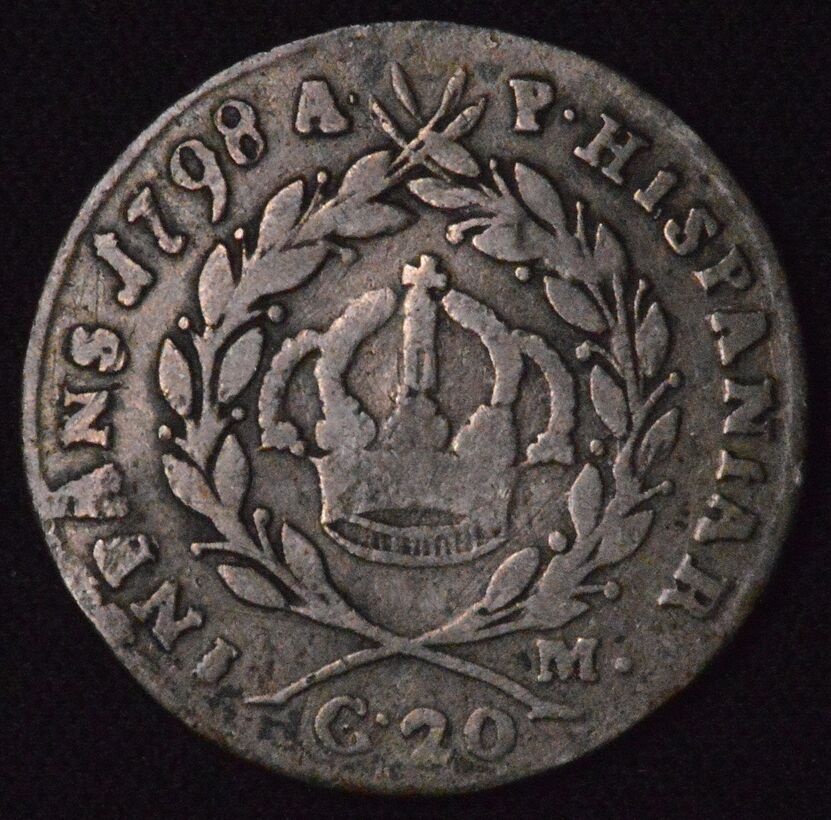 Edited by newtraffic2
11/29/2025 10:52 pm
|
|
Valued Member
United States
106 Posts |
The 1790 P CC coin from the Italian States, specifically the Kingdom of Naples under King Ferdinando IV, is a bronze coin with significant historical value. It represents a small denomination of 1 Grano. On the obverse, the coin features a finely engraved profile portrait of King Ferdinando IV, facing right. His depiction includes detailed facial features, a crown or royal headgear, and regal attire, emphasizing his royal authority. The surrounding inscriptions typically include his name and titles, such as "FERDINANDO IV" and the year "1790." The reverse side usually displays the coat of arms of the Kingdom of Naples or a symbolic emblem associated with the monarchy, often accompanied by decorative elements like floral motifs, scrollwork, or a crown. The mintmark "P CC" indicates the specific mint where the coin was produced. Made of bronze, this coin is smaller in size, approximately 20-25mm in diameter, and lighter than silver coins. Its detailed design and historical context make it a valuable collectible, showcasing the craftsmanship and royal symbolism of late 18th-century Naples. 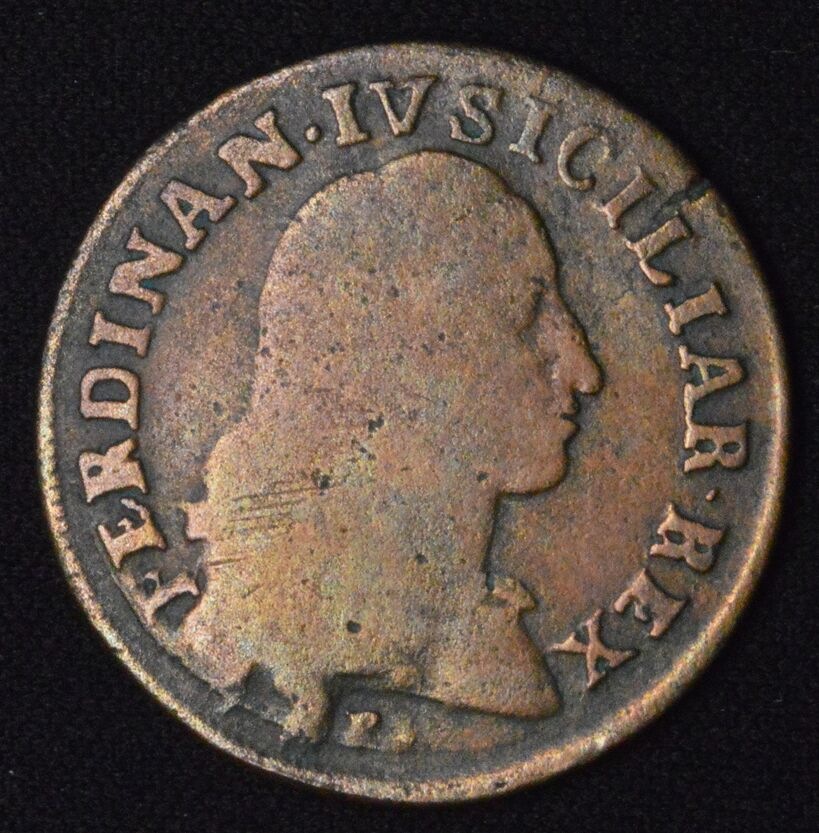 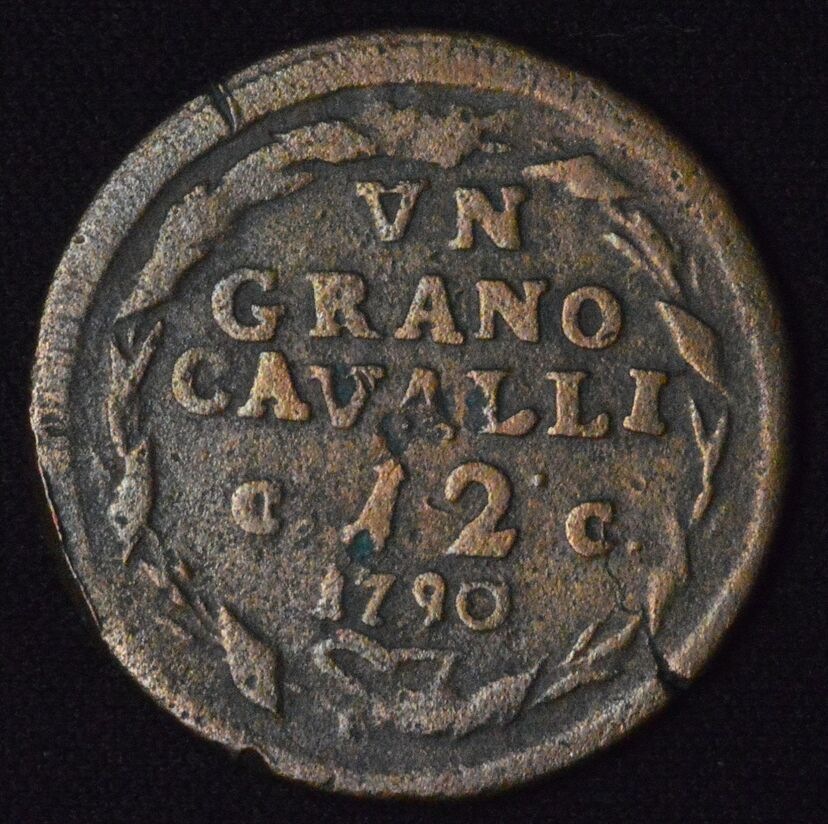 |
|
Valued Member
United States
106 Posts |
The 1799 Italy 6 Tornesi coin featuring King Ferdinando IV is a historic piece from the Kingdom of Sicily and Naples. This coin was part of the small denomination currency used during that period. On the obverse, the coin displays a detailed portrait of King Ferdinando IV, facing right. His depiction captures his regal presence, with finely engraved facial features, a crown, and royal attire. Around the portrait, there are inscriptions with his name and titles, such as "FERDINANDO IV" and the year "1799." The reverse typically features the coat of arms or a symbol representing the Kingdom of Sicily/Naples, often surrounded by decorative motifs like floral designs or scrollwork. The coin's inscription and design reflect the monarchy's authority and the coin's official status. Made of bronze, the coin is relatively small, likely around 20-25mm in diameter, and weighs proportionally to its denomination. Its historical significance, detailed craftsmanship, and connection to Ferdinand IV of Sicily and Naples make it a notable collectible for numismatists and history enthusiasts. 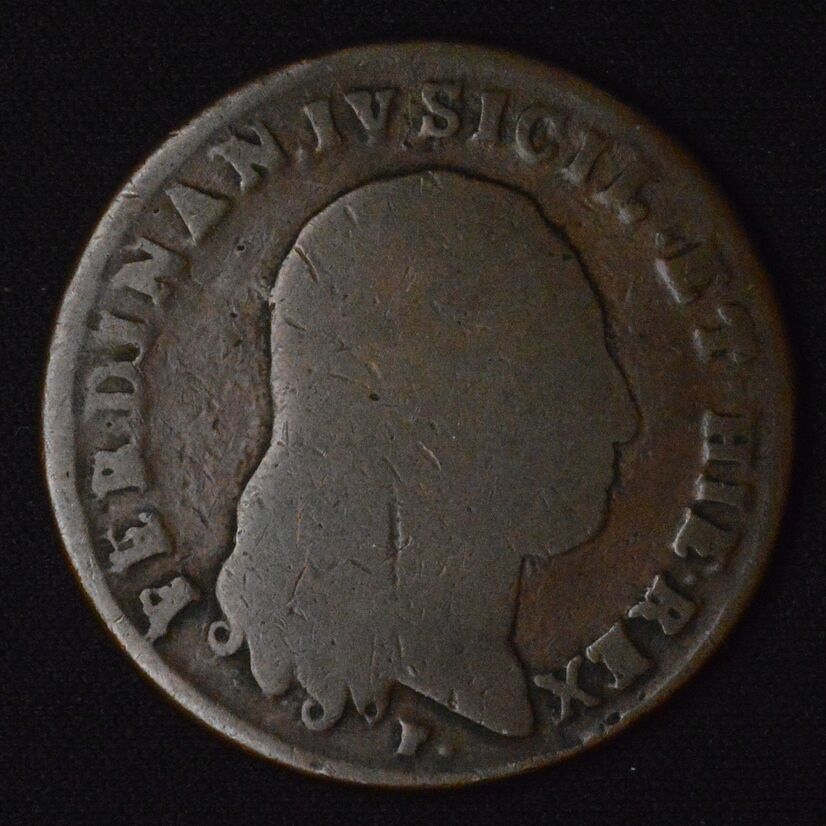 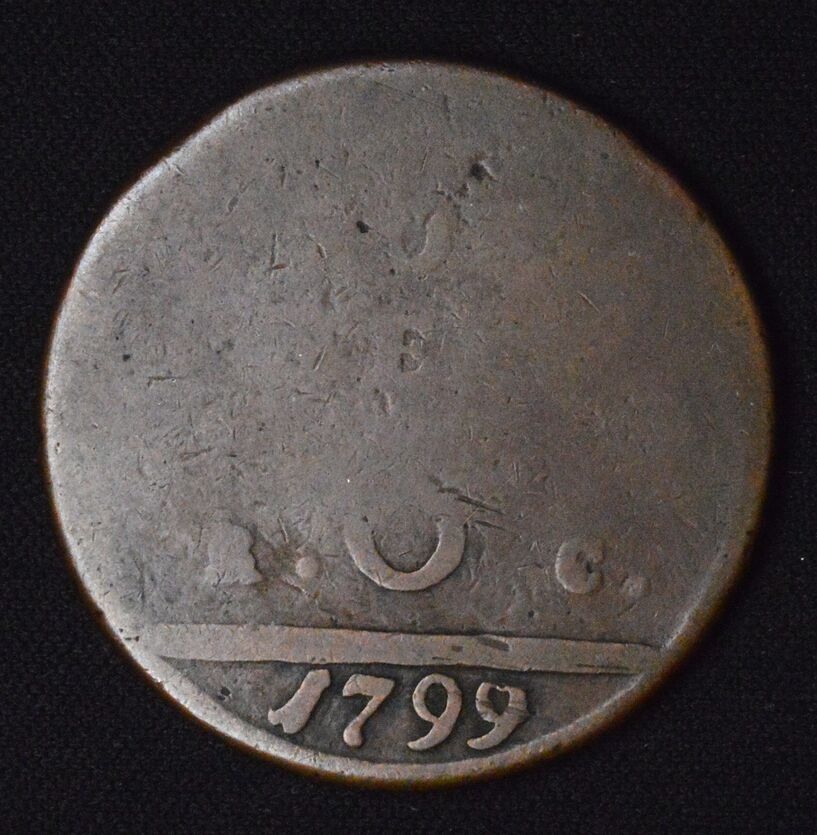 Edited by newtraffic2
11/30/2025 11:58 am
|
|
Valued Member
United States
106 Posts |
The 1797 Italian States Naples 8 Tornesi coin featuring King Ferdinando IV is a small denomination silver coin from the Kingdom of Naples. On the obverse, the coin displays a finely detailed profile portrait of King Ferdinando IV, facing right. His depiction includes his facial features, a crown or royal headgear, and attire befitting his royal status. Surrounding the portrait are inscriptions with his name and titles, such as "FERDINANDO IV." The reverse features the coat of arms of the Kingdom of Naples, often accompanied by decorative elements like floral motifs, scrollwork, or a crown. The inscription on this side typically includes the denomination "8 TORNESI" and the year "1797." Made of silver, this coin is relatively small, approximately 20-25mm in diameter, and weighs accordingly. Its detailed design, historical significance, and connection to Ferdinando IV make it a valuable collectible for numismatists and history enthusiasts interested in late 18th-century Italian coinage. 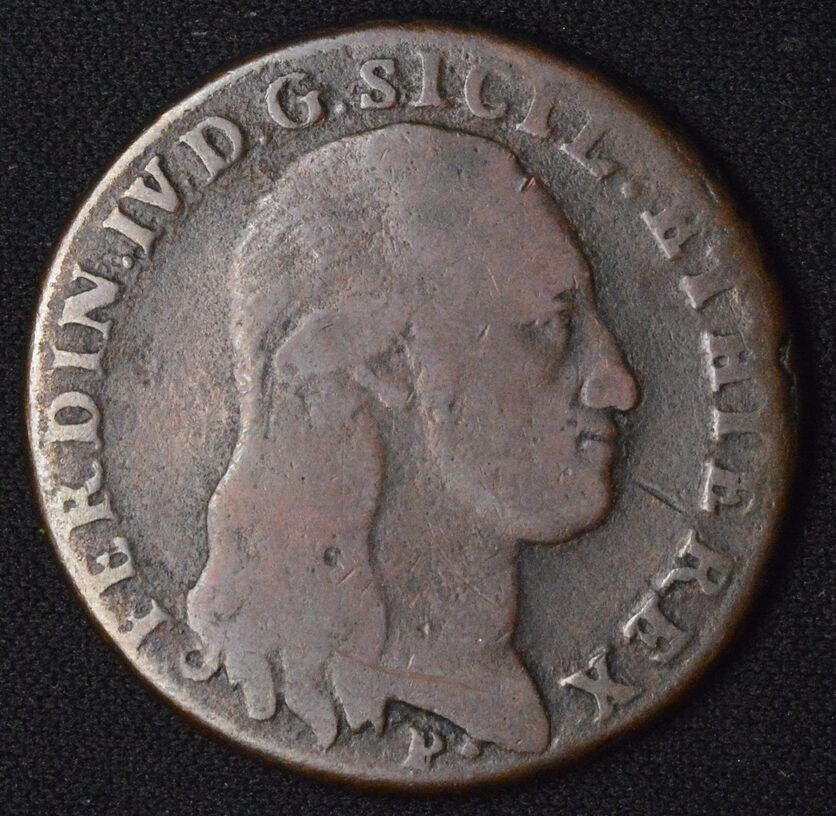 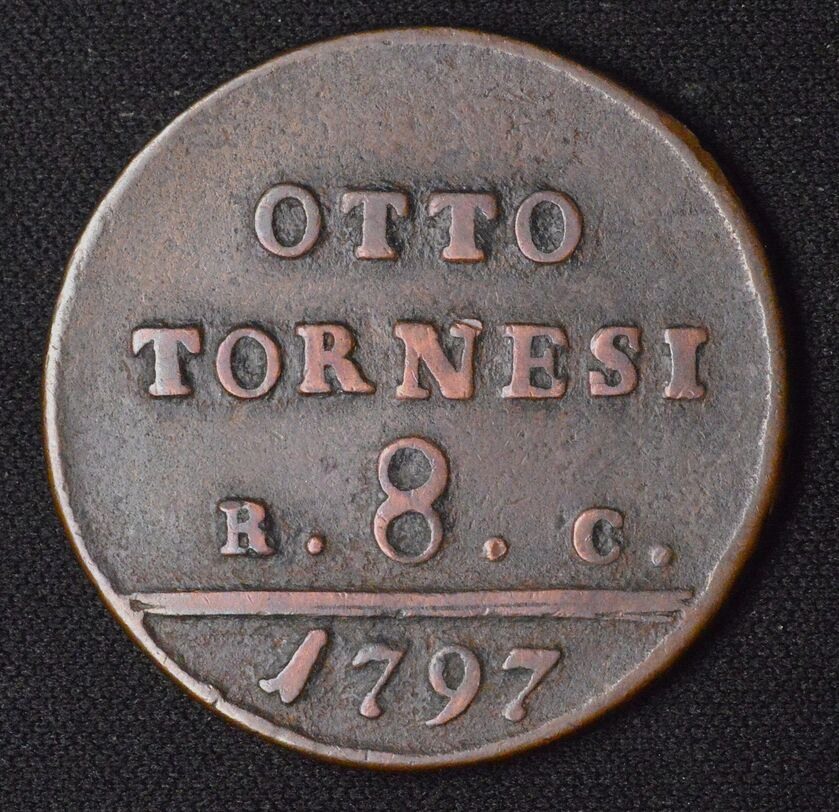 |
| |
Replies: 20 / Views: 1,570 |




 Posted 11/28/2025 9:37 pm





