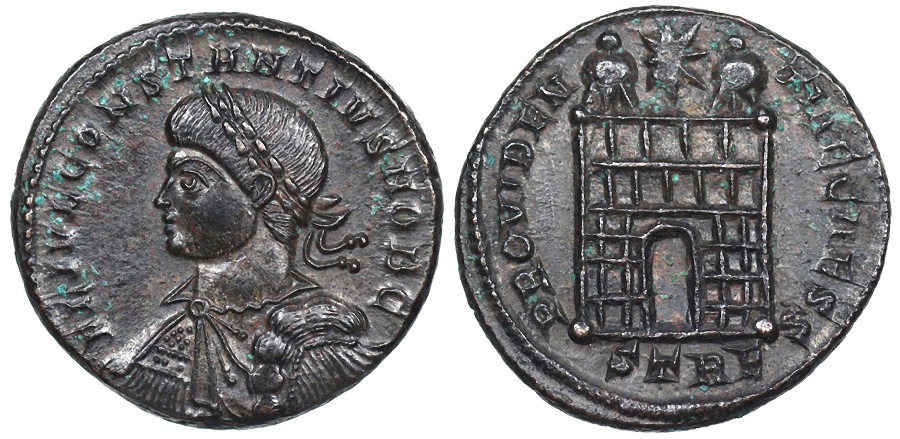
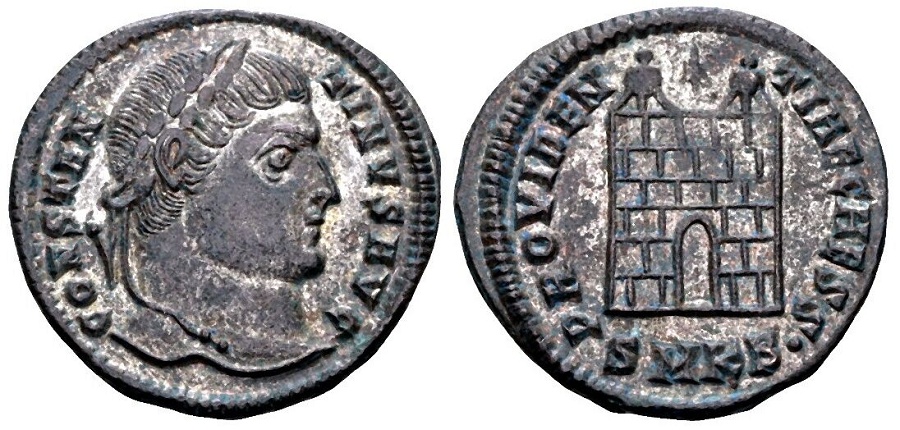
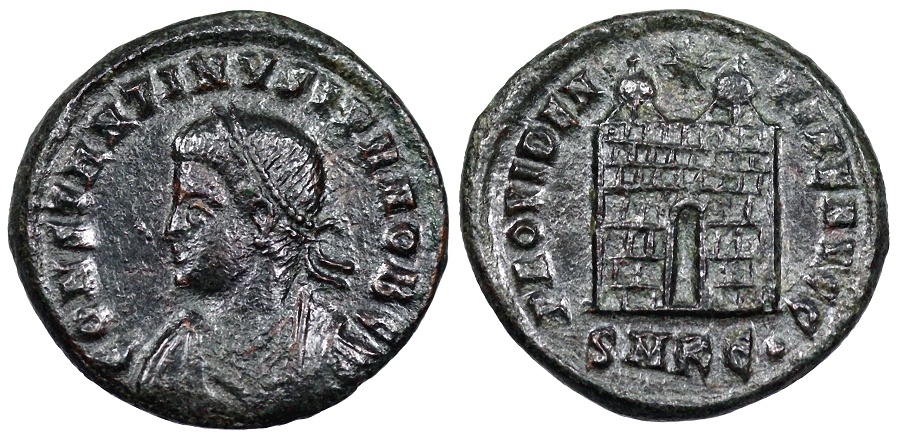
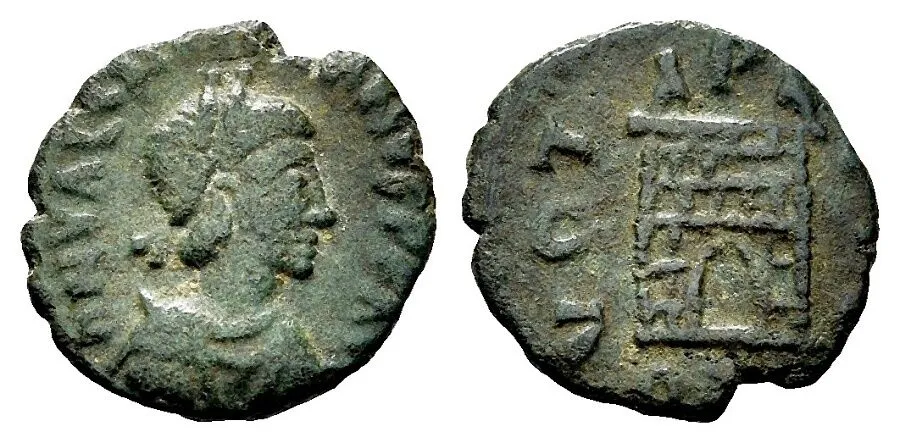
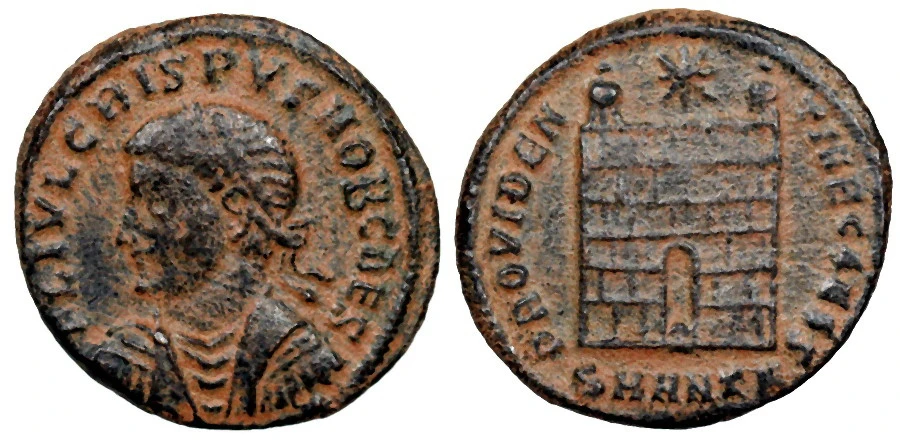
Rome has the best campgates and the topic could make a post all by itself. Here is just one thing that I think is neat and it is only about the top of helmets. The high crest on Roman helmets was usually made from horse hair like the coin below.
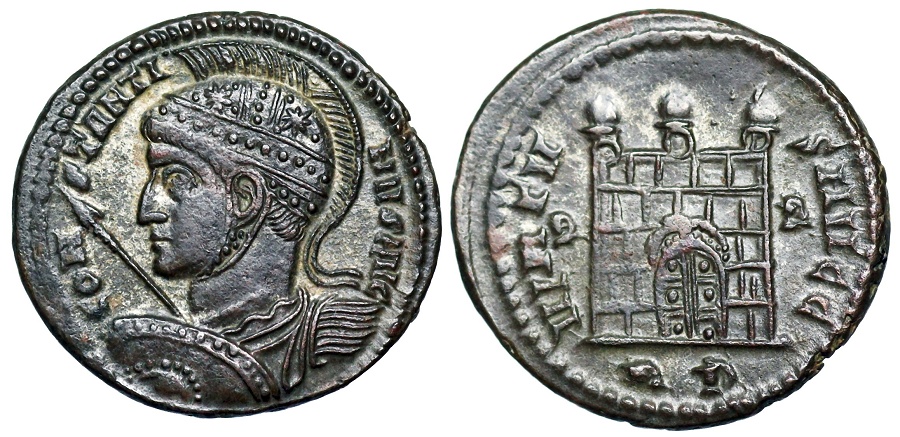
Constantine I
A.D. 318- 319
19mm 3.1g
CON-STANTI-NVS AVG; cuirassed and helmeted bust left, spear pointing forward and shield on left arm.
VIRTVS AVGG; campgate with closed doors and three turrets, across fields P-R
In ex. RP
RIC VII Rome 178
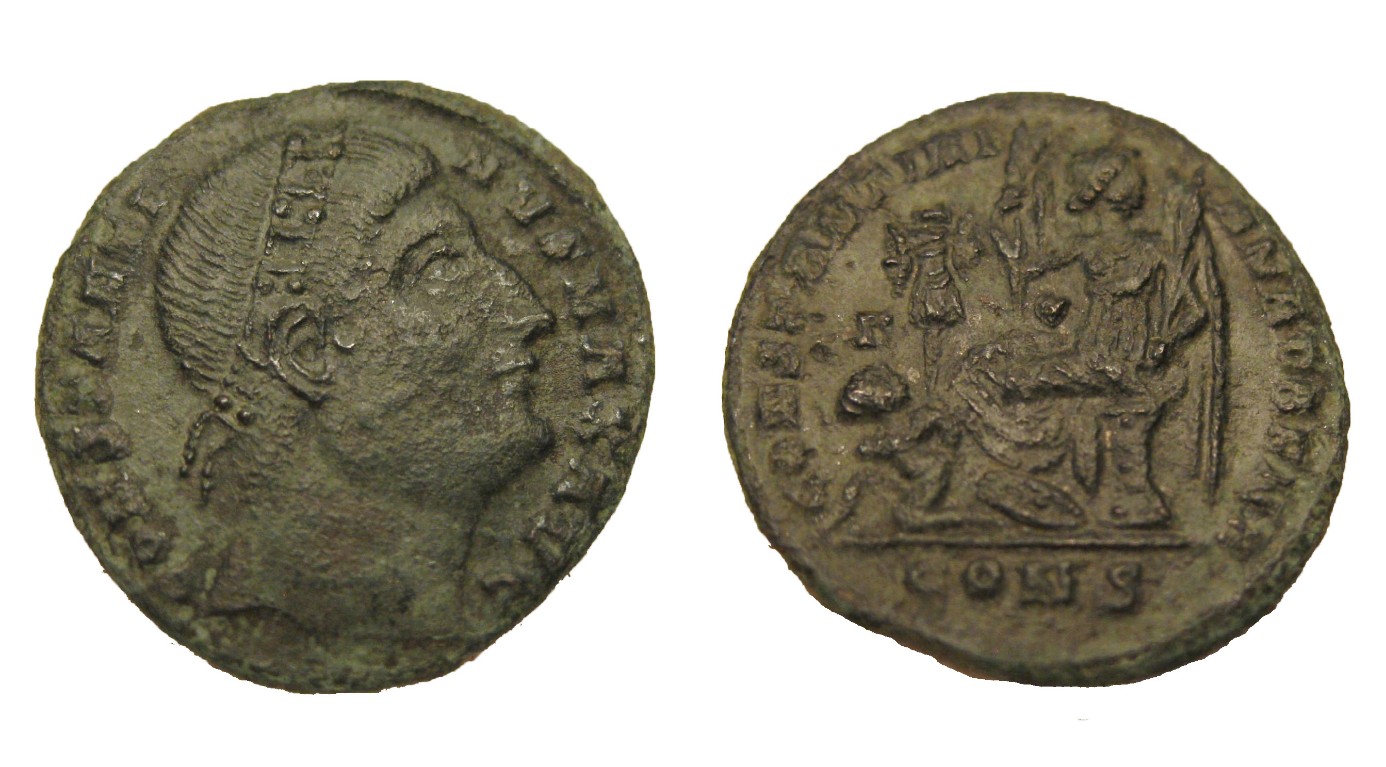
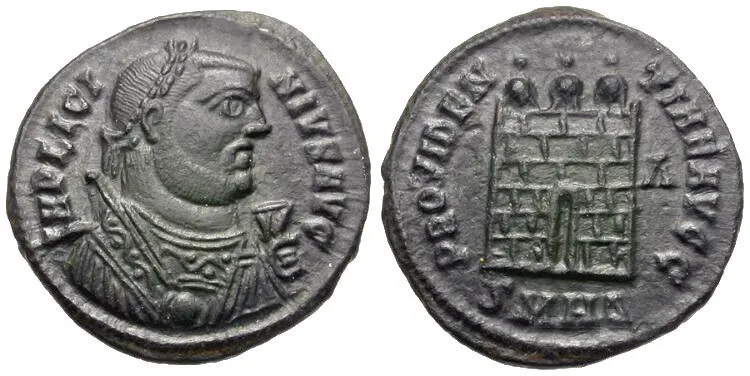
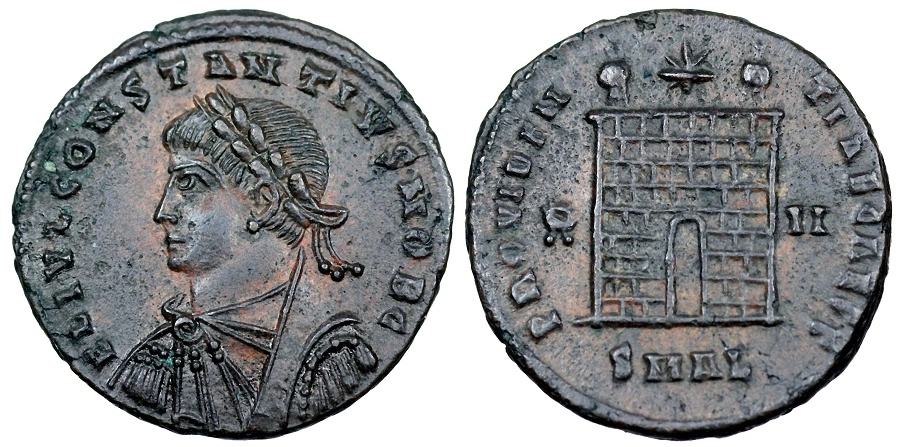
the coin below has an unusual crest made from feathers...probably from an ostrich

Constantine I
A.D. 318- 319
19mm 2.9g
CONSTANTINVS AVG; helmet with feather crest, cuirassed bust right.
VIRTVS AVGG; campgate with no doors and three turrets; across fields P-R
In ex. RT
RIC VII Rome 167
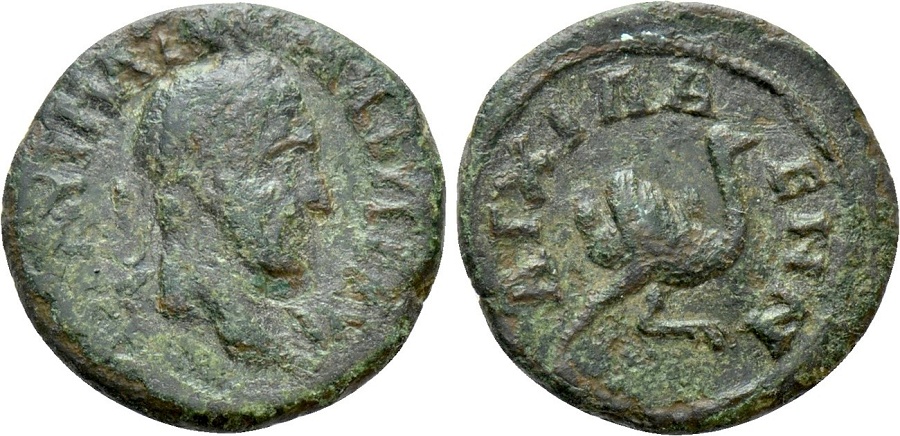
The ostrich feathers are probably from the now extinct Arabian ostrich. There is also a North African ostrich; but the feathers from the Arabian ostrich were more desired. The ostrich was featured on several Roman coins. Below is an example from Maximinus I (not mine)
They are also portrayed on several mosaics....here are two that give a clue about the fate of the Arabian ostrich--
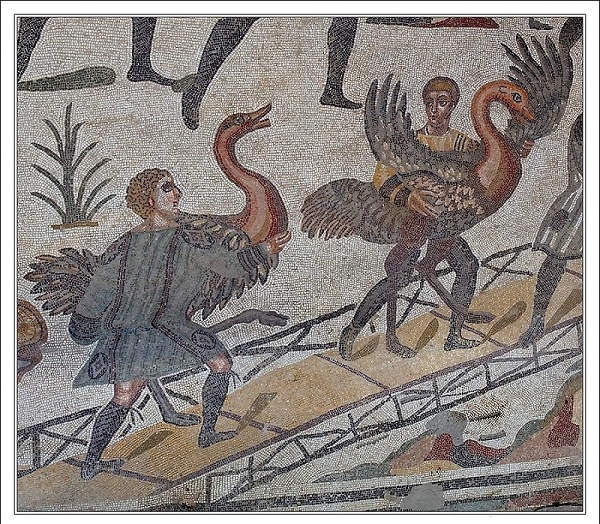
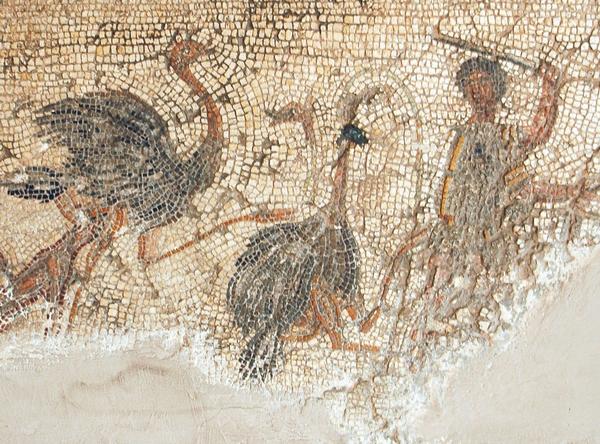
The first mosaic shows them being loaded into a ship and the second shows some being killed. Unfortunately for the Arabian ostrich, they were delicious; though they didn't go extinct until the early 1900's.
There is a Roman cookbook written by Apicius in the 4-5th century called De re Coquinaria and, of course, there is a recipe for ostrich.
In struthione elixo: piper, mentam, cuminum assume, apii semen, dactylos vel caryotas, mel, acetum, passum, liquamen, et oleum modice et in caccabo facies ut bulliat. Amulo obligas, et sic partes struthionis in lance perfundis, ete desuper piper aspargis. Si autem in condituram coquere volueris, alicam addis.
For boiled ostrich: pepper, mint, roast cumin, celery seed, dates or Jericho dates, honey, vinegar, passum, garum, a little oil. Put these in the pot and bring to the boil. Bind with amulum, pour over the pieces of ostrich in a serving dish and sprinkle with pepper. If you wish to cook the ostrich in the sauce, add alica. (Apicius, 212)
In the Historia Augusta there are several mentions of ostriches in the section about Elagabalus. He gave them away as presents and ate them.
"

t one dinner where there were many tables he brought in the heads of six hundred ostriches in order that the brains might be eaten."
Also from HA (Book 3 ch 4) a man named Firmus who--
"would eat great amounts of meat and he even, so it is said, consumed an ostrich in a single day."








 First Page


 Posted 12/11/2025 5:04 pm