| Author |
 Replies: 10 / Views: 419 Replies: 10 / Views: 419 |
|
|
Pillar of the Community
 United States
993 Posts |
I like looking for unusual ancients and here is my latest. 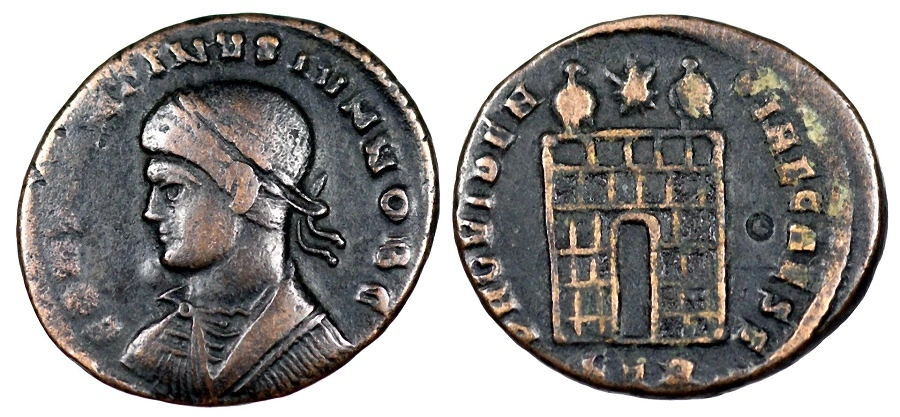 Constantine II A.D. 324- 325 AE nummus 17x19mm 2.7g CONSTANTINVS IVN NOB C; Laureate, draped and cuirassed bust left. PROVIDENTIAE CAESS; campgate, two turrets, no doors, star above. In ex. STR RIC VII Trier 455 The reverse of this coin has a small circular punch in the right field. It was struck hard enough that it made a raised area on the obverse to the left of the chin. I have seen similar punches on Indian coinage; but typically much earlier than this coin was struck. Maybe it has no significance at all. It also has patina and a bit of green indicating it was not done recently. The punch also looks a lot like the O in the obverse legend. Punches were used for the letters; but this was done on the dies, not the planchet. Perhaps, a bored mint worker (I'm looking at you Octavius!) punched an O on an already struck coin for some reason...his initial or a friends. This Constantine I brockage has a line under the reverse bust. For some obscure reason, somebody did this to the flan before striking; and yes, everything on the reverse is incuse, including the line. 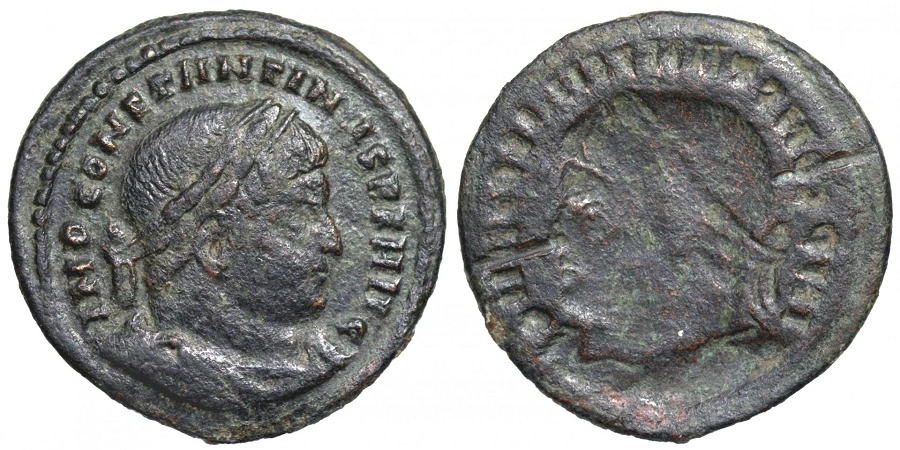 21mm 2.9g IMP CONSTANTINVS P F AVG |
|
|
|
Moderator
United States
196572 Posts |
Lovely examples!  |
|
Moderator
United States
34564 Posts |
Quote:
For some obscure reason Do you think that the two aspects (brockage and line) are related in any way?  "If you climb a good tree, you get a push."
-----Ghanaian proverb
"The danger we all now face is distinguishing between what is authentic and what is performed."
-----King Adz
|
|
Moderator
Australia
17007 Posts |
Brockages happen when a coin "sticks" to one die and isn;t removed befoe the next coin is struck. Perhaps the blanks had become overheated to the point of becoming soft and sticky. In such circumstances, brockaged coins might stick to each other too. I'm wondering if this coin had become "stuck" to the coin that had caused the brockage, and the ancient mint worker had used some kind of wedge or drill-like tool to prise the two coins apart again, thus creating the groove?
Don't say "infinitely" when you mean "very"; otherwise, you'll have no word left when you want to talk about something really infinite. - C. S. Lewis
|
|
Pillar of the Community
 United States
993 Posts |
Quote:
Do you think that the two aspects (brockage and line) are related in any way? No, because a brockage occurs when the coin gets stuck to the die and the next strike produces a mirror image on one side of the planchet; so it will only be an image of a coin. Something else was done here. |
|
Pillar of the Community
United States
993 Posts |
Quote:
I'm wondering if this coin had become "stuck" to the coin that had caused the brockage, and the ancient mint worker had used some kind of wedge or drill-like tool to prise the two coins apart again, thus creating the groove? No, because this would mean that the worker left the coin stuck to the die after trying to remove it. These brockage coins stuck to the die fell off on their own. edited to add-- whatever made the line was done to the planchet before striking, as it is under the bust; but not on the obverse. Edited by Victor
02/18/2026 10:52 am
|
|
Pillar of the Community
United Kingdom
1596 Posts |
I really like the Constantine I brockage coin.
Would these be circulated on purpose or would they enter the 'market' by accident?
|
|
Pillar of the Community
United States
993 Posts |
Quote:
would they enter the 'market' by accident? Yes, these were accidents that occurred when the worker did not notice that a coin was stuck to the die. Obverse brockages are fairly common; while reverse are rarer. The reason is that it would be easier to see if a coin was stuck to the bottom die; which was the obverse. here is a reverse brockage 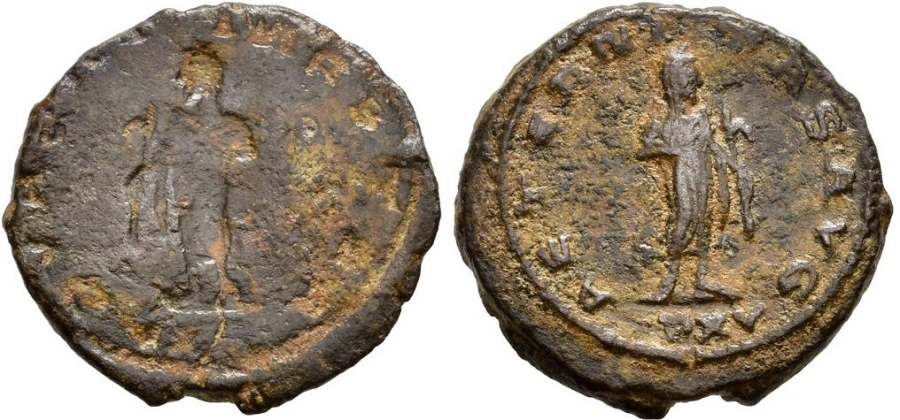 Gallienus (A.D. 260- 268) The reverse is AETERNITAS AVG, Saturn with harpa standing right; PXV in exergue. RIC 606 here is an obverse brockage for Tetricus 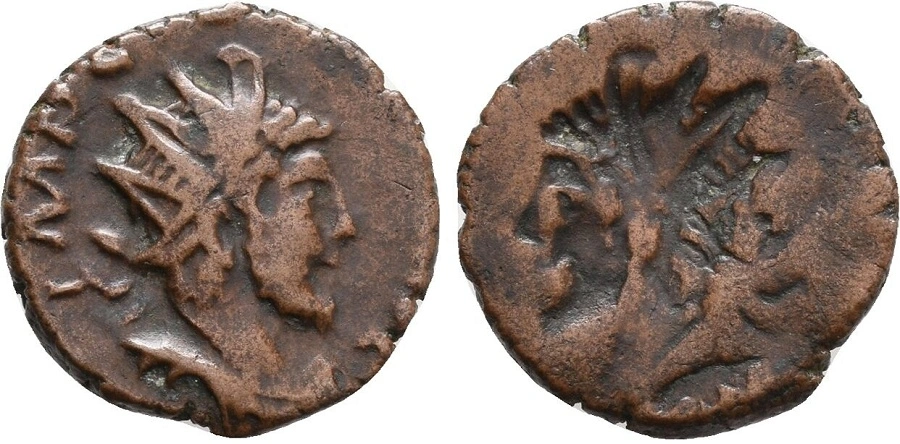 and here is a crazy partial reverse brockage 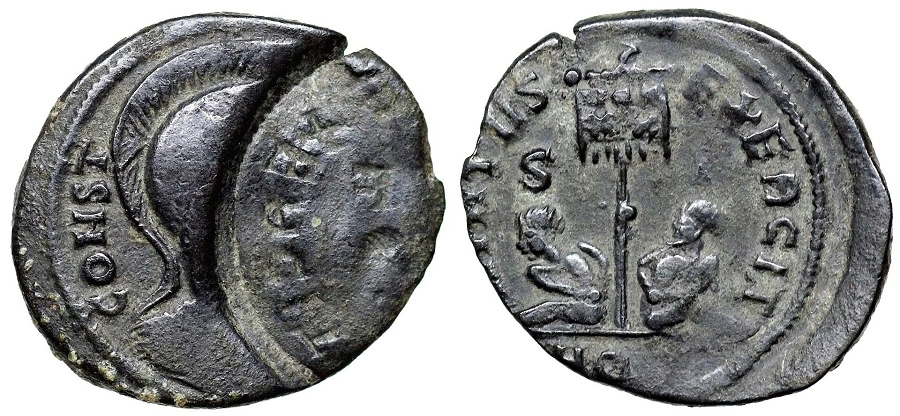 Constantine I A.D. 320 18x19mm 2.3g CONST-[ANTINVS AVG]; helmeted and cuirassed bust right. VIRTVS EXERCIT, [Valor of the army] Standard inscribed VOT/XX with captive seated on ground on either side, S-F across fields. in ex. AQ[P] RIC VII Aquileia 48 |
|
Moderator
United States
196572 Posts |
Very nice! |
|
Pillar of the Community
United Kingdom
1596 Posts |
Very interesting, thank you Victor. Some good examples there.
|
|
Pillar of the Community
United States
1122 Posts |
Victor thank you for posting and again sharing your knowledge. Learn something new on every thread. I have a really nice example of a double strike. Not rare, but this one is a beauty: 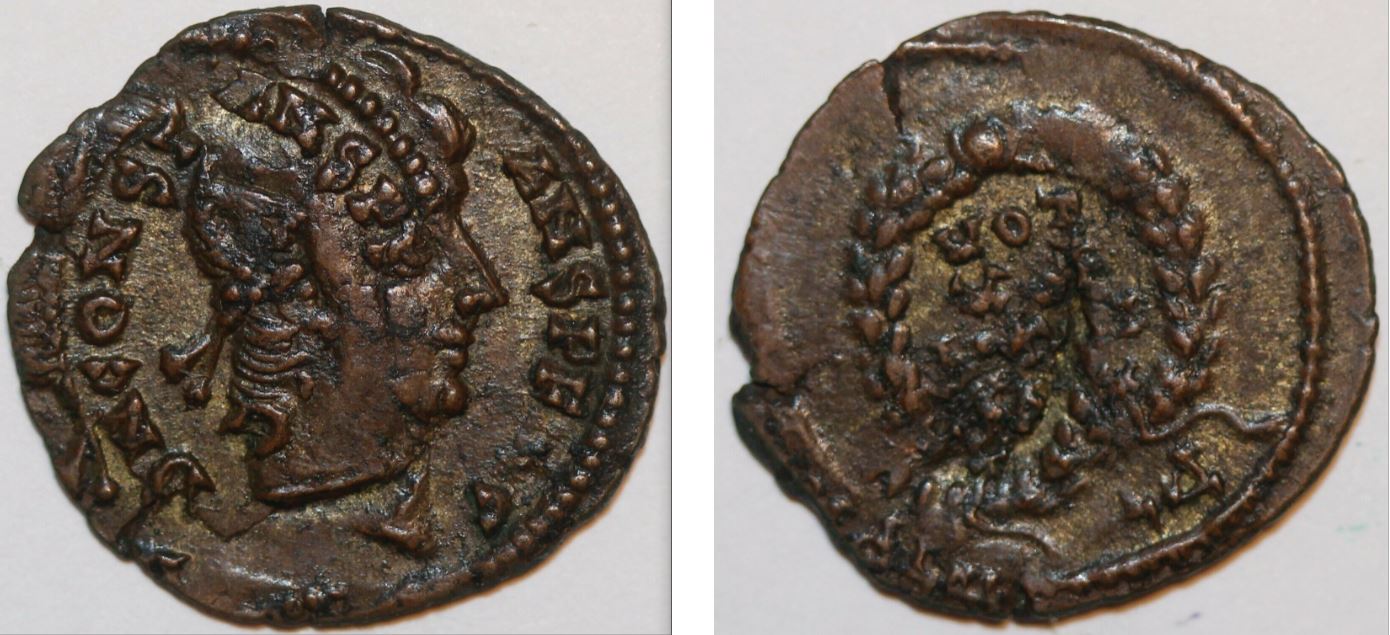 Constans. D N CONST-ANS P F AVG, pearl-diademed head right / VOT XX ? within wreath. Mintmark ? The only part of the mintmark I can make out is the letter is a delta; but it's from an Eastern mint, like Nicomedia, Heraclea or Cyzicus. |
| |
Replies: 10 / Views: 419 |
|










 Posted 02/17/2026 8:56 pm


