








 Posted 03/20/2026 12:00 pm


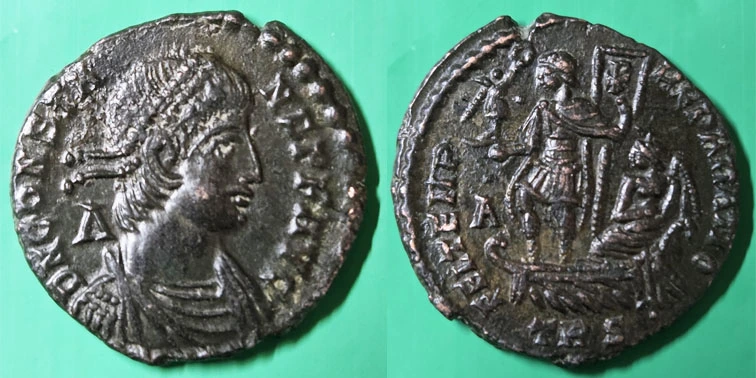
RIC VIII mentions that this type might allude to a visit that Constans made to Britain. RIC gives the Konrad Kraft article "Die Taten der Kaiser Constans und Constantius II" as a reference. Though RIC usually gives the date of issue as A.D. 348- 350, Kraft argues for an earlier issue probably around 344; which would be closer to the expedition.
The reason that this issue seems to allude to a visit to Britain is because there are several ancient sources that reference this trip to Britain. The real significance though, according to the sources, was that it was made in the winter...a very dangerous time to make this crossing. Libanius has more about the weather which I did not include (I got tired of typing). This probably happened A.D. 342- 343.
Firmicus Maternus, De errore profanum religionum On the Error of Pagan Religions Chapter 28:6
"You (Constans) have overthrown your enemies, enlarged the Empire, and, to add greater luster to your exploits, altering and scorning the fixed order of the seasons you have done in the winter what was never done before or will be again: you have trodden upon the swollen and raging waters of the Ocean. The wave of a sea already become almost unknown to us has trembled beneath your oars, and the Briton has quailed before the unexpected visage of the Emperor."
Libanius Oration LIX: Panegyric of Constantius and Constans
137 "It is not right to pass over in silence his voyage to the island of Britain, because many are ignorant about the island."
141 "If therefore after the island had rebelled, its inhabitants were holding an uprising, and the empire was being plundered, the news had arrived, and he had been seized with rage on hearing it and had thrown the die for the voyage, to report his act of daring would not have been to the credit of his resolve, but the crisis deriving from the rebels would have taken away the greater part of the glory."
Translation from From Constantine to Julian: Pagan and Byzantine Views A Source History.
Ammianus Marcellinus, Res Gestae Book XX.1
"But in Britain in the tenth consulship of Constantius and the third of Julian raids of the savage tribes of the Scots and the Picts, who had broken the peace that had been agreed upon, were laying waste the regions near the frontiers, so that fear seized the provincials, wearied as they were by a mass of past calamities. And Julian, who was passing the winter in Paris and was distracted amid many cares, was afraid to go to the aid of those across the sea, as Constans once did (as I have told)."
I have an unofficial issue from the Freckenham Hoard of 1948
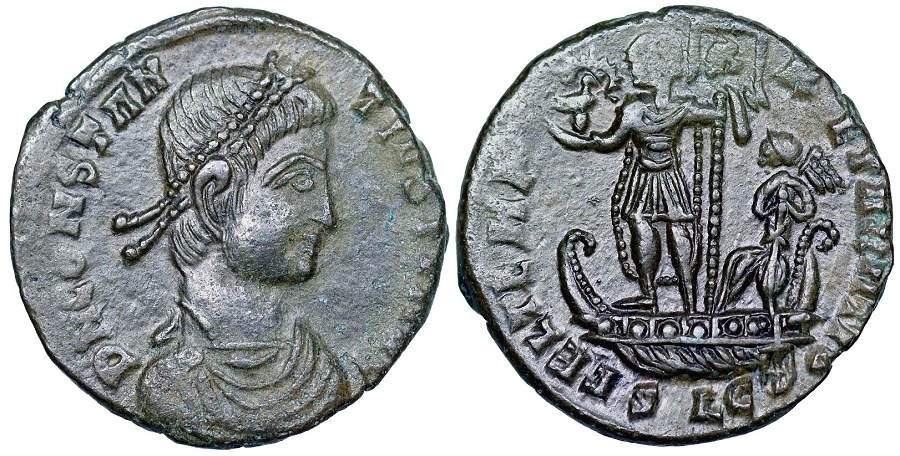
Constantius II
A.D. 348- 350
21mm 5.0g
D N CONSTAN-TIVS P F AVG; pearl-diademed, draped & cuirassed bust right.
FEL TEMP REPARATIO; Emperor in military dress stg. l., holding phoenix on globe and standard with [Chi-Rho]; in stern sits Victory, steering ship.
In ex. SLG
cf. RIC VIII Lyons 69
and this coin issued under the authority of Vetranio during the rebellion of Magnentius
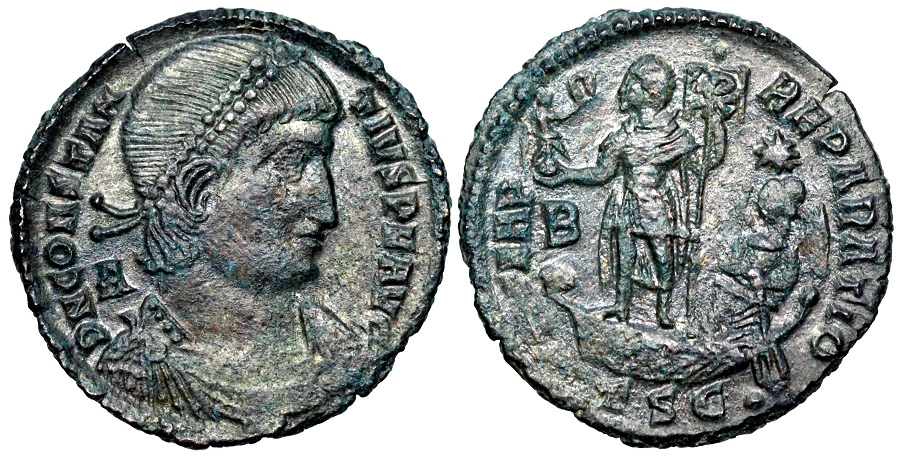
Constantius II
A.D. 350
23mm 4.3g
DN CONSTAN-TIVS PF AVG; pearl diademed, draped & cuirassed bust right, A behind bust.
FEL TEMP REPARATIO; Emperor in military dress stg. l., holding victory on globe and standard with Chi-Rho on banner; in stern sits Victory, steering ship; B in left field, star in right.
In ex. dot TSE dot
RIC VIII Thessalonica 133
The reason that this issue seems to allude to a visit to Britain is because there are several ancient sources that reference this trip to Britain. The real significance though, according to the sources, was that it was made in the winter...a very dangerous time to make this crossing. Libanius has more about the weather which I did not include (I got tired of typing). This probably happened A.D. 342- 343.
Firmicus Maternus, De errore profanum religionum On the Error of Pagan Religions Chapter 28:6
"You (Constans) have overthrown your enemies, enlarged the Empire, and, to add greater luster to your exploits, altering and scorning the fixed order of the seasons you have done in the winter what was never done before or will be again: you have trodden upon the swollen and raging waters of the Ocean. The wave of a sea already become almost unknown to us has trembled beneath your oars, and the Briton has quailed before the unexpected visage of the Emperor."
Libanius Oration LIX: Panegyric of Constantius and Constans
137 "It is not right to pass over in silence his voyage to the island of Britain, because many are ignorant about the island."
141 "If therefore after the island had rebelled, its inhabitants were holding an uprising, and the empire was being plundered, the news had arrived, and he had been seized with rage on hearing it and had thrown the die for the voyage, to report his act of daring would not have been to the credit of his resolve, but the crisis deriving from the rebels would have taken away the greater part of the glory."
Translation from From Constantine to Julian: Pagan and Byzantine Views A Source History.
Ammianus Marcellinus, Res Gestae Book XX.1
"But in Britain in the tenth consulship of Constantius and the third of Julian raids of the savage tribes of the Scots and the Picts, who had broken the peace that had been agreed upon, were laying waste the regions near the frontiers, so that fear seized the provincials, wearied as they were by a mass of past calamities. And Julian, who was passing the winter in Paris and was distracted amid many cares, was afraid to go to the aid of those across the sea, as Constans once did (as I have told)."
I have an unofficial issue from the Freckenham Hoard of 1948
Constantius II
A.D. 348- 350
21mm 5.0g
D N CONSTAN-TIVS P F AVG; pearl-diademed, draped & cuirassed bust right.
FEL TEMP REPARATIO; Emperor in military dress stg. l., holding phoenix on globe and standard with [Chi-Rho]; in stern sits Victory, steering ship.
In ex. SLG
cf. RIC VIII Lyons 69
and this coin issued under the authority of Vetranio during the rebellion of Magnentius
Constantius II
A.D. 350
23mm 4.3g
DN CONSTAN-TIVS PF AVG; pearl diademed, draped & cuirassed bust right, A behind bust.
FEL TEMP REPARATIO; Emperor in military dress stg. l., holding victory on globe and standard with Chi-Rho on banner; in stern sits Victory, steering ship; B in left field, star in right.
In ex. dot TSE dot
RIC VIII Thessalonica 133


