








 Posted 03/29/2026 5:44 pm


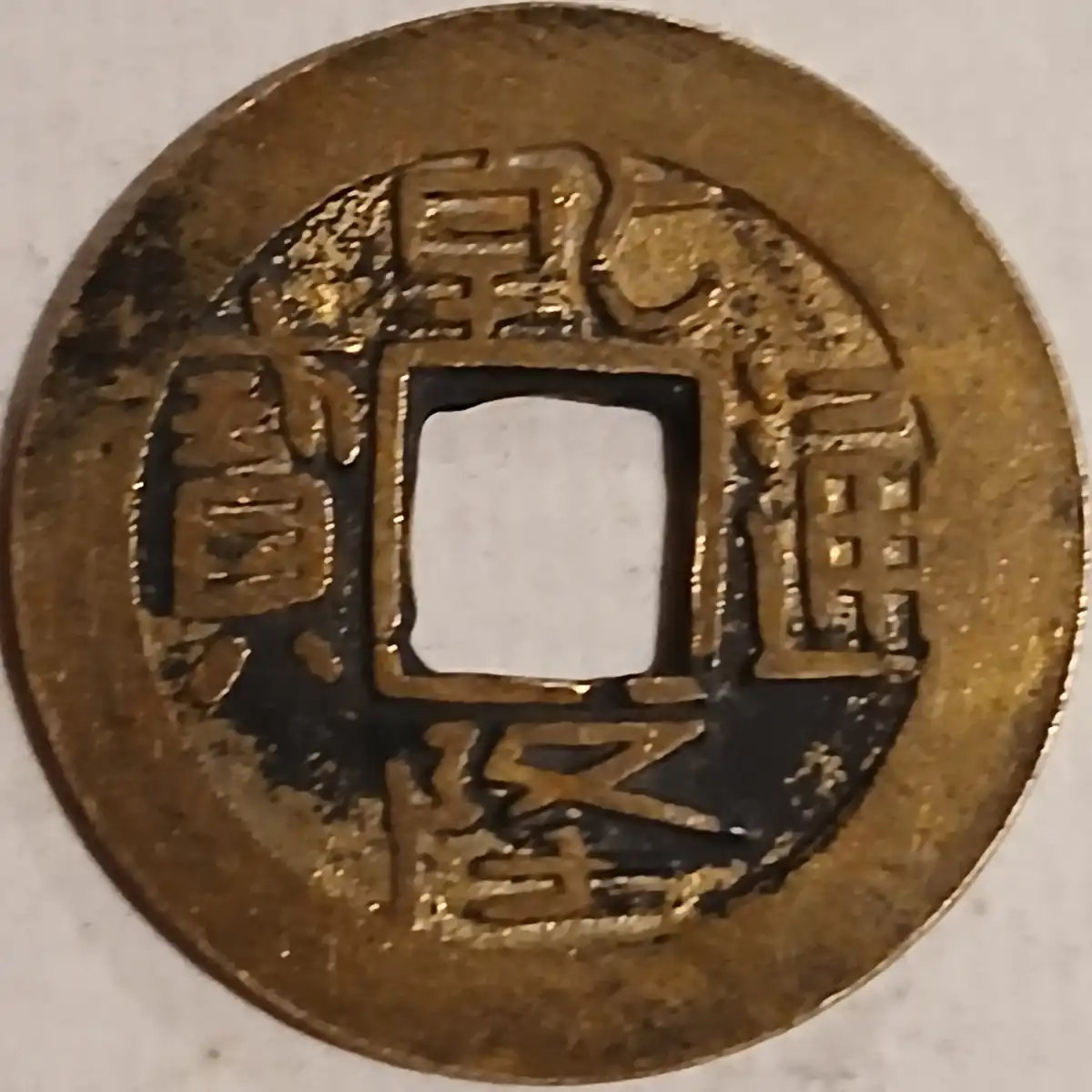
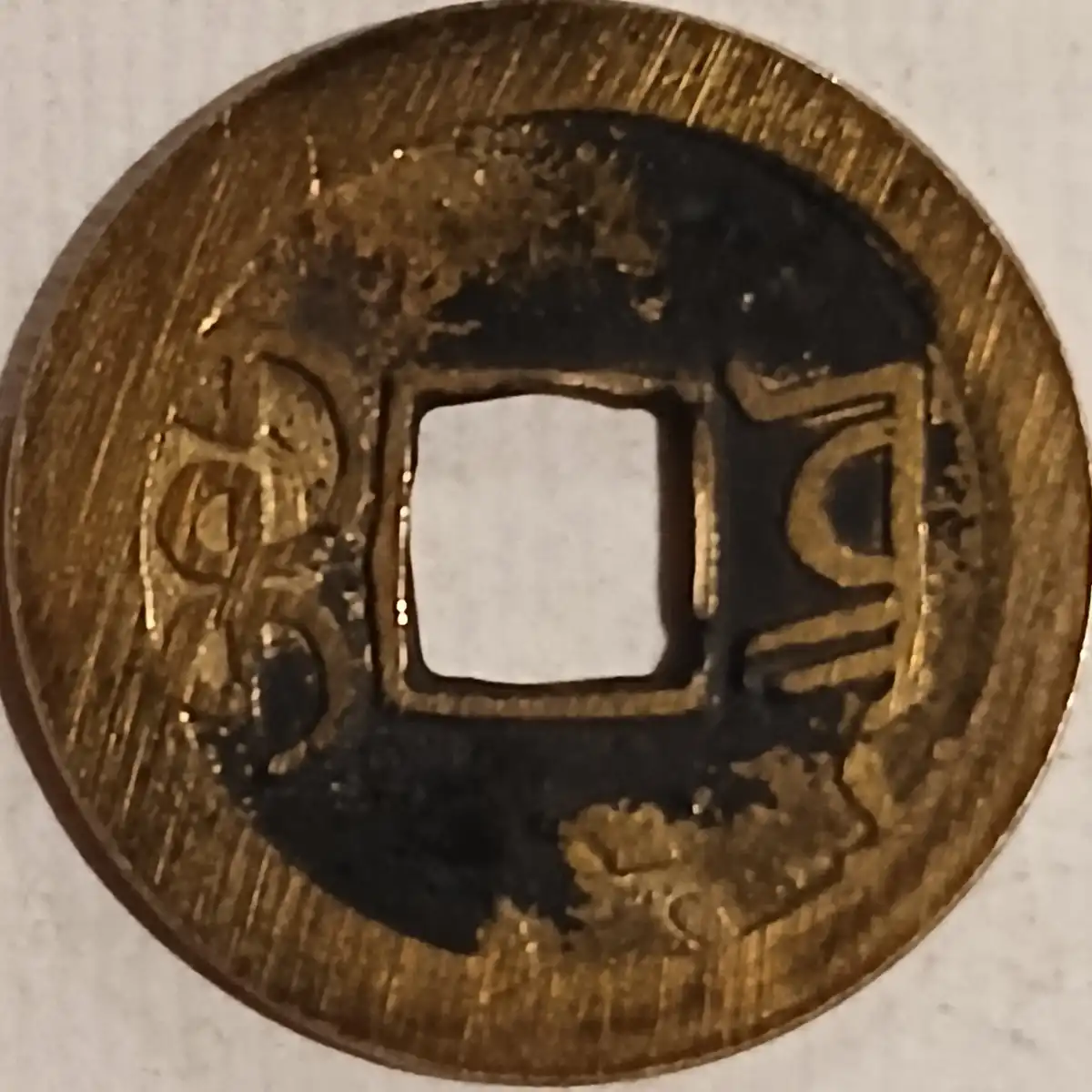
It is attempting to imitate a Qianlong Emperor cash coin, but the characters seem to have been copied by someone not fluent in reading Chinese characters - they are almost, but not quite correct. The Yunnan mintmark on the back is also oddly written. So, sorry, but it's not an actual coin, but a replica.
While these kinds of replica cash are frequently used and sold by purveyors of Feng Shui ornamentation theory, I am noticing the black discolouration on both sides, plus some scour marks where (presumably) even more black used to be before it was scraped away. My assumption would therefore be that it had been in a fire. And the main reason why fake cash coins would get tossed in a fire is for it to be used in traditional Chinese funeral rites, where replicas of useful items (such as money) are burned so the deceased can enjoy those items in the afterlife. Brass replica coins can then be scraped out of the ashes, polished clean, and used for the next funeral.
While these kinds of replica cash are frequently used and sold by purveyors of Feng Shui ornamentation theory, I am noticing the black discolouration on both sides, plus some scour marks where (presumably) even more black used to be before it was scraped away. My assumption would therefore be that it had been in a fire. And the main reason why fake cash coins would get tossed in a fire is for it to be used in traditional Chinese funeral rites, where replicas of useful items (such as money) are burned so the deceased can enjoy those items in the afterlife. Brass replica coins can then be scraped out of the ashes, polished clean, and used for the next funeral.
Don't say "infinitely" when you mean "very"; otherwise, you'll have no word left when you want to talk about something really infinite. - C. S. Lewis


