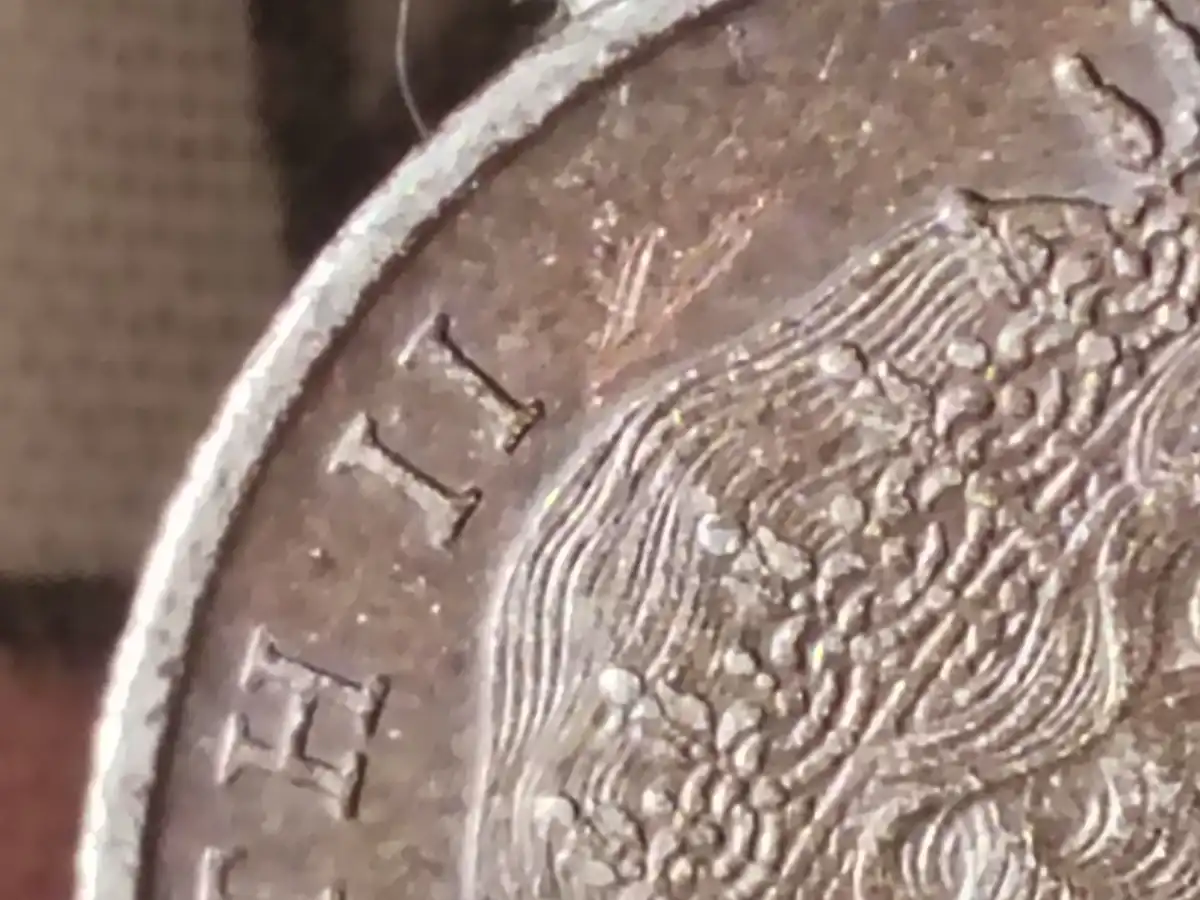
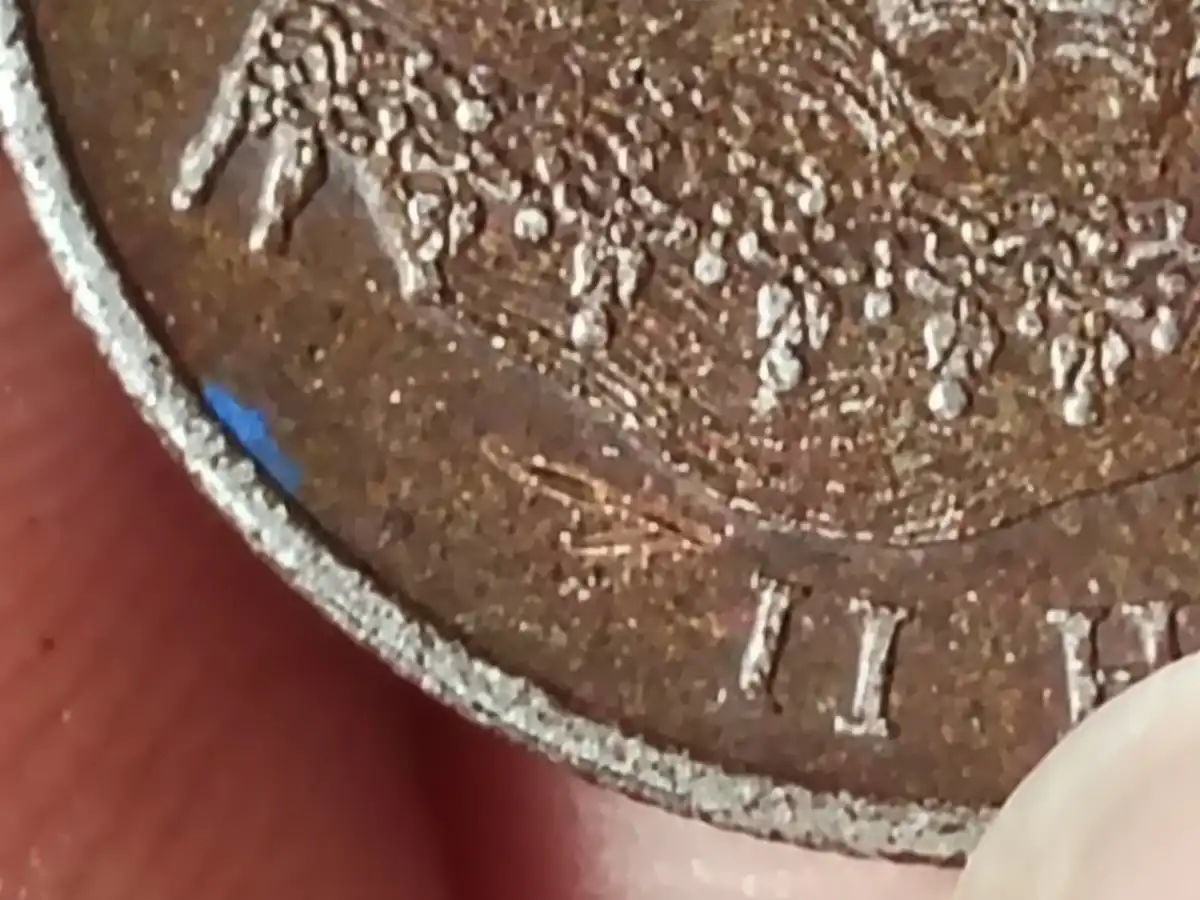
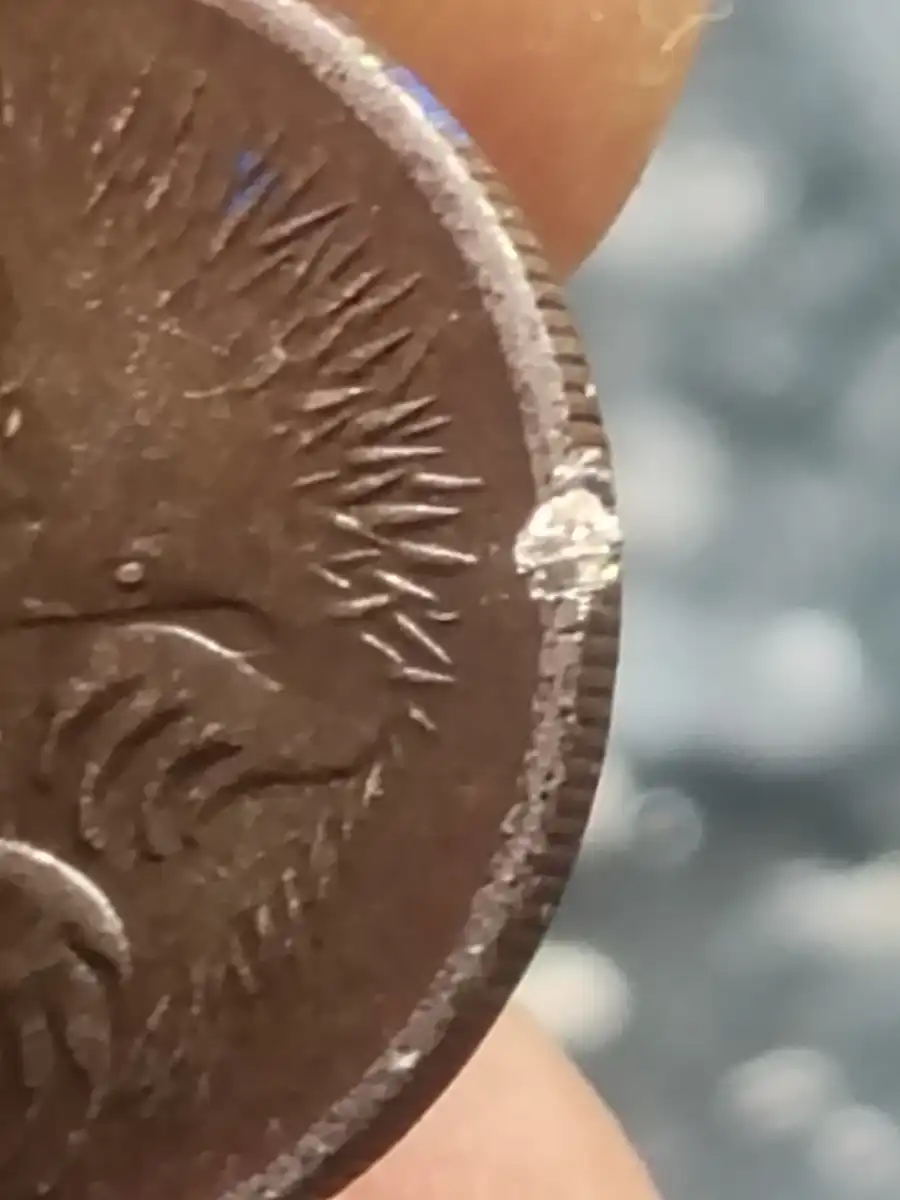
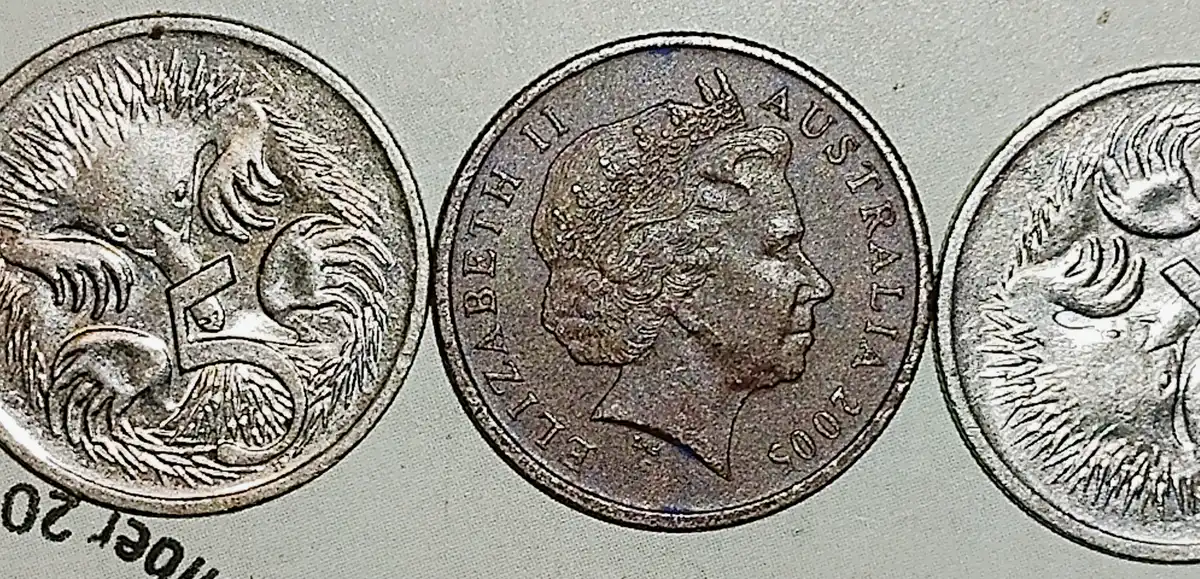
In the second pic one can clearly see that the "copper colour" is not present on the high points such as the rim, the lettering and the pearls on the tiara. This is clearly evidence that the brown colour is surface-level only and has worn away from circulation on those high points.
It's probably best not to deliberately scratch or mutilate coins that you suspect might be a compositional error - there are other non-destructive ways to test a coin of unknown composition (such as weight, density and XRF). Scratching should be avoided partly because in the (highly unlikely) event that you're actually correct and it is a "wrong planchet" error, you've just damaged a valuable coin and made it much less valuable. And partly because, here in Australia, deliberately damaging a coin without official government permission is illegal.
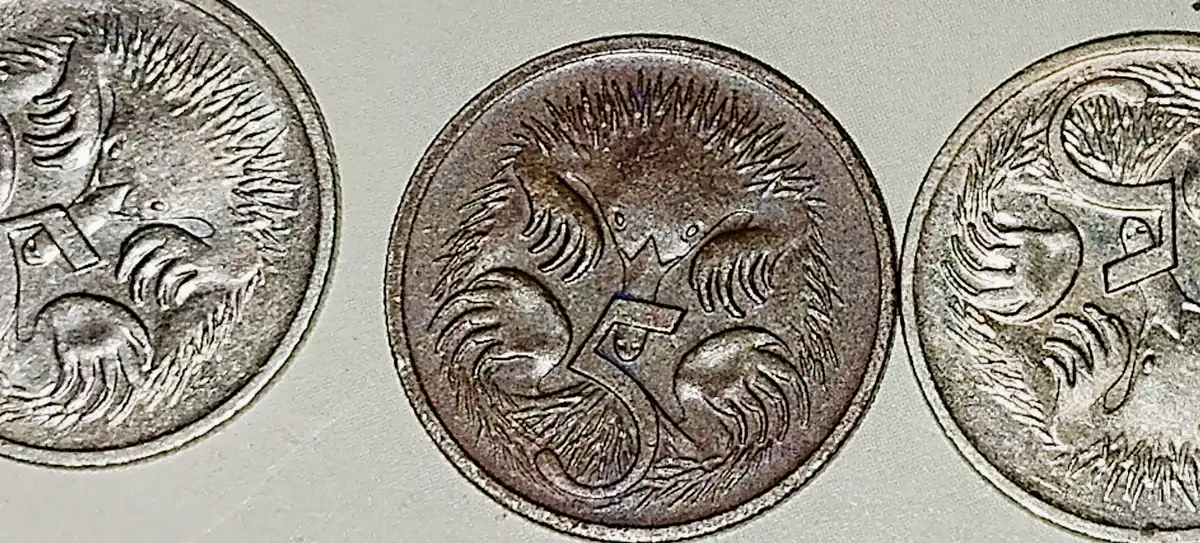
Once again, my old friend Occam gets his Razor out. Let's consider the possible theoretical explanations for a "copper coloured 2005 5 cent coin".
- 1. A bronze blank was somehow used to strike the coin. The year is 2005, and the Mint stopped using bronze to make any coins over a decade earlier. So this requires the special creation of a 5-cent-sized bronze blank, or perhaps a bronze blank has somehow been sitting around hiding in a blank hopper for over a decade before eventually falling out during the production of 5 cent coins.
- 2. A perfectly normal 5 cent coin is buried or otherwise stained, turning brown.
Which of those two possible scenarios requires the fewest number of assumptions? Which requires the fewest number of improbable events to occur, in sequence? The answer is number 2.
But we can test this with a simple piece of kit that every error-hunter ought to get for themselves: a scale or balance, capable of measuring to the nearest hundredth of a gram (0.01 grams). These are cheap; you can
get them from electronics stores for $50 or so, and only $10 or so from places like Temu). Having one of these balances really helps in identifying certain types of varieties and error coins, such as this example. If your coin weighs the same as a normal 5 cent piece, then it probably is a normal 5 cent piece that's just discoloured. If it's significantly lighter or heavier, then some kind of "wrong composition error" could be entertained.
Don't say "infinitely" when you mean "very"; otherwise, you'll have no word left when you want to talk about something really infinite. - C. S. Lewis






 Posted 04/01/2026 06:38 am