Another group of classic-era United States ("US") commemorative coin tidbits...Tidbit #1Multiple newspaper articles (OK, a syndicated story that ran in multiple newspapers) described Chester Beach, the artist responsible for creating the models for the Monroe Doctrine Centennial Half Dollar, as the winner of a design contest. Rather than being the winner of an open design competition, Beach was awarded the commission to create the coin models from concepts developed by the American Historical Revue and Motion Picture Historical Exposition ("Exposition"); he served at the recommendation of the US Commission of Fine Arts (after it was asked to recommend an artist by the Exposition).
Tidbit #2The coin's design was hailed (in 1923) as "one of the most beautiful in design and execution ever put out by the United States government" and that it had "caused a great advance demand from collectors in all parts of the world " Charles Moore, Chairman of the Fine Arts Commission in 1923 stated, "Personally, I feel great exultation over the way the model designed and completed by Mr. Beach has turned out. I do not know of a memorial coin that for sheer beauty equals this."
History tells us that "hyperbole" was sprinkled liberally over these claims.
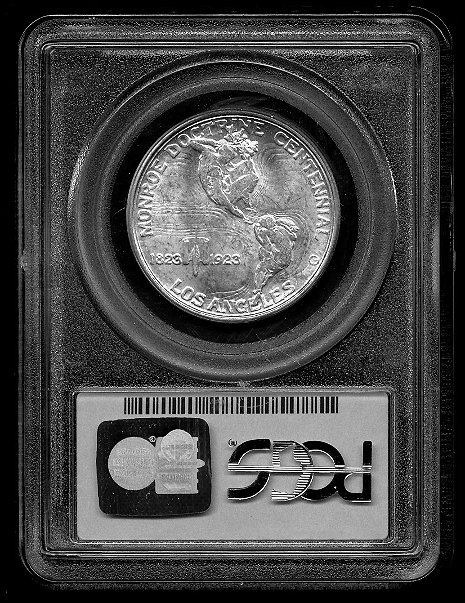
Tidbit #3By July 1923, the originality of Beach's reverse design (allegorical female figures representing North and South America) was being publicly called into question. A story had appeared in
The Buffalo News (Buffalo, New York), describing how artist Raphael Beck had created a very similar design for the award medal of the Pan American Exposition of 1901 - and had done so decades earlier (circa 1899). The design was used on various Exposition items.
Beck was reportedly alerted to the design similarity by friends who had seen the Half Dollar and read newspaper accounts crediting Chester Beach.
I discussed this topic (with images) previously, see:
1923 Monroe Doctrine Centennial - Ancestors.
Tidbit #4Chester Beach was born in San Francisco, California in May 1881. He was known for his various works (e.g., busts, statues, coin/medal designs, etc.) that often evidenced his love of the Beaux-Arts style.
He initially was educated and worked in California, but moved to New York in 1903 to expand his education opportunities and exposure to current trends in art. In 1904, he moved to Paris, France, where he studied at the Ecole des Beaux-Arts.
He returned to New York in 1907, was elected to the National Academy of Design in 1908 and continued to develop his skills and reputation. In the years that followed, as his reputation grew and commissions increased, he spent time in New York and Rome, Italy (maintaining studios in both locations.
Beach died in August 1956.
1923 Monroe Doctrine Enunciation Centennial Half Dollar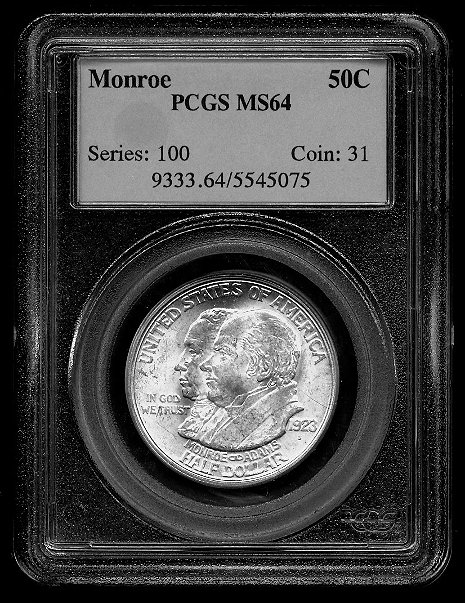
For other of my posts about commemorative coins and medals, including more "Historical Tidbits" stories, see:
Commems CollectionFor a related Monroe Doctrine Centennial Half Dollar "Tidbit", see:
-
1923 Monroe Doctrine Centennial - Want Ads 









 Posted 04/11/2026 12:08 pm


