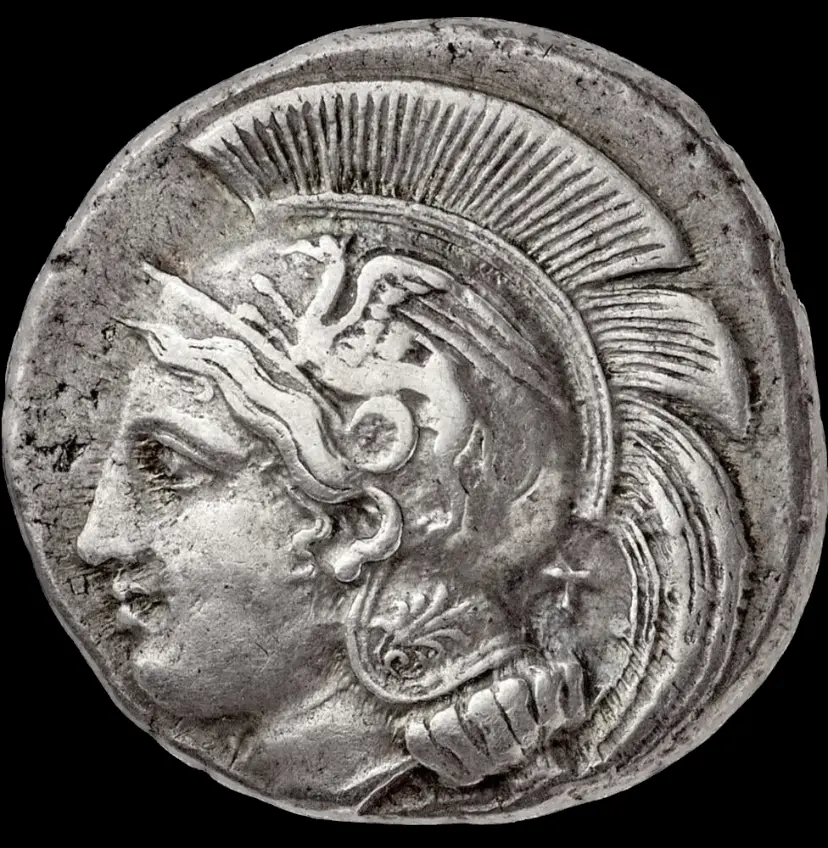
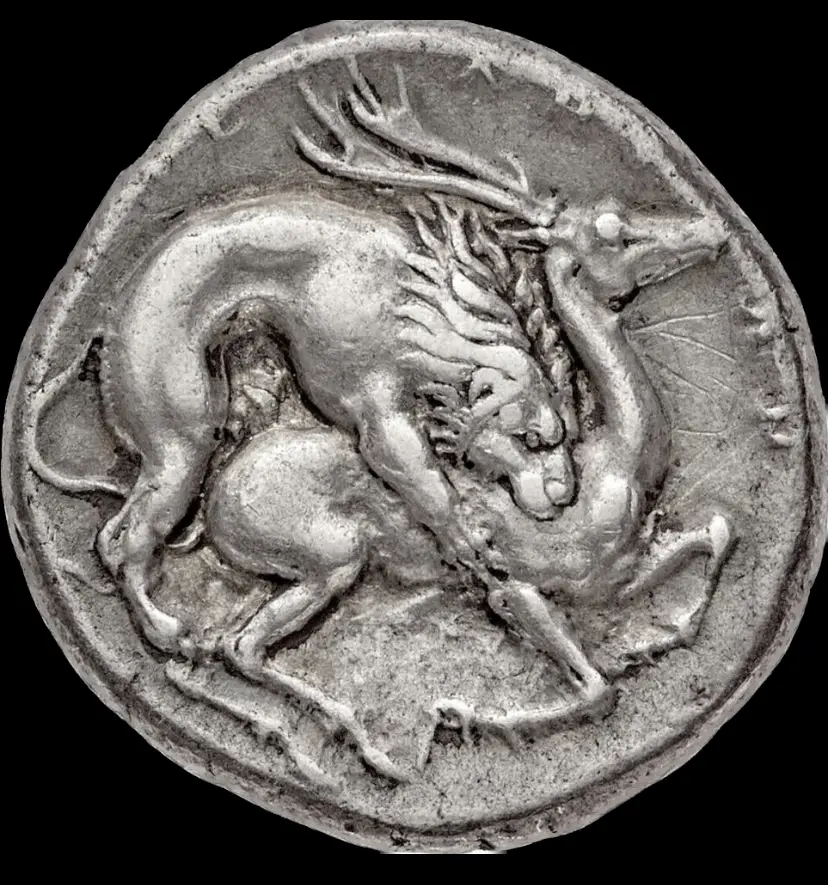
Another reference site not yet mentioned is CoinArchives. I've just ran a search for Velia didrachms there; 52 matches, one of which is the same variety as yours (with the deer and pouncing lion facing left, rather than the more common right-facing). That example, from a Japanese coin auction in December, is more worn than this one and is also NGC-slabbed. The little graffiti-marks on the reverse of your coin would be a tell-tale indicator, if the photography of past sale catalogues was any good.
CoinArchives used to be a much better resource when it was completely free. Now, only the last six months worth of international auctions are free, to access their full database costs US$600 per year.
Quote:
It is difficult or maybe impossible to find the provenance of an ancient coin. Most of the time records were not kept. It's fun to own an ancient coin that has absolute provenance from a hoard find for example or has some history in past auctions.
While I personally prefer it when I have a full history of a coin from discovery all the way to me, I only have this information for two of my 800 ancient and mediaeval coins. I have some auction/sale history for only a couple more. For the vast majority of them, my provenance goes back no further than "I bought it from that coin dealer".
And the unfortunate reason why this is often true is that many of our coins may not have been obtained through fully legal means. In most countries that are host to the ruins of ancient civilizations, buying and selling of ancient coins is either strictly controlled (eg Italy) or outright forbidden (eg Greece). People who find ancient coins in these countries have to choose to either do the right thing by their own country's laws and hand over their finds to their government for little to no reward, or illegally smuggle the coins out of the country to another country where the selling of such coins isn't illegal. Needless to say, when coins are smuggled like this, their history prior to that point is lost - especially as some countries have sought to reclaim and repatriate coins they believe were illegally stolen, so in many cases the original providence is deliberately obscured and destroyed.
Don't say "infinitely" when you mean "very"; otherwise, you'll have no word left when you want to talk about something really infinite. - C. S. Lewis









 Posted 05/28/2026 9:50 pm


 Beautiful coin.





