The classic-era of United States ("US") commemorative coins features many issues that are noted for the controversy they elicited. For some, the controversy was related to design issues, for some - date issues, for some - worthiness issues, for others it was the number of annual releases in their program. There are two, however, that stand out (at least to me) for their apparent disregard for history in the pursuit of coin sale profits. This
Quick Bits takes a look at the two coins that stretch history to the point of breaking (well beyond relatively minor design or date issues) in the name of "commemoration."
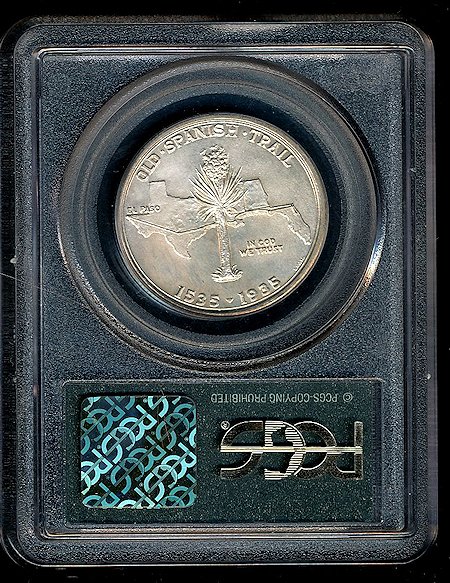
1935 Old Spanish Trail 400th AnniversaryFirst up, the 1935 Old Spanish Trail 400th Anniversary Half Dollar. The "Spanish Trail" half dollar was sponsored/championed/designed by L.W. Hoffecker, a prominent coin dealer in El Paso, Texas (he was also the 22nd President of the American Numismatic Association / 1939-1941). The bill that called for the coin was introduced in the 74th Congress in early 1935, and proposed "the coinage of 50-cent pieces in connection with the Cabeza de Vaca expedition and the opening of the Old Spanish Trail."
Unfortunately, history doesn't match the coin. While Cabeza de Vaca was real and the coin's reverse-side map does chart part of the journey of his path, such path is incomplete. More of an issue, however, is the fact that the route traversed bu Cabeza is not accurately considered the "Old Spanish Trail". That name is more typically associated with an 1820s / early 1830s trail (trade route) that connected Santa Fe, New Mexico with southern California; Cabeza's trip occurred in the 1530s and never went anywhere near southern California. The name was inappropriately commandeered for perceived historical relevance by the coin.
For more on the historical issues with this coin, see:
-
1935 Old Spanish Trail - Redux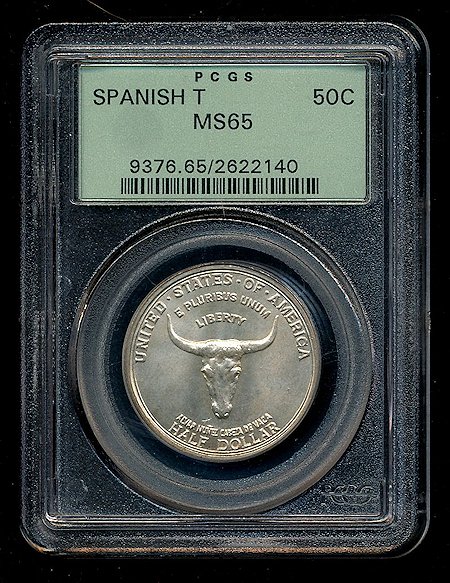
 1936 Cincinnati Music Center 50th Anniversary
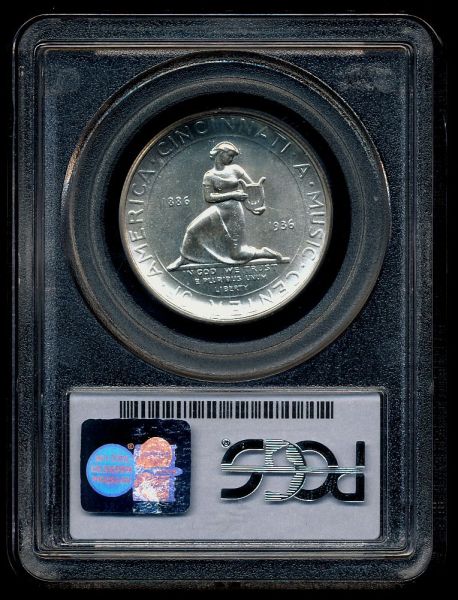
Next, is another controversial commemorative half dollar of the classic-era series - the 1936 Cincinnati Music Center 50th Anniversary Half Dollar. The coin was promoted by Thomas G. Melish.
Bills calling for the coin were introduced in the House of Representatives ("House") and Senate in January 1936. The House and Senate bills differed slightly in their intent, with the Senate bill creating the greater furor due to the language of its Title - it sought coins "in commemoration of the fiftieth anniversary of Cincinnati, Ohio, as a center of music, and its contribution to the art of music for the past fifty years." (The Senate bill went on to become law.)
Critics were quick to question the claim of Cincinnati being a center of music circa 1886. Also questioned was the use of a portrait of Stephen Foster on the coin's obverse - Foster had no significant musical link to Cincinnati.
For more on the coin's historical issues, and potential corrections, see:
-
1936 Cincinnati Music Center 50th AnniversaryAND
-
1936 Cincinnati Music Center 50th Anniversary - Controversy Avoided?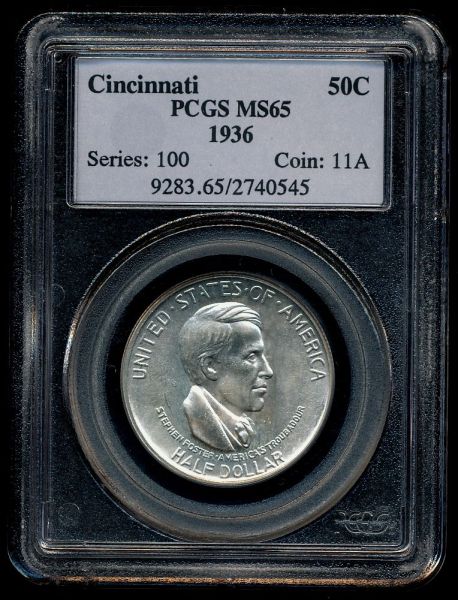
This pair is far from the only ones with attached controversy, but their blatant disregard for the facts make them "special."
For other of my posts about commemorative coins and medals, including other Quick Bits stories, see: [b]
Commems Collection






 Posted Today 1H 12M ago


