I've written before about the efforts in Congress to better regulate the approval of United States ("US") classic-era commemorative coins (see
Prohibiting Certain US Commemorative Coins.
On July 12, 1937, John Joseph Cochran (D-MO) introduced a bill in the House of Representatives ("House") that was designed to prohibit/stop the issuing of US commemorative coins approved prior to January 1, 1937. It allowed for such coins to be struck through July 12, 1937 but none after. The bill was simple, all-encompassing and did not exempt any coin program.
The Texas Centennial half dollar was approved on June 15, 1933. The authorizing legislation allowed for 1.5 million coins to be struck, but did not specify an end date for production.
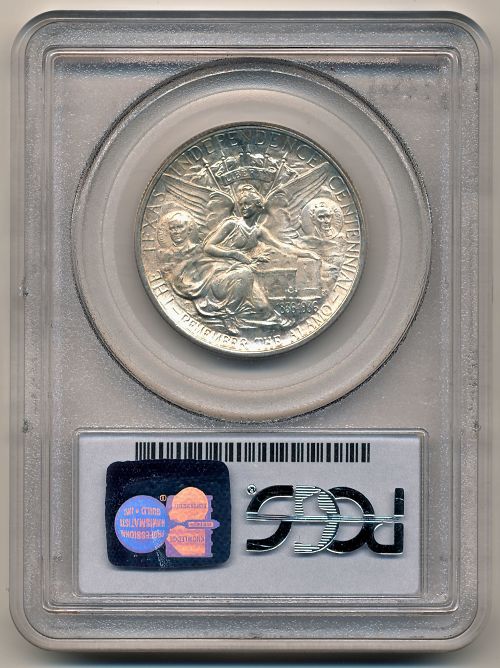
1934 Texas Independence Centennial Half Dollar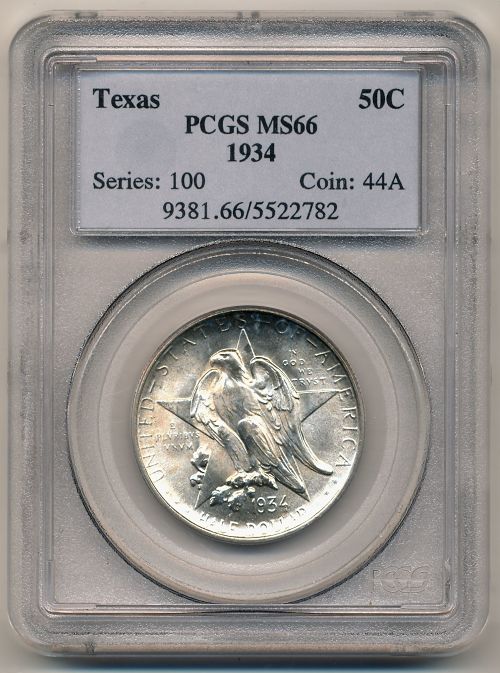
Combine the approval date for the ongoing Texas Centennial program with the provisions of Cochran's bill, and a potential problem immediately surfaced for the Texas Independence Centennial coin program. But Texas' representatives in Washington jumped into action and proactively sought to circumvent the measure's restrictions.
On July 16, 1937, a delegation of Texas Congressmen met with the US Teasury officials and told them that discontinuing the Texas Centennial coin program prematurely would negatively impact the efforts of the American Legion to construct a Memorial Museum Building on the campus of the University of Texas. The Texas delegation included Representatives Charles Lacy South (D-TX), Fritz Garland Lanham (D-TX) and Luther Alexander Johnson (D-TX) plus (future US President) Senator Lyndon Baines Johnson (D-TX).
The Treasury was sympathetic to Texas' situation, but did not ptomise to stop Congress' moves toward stopping the proliferation of US commemorative coins. The Treasury was, after all, vocal in its opposition to the continued approval/issue of US commemorative coins. It did, however, request that it be provided with an estimate as to the amount of funds needed to complete the project, along with an estimated completion date.
Though I haven't yet uncovered a direct link between the Treasury and Cochran regarding changes to his coin bill, on July 27, 1937, about 10 days after the Texas Delegation-Treasury meeting, Cochran introduced new legislation that listed the 1936 Norfolk, VA Bicentennial/Tricentennial, 1937 Battle of Antietam 75th Anniversary and Texas Independence Centennial coins as specific exemptions to the bill's date restrictions.
Note: Even though dated "1936", the Norfolk half dollar had not yet been struck; it would be struck in September 1937. Neither 1937 Cochran bill was passed by Congress - though a revised version would be approved in 1939 - but the Texas Independence Centennial coin program ended on its own in 1938. Ultimately, the coin program could have continued (at least for one more year), but it was brought to a close with the P/D/S issues struck in January 1938.
For other of my posts about commemorative coins and medals, including other Texas half dollar stories, see:
Commems Collection




 Replies: 0 / Views: 18


 Posted Today 53M ago


