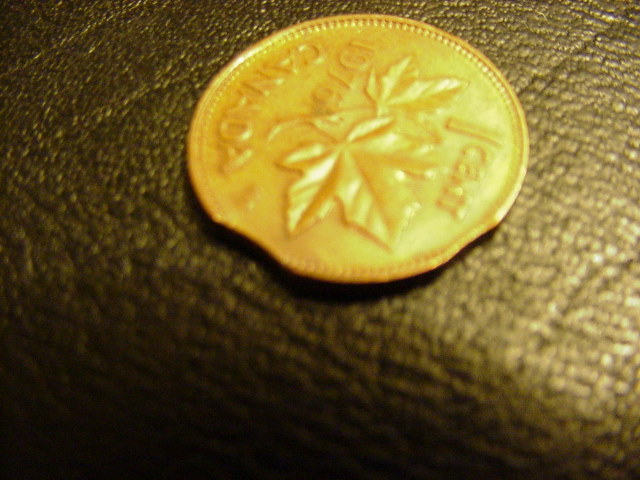
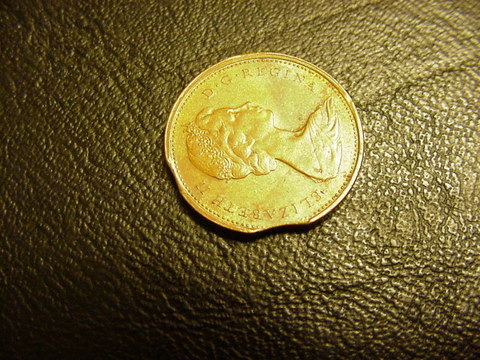
When a clip is not quite completely through a blank and the entire blank is rimmed and struck at which point the clip may or may not break off. There will be no weakness opposite the clip. On a small clip most of the weakness opposite shows from the rimming process. It was Bill English of Waterloo Ontario who first came up with the explanation, thus called the "English effect". I may be able to come up with photos of an example of both parts of a clipped coin.











 Posted 10/04/2009 12:27 pm


