| Author |
 Replies: 13 / Views: 19,530 Replies: 13 / Views: 19,530 |
|
|
Valued Member
United States
122 Posts |
I dug this dime out to ask the experts. The dime appears to have had a bubble in the planchet maybe after it was struck (?) or something. The obverse side is raised but the center of the "bubble" has collapsed. The reverse has a raised area opposite the bubble on the other side but is not as pronounced. I saw some of the "BB gun" shot coins in other threads but I can tell you for sure what ever this is.... is not the result of a BB gun shot. Has anyone ever seen this phenomenon? *** Moved by Staff to a more appropriate forum. ***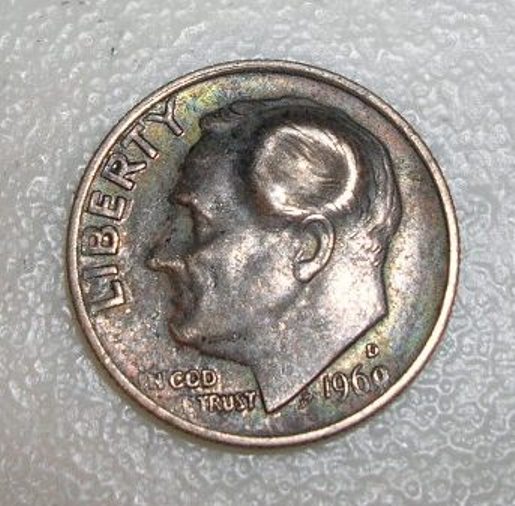 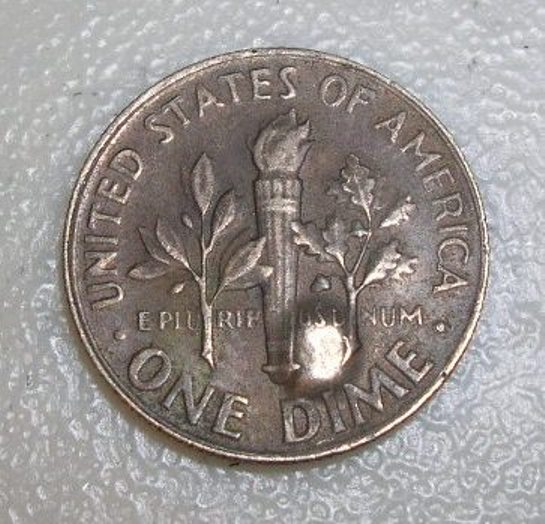 |
|
|
|
Pillar of the Community
United States
1418 Posts |
|
|
Moderator
 United States
16704 Posts |
Quote:
is not the result of a BB gun shot.
Sure looks like it. Does a BB fit in the recessed area? If so, most likely is. swcoin.ecrater.com
|
|
Bedrock of the Community
United States
14454 Posts |
it could be heat damage. I have seen heat cause bubbles like that also
|
|
Bedrock of the Community
United States
10045 Posts |
Quote:
The reverse has a raised area opposite the bubble on the other side but is not as pronounced. The bubble is raised on both sides? Perhaps it's due to intense heat?  There have been coins posted to the forums where the cladding has bubbled due to fire. I do see discoloration on your coin, which is common on heated coins. Just an idea. Bryan beat me to it.  Edited by DVCollector
09/29/2010 7:03 pm
|
|
Bedrock of the Community
United States
14454 Posts |
Quote:
Perhaps it's due to intense heat? There have been coins posted to the forums where the cladding has bubbled due to fire tap-tap-tap this thing on? Quote:
Just an idea. Bryan beat me to it Oh!  |
|
Pillar of the Community
3660 Posts |
Quote:
I can tell you for sure what ever this is.... is not the result of a BB gun shot.
Has anyone ever seen this phenomenon? I don't know what caused it, but it is definitely damage. The bulge on the reverse is caused by penetration from the obverse. The raised part on the obverse is not a collapsed bubble....it is a crater. The impact of the 'non BB' displaced the metal into a crater around ground zero. |
|
Bedrock of the Community
United States
17884 Posts |
It is a heat damaged coin. The coin was heated and had a bubble form on both sides. the obverse side was starting to balloon pretty well when the heat was taken away the gas bubble shrank and the metal collapsed before it solidified again.
|
|
Valued Member
 United States
122 Posts |
Quote:
It is a heat damaged coin. The coin was heated and had a bubble form on both sides. the obverse side was starting to balloon pretty well when the heat was taken away the gas bubble shrank and the metal collapsed before it solidified again.
This seems to be the best explanation. The bubble on the obverse IS raised but has collapsed at the center. Thanks to everyone for the comments. |
|
Pillar of the Community
3660 Posts |
Yes, I was obviously wrong as I see detail where there should have been none. The rupture of a malignant gas bubble......I have never seen such a thing of this magnitude. How would this have been done.....in an oven? Fire, (I might think) would have a dissimilar effect.
|
|
Valued Member
United States
122 Posts |
Quote:
How would this have been done.....in an oven? What I am wondering here is what was between the layers of metal that would make the bubble expand. People play funny games with coins sometimes. |
|
New Member
United States
1 Posts |
When the die comes down on the Platte gas and air gets trapped in between and can bubble up it's not from Heat from the sudden strike of the die that makes the gas bubble. Google acid bubble US coins |
|
Pillar of the Community
United States
1677 Posts |
Nope, this was called correctly 10 years ago. The bubble was caused by heat.
|
|
Bedrock of the Community
United States
17884 Posts |
Quote:
When the die comes down on the Platte gas and air gets trapped in between and can bubble up it's not from Heat from the sudden strike of the die that makes the gas bubble. Nope. Temperature of the coin would have to exceed at least 1,500 degrees F before the metal would become plastic enough for an internal gas bubble to expand and create a bubble in the metal. About the highest temperature the coin might reach from striking might be 200 degrees and probably not even that. |
| |
Replies: 13 / Views: 19,530 |
|




 Posted 09/29/2010 6:57 pm





