| Author |
 Replies: 45 / Views: 9,381 Replies: 45 / Views: 9,381 |
|
New Member
United States
25 Posts |
I am a new member to Coincommunity.com and am interested in corresponding with other members that collect early date Facing Eagle 8 Reales of Mexico. Mike
|
|
|
|
Pillar of the Community
United States
1801 Posts |
Are you referring to "Hook-Neck" 8 reales minted from 1823-1824 or all the 8 reales minted with the eagle design (1824-1897 with a few exceptions) that are known as resplandores? I collect both types as do several others on this site.
|
|
Pillar of the Community
United States
5362 Posts |
Macro122 hello and welcome.
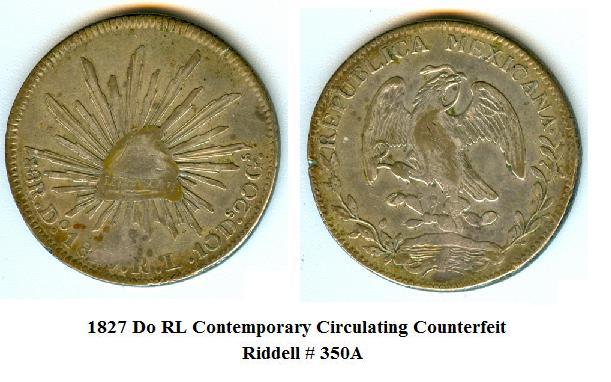
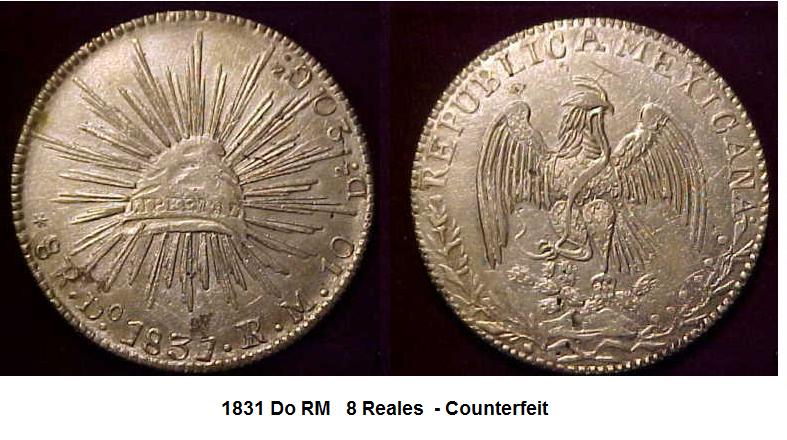
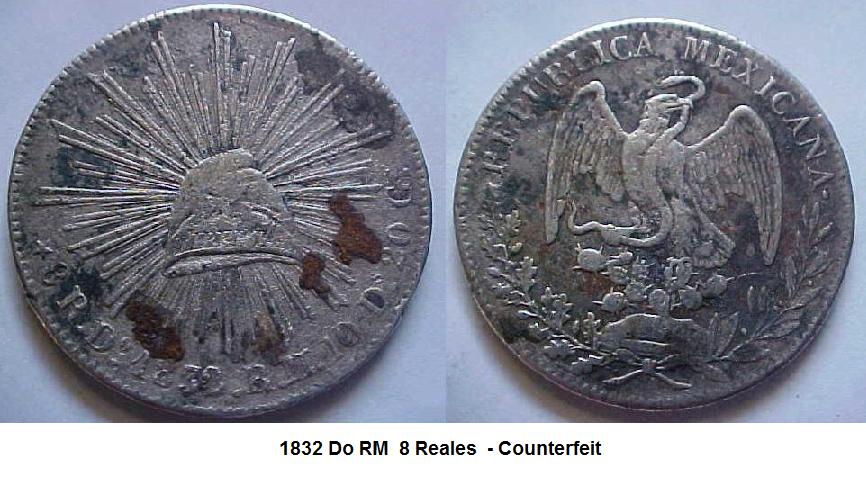
I am also a collector of Republican 8Rs - primarily the counterfeit varieties.
|
|
Valued Member
United States
426 Posts |
 Macro122! I also collect 8R cap & rays "Resplandores" but I haven't acquired a hookneck yet or a Iturbide 8R which are on my "want" list. |
|
New Member
 United States
25 Posts |
I collect Resplandores, especially the earlier dates (most interested in the pre-hubbed die varieties) or generally the Mexican dies. My main focus is on the Durango mint 1825-1832 and also 1832 to about 1850 or so in the hubbed die era. I am attempting to research and identify as many die types and marriages as possible. I also have several early date Resplandores from other mints as well. Mike
|
|
Pillar of the Community
United States
5362 Posts |
Macro122 Hello again - interesting project. I recall another collector with the same objective. Your name isn't Roberto is it?
I also recall discussing this precise project with Dave O'Harrow who felt it was essentially impossible to complete a complete die listing after 1825. He felt there were too many dies for each year and that examples from all of the dies may no longer even exist.
How many die marriages do you have? Any counterfeits?
|
|
New Member
United States
25 Posts |
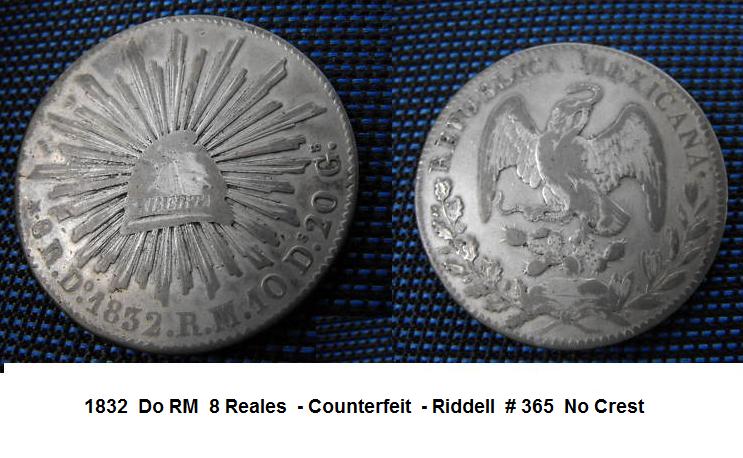
No, I am not Roberto. My name is Mike Crowder and I have been collecting for about 5 years. It is indeed a large undertaking to try and identify the large number of die marriages that were produced in those early years. That is a large reason why I chose to focus on only one mint primarily (Durango). I collected US Capped Bust half dollars for several years by die marriage, so this project fits right in line with that and there are a lot of similarities between the two. For example, there were 50 Capped Bust die marriages in 1827. A rather large number, but not impossible to identify. It obviously requires more than one set of eyes looking though. As far as counterfeits, I may have an odd one? I questioned a couple and showed them to Mike Dunigan and he said those were real. I was intrigued by a picture that you posted of the Eagle die of an 1832 Durango. In another place you mentioned possible counterfeits of the hubbed die style of that era without feathers at the eagle's crest. I will have to check for that. I think I may have seen them in the 1832-34 range. I have about 175 Durango die marriages between 1825 and 1850. So far I have identified 9 die marriages for 1825 and 11 for 1826 and so on with 1834 seeming to be the most prolific. I'm sure there are many more to discover. Mike |
|
Pillar of the Community
United States
651 Posts |
Welcome and Bienvenidos to CCF.
|
|
Pillar of the Community
United States
1801 Posts |
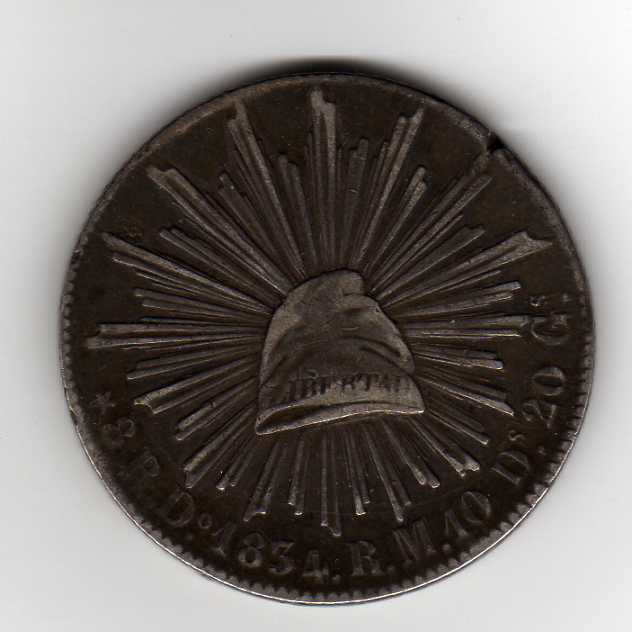
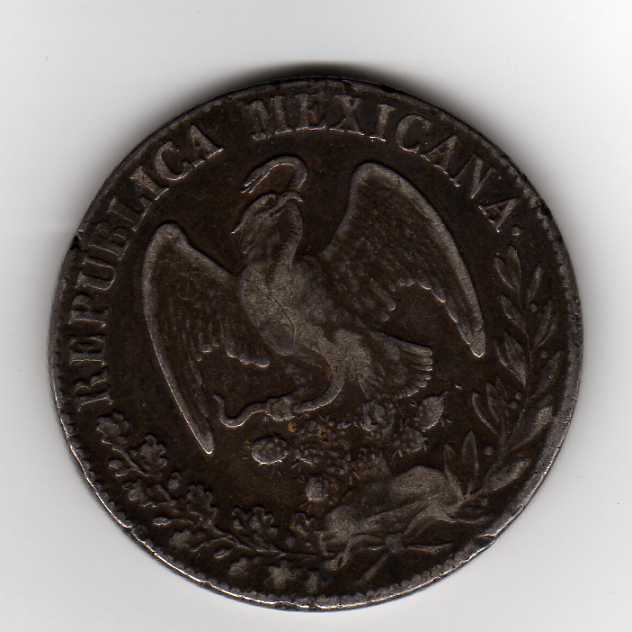
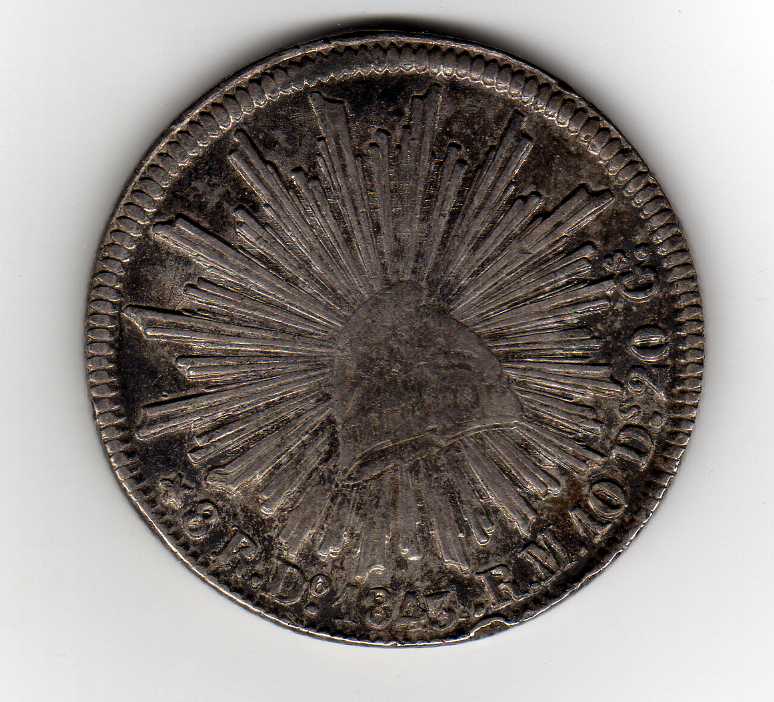
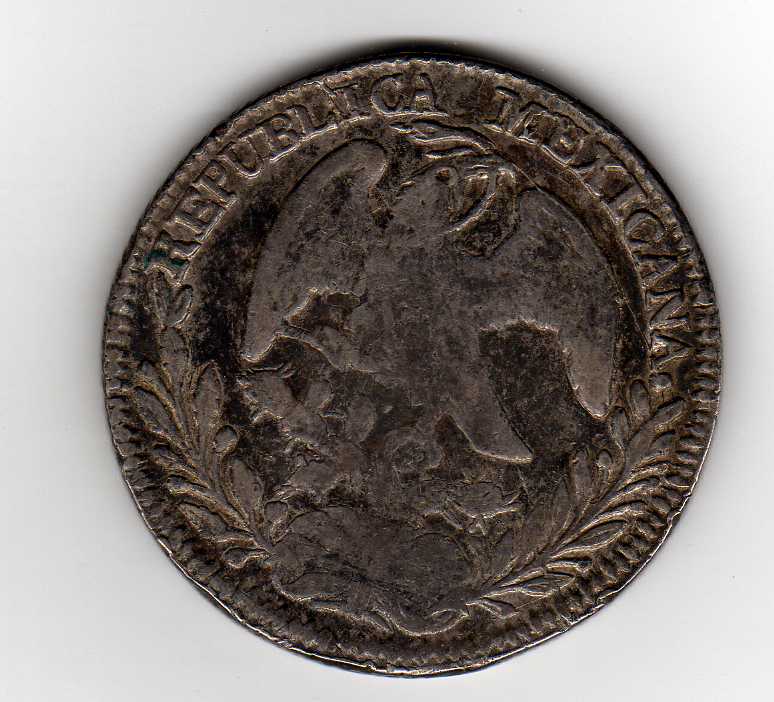
I have scans of a 34 and a 43 Do if you are interested in seeing them.
|
|
Pillar of the Community
United States
5362 Posts |
Hi Mike - I saw the name but still wondered if it was a pseudonym because Roberto has been focused on the same project for at least 10 years.
When I originally asked Dave O'Harrow about doing a die by die book like Hooknecks for Durango in the 1825 - 1826 range he indicated I could be hunting for in excess of 100 die pairs per year and that the number would rapidly increase to closer to 1000 pairs in 1832. He felt the task was too daunting for any one collector for an entire life's work. It was enough to derail me. But he did suggest going after the various punch combinations as a more reasonable target. How many different punches can be identified for the Durango eagles? The wings, body and head seem to be distinct punches in some cases so the question becomes were the various parts ever muled into different combinations? I know that the Internet and places like the forum are natural outlets for just this kind of interaction.
Remember when you think about the Bust half output of the US mint even in 1827 you are dealing with a very small production when compared to Mexican coins. Mexican mints produced MILLIONS of coins per year and these were later melted wholesale to retrieve gold from the alloy. So survival rates from the early years are often low - which is why they are not still dirt cheap. It is also why identifying more than a few dozen different dies may be difficult.
Perhaps you can be the catalyst necessary to locate in many different collections all of the known varieties. I have a few originals and would be happy to share what I do have with you.
But my real focus is on the counterfeit issues. There are dozens of Durango forgeries dated between 1825 and 1834. In fact the 1832 and 1834 Riddell dies # 365 and 371 (and their mules 365/371 and 371/365) are arguably the most common contemporary counterfeits in existence. The 365 eagle die totally lacks the crest on the eagle's head. This die was used with three cap dies dated 1832, 1834 and 1836. Many of these dies are very well made and it has been suspected that they were produced in France by the same people who supplied the real hubs. This suspicion was first published about 1840 so there may be some credence in the suspicion.
I will be happy to help in any way - perhaps we can involve Roberto as well.
|
|
New Member
United States
25 Posts |
To jfransch: I would certainly be interested in seeing the scans you have of the 1834 and 1843 Durangos! I'm not sure if you want to post them here or email them?
To: swamperbob: I am quite possibly underestimating the number of coins and thus the marriages that were produced. I have been somewhat encouraged by the number of duplicate dies and marriages that I have run across. It could turn out that they are just that much more common?
There are some oddities with the Eagle dies from Durango for sure. Various placements of the leg holding the snake, die dots that appear purposely placed on the lower eagle as well as within the usually oval or crescent shaped depression on the snake's body on the hubbed dies. Also a myriad of cactus spine configurations.
I have not studied the combination of eagle punch parts as yet. It did appear to me to be of similar nature to those identified in Hubbard/O'Harrow.
Indeed the survival rates for the early dates seems surprisingly low. That thought might also be falsely luring me in my thinking that this will be a manageable project. It doesn't help that nearly everyone I encounter is shipping these coins to China.
I would love to have others involved in this work! I have asked several people if they knew of anyone else as anal as I was, and had any interest or was working on anything of this nature. I came up dry. Even Mike Dunigan couldn't think of anyone, at least currently. I purchased several coins from the Mike McCormick collection and his flips indicated he had quite an interest in the die variations.
So, I would welcome involvement from those that share this interest (passion). The internet and digital photography are definitely a big advantage over the past for undertakings such as this.
|
|
Pillar of the Community
United States
1801 Posts |
|
|
New Member
United States
25 Posts |
Thanks for posting the scans of the 1834 and 1843 Durangos. There is an interesting anomaly (to me) that involves the 1834's. Your scan shows what is the normal Eagle die hub used from 1832 on through the end of the 1830's. All of the dies from these years appear to be from the same hub or hubs that are only minutely different. There is only one Eagle die (that I have seen) from this period that is significantly different and it occurs in 1834.
Ironically, the 1834 Eagle die pictured in Dunigan/Parker Resplandores is this odd Eagle die. Compare the placement of the tip of snake's head with the letters of the legend on your coin and that of the Dunigan plate coin. Yours has the tip of snake's head (not tongue) below the lower right serif of the right foot of the A in REPUBLICA and the snake's head is relatively close to the eagle when compared to the A.
The plate coin however has the tip of the snake's head (not tongue) below the center of the left foot of the A and much closer to the A.
Obviously a different hub was used for this die and so far I have found only this single occurrence and it appears in 1834.
I am finding small differences in these hubbed dies that are intriguing to me. On your 1843, the upper right serif of the L in REPUBLICA appears to be cleanly cut off in the die. I have (4) 1843's and all have full serifs.
|
|
Pillar of the Community
Czech Republic
803 Posts |
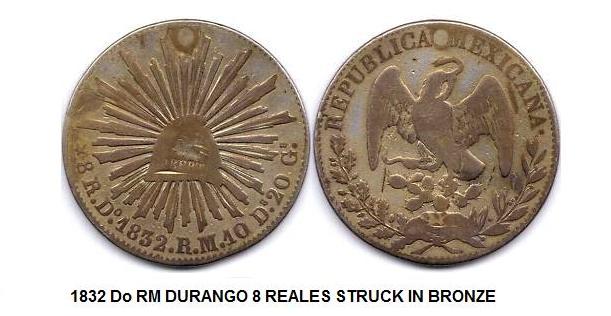
Hi Mike, Welcome to the forums. I'm also a fellow collector of 8 Reales, however my focus is a little earlier (War of Independence). Still, I do enjoy nice pre-standardized die Resplandores. Here's an early Durango I have for your viewing pleasures and for my own education:   |
|
Pillar of the Community
Czech Republic
803 Posts |
And here's a neat transfer die copy for Swamperbob: 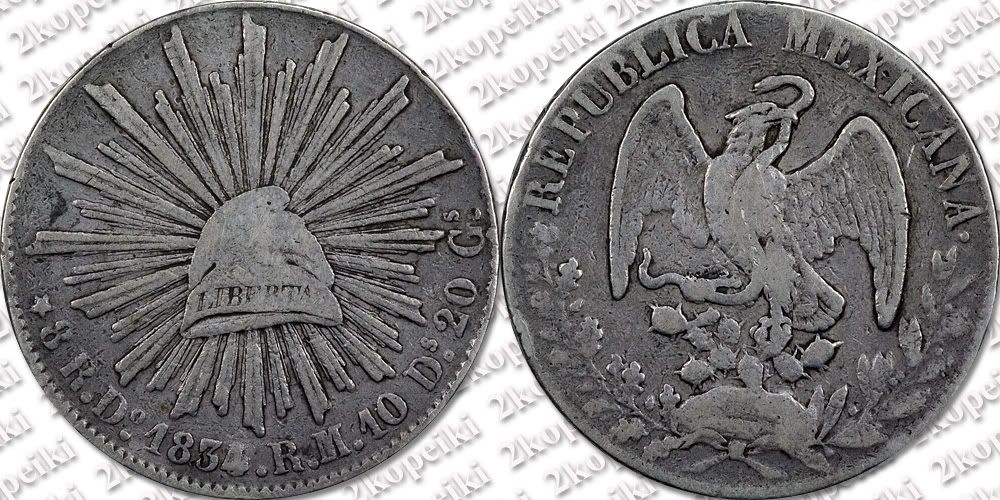 |
|
Pillar of the Community
United States
5362 Posts |
|
| |
Replies: 45 / Views: 9,381 |







 Posted 02/04/2011 11:52 pm