Quote:
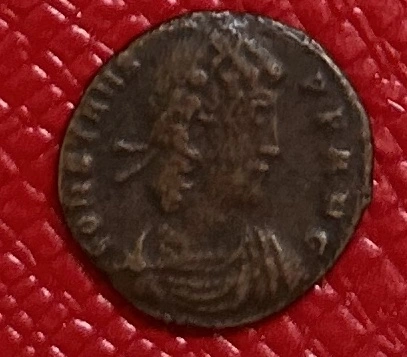
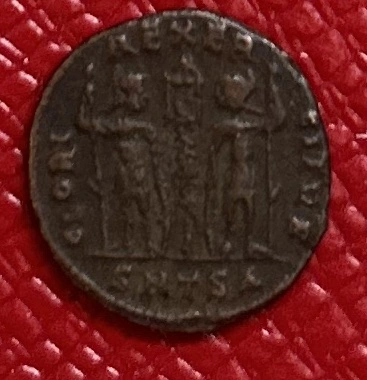
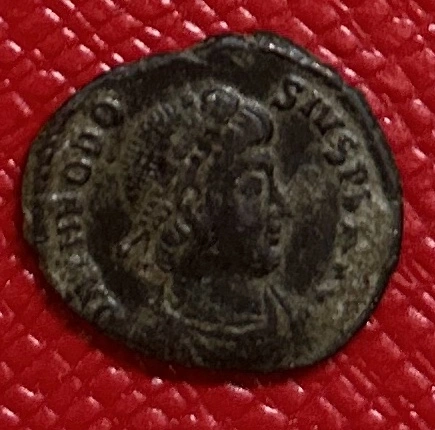
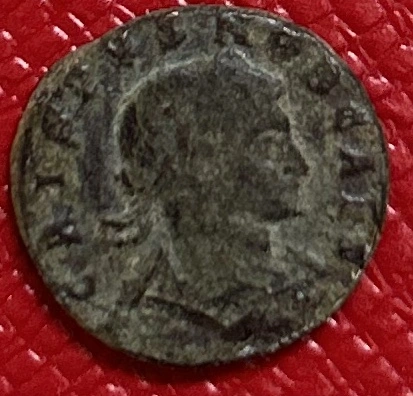
#2 The bust on this coin has long hair. Could this be a woman?
While the portrait does indeed, to us, look like a woman with long straight hair, nobody in ancient Rome would have thought that. Wearing long straight hair simply wasn't a fashion for them. Women - especially upper-class women out in public or in a formal setting (like a coinage portrait) would have their hair all done up fancy, and the fancier, the better. A wealthy woman flaunted her wealth by having a hairstyle so elaborate and ornate that only a whole team of slaves/servants and hours of spare time could make it look that way.
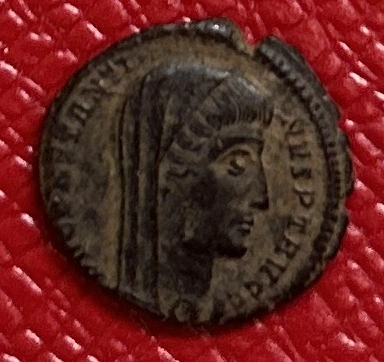
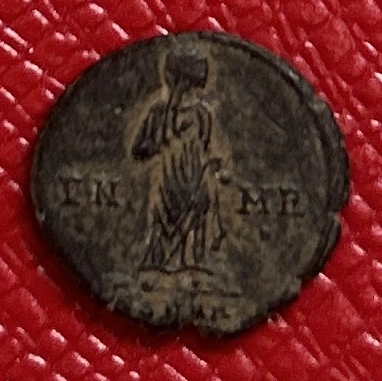
In the Roman state religion, the (male) priests wore veils like this. Wearing the veil signified a link to the divine. Roman emperors were also the High Priest (pontifex maximus) of the state religion, and the emperor would have donned a veil like this for the traditional rituals performed by the high priest, though a living emperor was almost never shown on the coins this way. Posthumous portraits, on the other hand, signified the divine destiny of the deceased - especially for emperors that were deified (declared to be gods). Constantine, despite being a confessing Christian and having been baptised just before his death, was deified by the Roman Senate in AD 337. Constantius II was the last Roman emperor to be deified, in AD 361. Emperor Gratian resigned from the high priesthood in AD 382 and the Roman priesthood itself was formally abolished by Theodosius I after he formally converted the Empire to Christianity. Much later, during the Renaissance, the Popes of Rome took the title of "pontifex maximus" for themselves.
Don't say "infinitely" when you mean "very"; otherwise, you'll have no word left when you want to talk about something really infinite. - C. S. Lewis






 Posted 05/06/2026 5:04 pm





