| Author |
 Replies: 1,299 / Views: 152,233 Replies: 1,299 / Views: 152,233 |
|
|
|
Pillar of the Community
United States
840 Posts |
According to Dr. Courteau, the BH 6 has a rarity factor of 9.
colonialtokens
|
|
New Member
United Kingdom
13 Posts |
I would like to share my small collection of Canadian tokens for your amusement: Montreal bank halfpenny: 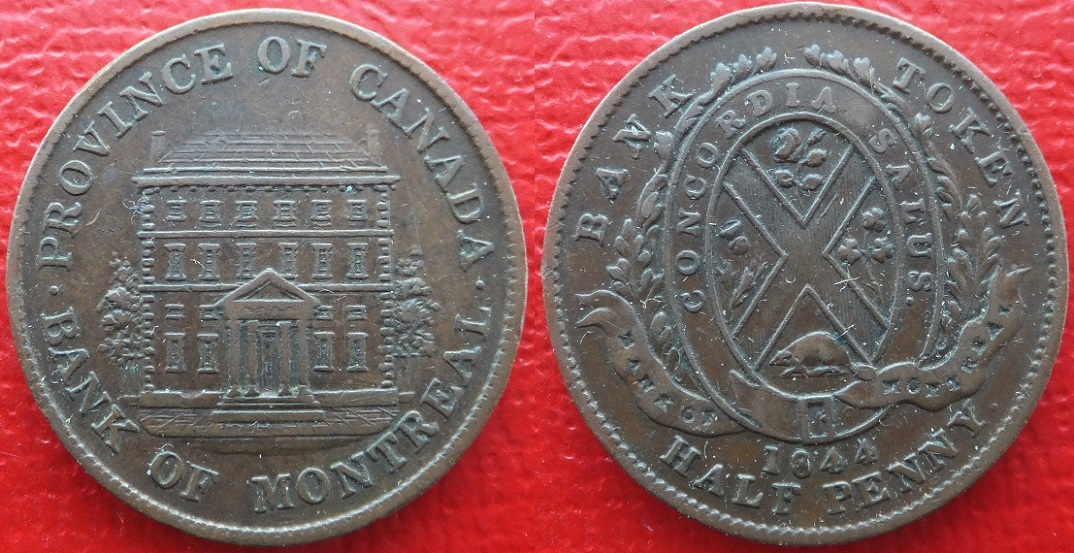 Lower Canada Richard Hurd halfpenny: 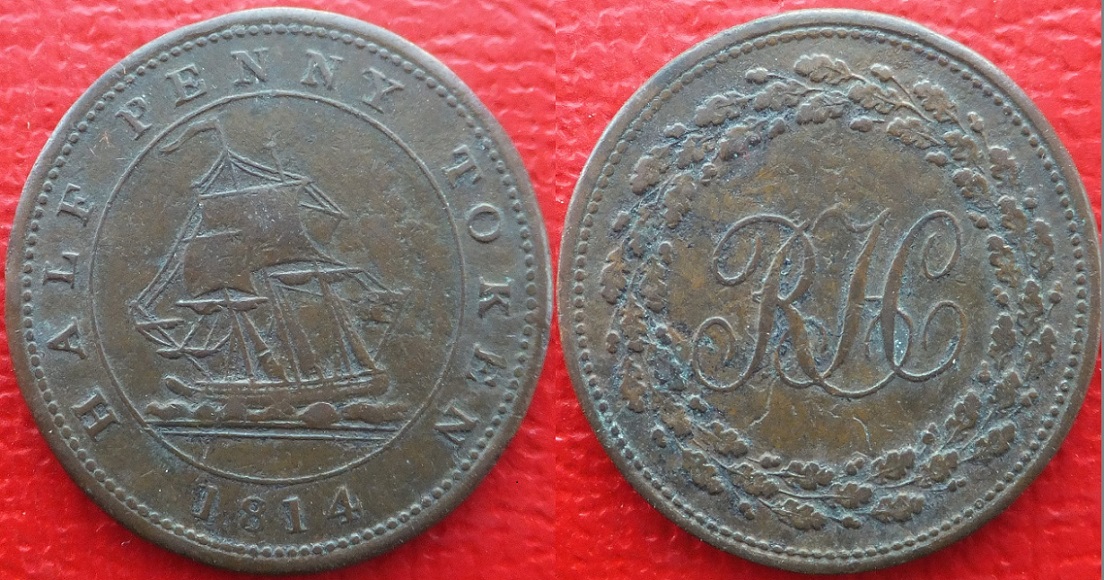 Magdalen Island penny: 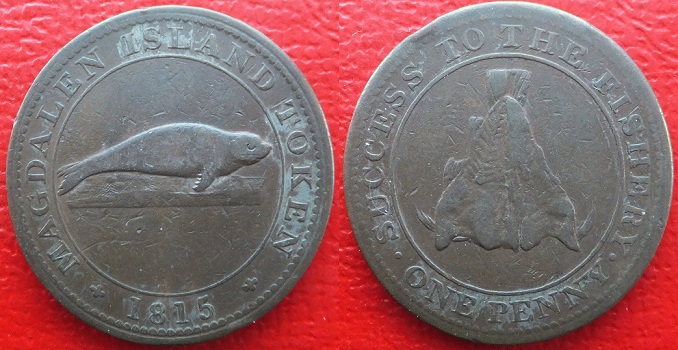 Prince Edward Island cent: 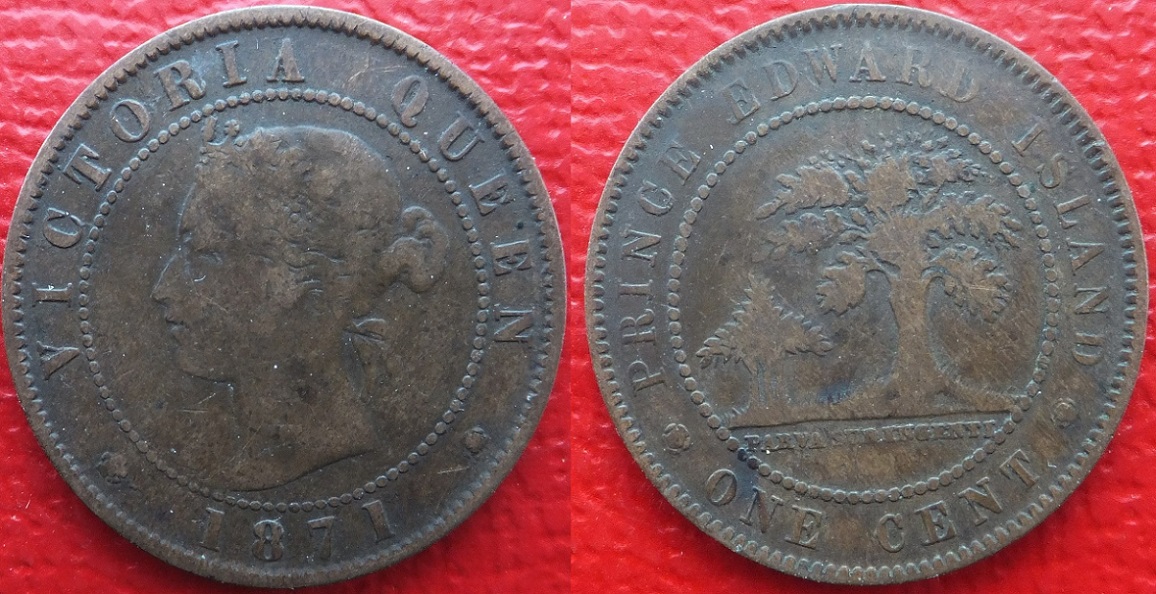 Finally, because I'm not ashamed, an Upper Canada Isaac Brock halfpenny that has err...seen better days: 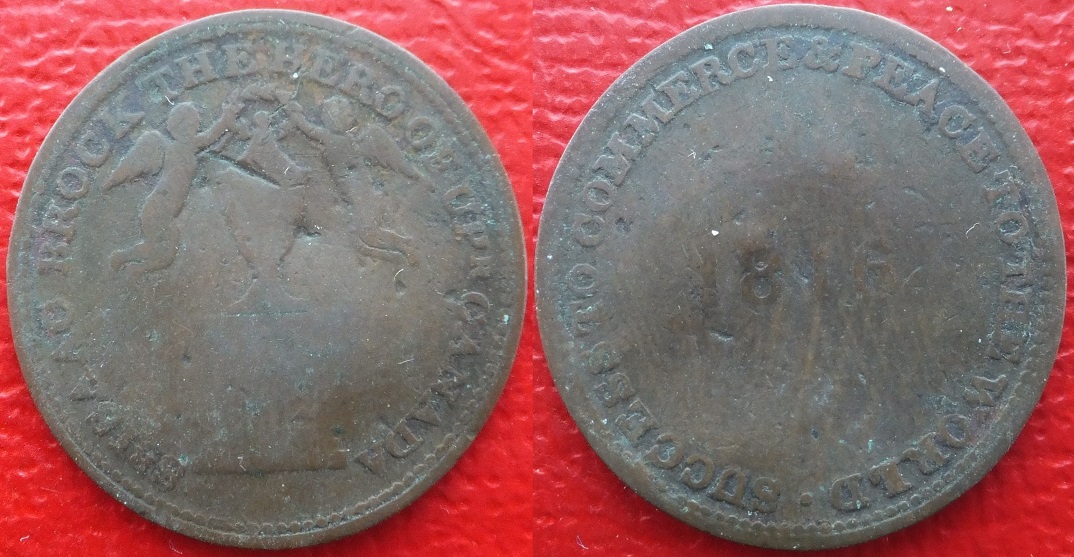 I don't have any references for these so if anyone fancies pinning any of these to a specific variety (assuming there are differences) then I'd appreciate the information.  Seasons greetings, MBE Edited by mrbadexample
12/22/2020 1:39 pm
|
|
Valued Member
United States
179 Posts |
Quote:
I don't have any references for these so if anyone fancies pinning any of these to a specific variety (assuming there are differences) then I'd appreciate the information. Here is some variety information taken from Charlton. Your Bank of Montreal halfpenny is listed as PC-1B6, which is the variety with the "long" beaver nose and "short" trees. The Richard Hurd halfpenny is listed as LC-51A1, A2, or A3 depending on whether it has an engrailed edge w/ coinage axis, plain edge w/ coinage axis, and plain edge w/ medal axis respectively. Funnily enough, your Brock token seems to be the same variety as this one that I picked up recently. Listed as UC-6A5. 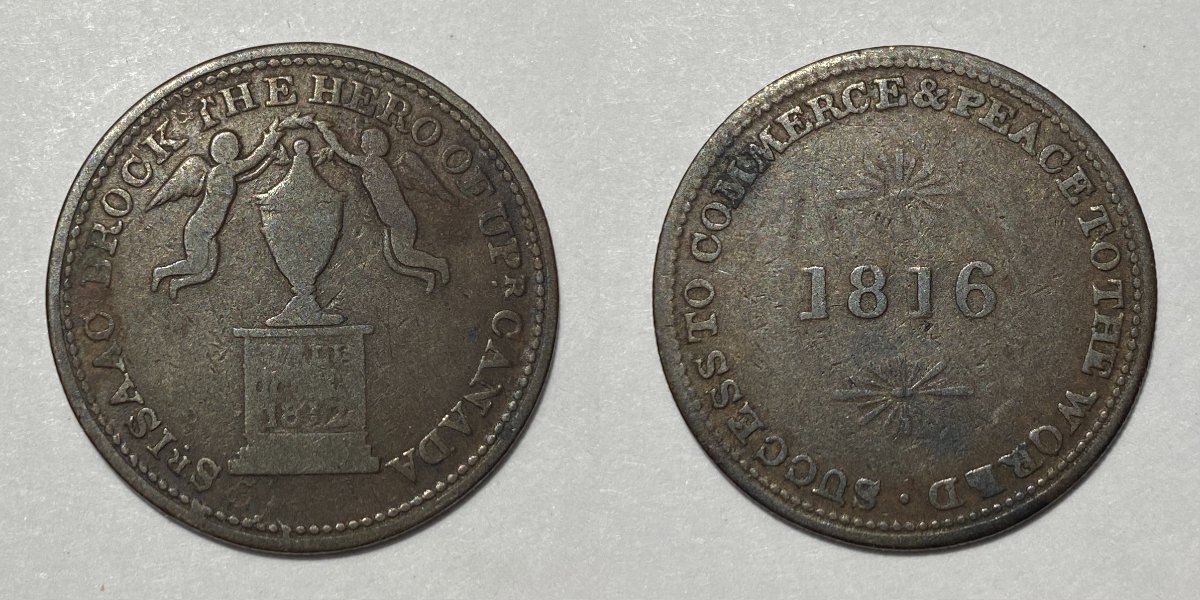 Cheers, and happy holidays! |
|
Pillar of the Community
United States
1077 Posts |
If your Hurd piece weighs about 8g, mrbadexample, it belongs on the British side of your collection.
The thick- and thin-flan varieties are accounted for by Charlton as follows: "Thomas Halliday designed this series of tokens for use in England. The farthing and penny did not circulate in Canada but were imported by collectors after 1870. Of the halfpenny denomination only the plain edge, light weight specimens were imported by Richard Hurd, a Montreal merchant, for use in Canada."
It appeared in Davis as Not Local 104, and now lists as Withers 1686, plus the varieties noted by blargish.
I've got all three denominations in my collection, all at or about VF. I haven't really tracked this, but my casual observation is that these days they quickly get pretty spendy as you approach EF.
Best to all for the holidays!
Tom
"If everything seems to be under control, you're just not going fast enough."
--- Mario Andretti
|
|
New Member
United Kingdom
13 Posts |
Thank you both, appreciate the education. The Richard Hurd halfpenny is indeed thick flan (8.1g), en-coin, engrailed edge. I didn't realise it was in Withers so that's now correctly assigned. Mine looks like it might be overstruck on something. Is this a possibility? Sorry about slipping the PEI cent onto a tokens thread.  |
|
New Member
United Kingdom
13 Posts |
Quote:
Funnily enough, your Brock token seems to be the same variety as this one that I picked up recently. Listed as UC-6A5. Not UC-6A3, with heads under T and ER?  |
|
Pillar of the Community
United States
840 Posts |
An ensample of the 'hammer head' in mention is on the cover of the New Charltons 10 edition. I sold a later die state in the recent Premeir auction.
doug
|
|
Pillar of the Community
United States
1077 Posts |
As for overstrikes, mrbadexample, I wouldn't put that possibility past ANY 1811-1820 token, Canadian or British. It was all basically emergency coinage, right? And so much of it was improvisational, it seems...die pairings from outer space, etc.! In the Davis/Withers series one can even come across semi-official countermarks, like those of the workhouses, on overstruck tokens. And, picking up on colonialtokens's cue, since it's already in my CCF Uploaded Images, I might as well post the hammerhead here for all to see! 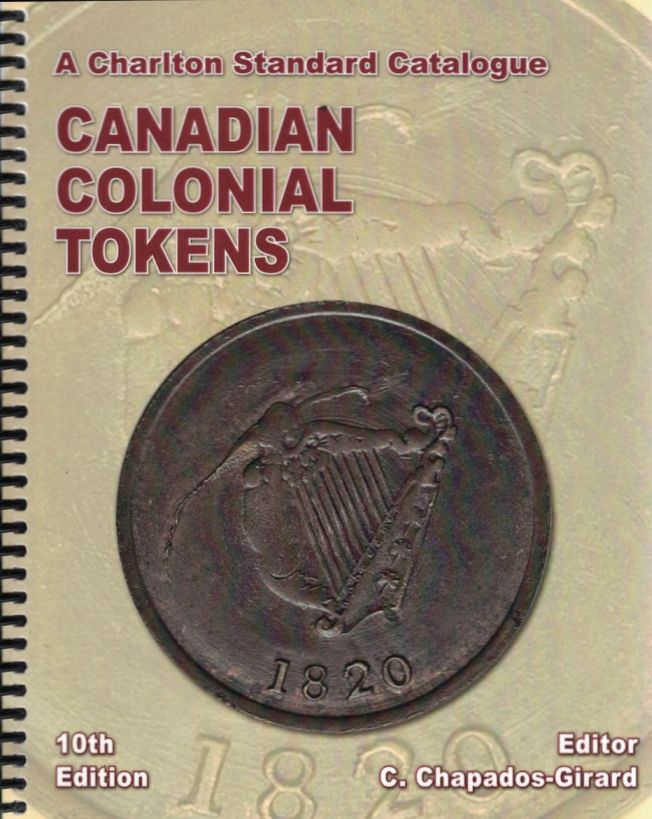 "If everything seems to be under control, you're just not going fast enough."
--- Mario Andretti
|
|
Pillar of the Community
United States
840 Posts |
Concerning the PC-1B:
Courteau identifies only three varieties having a long nose in the short tree grouping.
Yours appears to be Courteau variety 66:
66. Obv. Resembles No. 65, but lighter design, especially that of the trees; -- there is a moulding at the gable of the porch -- the only instance amongst the "Small trees." Open M in Montreal. This is always met with a perfect fence to the right.
Rev. The thistle sprig has a stem and both points of right ribbon show. 1844. R.3.
doug
|
|
Valued Member
United States
179 Posts |
Quote:Not UC-6A3, with heads under T and ER? mrbadexample, the key characteristic of UC-6A5 is the lack of a right serif on the 1's of 1816 on the reverse, as appears on your example (unless I'm mistaken.) Furthermore, the foot of the "A" of CANADA points below the bottom of the monument on UC-6A3, whereas it points to the middle of the monument on yours. |
|
Pillar of the Community
United States
683 Posts |
Here is my latest addition: NB-1B PCGS MS62BN, from the Temple collection, Courteau 34 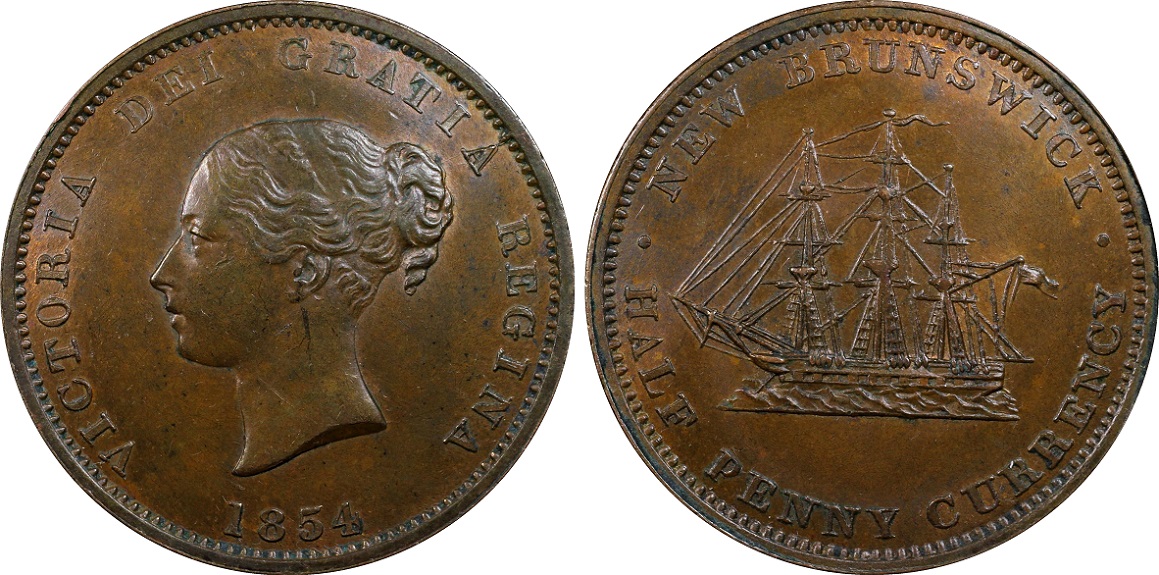 |
|
Pillar of the Community
United States
1077 Posts |
That's one gorgeous NB penny, Gene. That ship, and especially its complicated rigging, has always epitomized the diecutter's art for me.  Does anyone have more background on this NB ship? I've done some digging in the past but it seems to be an "ideal" (like the modern Bluenose, perhaps) representing in a generalized way the important New Brunswick shipbuilding industry of the era...haven't been able to learn whether this ship can itself be "attributed" beyond that. Happy New Year everybody...may 2021 be significantly less suboptimal for us all! Tom "If everything seems to be under control, you're just not going fast enough."
--- Mario Andretti
|
|
Pillar of the Community
United States
683 Posts |
Quote:
Does anyone have more background on this NB ship? I've done some digging in the past but it seems to be an "ideal" (like the modern Bluenose, perhaps) representing in a generalized way the important New Brunswick shipbuilding industry of the era...haven't been able to learn whether this ship can itself be "attributed" beyond that. Charlton names it "HMS New Brunswick". It may be the Albion launched in St. John, N.B. in 1834. There is no record of which ship was the model. Ref: Coins of New Brunswick by Richard W. Bird, 1993, pg 54. BTW, anyone collecting these should acquire a copy of this book. Bird does an excellent job of showing the Courteau varieties via line drawings. 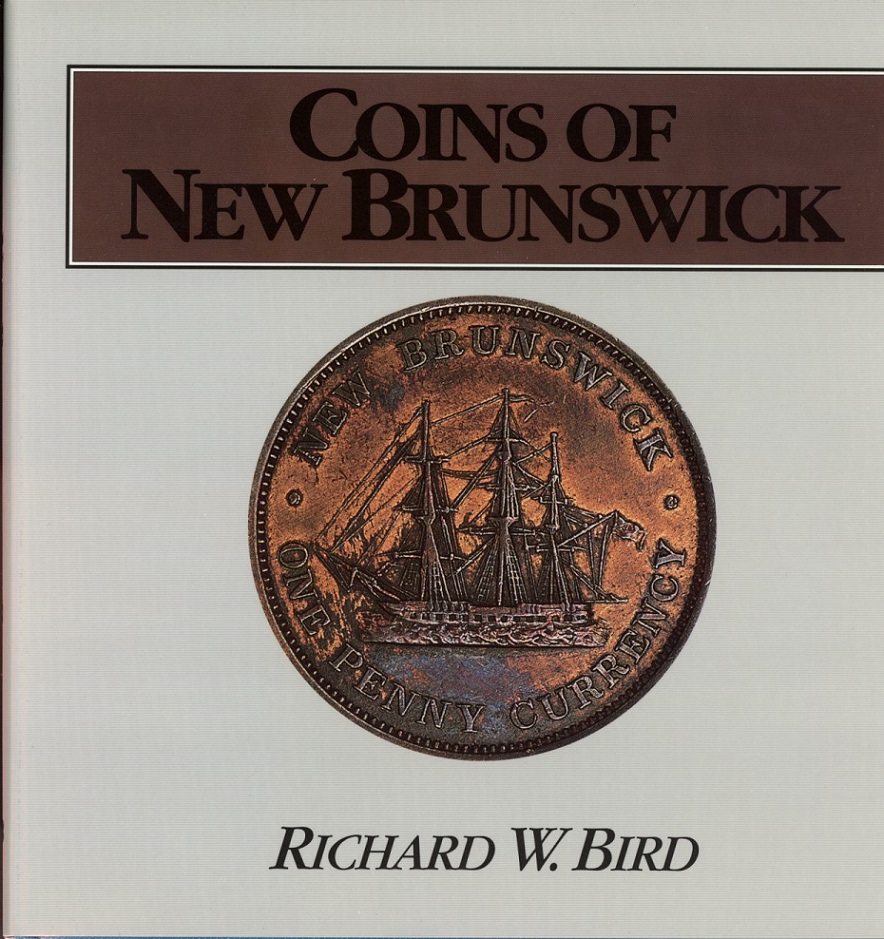 |
|
Pillar of the Community
 Canada
5644 Posts |
You never fail to amaze me, Gene, with your coins/tokens and references. Very nice!
|
|
Pillar of the Community
United States
1077 Posts |
My apologies, Gene...just noticed yours is a halfpenny, and I called it a penny. Meanwhile, it looks like the folks at the RCM have voted in favor of the HMS New Brunswick, presumably (one would hope) on the basis of some sort of ironclad historical evidence. 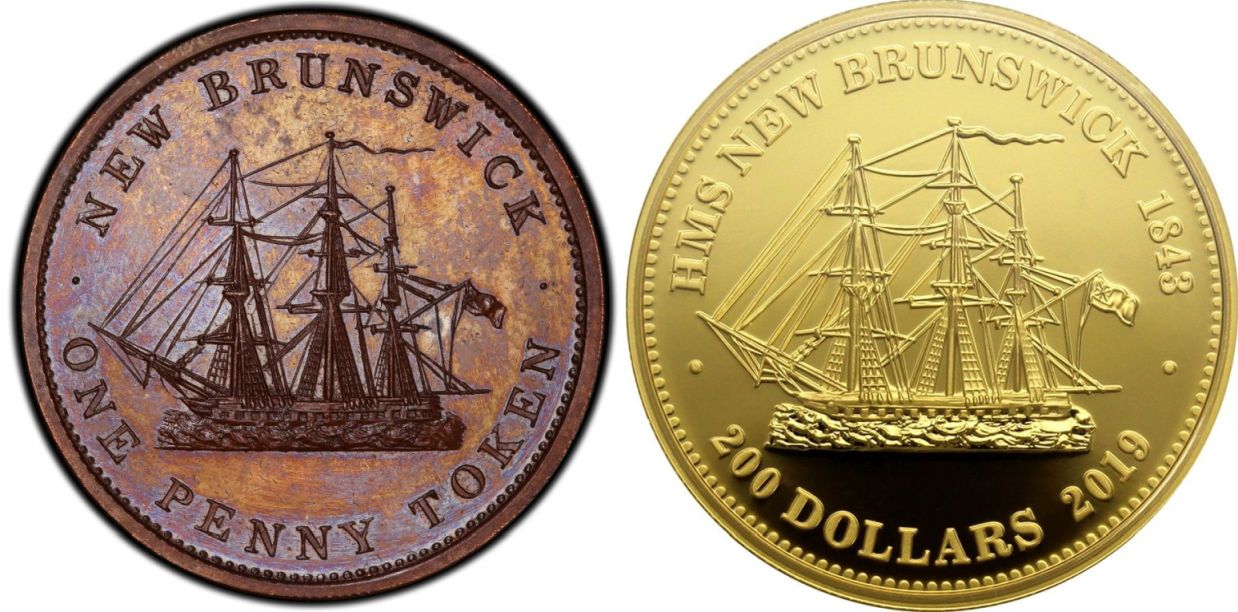 "If everything seems to be under control, you're just not going fast enough."
--- Mario Andretti
|
| |
Replies: 1,299 / Views: 152,233 |








 First Page
 Previous Page


 Posted 12/22/2020 1:33 pm


