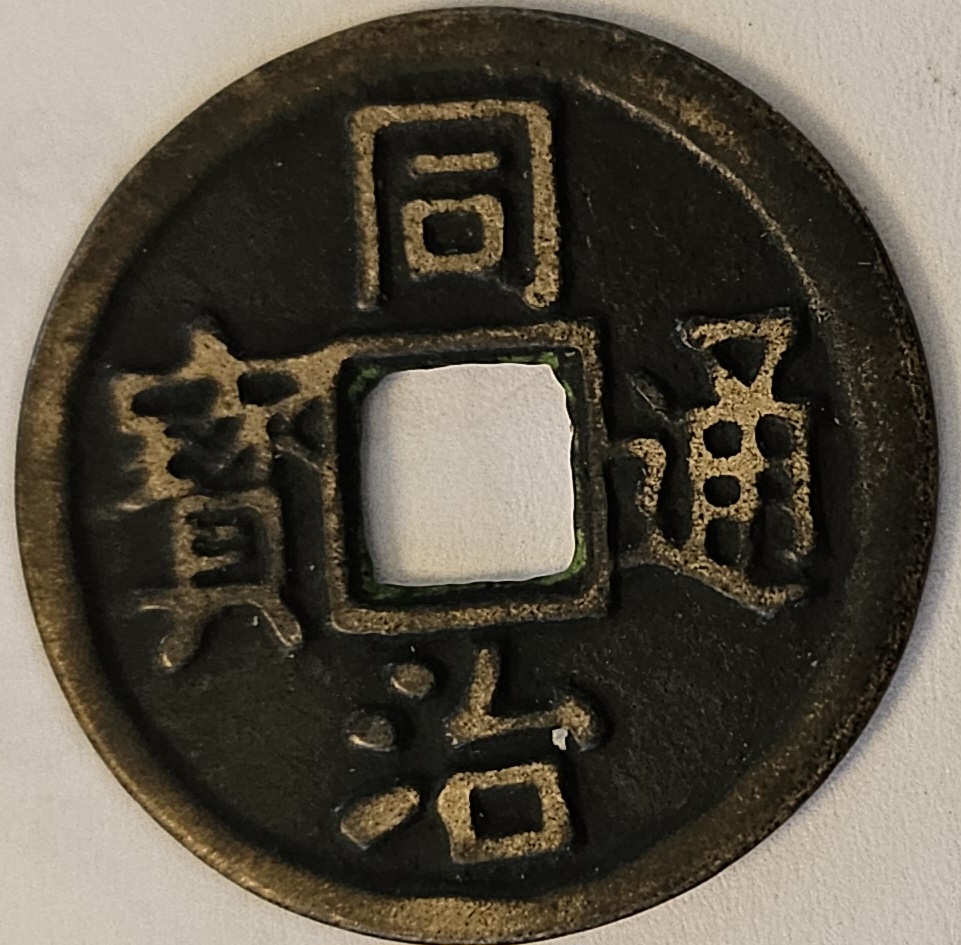
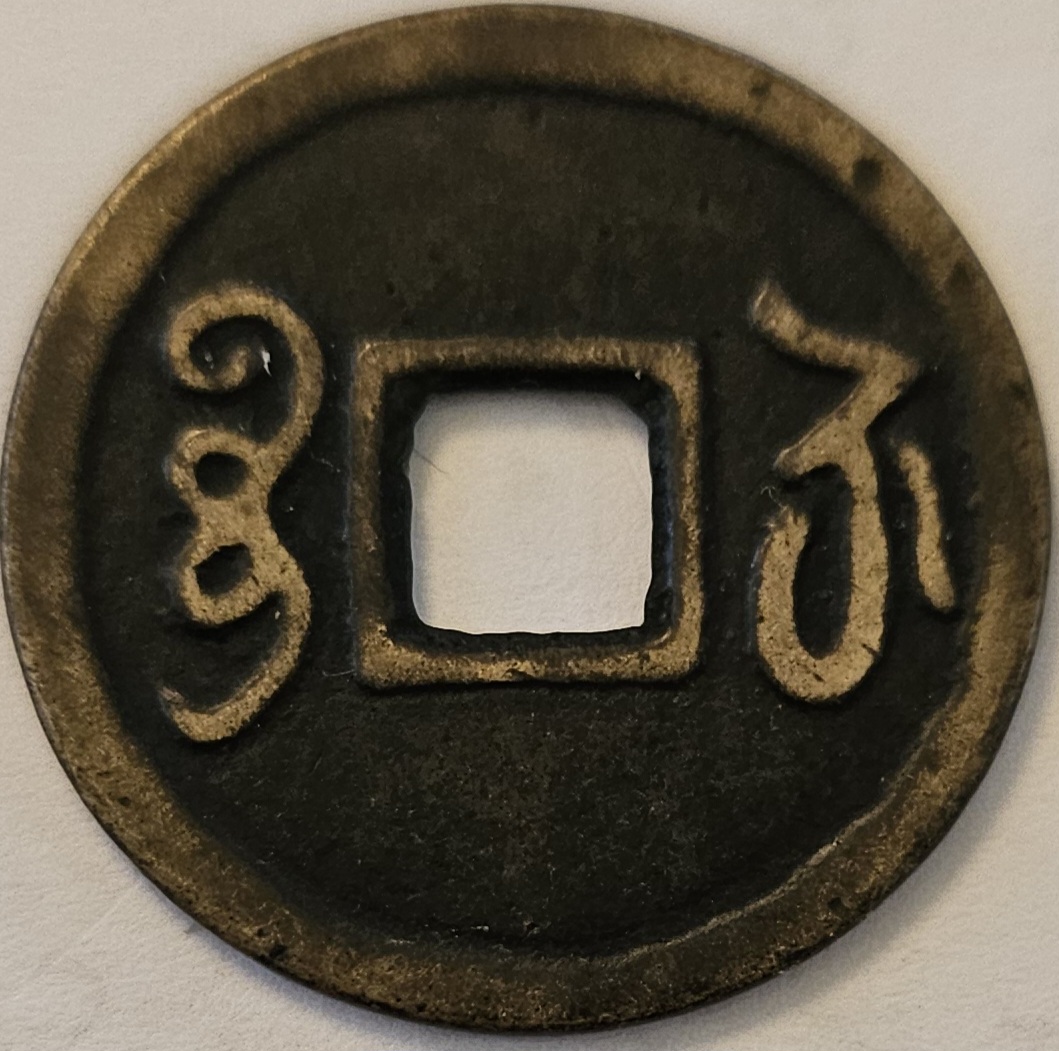
It is based on the coinage of the Tongzhi emperor (1856-1875) and the mintmark appears to be Wuchang, Hupeh province (now part of Wuhan, Hubei). However, while the Chinese script is quite accurately rendered, the Manchu script on the reverse is very garbled, compared to regular coinage - it's essentially just meaningless scribbles in the rough shape for the words for "boo u" (Wuchang mint). This is a scarce mint for this emperor; with only 2 million reported mintage; that sounds like a lot, but by comparison the central mints were churning out over a billion coins per year. The rims are also too narrow for a genuine coin of this time period. Here's the only example of a genuine coin of the type shown on zeno.ru.
The black, burnt surface implies to me this could have already been used as a piece of "joss money", to be ritually thrown in a fire at funerals so the deceased have some money in the afterlife. It might have originally been made for this purpose.
Don't say "infinitely" when you mean "very"; otherwise, you'll have no word left when you want to talk about something really infinite. - C. S. Lewis
Disclaimer: While a tremendous amount of effort goes into ensuring the accuracy of the information contained in this site, Coin Community assumes no liability for errors. Copyright 2005 - 2026 Coin Community Family- all rights reserved worldwide. Use of any images or content on this website without prior written permission of Coin Community or the original lender is strictly prohibited. Contact Us | Advertise Here | Privacy Policy / Terms of Use












 Posted 03/30/2024 3:57 pm


