











 Posted 05/24/2009 5:25 pm


Chop marks are interesting. They originated as a simple method of disclosing Sheffield Plate forgeries. Sheffield Plate was developed in England in the 1760-1770 era and used a layer of 90% silver foil laminated to a core of copper or other base metal. It was used to make low price silverware but counterfeiters adopted it rapidly because the color of the resulting coin was CORRECT.
As a technique it was used primarily BEFORE silver electroplating was developed in the mid 1830s. The merchant marks come in innumerable varieties most of which have NO MEANING and add no value to the coin.
To add value to a coin, the chops have to be clear and identifiable. There are many RARE chop marks and there is a distinct market for them. Some countries like Siam have distinct varieties.
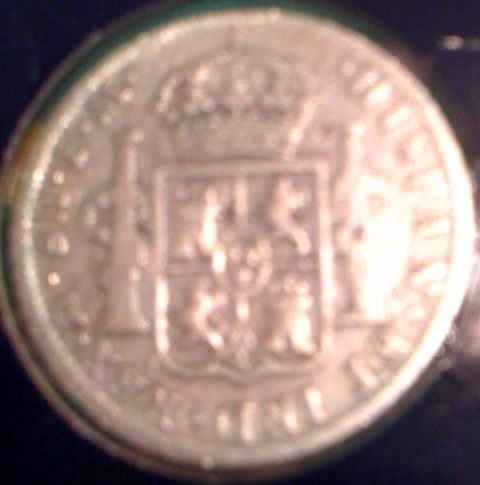
In this case, the coin appears to have been polished (based on the way light reflects). The polished coins were sold as souveniers in newspaper inserts in the 1960s up to the 1990s. The marketeers sold them for up to $100 each based on pure hype. I can recall selling them in the 1970s for $5 each at the same time the American Heritage Company was selling them for $69.99 plus shipping.
Most of the polished coins are not treated as "coins" but as historical curiosities.
As a technique it was used primarily BEFORE silver electroplating was developed in the mid 1830s. The merchant marks come in innumerable varieties most of which have NO MEANING and add no value to the coin.
To add value to a coin, the chops have to be clear and identifiable. There are many RARE chop marks and there is a distinct market for them. Some countries like Siam have distinct varieties.
In this case, the coin appears to have been polished (based on the way light reflects). The polished coins were sold as souveniers in newspaper inserts in the 1960s up to the 1990s. The marketeers sold them for up to $100 each based on pure hype. I can recall selling them in the 1970s for $5 each at the same time the American Heritage Company was selling them for $69.99 plus shipping.
Most of the polished coins are not treated as "coins" but as historical curiosities.


