| Author |
 Replies: 66 / Views: 4,688 Replies: 66 / Views: 4,688 |
|
|
|
Moderator
 United States
196572 Posts |
Looking good!  |
|
Pillar of the Community
 United States
8062 Posts |
@jbuck, since the title refers to 1200-1500 and the grosso pretty much ceased to exist by 1600, might consider moving this to the Ancient and Medieval subform? Might get more participation there, too.
|
|
Valued Member
 United States
106 Posts |
My apologies! I didn't see the words Medieval in the Ancient forum. For some reason it was left out on this end. I do see it now and yes this thread would fit perfectly there.
|
|
Moderator
United States
196572 Posts |
No need to apologize.  Done!  |
|
Valued Member
United States
106 Posts |
Thanks, have more to post soon!
|
|
Moderator
United States
196572 Posts |
Quote:
Thanks My pleasure. Quote:
have more to post soon!   |
|
Pillar of the Community
United States
8062 Posts |
Here is a fun coin for contrasting with newtraffic's grosso of Bernabo and Galeazzo II. I couldn't find my own photos, so these are the seller's photos: 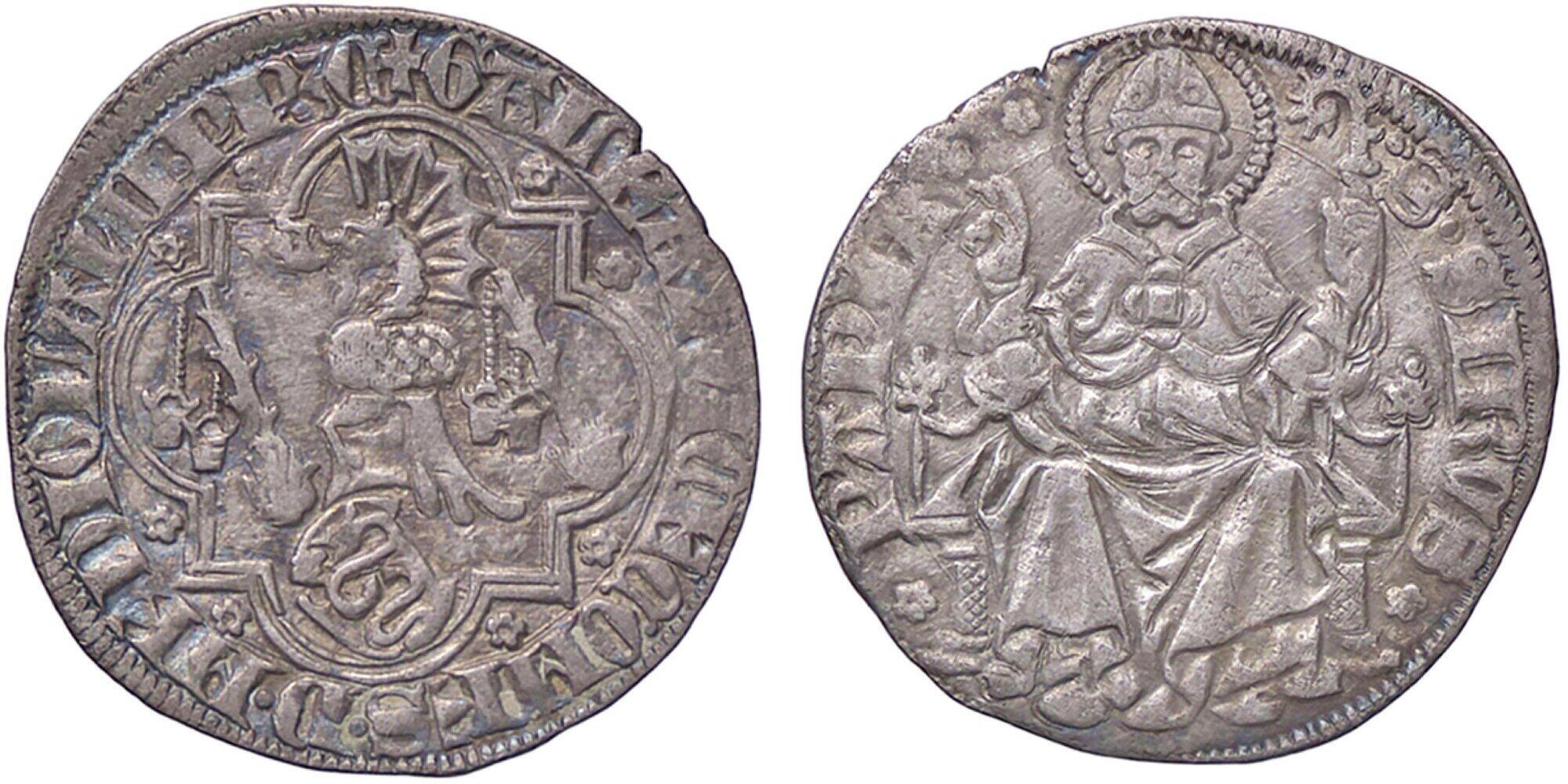 Copyright InAsta The obverse legend is GALEAZ VICECOMES DVX MEDIOLANI PPZC. Yep, it's the same Galeazzo II Visconti, Duke of Milan. And that seated saint sure looks like Saint Ambrose again. But not so fast! Ambrose is holding a whip in his right hand on newtraffic's coin, but this saint doesn't ... because it's not Ambrose, and it's actually not a coin of MIlan. It's a coin of Pavia, and the saint is Saint Syrus (San Siro), patron saint of Pavia. Galeazzo had recently subjugated Pavia to Milanese rule (the PP in the obverse legend is for Pavia, which is Papia in Latin). And that's usually cause for striking your own coins in your new territory. |
|
Valued Member
United States
106 Posts |
This is going to be a great thread. Maybe one of the best in history on the subject? :)
Thank you for these educational contributions, it takes me there to the place and time!
But, why use different Saints? Why not keep it with Ambrose?
Edited by newtraffic2
12/02/2025 10:38 pm
|
|
Pillar of the Community
United States
8062 Posts |
Because of the strong association of the coinage with the place where the coin was produced. Even though Pavia had come under control of Milan, there were some unusual circumstances that caused the mint to continue operating there for about another 100 years (Galeazzo II and then his son ruled from there, while Bernabo lived in Milan). So they continued to use an image of their local patron saint (Syrus) on the coins struck there. The Pavia mint was closed in 1450. @newtraffic2, given your interest, I highly recommend this book: 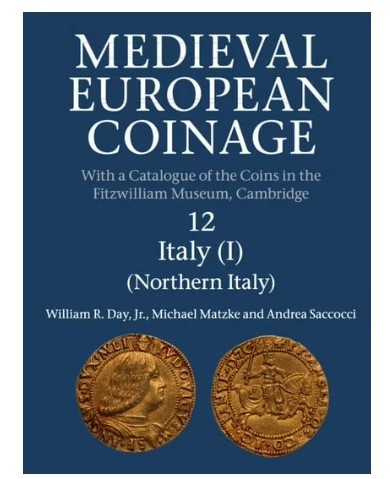 It' my bible for medieval northern Italy 1000-1500, including Venice and Milan (but also other big coin producing city-states like Genoa and Mantua), and certainly the best reference work in English for this era/area, as well as the most up-to-date scholarship, published 2016. Walmart shows it for $52. Edited by tdziemia
12/03/2025 4:39 pm
|
|
Valued Member
United States
106 Posts |
Marvelous!! Needed one of these. Thank you! I'll try to find a cheap copy!
Edited by newtraffic2
12/03/2025 12:15 pm
|
|
Valued Member
United States
106 Posts |
@tdziemia mate, I wish I can personally thank you! you brought and bring so much life into these threads. Thank you x 1million! you not only added to my thirst of this history, but you are passionate about it yourself. Let's keep it going!
|
|
Pillar of the Community
United States
8062 Posts |
Quote:
Thank you! I'll try to find a cheap copy! Careful ... it's an 1100 page paperback. If you find it on the cheap it might fall apart before it reaches you  Quote:
Let's keep it going! You betcha! It's a great idea to have a focused thread on the Italian grosso; I am sure we will eventually have other members see it and show some of theirs, cause I know they are out there. And I like your idea of collecting examples of more Venetian doges and will look forward to seeing them as your collection grows. It's a series where you can get 600+ year old coins in nice condition without breaking the bank! have one or two more I will look for, and once considered pursuing that as a theme, but then took my collection in other directions. Meanwhile, I have one more from Milan but need to find a photo. Then I'll head south to Florence. Edited by tdziemia
12/03/2025 4:37 pm
|
|
Valued Member
United States
106 Posts |
I am a cheap one when it comes to books. I used to own over 30k worth of books before a terrible relative took them from storage (their home) and donated them ALL. I lost so much time and money with that. I will buy it though, but books and I have trauma due to that event over 10 years back. Here: Giovanni Dandolo (1280-1289) next? 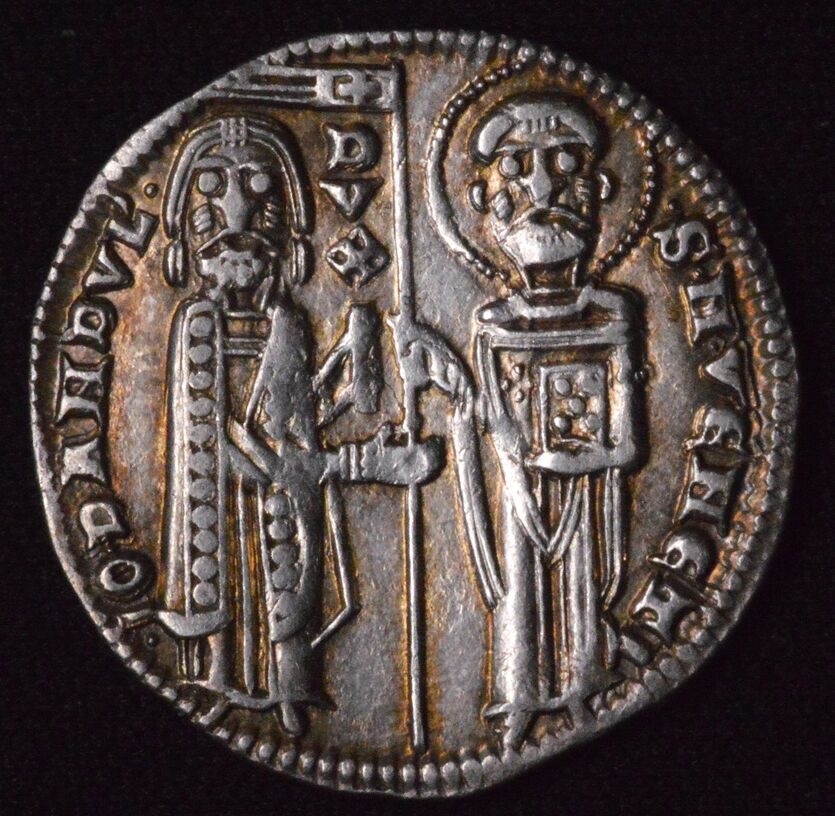 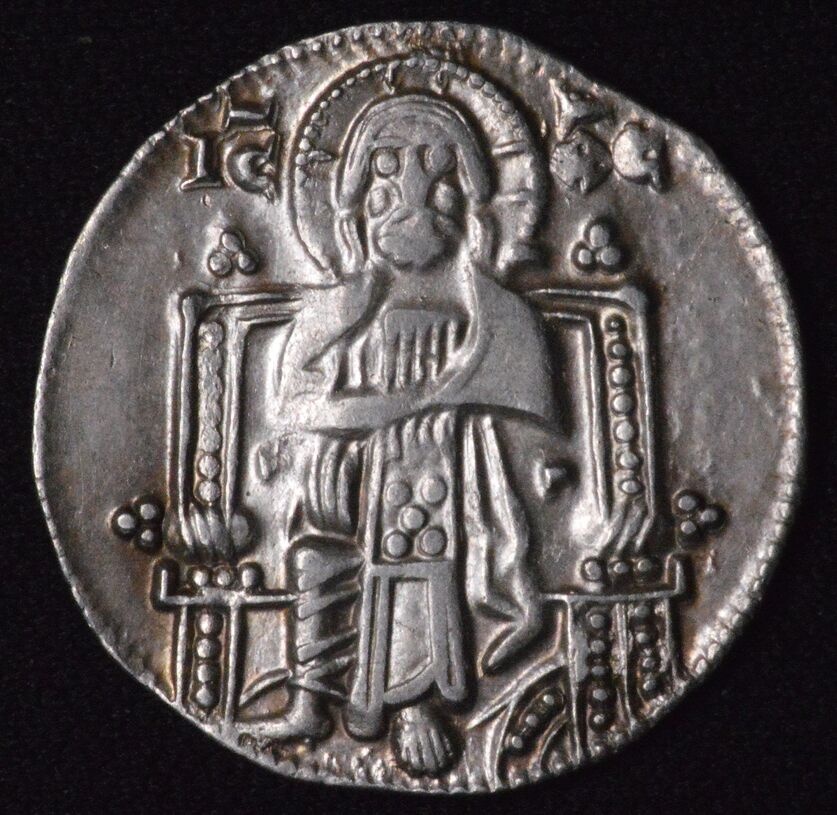 The Venice Silver Grosso of Doge Giovanni Dandolo, dating from 1280 to 1289, is a stunning example of medieval Venetian coinage. This coin highlights the artistic craftsmanship and political symbolism of Venice during the late 13th century. Made from silver, the grosso was a key currency used in trade and everyday transactions, reflecting Venice's economic prominence and independence during this period. Its historical significance and beautiful design make it a highly desirable piece for collectors and enthusiasts alike. This particular grosso features a finely detailed portrait of Doge Giovanni Dandolo, a prominent figure in Venice's history known for his leadership and diplomatic skills. The obverse displays his image along with inscriptions identifying him and his position. The craftsmanship demonstrates the skill of Venetian mint engravers, with intricate details that have been preserved over centuries. The coin's artistry captures the regal authority of the doge and the stability of Venice's republic during his rule. The reverse side of the coin often bears the iconic symbol of Venice, such as the winged lion of Saint Mark, which was a powerful emblem of Venetian sovereignty and religious devotion. The inscriptions usually include the name of the city and the mint, further authenticating the coin's origin. The coin's design is complemented by a beautiful yellow toning, which enhances its visual appeal and highlights the coin's age and historical character. This toning adds a warm, golden glow that accentuates the fine details and gives the coin a distinctive, attractive appearance. I never turn down detailed original examples of Grossos, however, I would like to focus on Nicolò Tron grosso (Pricey), Francesco & Enrico Dandolo, and Reniero Zeno. Edited by newtraffic2
12/03/2025 8:13 pm
|
|
Valued Member
United States
106 Posts |
I would also like to designate this thread, generously to myself and others who may in the future pass at a later age. This will be used by any heirs to determine value from other members of the aforementioned coins owned by the poster. @jbuck, is that ok? If I give a heir my login one day, they can post and ask questions on the coins as these are all owned by me? (The ones I posted)
Edited by newtraffic2
12/03/2025 7:57 pm
|
|
Moderator
United States
196572 Posts |
Quote:
a terrible relative took them from storage (their home) and donated them ALL. I would have been tempted to relieve said relative of their oxygen habit.  Quote:
@jbuck, is that ok? If I give a heir my login one day, they can post and ask questions on the coins as these are all owned by me? We have had deceased members' relatives log in with their accounts to let us know they have passed. Other times they create their own accounts to give us the news and ask questions. Either is okay, as long as they come here with good motives. I hope that does not happen to either of us for a long, long time. |
| |
Replies: 66 / Views: 4,688 |





 First Page


 Posted 12/02/2025 10:55 am





