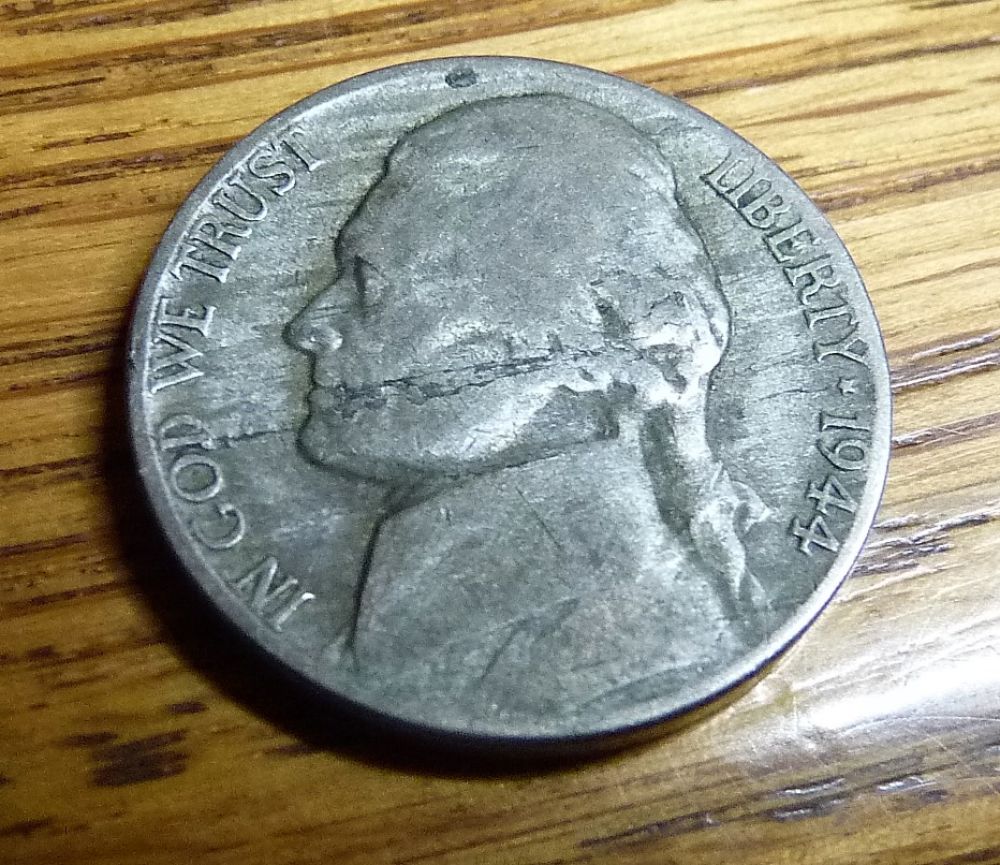
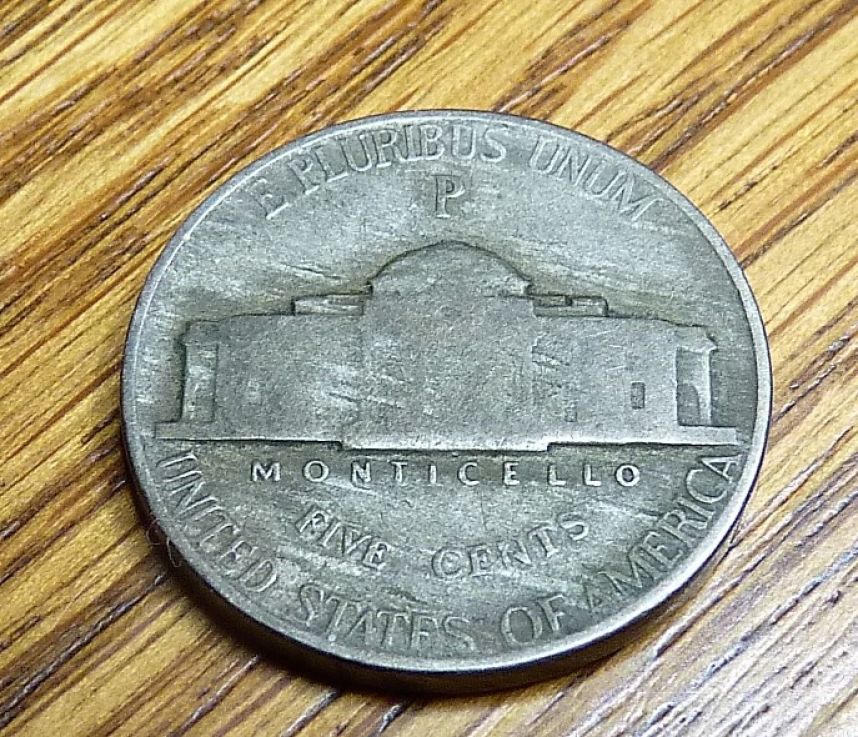
Just some pertinent follow-up here for posterity in the CCF on the cause of WWII Nickels and lamination issues. My last SEM-EDS/XRF article was published in Mint Error News 97 here:
https://minterrornews.com/issue97.pdf. Here is the Abstract: Lamination in wartime
Jefferson nickels reflects a multi stage metallurgical failure rooted in both internal alloy behavior and later surface transformations. Bulk XRF measurements confirm that manganese levels remain below the
Red Book's 9% reference value, demonstrating that the interior alloy retains its intended Cu-Ag-Mn proportions. Yet SEM/EDS exposes a more complex surface condition: thin, discontinuous zones of true Mn enrichment that migrate toward the upper metal layer and oxidize over time. These enriched layers are too subtle for XRF to detect, but their presence is metallurgically significant and directly tied to surface instability.
The internal structure shows its own vulnerabilities. During solidification, manganese's strong affinity for oxygen, sulfur, and chlorine produces brittle Mn oxide, Mn sulfide, and Mn chloride inclusions that fail to dissolve into the matrix. Rolling elongates these inclusions into stringers, creating weak internal planes that later manifest as lamination seams. SEM/EDS mapping confirms that these internal phases persist and remain chemically reactive, providing a structural foundation for delamination.
Surface processes compound these internal weaknesses. Over time, manganese migrates toward the exterior, forming mixed metallic/oxide transition zones that crack, oxidize, and interact with environmental sulfur and chloride species. Although XRF does not register these layers, EDS consistently identifies localized Mn enrichment that destabilizes the surface. Environmental exposure accelerates this degradation, as Mn bearing sulfides and chlorides react readily with moisture and pollutants, weakening both internal stringers and surface layers.
Together, the evidence demonstrates that lamination in WWII nickels arises from the combined effects of internal Mn oxide stringers and true Mn surface enrichment, with environmental reactions further driving the peel phenomenon. Both mechanisms are present, both are metallurgically credible, and current data does not allow prioritizing one over the other. Continued SEM/EDS mapping of enriched zones will help refine the relative contributions of each process.
Tom DeLorey in the recent E-Sylym Newsletter came up with some very important news/updates. See here:
https://www.coinbooks.org/v29/esylum_v29n42.html He writes: More on Why WWII Nickels Laminate
Here's a response to last week's discussion of why WWII
Jefferson nickels laminate. Vocabulary note: 'warnix' =
War Nickels. -Editor
Tom DeLorey writes:
While I was at
Coin World's Collectors Clearinghouse in the mid 1970's, I was updating a chart with the weights, diameters, thicknesses, contents and Specific Gravities for all U.S. Coins that had been created by my mentor there, Ed Fleischmann. We found it very handy when identifying wrong planchet coin errors, and counterfeits. Versions of this chart have appeared in many places over the years.
Most values were given expected numbers, but the S.G. for the warnix was given as a range that Ed had observed over the years via testing specimens. He attributed this to the laminations so commonly seen on warnix.
I was curious as to what the expected S.G. should be, so I wrote to Dr. Goldman at the Mint Lab in Washington, D.C. Over the years he had always been very helpful in responding to our inquiries, unlike the current Mint administration. I also asked him why so many warnix were found laminated.
He gave me an expected figure, but said that the range we used was probably more accurate because of the lamination problems. As to the cause of the laminations, he said basically this:
I was working at the Philadelphia Mint during the War. We were so busy striking coins for domestic and foreign use that ingots of non-precious metals were stored outdoors in the open courtyard of the building, where they were exposed to the elements. The manganese ingots especially became highly oxidized. We should have scaled them (i.e., scoured them with coarse wire brushes-TD) before using them, but we were just too busy. The manganese oxide went into the melts, where it did not bond well.'
So, sometimes an easy answer is the correct one.
Response to Tom DeLorey: This finding is an interesting update IMO but it may effect the amount of laminations found but the surface chemistry does not really change. See this new overview: Even if the manganese ingots had been perfectly stored and free of heavy surface oxidation, the wartime nickel alloy still contained approximately 9% Mn, and manganese inherently has a very strong affinity for oxygen. Some Mn oxides, sulfides, and related inclusions would likely have formed during normal melting, casting, and working of the alloy regardless. However, if Dr. Goldman's recollection is accurate, the use of heavily oxidized manganese stock probably introduced far more oxide contamination than would normally be expected, increasing both the frequency of lamination defects throughout the wartime nickel population.
In other words, manganese-related stringers and inclusions were probably an unavoidable consequence of the Cu-Ag-Mn alloy system, but
the wartime storage and production conditions may have significantly amplified the problem. The result would be more Mn-oxide inclusions, more elongated stringers after rolling, and ultimately a much larger population of
War Nickels susceptible to lamination and surface instability than would have occurred under ideal metallurgical conditions.
Whether the Mn stock was well kept or ill kept IMO WWII
Jefferson nickels would still be easily the #1 Lamination Error Series in 20thC U.S. Minting history. Remembering also their is another factor here and that is environmental effects already acting on a very compromised Mn-Oxide unstable surface layer. Again a great addition to this study by Tom DeLorey! JPL






 Posted 11/16/2016 9:58 pm





 to the forum!