




 Replies: 3 / Views: 48




 Posted Yesterday 10:57 pm


Despite what the sellers of "ping test" devices might try to make you believe, scientifically, several factors should affect the "ring" of a coin:
- Diameter
- Thickness
- Composition and internal microcrystalline structure
- Shape
Diameter, thickness, and composition should all be "the same" for cupronickel nickels (assuming they're all genuine), though there may be some differences within mint tolerance. "internal microcrystalline structure" is a property of the alloy and it's treatment; theoretically this might change if the coins (for example) are heated to far above normal room temperatures, but should likewise also be constant across the series. This just leaves "shape" as our main fluctuating variable.
Now while the overall "shape" is obviously "round", the pitch of the "ring" of a metallic object is highly dependant on the precise shape - any fluctuation can cause a disruption that pushes the ringing to a pitch higher or lower than its normal resonating frequencies. Consider the famous Liberty Bell - a tiny crack rendered it "un-ringable", despite the overall shape of the bell being essentially the same to the human eye both before and after the crack formed (the highly visible crack-line seen on the bell today was caused later by people trying to "fix" the crack).
So, a "crack" can affect the ring; for a coin, this "crack" could be either external, or internal, so a gas bubble inside the coin would be enough to do it. Other things that might affect the ring in terms of shape are:
- the roundness of the edge.
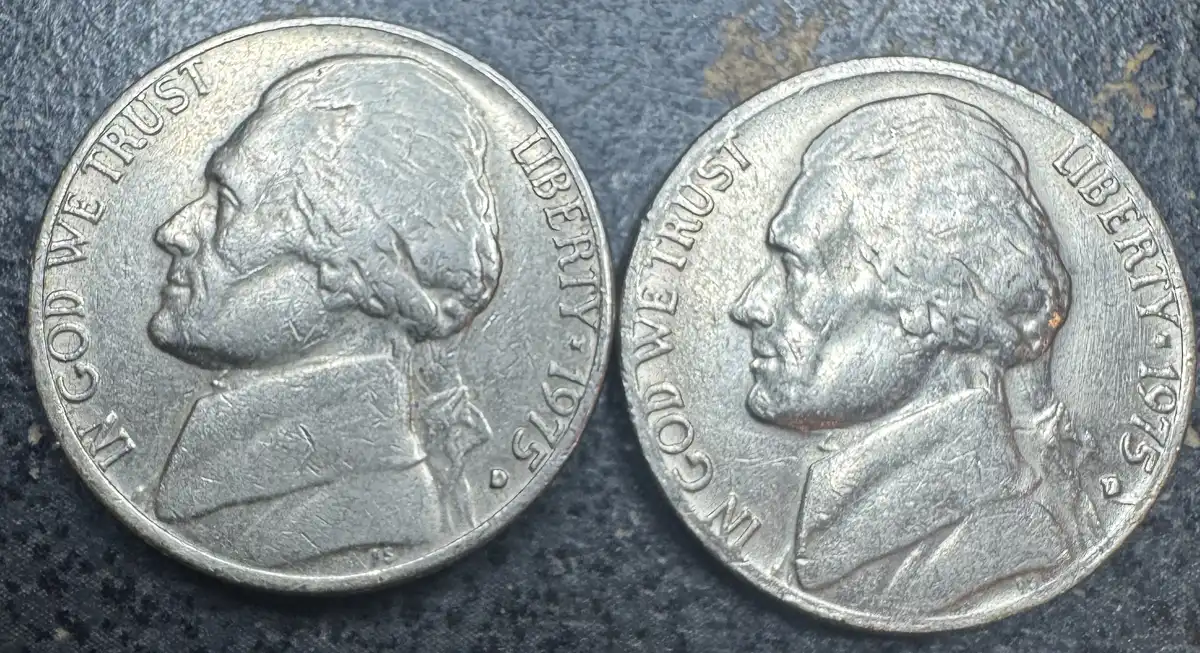
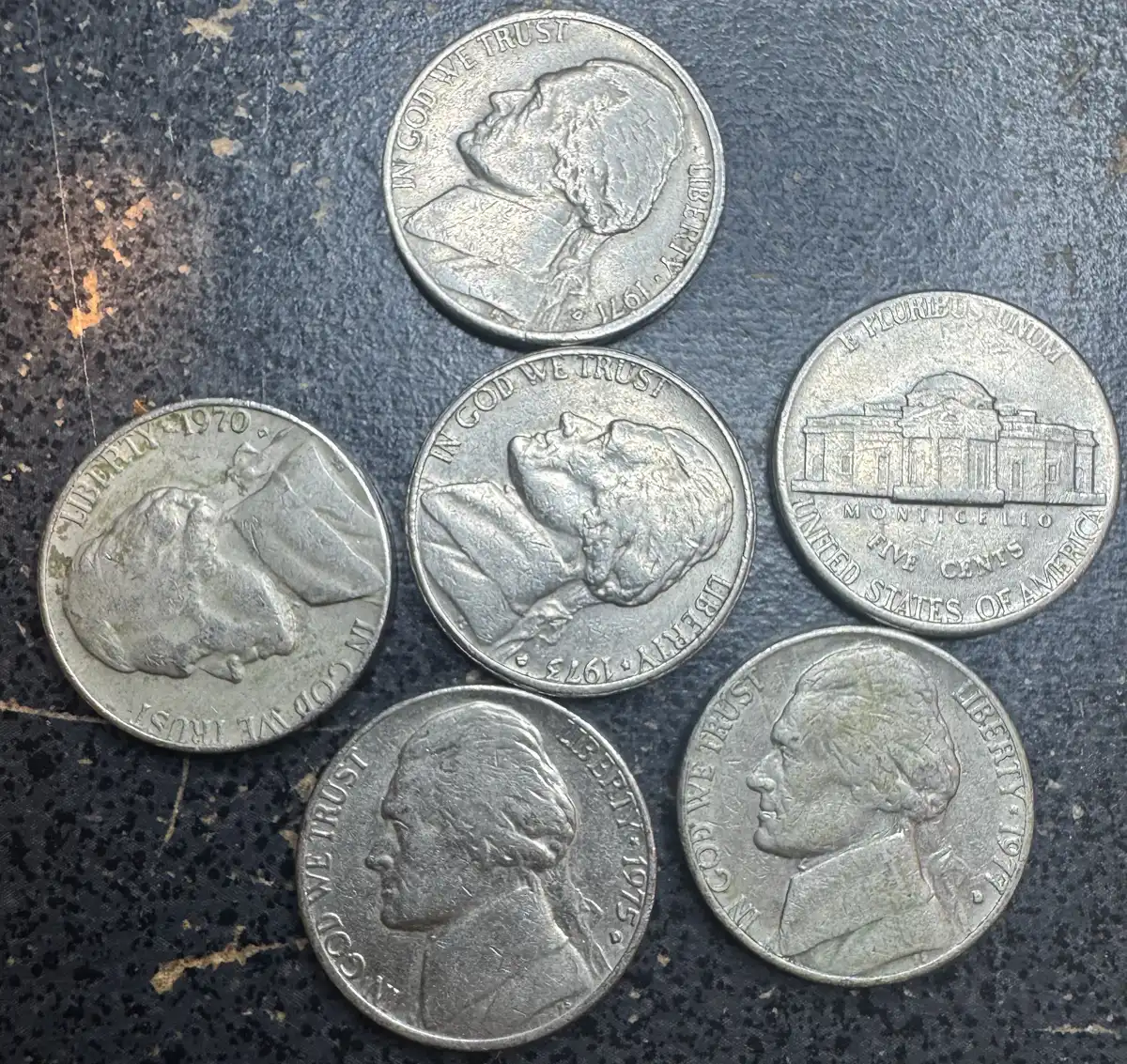
- the flatness of the rim (some of those heavily worn coins in your pictures have distinctly worn-down rims).
- General circulation wear.
- the curvature of the fields; older US coins are particularly prone to the fields "curving up" towards the rim, rather than making a sharp 90-degree transition from field to rim.
- any dints or knocks that significantly push the coin out of roundness.
Don't say "infinitely" when you mean "very"; otherwise, you'll have no word left when you want to talk about something really infinite. - C. S. Lewis


