| Author |
 Replies: 61 / Views: 1,597 Replies: 61 / Views: 1,597 |
|
|
|
New Member
 United States
37 Posts |
|
|
New Member
United States
37 Posts |
I promise, these pictures were 100% oriented correctly...this site is a bit frustrating.
|
|
Bedrock of the Community
 United States
18784 Posts |
Quote:
I promise, these pictures were 100% oriented correctly  i highly doubt PCGS would have straight graded a coin with that many scratches on it let alone slab it at 66. here is the TV on the PCGS site and the scratches are not there. 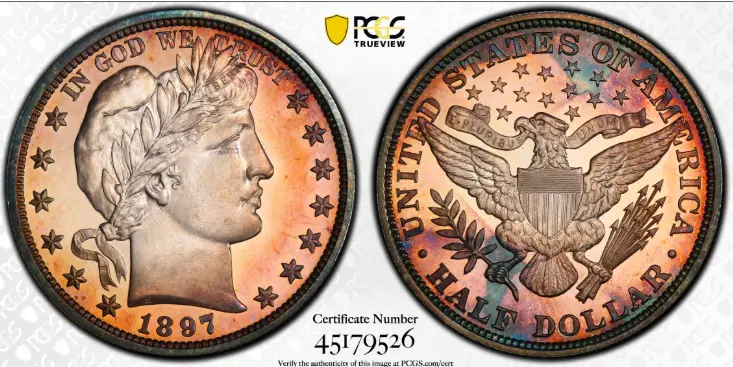 |
|
New Member
United States
37 Posts |
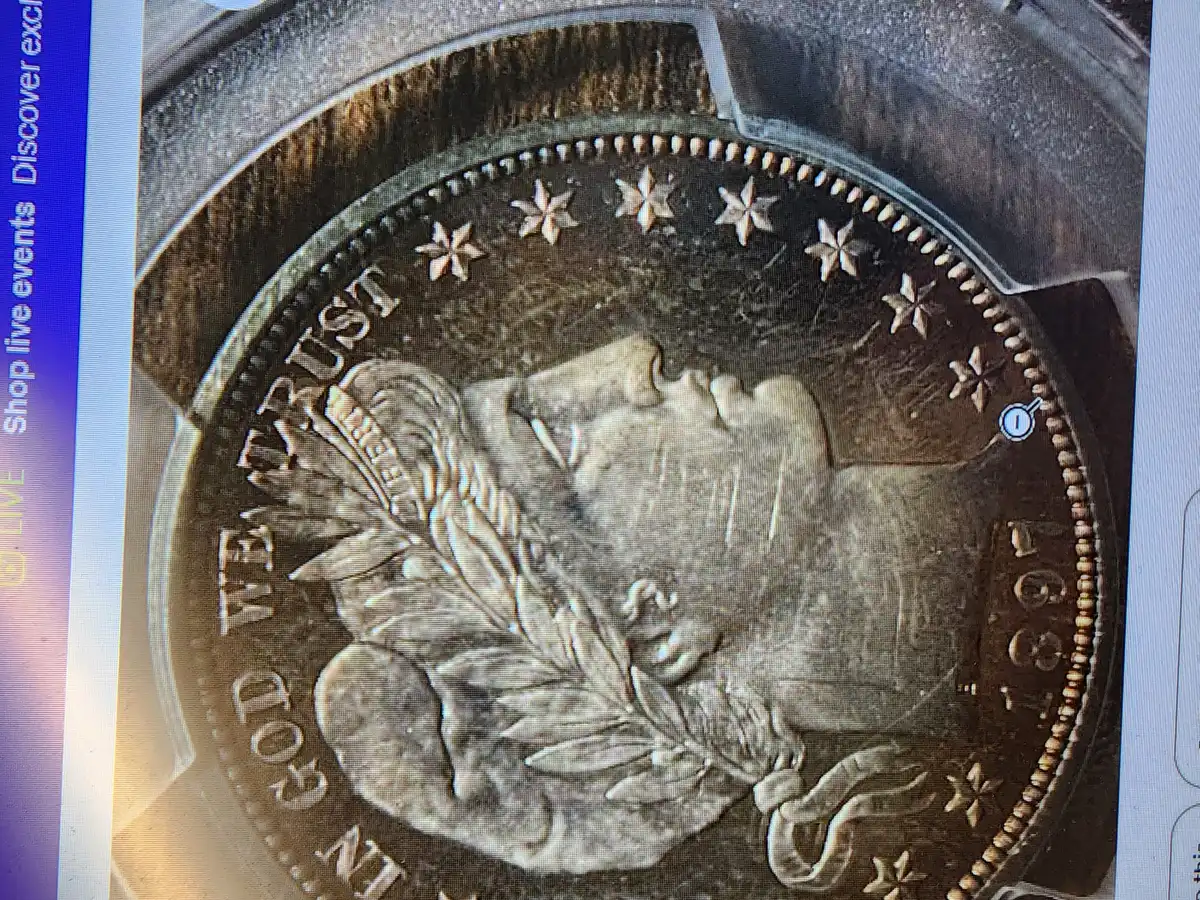
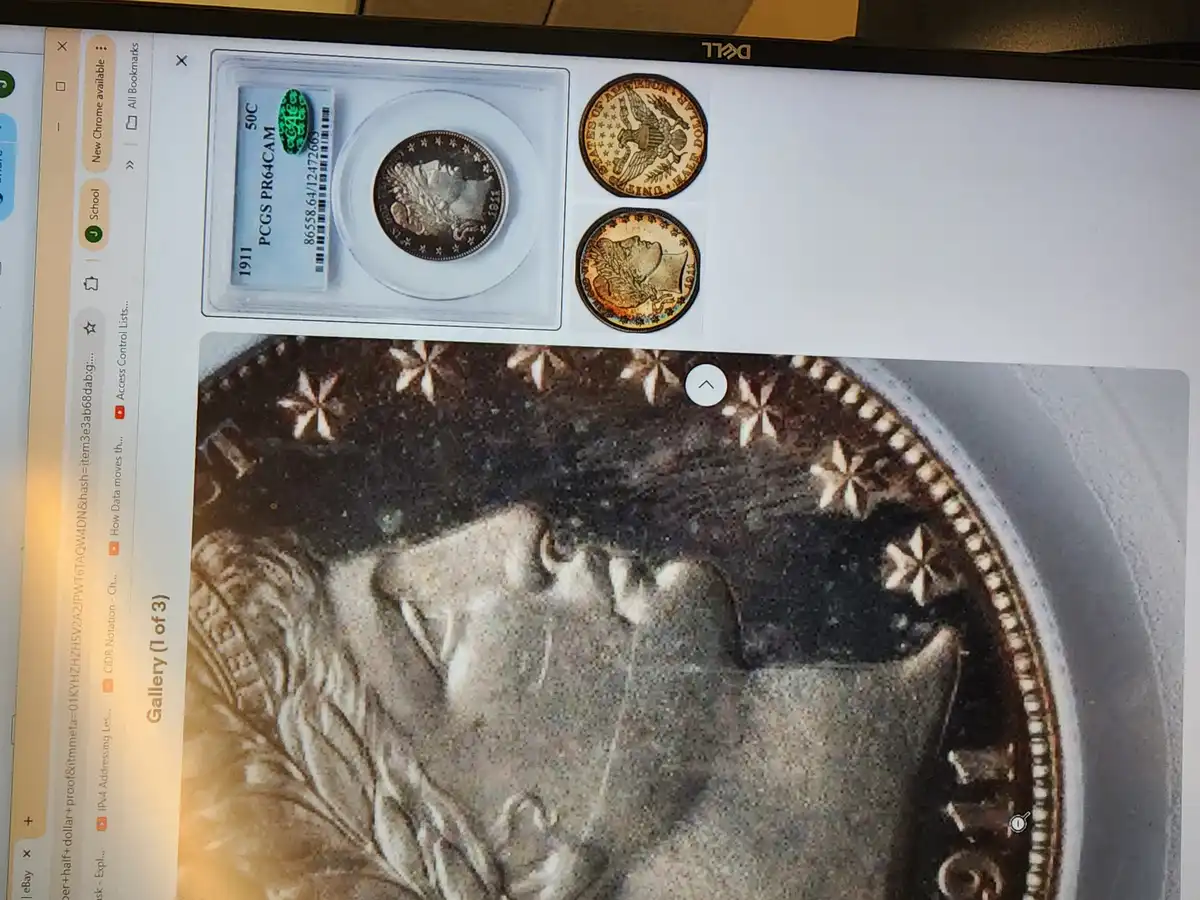
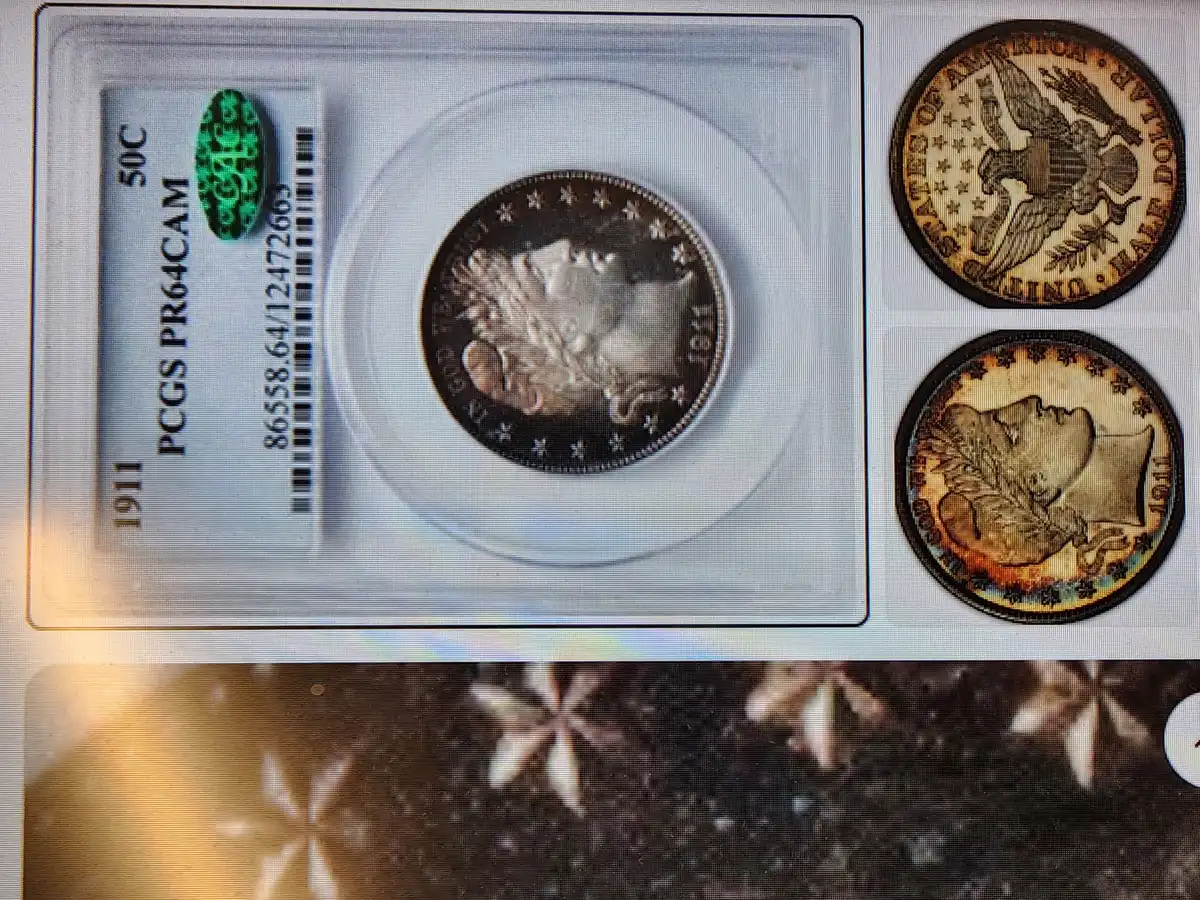
Panzaldi - they 100% DID and would.. I zoomed in on the "TV" picture and you can clearly see the scratches. Also, there are TWO coins there with major scratched on both. One is the 1897 your questioning and the second is a 1911. As long as the scratches are not post mint mark damage, they seem to let them straight grade on all types of coins. I just don't get why MY coin is being sandbagged. Here is the picture zoomed in for your review and you can totally see the scratches. 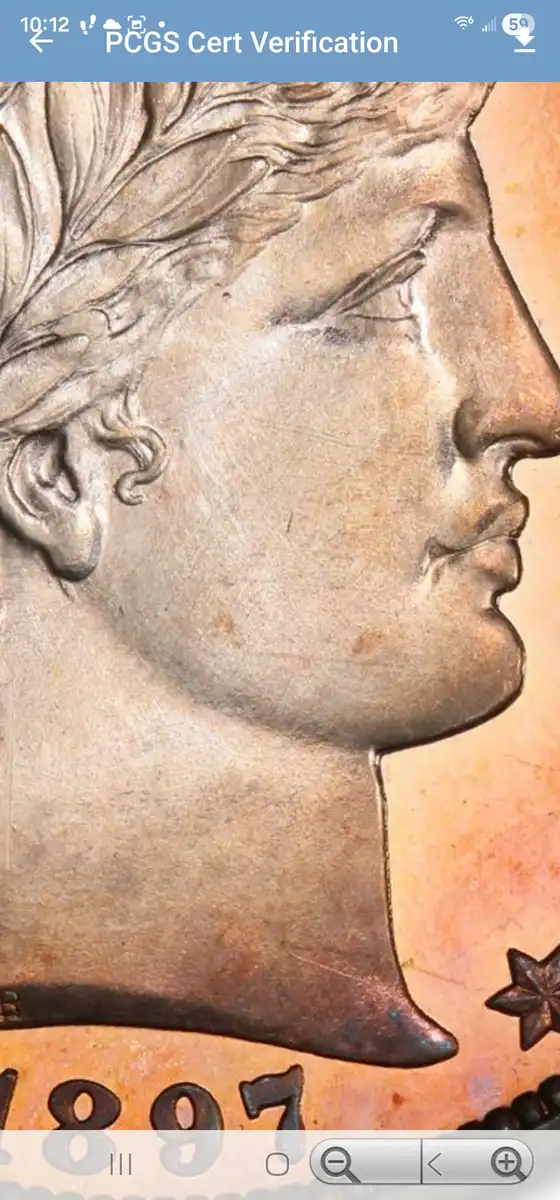  |
|
New Member
United States
37 Posts |
Both of those coins are selling on ebay right now, thats where I found them today. |
|
New Member
United States
37 Posts |
I will say, this IS the frustrating part with regards to photos... PCGS "dolls up" the archive "TV" photo to a fault... You need to see the true skin of the coin, otherwise what is the point? On the other hand, my camera and both owners of these barbers are at the mercy of THEIR camera when posting to sell... Any potential buyer that see's the ebay listing and looks at these photos would likely run away or likely do what I did.. and question it because relative to my coin.. they appear a lot worse. The reality is they may very well be worse, but our cameras magnify the blemishes and make them look way worse sometimes than they really are - even under 3X. Just food for thought.. Still believe, I could actually bump up potentially to PR64 after seeing the 1897 and 1911 however - especially with what I call early / mid life toning that adds to the eye appeal. Like we all have been saying, beauty is in the eye of the beholder, which is why their is an absolute subjectivity in all of these coins that are graded. |
|
New Member
United States
37 Posts |
One more thing Panzaldi - I know you mentioned that you have been consistent in your eval of the toning.. however it has changed from your first impression - possibly due to how I changed my methodology and as a result, the progression of pictures, had less and less light in.. which in turn, represented the coin in a darker tone.. This is not really true to the coin's natural color and I would say the darkest the skin gets is around gun metal grey - perhaps a tad darker in some places. The electric blue and pink hues are representative of early / mid not end stage toning.
Here are your original comments:
"based on what I can see your coin would not be considered Amazing, I would place it in the Above Average toning box. it would not have added any bump in the grade imo.
here is some insight into how PCGS looks at toning for both MS and Proof coins
PCGS uses seven levels for toning: Amazing, Positive, Above Average, Neutral, Below Average, Negative, Ugly.
MS/PR68 - Must have positive eye appeal.
MS/PR67 - Must have above average eye appeal.
MS/PR66 - Cannot have below average eye appeal.
MS/PR65 - Cannot have negative eye appeal; can have below average luster/toning only if outstanding in all other areas"
Edited by DrapedBust1776
07/28/2026 10:28 am
|
|
Pillar of the Community
United States
1807 Posts |
You have a very attractive proof Barber half dollar. It seems like you want everyone to agree with your assessment, good luck. Back to your original question, Quote:
It would be greatly appreciated if you could weigh in on whether the toning here on this 1892 barber half (graded PR63 by PCGS) is considered monster toning. In my opinion, no, it is not monster toning. Regarding the grade, I think you have a high end 63. Send it to CAC? Just because there are less appealing versions on ebay, it does not mean yours should be graded higher. If YOU are happy with the coin, that is all that matters. I think it is a very nice example, and I would be proud to have it in my collection |
|
New Member
United States
37 Posts |
Thank-you PSUMAN08
You may be right, and that is wrong for me.. I think it's coming from as you said, I know what the coin in hand looks like and then I have seen some comments get progressively worse as I added pictures.
It's fine really, people can absolutely disagree with my viewpoint.. I do believe I may have come off a tad differently though. Apologies if I did.
I prefer honesty of how everyone feels about the coin rather than appeasement.
I appreciate you taking the time to evaluate my coin!
|
|
Pillar of the Community
United States
3690 Posts |
Just a few thoughts on the 19th Century proofs and collectors. As background, I've worked as a buyer's agent for 55-ish years. In that role, my duty is to flag as many concerns with a coin as possible for the buyers, so they can make informed buying decisions. Of necessity, that makes the way I look at coins more critical and more conservative on grading. CCF has several members who collect 19th Century proofs, and a couple members who have fantastic collections of toned proofs. Over the years. I've handled several Barber Half proofs. A quick look at my digital records shows that I handled five 1892 Barber half proofs, including one impaired proof, and it looks like none of those were slabbed. Most 19th Century proofs exist in sufficient quantity for the demand, which is why most dates don't attract huge prices in mid-Proof grades (63-64-65). Very few people actually try to assemble complete series proof date sets. More seek proof type coins for type sets. Because of suppressed demand, the seemingly low proof mintages are deceptive. Survivorship numbers for proofs vary widely. The depression of 1893-1897 forced many 1870s-mid1890s proofs into commerce. It is not unusual to see mid-UNC business strikes sell for much higher prices than the same mid-Proof grades. That is especially noticeable in the five cent series, where UNC Shield or Liberty nickels frequently outpace the proofs. Even the proof-only dates in those series don't command the premium people would expect. There are still quite a few raw proofs out there, and most larger coin shows will have an ample supply of most common date proofs. Not many trade on ebay, but that isn't a surprise. Marketplaces such as Great Collections and Greysheet Marketplace handle many more proofs. Toning is temporary. It is an ongoing process, and today's toning likely will not look the same in 20-30 years. There aren't many ways to arrest that process, although using Argon gas in sealed slabs would be an interesting option. Very few of the adjectives applied to toning matter. In reality, there are only two types of toning -- attractive and unattractive -- and perceptions will vary widely. See the old adage about beauty and beholders. Typical album toning is light, with a golden ring inside the rim. Some of the brighter colors immediately start the debate about artificial versus natural toning, and several members on here will be quick (and correct) to point out that the real debate is between market acceptable and market unacceptable toning. Just from my vantage point, the toning on a proof is far less important than the surface conditions, which will strongly affect the grade. Once the technical grade is established, then the attractive versus unattractive discussion comes into play. Again, just some thoughts in general. I certainly agree with the comments upthread about the difficulty in photographing proof coins, especially the silver proofs. |
|
New Member
United States
37 Posts |
Fortcollins, I appreciate your response and a lot of knowledge here. Much appreciated. I have read if you have a toned coin in a slab, low humidity, low light and the safe has humidity / mildew control such as mine - AND you put the slab into another layer of protection... you may not EVER in a lifetime see the destructive damage you speak of. This can be controlled without argon gass and it seems that collectors on this thread with all due respect my friend, are a bit paranoid about the coin turning black.
That said, do you have any thoughts about my coin?
Edited by DrapedBust1776
07/30/2026 9:46 pm
|
|
Moderator
 United States
191802 Posts |
Thank you for sharing your experience with us, FC!  I must quote this for truth...  Quote:
Some of the brighter colors immediately start the debate about artificial versus natural toning, and several members on here will be quick (and correct) to point out that the real debate is between market acceptable and market unacceptable toning. |
|
New Member
United States
37 Posts |
Yes, its an age old debate..but would say since mine was graded by PCGS and wasn't flagged its not artificial.
|
|
Pillar of the Community
United States
3690 Posts |
I held back on some of my thoughts, but you asked again for my opinion on the coin. Again, I see the coin fairly critically because of my role as a buyer's agent. This is not a coin I would recommend to my buyers. There are three things buyers want in any 19th Century proof coin.  First, authenticity. PCGS determined that this is a proof, and is genuine. Second, technical grade. PR-63 is generally the floor for what collectors seeking proofs will buy. PCGS has this as PR-63, but I can't get there. More on that below. Third, many buyers want CAM or DCAM proofs, and that's the one thing beyond technical grade that enhances proof value significantly. Correctly, PCGS didn't see this as a CAM. You keep asking about toning. "Monster toning" isn't a category. It's a marketing slogan. Toning is simply a chemical process. Toning mostly is a neutral for most buyers. It isn't the reason people buy proofs. People either want a proof coin, or they don't. If they want a proof coin, technical grade and CAM/DCAM designation are the price drivers. Attractive, unobtrusive toning can make some buyers take a second look. As others have noted upthread, this toning isn't attractive. In addition, what may be a fingerprint at the back of Liberty's head is an issue. In terms of technical grade, I have reservations whether this may be an impaired proof. The obverse has a number of contact marks that are much more consistent with light circulation than with cabinet storage or mishandling over the years. The obverse rims have numerous very light scratches. Liberty's face has several longer scratches. Most notable are the scratch from the inner ear to the back of the eye, the scratch from the bottom of the earlobe to the lips, the vertical parallel scratches from the center of the jaw to the mid-neck, multidirectional light scratches above the truncation of the neck, and scratches on the higher edges of some of the leaves, e.g. the second leaf to the right of the cap curl and the upper leaf adjoining the first "T" of TRUST. There is multiple NW-SE pitting across the cheek and on the tip of the nose. These marks suggest light circulation, such as being scraped across a store counter. That would suggest PR-58. If a grader doesn't see this as enough to call it an impaired proof, these marks are more consistent with PR-62 than with a higher grade. To me, PCGS calling this PR-63 seems generous. You've asked for honesty in the comments, and if I saw this coin in a dealer's case on a bourse floor, I'd walk away. |
|
Bedrock of the Community
United States
19346 Posts |
Excellent discussion, all! Learning can be fun.
|
| |
Replies: 61 / Views: 1,597 |







 First Page
 Previous Page


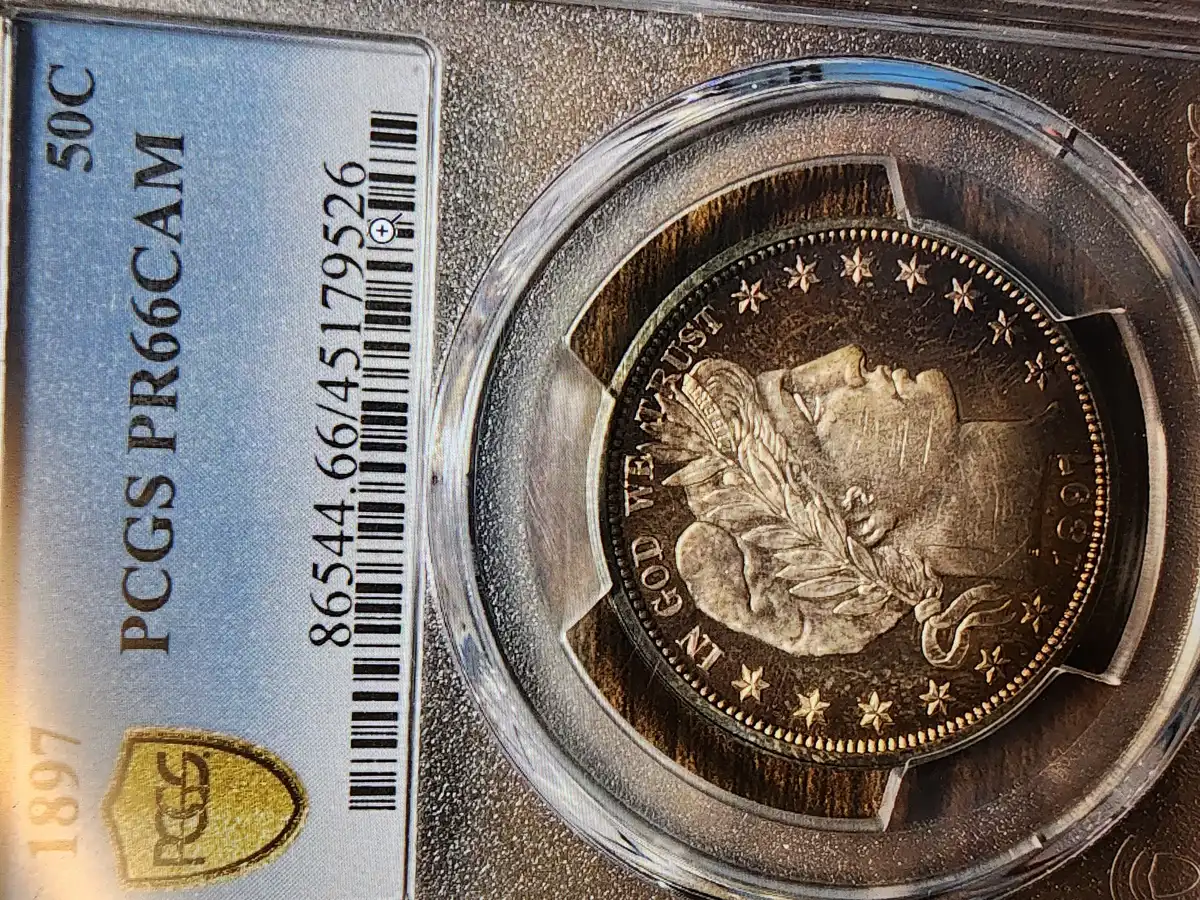

 Posted 07/27/2026 2:35 pm





