| Author |
 Replies: 10 / Views: 152 Replies: 10 / Views: 152 |
|
|
Valued Member
United States
295 Posts |
I found this coin several years ago, and finally made a copy of a normal strike with the new coin. It is obvious to me that the coin was cleaned up at the mint and the new portrait is so dissimilar to the original that other collectors thought at first it must be a counterfeit.. Now my question is this: If this die struck hundreds, or even dozens of coins - without further change, is it then a new variety? I understand that sooner or later the mint must have caught the error and removed the die. But what to call this specimen ? Please let me know what you think. 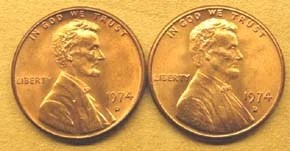 |
|
|
|
Pillar of the Community
 United States
6872 Posts |
There are 20th century U.S. coins considered as varieties due to overpolished dies. The 3 legged Buffalo nickel is one of the best known. That 1974-D probably isn't an officially listed overpolished die variety (yet, anyway), but it definitely looks extreme enough to be considered collectible. Could we get a better image of just the coin in question, both sides? It would be interesting to see if the reverse die was also severely polished after a clash or other die damage. |
|
Pillar of the Community
United States
7265 Posts |
|
|
Bedrock of the Community
United States
78128 Posts |
|
|
Pillar of the Community
United States
1606 Posts |
Quote:
But what to call this specimen? The Great Emaciator  |
|
Moderator
 United States
15845 Posts |
Quote:
Could we get a better image of just the coin in question, both sides?  . I can't tell what you are asking about based on this teeny photo. |
|
Bedrock of the Community
United States
19501 Posts |
Interesting conversation. Personally, I can't distinguish much with the relatively small image posted. Photos of the reverse could give a bit more context. Thanks.
|
|
Bedrock of the Community
Canada
21853 Posts |
There are probably hundreds of overpolished dies out there
including ones like yours where the neck has been polished out.
Technically they are not a true variety and would be overwhelming
to try to identify them all as varieties.
At what stage of the polishing would you identify it as a "variety".
|
|
Pillar of the Community
United States
666 Posts |
Quote:
Personally, I can't distinguish much with the relatively small image posted. Too small? Try right-clicking on the photo and "open image in a new tab". Then you can enlarge it to your heart's content. |
|
Pillar of the Community
United States
6872 Posts |
Jimmy, a 3.5 leg Buffalo nickel missing a tiny bit of the front leg will transform from a $50 coin into a $10000 coin. Collectors can have a weird fascination with overpolished dies. Also refer to the Kennedy half dollars and Lincoln Memorial cents with the missing FG initials. I think a nice example of a coin with severe die over-polishing could find a home in many collections of minor mint error coins. |
|
Bedrock of the Community
Canada
21853 Posts |
Brandmeister
I agree that there are some overpolished dies that have been given
fancy names and command a premium but my point is that you can't
expect every coin with a bit of overpolishing to be recognized. Where
would you draw the line as to what constitutes as being overpolished.
Edited by JimmyD
Today 13M ago
|
| |
Replies: 10 / Views: 152 |
|










 Posted Today 9H 11M ago


