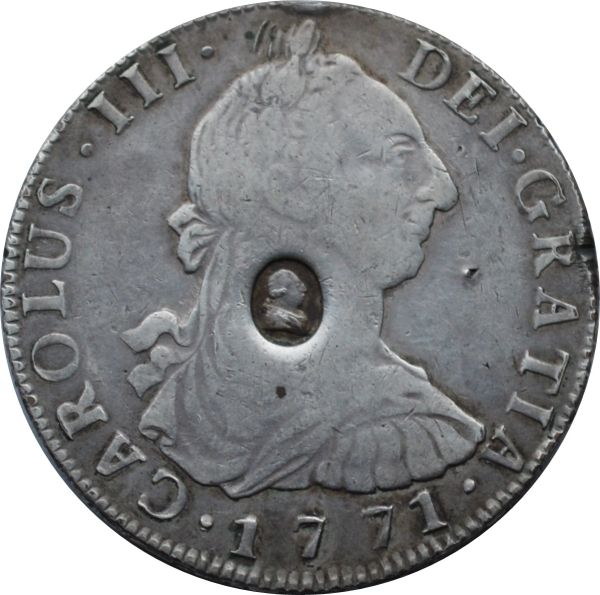
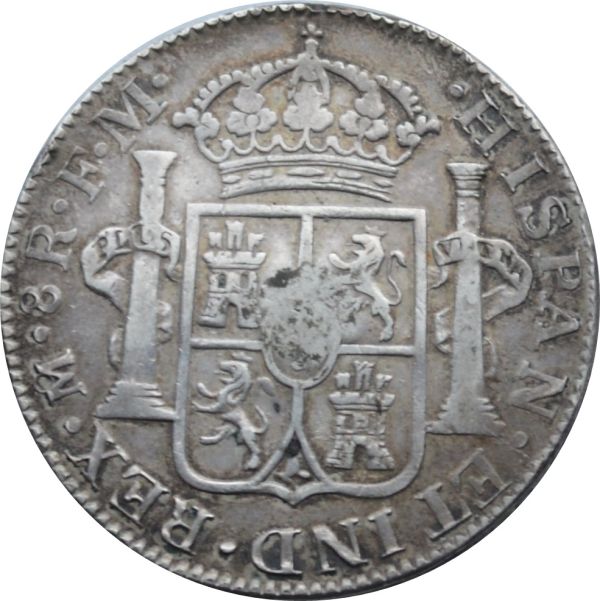
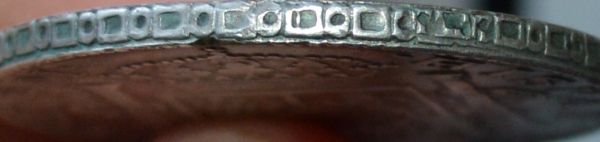
OK so, the first obvious issue with this coin is that, in so far as I can tell, these coins were only issued from 1772 onwards. It is underweight also at 24.91 grams.
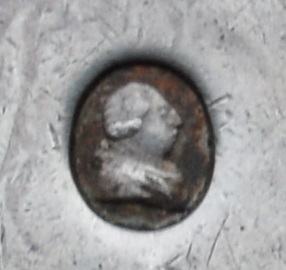
I do know that many fakes were deliberately made by the British in the late 1700's to undermine faith in the Spanish coinage. The counter-stamp I would tentatively say looks real so perhaps this is a British contemporary forgery?
Or perhaps I'm wrong, and this is simply a standard counter-stamped George III dollar. But I'm working on the assumption this is a forgery - though perhaps a contemporary and interesting one. I know there are many members with great knowledge in this area - hope to hear from some of you. Thanks.
I vote, counterfeit coin and counterfeit countermark, which were contemporarily quite common. Check out the fake mark (on a fake 8 reales) in Plate 9/#3 of this informative BNJ article: http://www.britnumsoc.org/publicati...NJ_70_11.pdf
I think I have made a mistake - I've double posted when I should have moved it - Can anyone tell me how to delete this thread and have it opne for discussion on the world coin forum? Sorry for the mistake!
Bpoc1 - I think you noticed I made the mistake :-)
Philadelphian - Thanks for that fantastic information booklet. Just had a scanned read through some of the most appropriate sections - no doubt the forgery of both coins and the countermarks was hugely prevalent
Disclaimer: While a tremendous amount of effort goes into ensuring the accuracy of the information contained in this site, Coin Community assumes no liability for errors. Copyright 2005 - 2026 Coin Community Family- all rights reserved worldwide. Use of any images or content on this website without prior written permission of Coin Community or the original lender is strictly prohibited. Contact Us | Advertise Here | Privacy Policy / Terms of Use













 Posted 03/24/2014 3:55 pm


