|
This page may contain links that result in small commissions to keep this free site up and running.

Welcome Guest! Registering and/or logging in will remove the anchor (bottom) ads and the security checks. It's Free!
To participate in the forum you must log in or register. | Author |
 Replies: 5,980 / Views: 455,865 Replies: 5,980 / Views: 455,865 |
|
|
|
Bedrock of the Community
 United States
10284 Posts |
Now I mentioned earlier that I also liked Folklore. Two great purchase tonight, this one in gratitude for the seller helping me finish my next post. This is a big honkin' bronze. I like the stories behind them since I was a kid. Society of Medalists Issue No.79 1969
Paul Bunyan ~ Johnny AppleseedBronze 73 mm By Bruno Mankowski ~ Medallic Art Company.  Obverse: Paul Bunyan shown wielding an axe, his giant blue ox "Babe", is in the background. Reverse: Johnny Appleseed shown striding to the left scattering seed with one hand and carrying a shovel on his shoulder with the other.  Paul Bunyan and his Blue Ox Paul Bunyan and his Blue OxIn the urban legends Bunyan is described as a Lumberjack of gigantic stature and size with titanic power and strength. In American folklore he and his blue Ox named Babe are said to be responsible for the creation of several American landscapes, landmarks and natural wonders. For example they are said to have created the 10,000 lakes of Minnesota by their footprints, inlcuding Lake Bemidji, which indeed has the shape of a giant footprint resembling it when viewed from high above. Further Bunyan is said to have created the Grand Canyon by pulling his ax behind him, and Mount Hood by putting stones on his campfire. The men's shanty in his camp covered a half section, and the mess camp was a stupendous affair. The range on which an army of cooks prepared the beans and "red horse" was so long that when the cooks wanted to grease it up for the purpose of baking the wheat cakes in the morning, they strapped two large hams to Bunyans feet and started him running up and down a half mile of black glistening stove top.  Johnny Appleseed Johnny AppleseedJohn Chapman was a real person (September 26, 1774 - March 18, 1845), better known as Johnny Appleseed, an American pioneer nurseryman who introduced apple trees to large parts of Pennsylvania, Ontario, Ohio, Indiana, and Illinois, as well as the northern counties of present-day West Virginia. He was said to have worn a tin pan or pot on his head as it doubled as headgear and for cooking. He became an American legend while still alive, due to his kind, generous ways, his leadership in conservation, and the symbolic importance he attributed to apples.  He was also a missionary and the inspiration for many museums and historical sites such as the Johnny Appleseed Museum in Urbana, Ohio, and the Johnny Appleseed Heritage Center in Ashland County, Ohio. The Fort Wayne Tin Caps, a minor league baseball team in Fort Wayne, Indiana, where Chapman spent his final years, is named in his honor. Edited by TNG
03/26/2018 02:23 am
|
|
Bedrock of the Community
United States
10284 Posts |
This will make 10 different Remington medals I have. I have not found an 11th although Remington had certainly more scupltures than these. I also have a duplicate of "Coming through the Rye" which I think is the coolest. All are beautiful, large 1/4 inch thick bronze metals with an awesome matte-like gilt finish. The images are from the seller I bought them from and used with permission. I could probably never take this good of images myself. I have seen one rather tarnished and spotted complete set of 10 listed for sale now for close to $700.00 which has not sold in a framed case that holds 10 medals and looks original to the set. It appears I have a complete set now. I did not pay near that amount for these but that was also because of the more-than-fair person I bought them all from. A cherished and hotly persued collection I am now glad to own.  The Rattlesnake The Rattlesnake was copyrighted in 1905, Remington's 12th sculpture. A powerful composition, it focuses all attention and movement to the small but deadly rattlesnake. The Rattlesnake won much praise when it was completed and was called the work of a master's hand. Remington enjoyed modeling this piece so thoroughly, that after it was finished, he completely reworked it over a ten day period. The new piece was nearly four inches taller than the original version, and the position of the out lines was also greatly altered. The head, neck and back legs of the horse, and the angle of the cowboys body, now flowed in a more pronounced arching motion. He recorded in his diary,"It has taken much longer to model than I had any idea of but it is a good job and a good bronze, well worth while". This piece is Remington's third most popular sculpture ever, probably due to the fact it adds the elements of the fashionable bronco with those of a close encounter with death.   Remington's fourth bronze, The Scalp is the artist's first sculptural depiction of an Indian subject. In the work, Remington has rendered a Sioux warrior in a dignified and victorious pose, heroically placed atop a horse that is in mid-stride, coming to an energetic halt. The victor holding a human scalp in a clenched fist.   The Sergeant The Sergeant is the smallest of Remington's castings standing less than eleven inches tall. This bronze shows the hard life of a tough, weathered, and sharp-nosed Sergeant. Quite often this bronze is mistaken for a grizzled veteran of the Indian wars. But this was not the intent of Remington. He wanted it to be a tribute to the First U.S. Volunteer Calvary, the Rough Riders, whom he rode with and respected so much. The Sergeant combines two types of Remington's works the cowpuncher and the soldier.   The Fallen Rider The Fallen Rider also named The Wicked Pony was inspired by a past recollection of a western trip. During which Remington had witnessed a cowboy that had been thrown from a rank tempered bronc. He looked on as the cowboy attempted to tussle the animal to the ground by its ear, an unfair and dangerous match in which the cowboy was fatally kicked. Experiencing this event made a significant impression on Remington. He purposefully portrayed more expression and strain in this figures face than any before. The horse is depicted with extremely calculated positions in movement as if the artist was recalling a particularly drastic moment during this episode.  The other write ups can be traced from here on previous posts. http://goccf.com/t/301479&whichpage=25#2660149 |
|
Bedrock of the Community
United States
10284 Posts |
The set of 10 Remington Medallic Art Medals  |
|
Pillar of the Community
United States
1088 Posts |
TNG, I am very impressed with the clarity and quality of your photos. Great pictures.
|
|
Moderator
 United States
195559 Posts |
Everyone was busy over the weekend. Nice additions.  |
|
Bedrock of the Community
United States
10284 Posts |
stud, not my pictures but used with permission. Thanks and thanks to jbuckster too.
|
|
Bedrock of the Community
United States
10284 Posts |
 Betsy Ross Betsy Ross, born in Philadelphia January 1, 1752. A fourth-generation American. She apprenticed with an upholsterer before irrevocably splitting with her family to marry outside the Quaker religion. She and her husband John Ross started their own upholstery business. Despite a lack of credible evidence to support it, legend holds that President George Washington requested that Betsy make the first American flag. The story of her making the first American flag was shared with the public by her grandson, William J Canby nearly 50 years after her passing. He wrote that she made the flag in June of 1776 after a visit from President George Washington, Robert Morris, and her husband's uncle, George Ross.  According to family tradition, upon a visit from General George Washington, commander-in-chief of the Continental Army, in 1776, Ross convinced George Washington to change the shape of the stars he had sketched for the flag from six-pointed to five-pointed by demonstrating that it was easier and speedier to cut the latter. However, there is no archival evidence or other recorded verbal tradition to substantiate this story of the first American flag. Her grandson's recollections were published in Harper's Monthly in 1873, but today most scholars agree that it was not Betsy who made the first flag. However, Betsy was without dispute was a flagmaker who, records show, was paid in 1777 by the Pennsylvania State Navy Board for making "ship's flags. It was so easy to just believe that Betsy Ross made the first flag when I went to school. So I still like to believe that. Betsy died on January 30, 1836, at the age of 84, in Philadelphia. |
|
Moderator
United States
195559 Posts |
A lovely meal and a wonderful post to accompany it. |
|
Bedrock of the Community
United States
10284 Posts |
1937 POCAHONTAS COAL Bronze Medal 1883-1937This Bronze medal also celebrates the 100 year founding of Mercer County W. VA. 1837-1937, Which is near the border of Northern Virginia.  It measures 1.25 inches in diameter. On the obverse, Pocahontas is standing in front of coal hopper railroad cars. It shows a side view of the larger-than-life Pocahontas statue, which is one of the favorite attractions of Jamestown Island in VA. Finished in 1913. her hands are worn a bright copper color because so many visitors have held them while posing for photos. A reproduction of the statue was given to the British people by the governor of Virginia to adorn Pocahontas' burial grounds at St. George's Church in Gravesend, England. On the reverse, The Art Deco-styled Mercer County Court House at Princeton, West Virginia, in the Bluestone Region of southern West Virginia.  Pocahontas was a Powhatan Native American woman, born around 1595, known for her involvement with English colonial settlement at Jamestown, Virginia. In a well-known historical anecdote, she saved the life of Englishman John Smith, by placing her head upon his own at the moment of his execution. Pocahontas later married John Rolfe, and they were among the ancestors of many of the First Families of Virginia. She changed her name to Rebecca Rolfe and died while visiting England in 1617 in her very early twenties. Pocahontas is a town in Tazewell County, Virginia, United States. It was named for Chief Powhatan's daughter, Pocahontas, who lived in the 17th-century Jamestown Settlement. Pocahontas Coalfield, is located in Mercer County/McDowell County, West Virginia and Tazewell County, Virginia. In a later time, this would be just a few hills east of the Hatfield and McCoy's feuding grounds. As the availability and fame of high-quality Pocahontas bituminous coal increased, economic forces took over. Coal operators and their employees settled dozens of towns in southern West Virginia, and in the next few years, as coal demand swelled, some of them amassed fortunes. The countryside was soon sprinkled with tipples, coke ovens, houses for workers, company stores and churches. In the four decades before the Crash of 1929 and subsequent Depression, these coal towns flourished. One example was the small community of Bramwell, West Virginia, which in its heyday boasted the highest per capita concentration of millionaires in the country.
Edited by TNG
03/31/2018 10:52 am
|
|
Moderator
United States
195559 Posts |
Very nice! |
|
Bedrock of the Community
United States
10284 Posts |
Thanks, jbuckster. My wife took a whopping 2 minutes to admire the Remington medals tonight. Well, maybe a little less but she said "They're nice".  |
|
Moderator
United States
195559 Posts |
If she does not get it, she does not get it.  |
|
Bedrock of the Community
United States
10284 Posts |
1981 Reagan Medallic Art Co Presidential Bronze Medal
40th President of the United States I will simply put a link to my other entry for this medal since I wrote about this man there. http://goccf.com/t/301479&whichpage=14#2615381What I will say is that I have never seen one of these listed for sale over the past year. My eyes got big!  I paid a little more than the usual bronze medals fetch in this Presidential series but I don't think I'll see another of these for a long time, if ever. It kind of goes well with the large one I bought and linked to.  
Edited by TNG
04/02/2018 12:26 am
|
|
Bedrock of the Community
United States
10284 Posts |
This is my collection of these Medallic Art Co. Half Dollar sized medals of some of my favorite people in American history. There were many made, there are quite a few I'd like to add yet. There are quite a few I could care less about. 9 Presidents ( 10 if you count Jefferson Davis ) 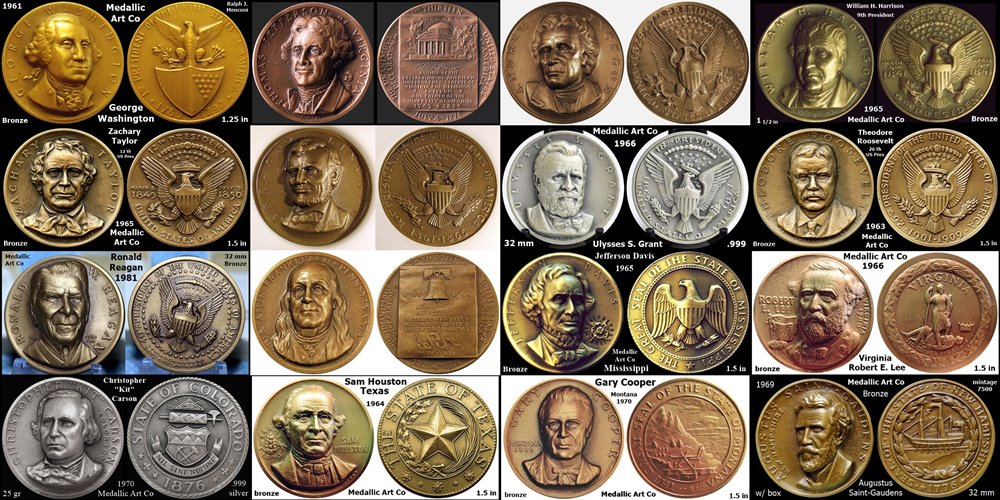 Two of these are .999 silver, the rest are bronze and although they look different in color, in hand the look pretty much the same. |
|
Bedrock of the Community
United States
12477 Posts |
I'll post a couple of Nürnberg-Fürther Strassenbahn tokens that I haven't gotten to yet. These are both related to a previously posted token of the same set: Albrecht Dürer. Pardon the crappy pics: 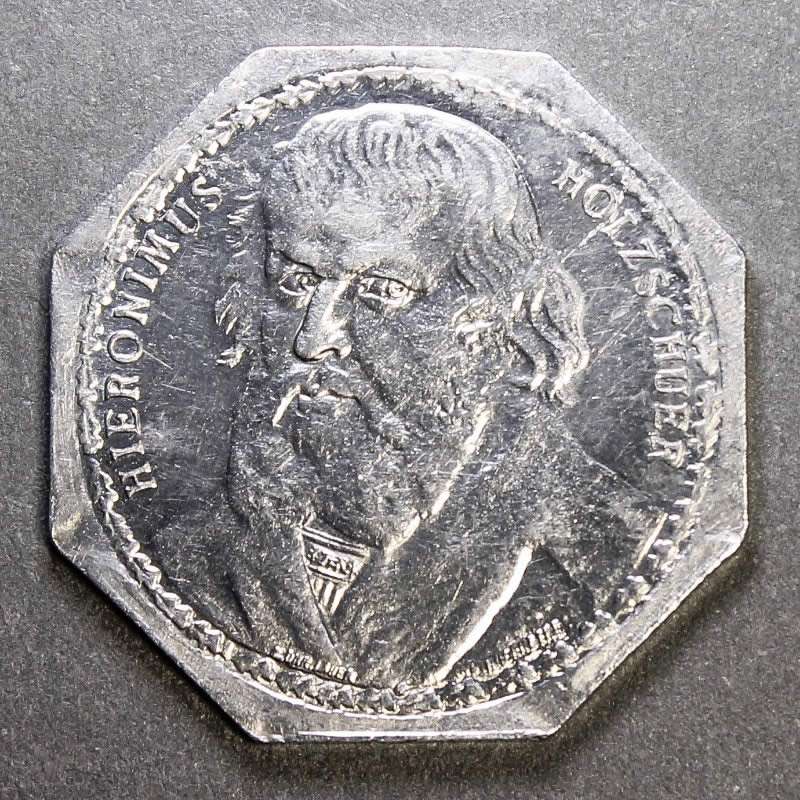 Hieronimus Holzschuer (alt. Hieronymus Holzshuher) was a patrician on the inner council of the Imperial City of Nürnberg. He eventually rose to the position of Supreme Captain. The Holzschuer line is one of the oldest patrician families of Nürnberg and they served on the council, with few breaks, from 1228 to 1806. In 1806 the council was dissolved, along with the end of Imperial City status, due to the invasion of Napoleon, and annexation by Bavaria. His only claim to fame is the portrait of him done by Albrecht Dürer, painted in 1526: 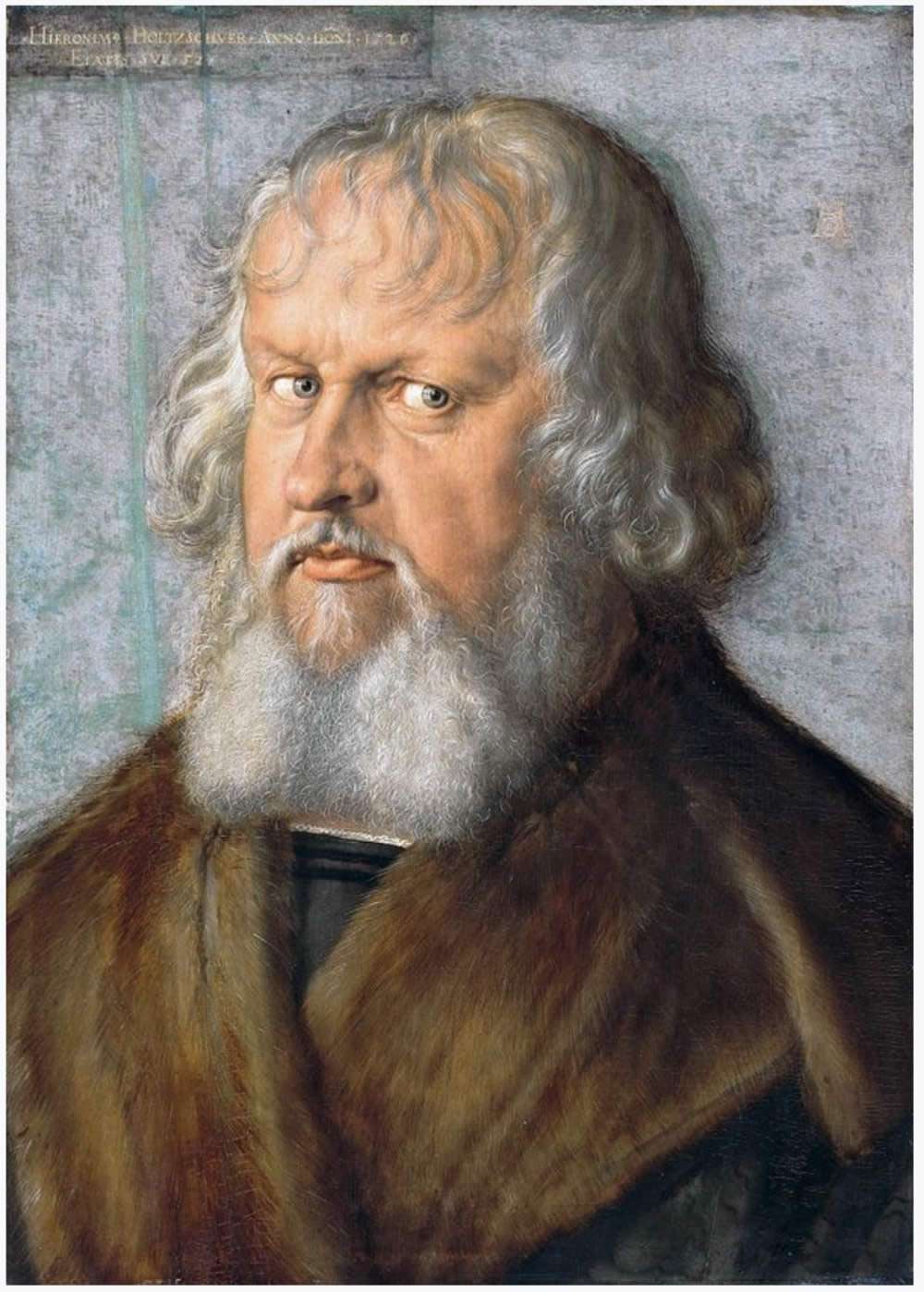 The next is, simply, Dürer's home from 1509 to his death in 1528. It still stands today. 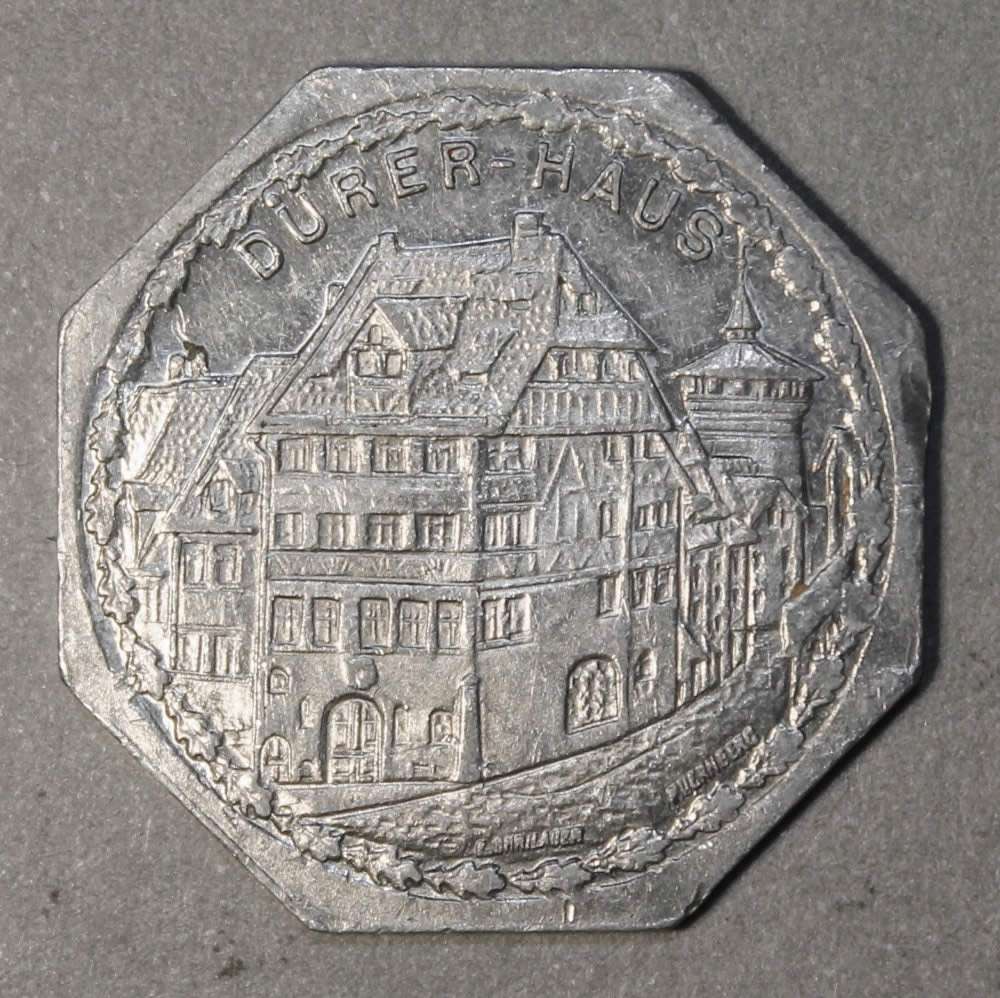 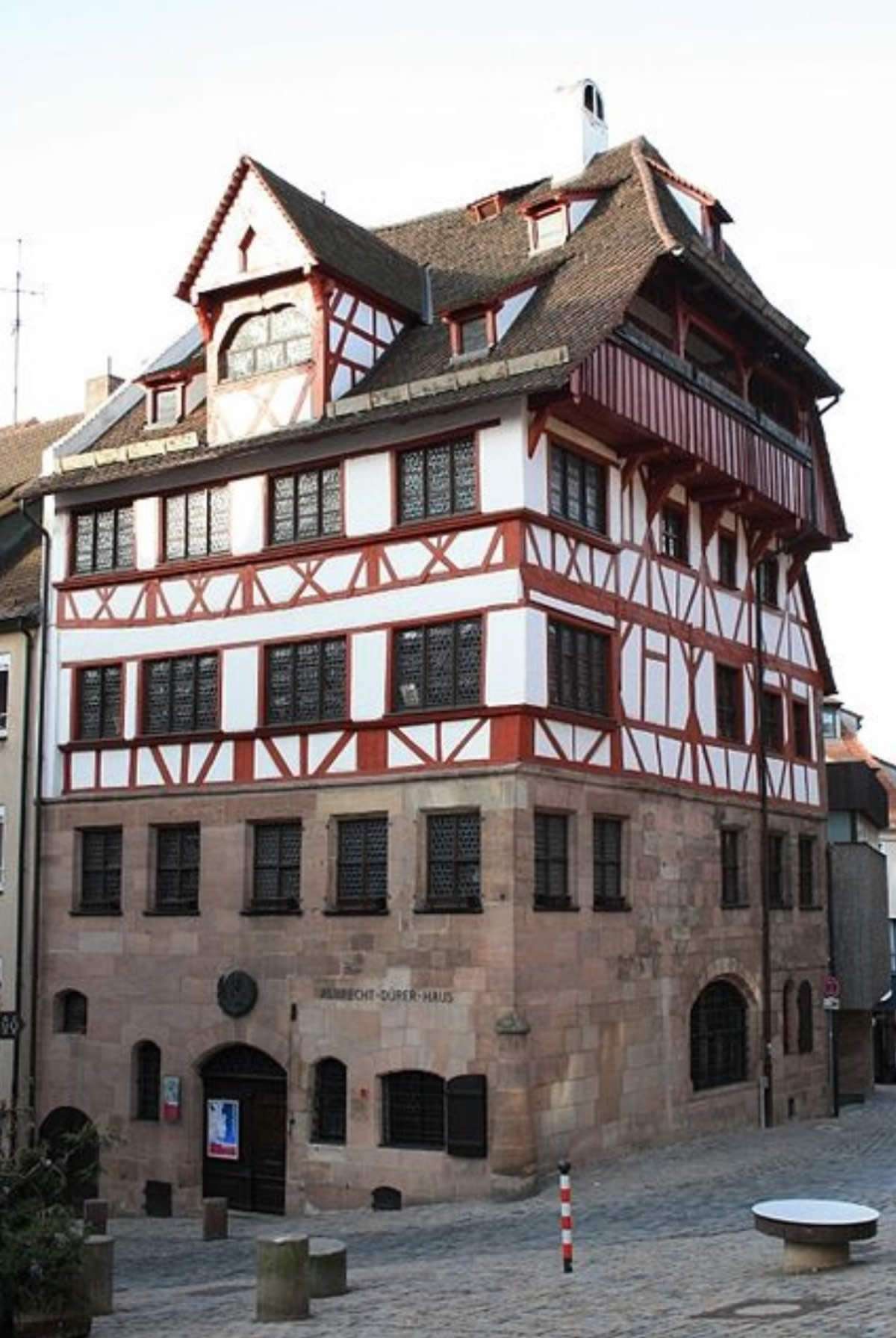 In Memory of Crazyb0 12-26-1951 to 7-27-2020
In Memory of Tootallious 3-31-1964 to 4-15-2020
In Memory of T-BOP 10-12-1949 to 1-19-2024
|
| |
Replies: 5,980 / Views: 455,865 |
To participate in the forum you must log in or register.
Disclaimer: While a tremendous amount of effort goes into ensuring the accuracy of the information contained in this site, Coin Community assumes no liability for errors. Copyright 2005 - 2026 Coin Community Family- all rights reserved worldwide. Use of any images or content on this website without prior written permission of Coin Community or the original lender is strictly prohibited.
Contact Us | Advertise Here | Privacy Policy / Terms of Use
|
| Coin Community Forum |
© 2005 - 2026 Coin Community Forums |
| It took 0.86 seconds to rattle this change. |
 |
|
| |
| |







 First Page
 Previous Page


 Posted 03/26/2018 01:27 am


