| Author |
 Replies: 21 / Views: 4,582 Replies: 21 / Views: 4,582 |
Page 2 of 2
|
|
|
|
Formerly nancyc
Australia
5385 Posts |
 Lovely Errors! life is a mystery to be lived not a problem to be solved
|
|
Rest in Peace
1988 Posts |
You got that right nancyc
|
|
Moderator
 Canada
10476 Posts |
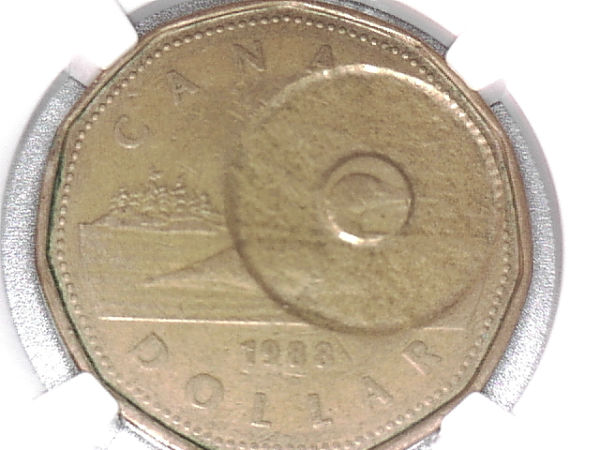
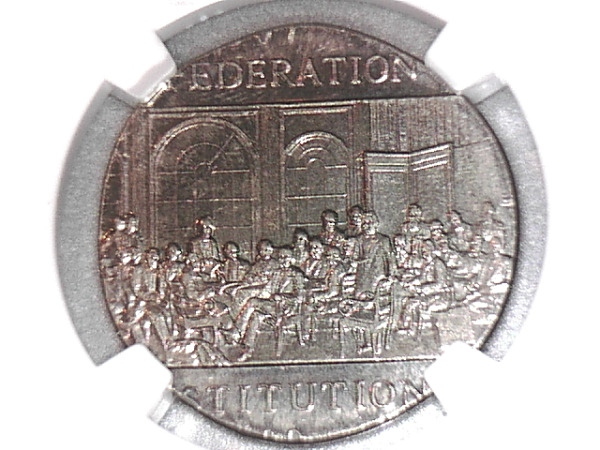
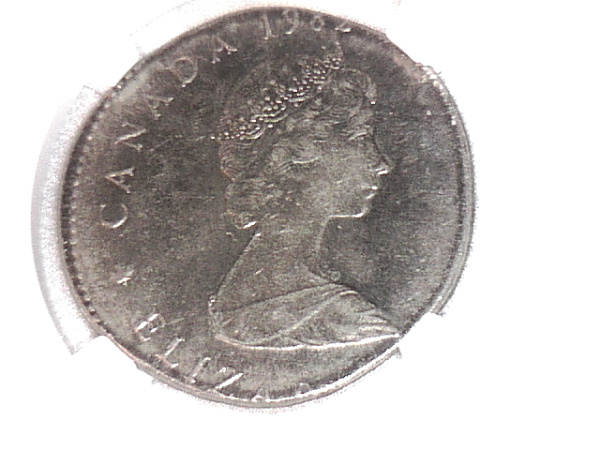
I guess the photo was deceiving to my eye. I checked my 1982 Constitution dollar coin and it is even smaller than yours. Mine is the exact weight and composition for a New Zealand Cu-Ni 10c planchet. I wonder how many other oddities exist for that particular coin...
"Discovery follows discovery, each both raising and answering questions, each ending a long search, and each providing the new instruments for a new search." -- J. Robert OppenheimerContent of this post is licensed under a Creative Commons Attribution-NonCommercial 3.0 Unported License. See: http://creativecommons.org/licenses...0/deed.en_USMy eBay store
Edited by SPP-Ottawa
06/06/2012 12:18 am
|
|
Pillar of the Community
Canada
743 Posts |
With all these coins struck on different planchets, how do they carry a value. From what I hear they are made by mint workers causing trouble and having fun and then throwing them into circulation. Not really a dye or planchet strike error!
|
|
Valued Member
 Canada
334 Posts |
SPP
When the Constitution dollar errors were first available they seemed to come from only a couple dealers at the time . I have seen several off metals , a couple of large broadstrikes , a few off centers , a couple of partial brockages and a few other types . I would estimate that perhaps there are about 30 major errors that are out there on the 82's .
|
|
Valued Member
Canada
334 Posts |
Jeyrey2000
They carry value because people collect them :-) . The origins of such errors is always open to debate . Most of them do indeed result from mistakes in the manufacturing process .
|
|
Moderator
Canada
10476 Posts |
I assume your estimate excludes the coinage axis strikes, and the thin planchets (both medal and coinage axis). I think there are countless more minor errors out there for this year. I have a triple clip 1982 dollar and have assembled an "around the clock" set of clips on the 1982 Constitution dollars, something I have not been able to do for any other year.
"Discovery follows discovery, each both raising and answering questions, each ending a long search, and each providing the new instruments for a new search." -- J. Robert OppenheimerContent of this post is licensed under a Creative Commons Attribution-NonCommercial 3.0 Unported License. See: http://creativecommons.org/licenses...0/deed.en_USMy eBay store
|
|
Valued Member
Canada
334 Posts |
My estimate is for the major striking/planchet errors on them . It doesn't include things as die rotations or minor clips . I think the thin planchet ones are way over hyped/priced . I remember one dealer had quite the number of 82 errors in his display one year at a torex . Moores also use to have them in their auctions ( probably from this same dealer - speculation here ).
|
|
Pillar of the Community
United States
2295 Posts |
|
|
Valued Member
United States
462 Posts |
Edited by Zimmy
06/09/2012 09:00 am
|
|
Moderator
Canada
10476 Posts |
I recently checked the RCM records for 1982. The RCM did not mint 25c Barbados coins in 1982. So if your coin weighs 5.6 grams, that means that it would have to been struck on a 1981 Barbados 25c planchet? I find that a bit puzzling, because the 1982 Constitution dollar struck for circulation was produced in the 1982 calendar year. It was first presented by the Minister of Supply and Services to Queen Elizabeth II, during her Royal visit to Canada (April 17). The Minister announced then, that the coin would be available to the public by July 1. So did mint workers just have a handful of 1981 Barbados planchets just lying around in late spring of 1982? Note that the RCM made New Zealand 10c coins in 1982, on Cu-Ni planchets with specifications of 5.67 grams. The planchet compositions and weights are exact for Barbados 25c and New Zealand 10c, if not the same. I think the RCM used the exact same planchets, for both of these country's coins. 1981 Barbados 25c 5.6 g 23.6 mm (4,365,000 mintage) 1982 New Zealand 10c 5.66 g 23.62 mm (18,000,000 mintage) Even if the planchets are the same, I wonder if it is the intent of the end-product of that planchet, is how it should be designated? In my opinion, the best explanation is that these examples were struck on a 1982 New Zealand 10c piece (a production coin for the same year). Occam's razor applies here. By the way, my coin weighs 5.63 grams... do either of you have weight measurements for your examples? "Discovery follows discovery, each both raising and answering questions, each ending a long search, and each providing the new instruments for a new search." -- J. Robert OppenheimerContent of this post is licensed under a Creative Commons Attribution-NonCommercial 3.0 Unported License. See: http://creativecommons.org/licenses...0/deed.en_USMy eBay store
Edited by SPP-Ottawa
06/09/2012 2:25 pm
|
|
Valued Member
Canada
334 Posts |
There is the possibility that the mint struck the 1981 coins in early 82 . They don't have to strike the coins with the current years date . Then again it could be the new zealand one . Although there has been many great attempts to publish which country/denomination the RCM struck coins for , it is incomplete . Mr. Glassfords site being the best of the best :-) . |
|
Valued Member
Canada
334 Posts |
Looking through my records I had mine recorded as a barbados 25 cent but the weight notation says 5.5 g . It is in a holder so I can't re weigh it . Been a long time since it was weighed , must have been some reason I put the barbados designation - maybe I messed up :-). The 81 one has 5.6 g noted .
|
|
Valued Member
United States
462 Posts |
Mine weighs 5.5 grams. Mr Glassford attributed it although NGC slabbed it as struck on foreign planchet. It's not uncommon to have a planchet from a prior year make its way into the next year's production. The New Zealand planchet at 5.66 grams and the Barbados at 5.6 grams, if both correct, would lean towards our lighter 5.5 gram planchet being Barbados. Other than that, the two countries planchets are very similar.
|
|
Moderator
Canada
10476 Posts |
It could also be a function of how the data was recorded. Note that the 1981 RCM reports reported planchets to 1 decimal place, and the 1982 reports to two decimal places. I think they used the same planchet... So, in the end, we are both right... because prior to striking, a blank planchet is just that - a blank planchet.... "Discovery follows discovery, each both raising and answering questions, each ending a long search, and each providing the new instruments for a new search." -- J. Robert OppenheimerContent of this post is licensed under a Creative Commons Attribution-NonCommercial 3.0 Unported License. See: http://creativecommons.org/licenses...0/deed.en_USMy eBay store
|
|
Page 2 of 2
|
Replies: 21 / Views: 4,582 |
Page 2 of 2
|






 First Page


 Posted 06/05/2012 8:58 pm