| Author |
 Replies: 35 / Views: 8,680 Replies: 35 / Views: 8,680 |
Page 3 of 3
|
|
|
|
Bedrock of the Community
United States
20753 Posts |
Quote:
When I went to summer camp as a kid, I got to do all kinds of fun sciencey experiments to earn some of my Girl Scout I don't remember the exact amounts, but the basic idea is vinegar + salt = magic penny cleaner! You can literally clean pennies by the handful. Here's the kicker: if you didn't rinse your pennies promptly in distilled water, or used the wrong ratio of salt to vinegar . . .
If your read a lot of the posts on this forum about cleaning coins, you would have seen more than a zillion time, slight exageration, DO NOT CLEAN COINS. Not intending to bore you but in most instances the STUFF on coins is in many times from a chemical reaction with something in the air and the metal of the coins. Removing that STUFF, removes part of the metal of the coins. For example with Copper, and not just coins but Copper pipes too, as they get exposed to moist air a thin layer of Cuprus Oxide {Cu2)} forms. As such coins are exposed to more moist air and there is Carbon DiOxide present, more reactions occur to form Copper Carbonate [CuCO3-Cu{OH}2]. People living in areas where SO is present in the air from Fossil fired furnaces, power stations and steel mills, this further reacts with Copper. All in all, the removal of all such STUFF on the surface of your coins takes away some of the metal. Vinegar contains an acid. Salts are abbrasive. Worse yet is your common table salt, NaCl, is not exactly pure and can and usually does contain all sorts of STUFF. Some of which may do more damage than good. DO NOT CLEAN COINS. Thad: So many things can effect what your doing. Possibly even your breath on a coin or near a coin may create effects in this experiment. Dust in the air, moisture in the air, stuff on a coin itself from the packaging too may effect these types of experiments. To do it properly you would sort of need a perfectly clean coin, clean container, vaccum area, etc. AND don't forget if in the Sun, use the correct Sun.   Edited by just carl
09/19/2012 10:36 am
|
|
Moderator
 United States
196100 Posts |
Quote:
If anything, the after picture looks less pink. I looked at the photo before reading your text and that was the first thing I noticed. My quick conclusion was it was after-before, but then I read what you wrote. An interesting outcome. Quote:
I'm going to ponder the science behind what might have happened chemically before I comment further. My guess is that there was just enough of an organic substance on the cent to affect the colour. The acetone did its job. Treat this cent again. If it changes more, then we might have a problem. |
|
Pillar of the Community
United States
1345 Posts |
Quote:
CONCLUSION: If anything, the after picture looks less pink. In this case the acetone appears to have slightly altered the color to a more natural "minty fresh" look. So when the 1934 D LWC I stoled on ebay from the guy that claims the pink color indicates an acetone bath, Finally arrives, I should give it an acetone bath.. |
|
Pillar of the Community
United States
8534 Posts |
It definitely changed the zincoln. I've used acetone on Indian cents and they never change. I have no idea if it would change silver or nickel. Oregon coin geek.....*** GO BEAVS ! ! ! ***
|
|
New Member
United States
10 Posts |
I'm new here, but used to collect back in the early 80's. I've been experimenting with acetone to remove circulation crud. My experience is it has been safe but don't know if I'd recommend it on copper. I just q-tip rubbed a bucket Indian Head cent that was pitted and corroded with acetone as a test, and her cheek now looks like she has pink chickenpox. The acetone removed the corrosion but only in certain spots. I have however use it with apparently harmless results. I think with copper, it's a gamble, and depends on the coin and what's on it. P.S. - I have discovered however, that there are coin like tubes that are made of *Nalgene* plastic which are surprisingly safe for acetone, and are soft, unlike hard glass. Got them at a camping supply store. Acetone will melt almost any other plastic, even yellow lighter fluid plastic containers. I may even be putting a protective layer of plastic on my coins that may prove to be the best holders ever discovered! |
|
Pillar of the Community
United States
3552 Posts |
Quote:
putting a protective layer of plastic on my coins Willoughby, Firstly, a big  from all of us here at CCF. When you get a chance please include a photo of what you are proposing to do above. I am just a bit unclear of the desired end result. mdpmedia |
|
Pillar of the Community
Canada
1354 Posts |
I just used acetone on approx 200 copper Canadian pennies that I found CRH from the 30-40's and were caked with gunk. I would put about 20 in a jar of acetone and they would sit in it while I cleaned them 1 by 1 with a qtip and then did a quick rinse with acetone after. So they sat there for 15 min maximum. I didn't get all the gunk off but there was NO distortion of the coins color at all. I was pleased with the outcome and will continue to use it on copper.
|
|
Pillar of the Community
United States
802 Posts |
Thanks coin chick... I was debating doing this for some heavily crudded Wheaties... no real value or rare or anything, but it would be nice to get some of the green marks and crud off them.
|
|
Pillar of the Community
United States
1227 Posts |
Carl, if you read my whole post, I wasn't advocating doing it. I did this as an experiment when I was a wee thing (like nine years old) and wondered if this might affect later acetone dips.
|
|
Bedrock of the Community
 United States
20049 Posts |
Lincoln Cent Lover!VERDI-CARE™ INVENTOR https://verdi.care/
|
|
Bedrock of the Community
United States
20049 Posts |
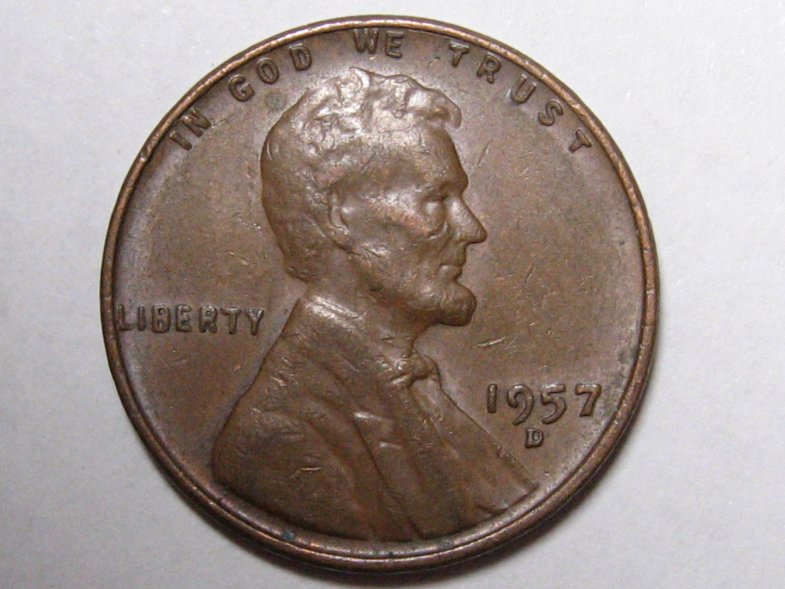
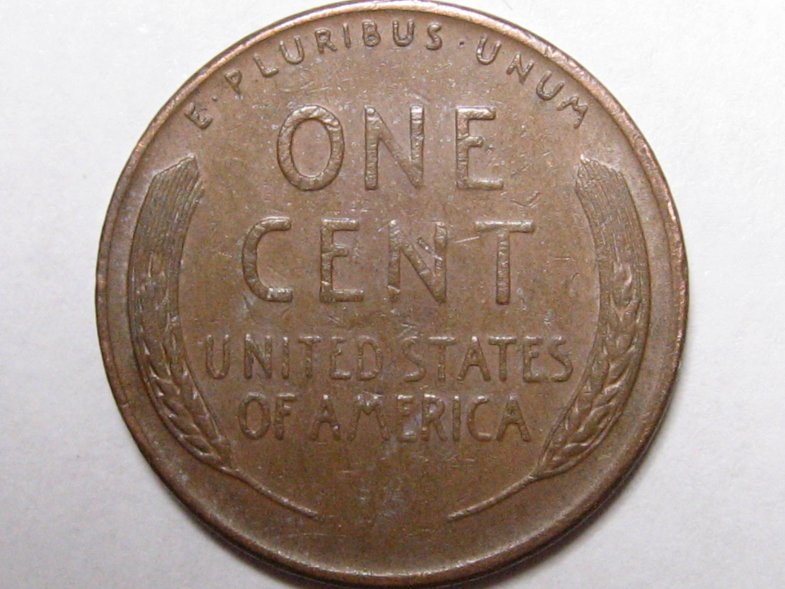
24 hours brown Wheat cent, left initial and right 24 hours. I'm going to repeat this test because I'm surprized in the color difference. It didn't turn pink but the color appeared to change. I don't believe my camera settings or light changed but I'm going to repeat to make sure. Something is funky with my white balance....look at my background (white copy paper). I must have put the coin in a slightly different position on the paper. 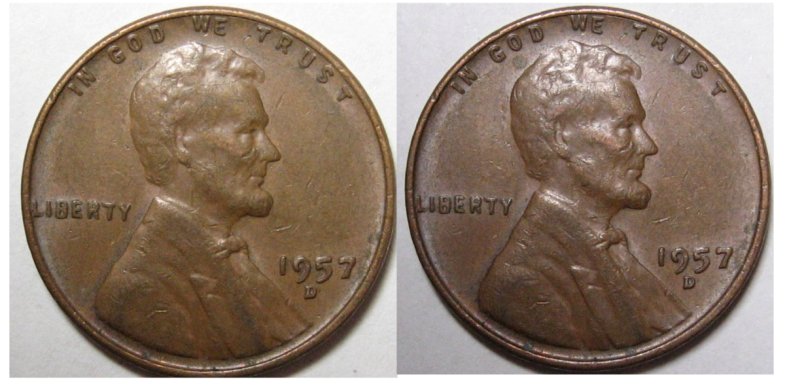 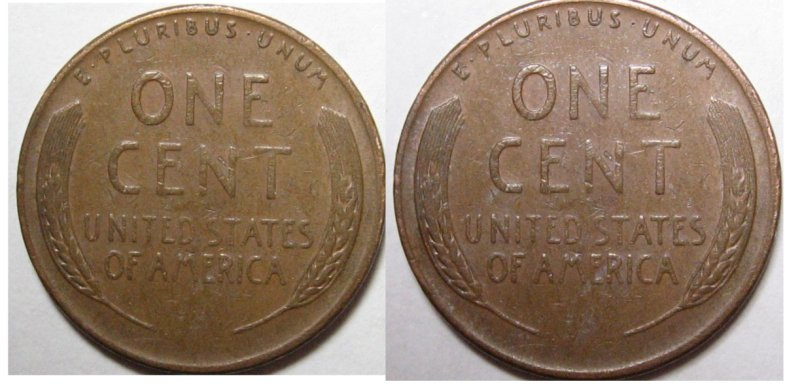 Edited by BadThad
09/19/2012 10:24 pm
|
|
Bedrock of the Community
United States
12437 Posts |
Quote:
I have discovered however, that there are coin like tubes that are made of *Nalgene* plastic which are surprisingly safe for acetone, and are soft That would be polypropylene, aka #5 plastic |
|
Bedrock of the Community
United States
20753 Posts |
Quote:
Carl, if you read my whole post, I wasn't advocating doing it. I did this as an experiment when I was a wee thing (like nine years old) and wondered if this might affect later acetone dips. Being that long ago, probably would have no effect at all. If you mean the same coins and after all those years, Acetone should do nothing except remove new dirt. Hopefully there is no salt left on those coins now. Thad: I still think there is a possibility it is something your doing and not the Acetone. I've done so many dips in that stuff with Copper coins and no reactions at all. However, never tried it on a new Cent. Although not noted anywhere, I wonder if the outer layer is not just Copper. To save money, the Mint may be telling their suppliers to mix STUFF in with the Copper. Or your breathing on those coins. Or something is in the Acetone. I'm sort of wondering all sorts of possibilities on how Acetone can possibly effect Copper. |
|
Pillar of the Community
United States
979 Posts |
|
|
Bedrock of the Community
United States
20753 Posts |
May not be an answer to why things change in Acetone but there was an experiment a long time ago. In this experiment an attempt was made to make the purest water possible. Once made it was placed in a very clean glass jar and sealed. Eventually this jar was placed in a Museum somewhere and is now all cloudy. It was discovered that the glass was slowly disolving into the water. Glass is not perfect and does not only disolve but flows as well. Yes it takes time but it may well be possible that even with this type of experiment with Acetone and Copper in a glass container, some of the properties of the glass may be being absorbed into the solution. Knowing the type of glass, all it's properties, etc., may be a necessity in this type of experiment.
From Wikipedia:
The most familiar type of glass, used for centuries in windows and drinking vessels, is soda-lime glass, composed of about 75% silica (SiO2) plus sodium oxide Na2O from soda ash, lime CaO, and several minor additives. Often, the term glass is used in a restricted sense to refer to this specific use.
Edited by just carl
11/14/2012 10:18 am
|
|
Page 3 of 3
|
Replies: 35 / Views: 8,680 |
Page 3 of 3
|







 First Page
 Previous Page

 Posted 09/19/2012 12:01 pm