| Author |
 Replies: 26 / Views: 5,468 Replies: 26 / Views: 5,468 |
Page 2 of 2
|
|
|
|
Bedrock of the Community
United States
20753 Posts |
I've got Albums of Lincoln Cents, Indian cents, Large Cents and all in Whitman Classic Albums. All are kept in doubled Zip Lock Plastic Bags. First into one, folded over and pushed out as much air as possible. Then that goes into a second one and again, folder over. Been doing that for a long, long time. NONE of any of my Copper coins have toned at all. |
|
Valued Member
 Spain
134 Posts |
I opted for the same method, but adding the silica gel and without the double bag. The zip locks I found at home are fairly large, so I was able to fit up to 5 album pages in each one; all well packed with a silica bag and the air extracted until it turned into a solid bock.
Now my only worry is whether or not the plastic from the album pages will have any effect on the coins; I'm not even sure they are PVC free, though I bought them just a year ago.
It would be a nice idea to start a thread on this type of tips (if it doesn't exist yet); specially those specific to the restoration and preservation of each metal. For example: the lacquer and acetone tip above, which I'm just about to try.
|
|
Bedrock of the Community
United States
20037 Posts |
Quote:
All are kept in doubled Zip Lock Plastic Bags. First into one, folded over and pushed out as much air as possible. Then that goes into a second one and again, folder over. Been doing that for a long, long time. NONE of any of my Copper coins have toned at all.
Exactly: mo layers = mo betta I take that to another level and put those into tupperware type containers. |
|
Bedrock of the Community
United States
20037 Posts |
Quote:
Can you protect zinc coins by using clear acrylic laquer? What's the point of using laquer when that in itself will ruin the coin.  Lincoln Cent Lover!VERDI-CARE™ INVENTOR https://verdi.care/
|
|
Pillar of the Community
United States
1391 Posts |
I thought you could remove laquer with acetone. I thought they used to laquer coins all the time. Is it known to be a bad thing now?
|
|
Valued Member
Spain
134 Posts |
I'm sort of disappointed with the acetone; I naively thought it was going to be like a magic dip where the coin was instantly restored to its former glory... but I saw no change at all.  I guess its purpose is preservation rather than restoration. Another issue, I found some coins that are toning at different rates in some parts; which usually leaves lines all over the coin. Like this one: 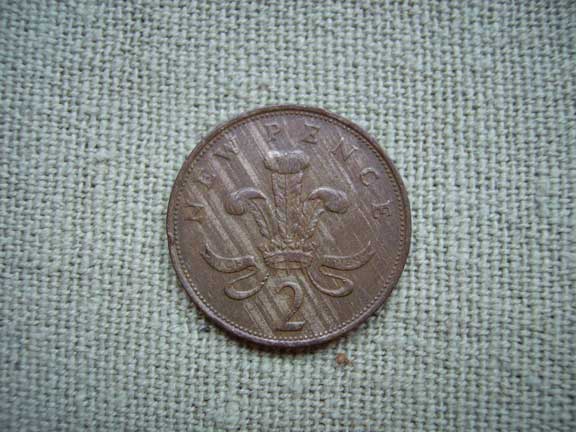 Why has this happened and how can it be fixed? Edited by silvermaniac
06/25/2013 4:00 pm
|
|
Valued Member
United States
293 Posts |
Silvermaniac: I'm going to try to answer with Spain in mind. One of the previous posters mentioned "keep the coins out of air" and that is correct in the sense you have to avoid humidity . . . copper coins are really vulnerable to that. I know a fellow coin dealer who would not buy any red copper American or whatever when he lived in Hawaii. Keep in mind that Hawaii is just south of the Tropic of Cancer which puts in the tropical zone. Now he can buy those as he wished because he's out Hawaii and out of the tropics. Now since you live in Spain if you are close to the coast you may have exposure to salt air . . . kind of like American New England does. If that's what you deal with you may have to store your coins in a bank box . . . but just make sure that those are designed like fire safes which are designed to keep a humid environment to save paper.
|
|
Valued Member
Spain
134 Posts |
Thanks a lot, I didn't even consider the humidity and the salt of this climate. But regarding the bank box... well, let's put it this way: it would probably be cheaper to buy new coins every year than pay for a bank box.  Edited by silvermaniac
06/25/2013 11:35 pm
|
|
Bedrock of the Community
United States
20037 Posts |
Quote:
I'm sort of disappointed with the acetone; I naively thought it was going to be like a magic dip where the coin was instantly restored to its former glory... but I saw no change at all. I guess its purpose is preservation rather than restoration.
Another issue, I found some coins that are toning at different rates in some parts; which usually leaves lines all over the coin. Like this one: That's the whole point of using acetone, it's extremely coin safe. It will (generally) not alter the coin. As far as your copper, it's a beautiful woody. Why would you want to clean it? A lot of us actually collect those coins with "lines all over them". 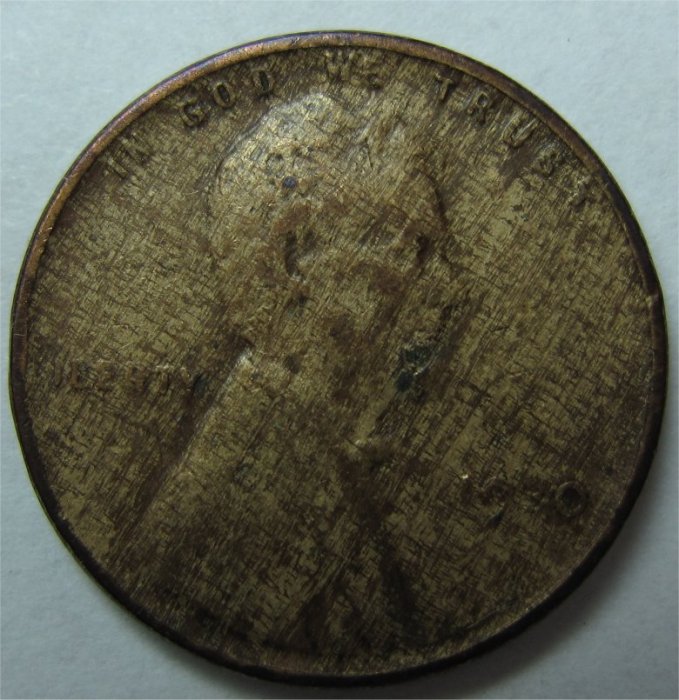 Edited by BadThad
06/25/2013 11:29 pm
|
|
Valued Member
Spain
134 Posts |
I didn't know that; I thought it would rather be considered sort of a damaged coin. I have very few that are changing tones in that way -probably all of them British 2 pence- and I'm not sure if it had something to do with me giving them a bath to clean them, which made the different tones more obvious; reason why I thought I ruin them. In any case, I'm just starting to develop a taste for bronze coins in general. I don't know... there's something about bronze coins that I'm starting to see extremely beautiful; even with the same designs that in other more valuable metals. Like this one I saw on facebook, for example... it's just stunning!  Edited by silvermaniac
06/26/2013 12:06 am
|
|
Bedrock of the Community
United States
17884 Posts |
The uneven toning is caused by the metals in the alloy not being completely and evenly mixed. This meant the ingot did not the same alloy percentages at all points. When the ingot is rolled out these different areas get stretched out into streaked areas of differing composition and then since these areas tone at different rates the contrast between the different areas becomes more noticeable. The only way to fix this is to melt the coin back down and make sure the metals are well mixed this time when you do the pour, and cool the ingot quickly so the metals do not have a chance to separate. (Some alloys, due to different densities and melting points of the metals, will start to separate again if the melt is cooled too slowly.)
|
|
Valued Member
Spain
134 Posts |
Yes, I was afraid I would get that answer.  Do you guys also ziplock the Cu-Nis? I mean, the ones I got didn't seem to get affected in this past 2 years. What about longer periods; what should I expect if left in the albums? Edited by silvermaniac
06/27/2013 6:27 pm
|
|
Pillar of the Community
United States
2077 Posts |
Has anyone ever tried sealing copper coins with a soft wax?
|
|
Bedrock of the Community
Australia
21789 Posts |
If you are thinking of protecting ANY coin with an acrylic lacquer coating it would be best to apply to an untoned coin.
Reason being that with a toned coin, an especially a zinc one, all of the oxides and sulfides would be locked beneath the coated seal. It would be a bit like applying a clear coat seal to a rusted steel surface.
That is especially a problem with zinc coins, because none have been issued for decades.
|
|
Valued Member
Spain
134 Posts |
I've been checking on my common coins and noticed some have black spots, specially those with Nickel on them (Cu-Ni and Nickel-brass); is there any way to remove these black spots?
|
|
Page 2 of 2
|
Replies: 26 / Views: 5,468 |
Page 2 of 2
|








 First Page

 Posted 06/25/2013 12:38 pm


