| Author |
 Replies: 27 / Views: 2,455 Replies: 27 / Views: 2,455 |
Page 2 of 2
|
|
|
|
Valued Member
 United States
160 Posts |
BH1964 -- OK, got it. Makes sense. So, here's a weird question. While I'm not sure how "toning" or "patina" forms, if I let this coin sit for another 50 years, and it develops new "toning," or "patina," then would this coin theoretically then increase in value, since it would presumably begin to look more "natural" again?
Steve
|
|
Pillar of the Community
United States
1261 Posts |
I think it may Steve although it may looked like it was cleaned a long time ago. Some collectors have developed a skill in determining that. Just leave it alone and let it tone again. Some people put them on their windowsills to help speed up the process. It does work but just make sure you where gloves when holding it. Mine developed some ugly fingerprints when I tried that method.
|
|
Pillar of the Community
United States
1261 Posts |
BTW, good job asking questions. That's how you learn! Anyone can make a coin look bright silver again but it takes decades to develop the nice natural toning that collectors look for. It also takes proper storage too. An old time dealer once equated the cleaning of a coin to taking a brillo pad to your brand new mint condition Porsche.
Edited by chesterb
12/23/2013 01:23 am
|
|
Valued Member
United States
160 Posts |
chesterb --
A windowsill? That's interesting...
Let me take this just a bit further (since my repeated questions don't seem to have annoyed you quite yet... :) )...as I mentioned in the other thread, I don't intend to sell my coins. I enjoy them too much. BUT -- I recognize that someday, most likely, my daughter will end up inheriting my ever-growing collection, and at that point, SHE may or may not have the sentimental attachment to them that I do -- such that the value in these coins TO HER may someday be to sell them. In that case, I want the value to be as high as possible, down the road. And from that perspective, I've just been putting them in holders, and then into my safe. BUT -- you mentioned "proper storage." If I want a coin to be both "protected," and also have a chance to develop some natural toning, what would you suggest to be "proper storage?"
Also, that "brillo pad" analogy really drives the point home, regarding cleaning. So what would you suggest I do, when I dig a nice, old coin...can you give me a few "rules of thumb" that I should follow, so as to maintain as much value as possible? Most silver comes out of the ground in nice shape, but without the "toning" that we have discussed. Right now, while out detecting, I always take bottled water (for rinsing), and several small medicine bottles for transporting the coins home -- some with water (which is where I put any old but worn coins), and some with cotton balls (which is where I put any coin that I think may be more rare, or may grade higher than usual). Once home, what would you suggest? Water rinse, and that's it -- and then into "proper storage?"
Steve
Edited by sgoss66
12/23/2013 01:40 am
|
|
Bedrock of the Community
13014 Posts |
Steve to touch on your question of how to unclean a coin there's two main ways that people do it. The first is what you mentioned letting it retone naturally. There's coins on the market that were cleaned at one point and did retone. Franklin I think most circulated 1800s coins probably saw some sort of cleaning in their lifetime, but if they retone and cover it up they're considered gradeable again by the market assuming there aren't scratch marks from a brush.
The second is you can wear the coin down until it's natural surface underneath is exposed again. This is commonly referred to as a pocket piece where people carry the coin around letting it naturally wear down until the cleaned surface has worn off.
Neither method is quick and both take years sometimes decades, but the pocket piece is generally a little faster. The down side to the pocket piece method is you're also wearing off detail lowering the grade. There are instances where it would be better off being cleaned than worn down. Say there's a massive price jump between vf and xf, a cleaned xf would probably be worth more in xf than a natural vf one. That's not the case here but just something extra to consider.
As far as proper protection while trying to tone it, you'll want to remove it from any air tight or 2x2 you have it in since that slows toning. There's several brands of old albums that protect the coin from wear but coins toned up well in them because of what they were made out of. I believe the old Whitman albums and the Reymond something coin boards were pretty well known for that and I'm sure they're others.
Retoning to market acceptability would be the ideal method for a cleaned coin, though coins with pitting or scratches from a harsh cleaning would likely need to be worn down some to avoid the details label.
|
|
Bedrock of the Community
13014 Posts |
I forgot to mention, believe it or not wrapping a coin in a taco bell napkin supposedly tones a coin up very nicely.
|
|
Bedrock of the Community
United States
37154 Posts |
|
|
Valued Member
United States
160 Posts |
Thanks, IndianGoldEagle! basebal21 -- amazingly detailed and helpful info! Wow, there is so much more to it than I would have thought...but it makes sense all that you said. I fully understand that there's a tradeoff between using the "pocket piece" method, which will reduce the grade vs. letting a coin "tone" over time, but at a higher grade. OK, so here's a question, related to any nice coin that I have dug...I'm trying to figure out how to take it from the dirt, to being a piece with the highest value possible. I used to be confused, before some of you have helped me to understand better, about the "environmental damage" thing. I'm beginning to understand that "damage" doesn't necessarily mean damage the way I would think of damage; more often than not it means the toning/coloring is not what a collector expects to see. SO -- what I'm asking is this...is there a good "process" for me to follow, for any nice coin I happen to dig? For instance -- if I take any dug coin, rinse it with water, and then pack it in cotton balls until I get home; then, give it an acetone bath, and wrap it in a taco bell napkin, or set it on a window sill...that might be one way to do it, but I have no idea if it's a "proper" way, or maybe the best way... Can you, or anyone, offer a "method" or "approach" for me to take? I accept that it may not be perfect, but I think most silver coins come out of the ground in decent shape (with the main issue being just how much "wear" on the details of the coin occurred before it was dropped). Most are not pitted in any way, or "damaged" otherwise. just because they were in the dirt. BUT, there is certainly not the toning or patina that is desirable... Here's another coin I dug, that is in REALLY nice condition in my opinion, details-wise, but which doesn't have the right "toning." What do I do? 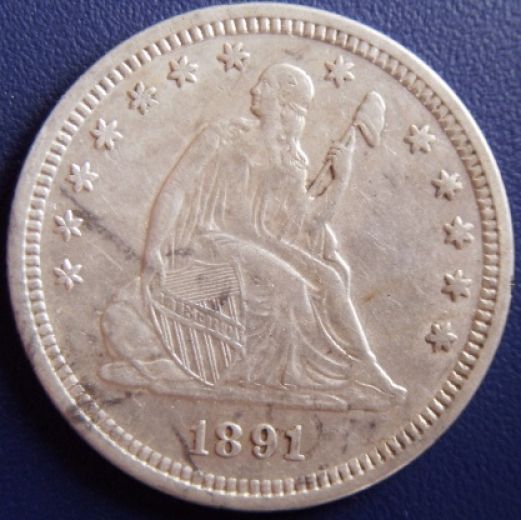 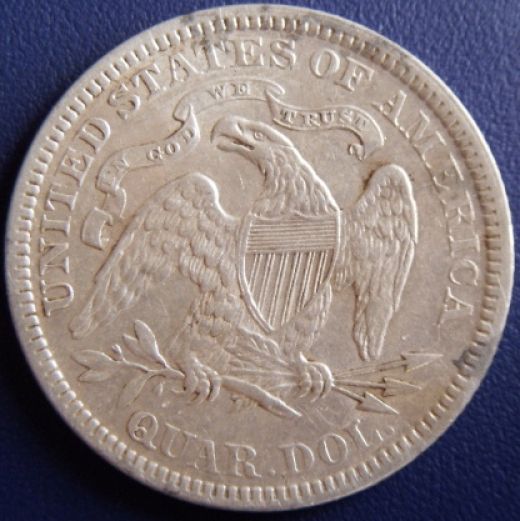 Any thoughts as to how to handle dug coins, like this one? Steve |
|
Pillar of the Community
United States
8534 Posts |
Wow that's a nice coin. Did you take baking soda to this one too ?
Oregon coin geek.....*** GO BEAVS ! ! ! ***
|
|
Bedrock of the Community
United States
10982 Posts |
Very few dug coins will have much value. Only true rarities will possess much beyond the value of their metallic content. Detecting can be fun and profitable if you find silver or gold but expecting real numismatic value from coins coming out of the ground is not realistic 99% of time.
That said, preserving what you do find so it retains (or possibly gains) value is a great idea. Never abrasively clean and letting the coins rest for a few years on unfinished wood can help. Good luck!
|
|
Valued Member
United States
160 Posts |
Thanks for the idea of storing on unfinished wood, BH1964. Interesting, and I will give that a try.
NO, 52Raymo. No baking soda to this one! It was in way too nice of shape; it got nothing more than a rinse with water...
But, again, I am guessing it doesn't have the "look" that a collector is looking for. I had a few people estimate that coin to be XF/borderline AU on the details, but again -- I'm guessing that even though I did nothing to it except a water rinse, it's not got the "look" that most desire. If it acquires "toning," then maybe it would be more desirable to a collector? I don't know...
Steve
|
|
Bedrock of the Community
13014 Posts |
Steve
I would probably skip the cotton packing just to make sure no hair line scratches happen. Bring some mylar flips with you and put them in there until you can get them home and rise and acetone them would be my suggestion to play it safe. Your method is likely fine but if you wanted to be extra cautious you could skip that for the coins like the last one you just posted with excellent detail.
For that one you just posted the detail on it is fantastic, the super light color not so much. That one would definitely get a lot of interest with the proper tone on it. Its a perfect candidate to be placed on wood or in an album ect and let nature do its thing.
|
|
Pillar of the Community
United States
8534 Posts |
Gosh I think I would go with the water/cotton ball set up. Putting a coin in a flip with dirt on it just seems like that would scratch the bejesus out of it.
Oregon coin geek.....*** GO BEAVS ! ! ! ***
|
|
Valued Member
United States
160 Posts |
basebal21 and 52Raymo --
Thanks for the input, guys. I realize that I'm asking questions that wouldn't usually be asked here -- and that most have probably never thought of, but I'm trying to find what to do from the point where my knowledge ends (finding them) and yours begins (how to property handle a coin).
Yeah, basebal21, even I can tell that that coloring on that quarter is "not right" from a collector's perspective, as compared to a nicely toned specimen. I love that coin, and it's one of the nicest I've found, in terms of the amount of detail; but it is frustrating that even a "dug" coin with that much detail on it really "suffers," from a "value" perspective. Again, not that I plan to ever sell it, but I sure would like to see it (and some of the other older/nicer ones I have) end up in nice enough condition from a collector's perspective that if in the future my daughter would wish to sell it, she'd get some value out of it.
THANK YOU all, for your continued help and patience in answering my questions and educating me...
Steve
|
|
Pillar of the Community
United States
5854 Posts |
I would say the Half Dime has VG details and the quarter looks close to AU details. Both look cleaned. I'm not sure if you have already mentioned it in this thread but did both of these coins come from the same place as the 1830 dime? |
|
Page 2 of 2
|
Replies: 27 / Views: 2,455 |
Page 2 of 2
|








 First Page


 Posted 12/23/2013 01:13 am


