| Author |
 Replies: 20 / Views: 3,357 Replies: 20 / Views: 3,357 |
Page 2 of 2
|
|
|
|
Moderator
 United States
196424 Posts |
|
|
Bedrock of the Community
 United States
12923 Posts |
Wow, what a beating.  Agree with the above assessments: PMD. Guessing that "raised" spot in the center is where it was clamped/held for... zee procedure.... |
|
Pillar of the Community
United States
1804 Posts |
|
|
Pillar of the Community
United States
1804 Posts |
Have never seem one on the reverse. Do not personally believe it was done with a brass wheel grinder. Nickel is way too hard for BRASS, I guess. Betting on STAINLESS STEEL (KNIFE LIKE) tool. The groves are both clock wise and counter clock wise in the same area. Seemingly like trying to move it. Looks like some one is TOGGLING it, for a reason. This one is hit RIGHT side, LEFT side, JAW, and FOREHEAD. 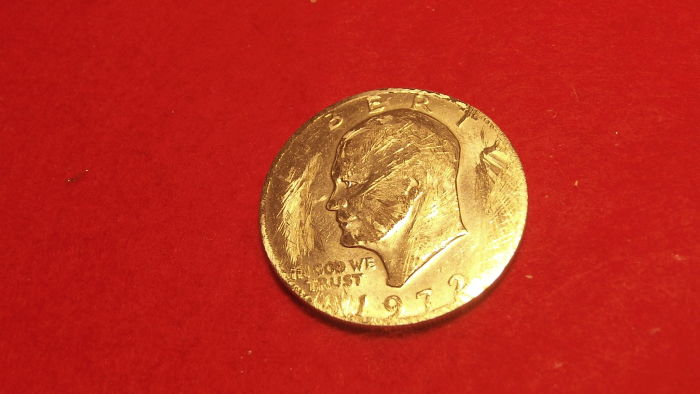 |
|
Bedrock of the Community
United States
12437 Posts |
Why would it have to be brass? I own several wire wheels with steel bristles. Ultimately, it does not matter at all what tool what used to inflict the damage because it does nothing to change the fact that the coin was damaged post-mint. There is an almost infinite number of ways to damage a coin, some are plainly obvious while others are an enigma wrapped up in a riddle. Attempting to figure out the specific cause of damage can be a bit of a fool's errand since generally the only one who knows definitively is the person who did the damage in the first place. A more productive process is to learn what can and cannot happen during minting, that knowledge is much more useful and will make spotting PMD much easier. |
|
Pillar of the Community
United States
1804 Posts |
BIO  Quote: A more productive process is to learn what can and cannot happen during minting, that knowledge is much more useful and will make spotting PMD much easier. Will you share your thoughts? I am here to learn  Particularly interested in MINT knowledge about times that a dies has a failure. Or when a coin is stuck in the COLLAR. Thank you kindly. |
|
Bedrock of the Community
United States
12437 Posts |
What are you referring to as a "die failure"? Dies can be taken out of service for wear(~100,000- 1 million business strikes depending on denomination) or damage(cracks, breaks, etc) but it has to be fairly significant to shut down the press, remove a die, and resurface it or replace it with a new one. As long as a die can be used to strike a reasonably legible coin, then the die will remain in service.
A coin stuck in the collar can result in a multi-strike coin or another planchet could be fed to the dies and then you would most likely have an off-center or broadstruck/brockage combo on the second planchet if the first planchet had been struck first. There are many factors in play that could effect the resultant error, including the type of press(older Bliss presses had a vertical die arrangement while the newer Schuler presses have horizontal dies) and the hammer/anvil die orientation.
|
|
Bedrock of the Community
United States
12437 Posts |
Even in this modern internet age where most information is just a click away, a solid numismatic library is a must to learn about the minting process. Looking Through Lincoln Cents by Charles Daughtrey has a nice primer on die production and Price Guide to Mint Errors by Alan Herbert is indispensable as an error reference. Herbert created what he called the "PDS" system which classifies errors and varieties by Planchet, Die, and Strike.
|
|
Pillar of the Community
United States
1804 Posts |
BIO Quote:
What are you referring to as a "die failure"? Dies can be taken out of service for wear(~100,000- 1 million business strikes depending on denomination) or damage(cracks, breaks, etc) but it has to be fairly significant to shut down the press, remove a die, and resurface it or replace it with a new one. As long as a die can be used to strike a reasonably legible coin, then the die will remain in service. At the risk of really showing my newbieness. Denomination: My question is directed only to Eisenhower dollarsCan a collar, or hammer, or anvil die ever have a catastrophic failure? Thank you for sharing your knowledge. |
|
Valued Member
United States
204 Posts |
I think this is PMD (Post Mint Damage) caused by some type of blade or machine |
|
Pillar of the Community
United States
1804 Posts |
This tid-bit from Mike Diamond Error PDF Quote:
Rolling Mill Errors Rolled-thick planchets Rolled-thin planchets Tapered planchets Rolling indentation (ES, Jan/Feb 2000) Rolled-in scrap (ES, May/June 2006) Bristles from descaling brush Does anyone know what is a descaling brush? What does it do? Why would a coin need to be "descaled? Could this "thing" in any way be responsible for the damage to the two coins in this thread? |
|
Pillar of the Community
United States
2189 Posts |
Quote:
Could this "thing" in any way be responsible for the damage to the two coins in this thread?  I'm not an expert but I know enough that it was done after the coin was struck. PSD Post Strike Damage, There's nothing more to it. Not sure what a descaling brush is myself but what ever it is, If It did cause the Damage it was after it was struck. PSDAs biokemist said Quote:
Ultimately, it does not matter at all what tool what used to inflict the damage because it does nothing to change the fact that the coin was damaged post-mint. There is an almost infinite number of ways to damage a coin, some are plainly obvious while others are an enigma wrapped up in a riddle. Attempting to figure out the specific cause of damage can be a bit of a fool's errand since generally the only one who knows definitively is the person who did the damage in the first place. Edited by jasper62
04/05/2015 10:38 am
|
|
Pillar of the Community
United States
1804 Posts |
Jasper62 Quote:I'm not an expert but I know enough that it was done after the coin was struck. PSD Post Strike Damage, There's nothing more to it. Not sure what a descaling brush is myself but what ever it is, If It did cause the Damage it was after it was struck. PSD When is a "descaling Brush" applied? Where is the coin when it is applied? Why is a descaling brush applied to a coin? |
|
Pillar of the Community
United States
2189 Posts |
Domain555
I believe I clarified "I do not know what a descaling brush is"
Edited by jasper62
04/05/2015 10:56 am
|
|
Bedrock of the Community
United States
12437 Posts |
Quote:
Can a collar, or hammer, or anvil die ever have a catastrophic failure?
I am sure it can happen but it would be a very rare event for hardened die steel to spontaneously shatter, it is more of a gradual event with progressive cracking, chipping, and breaking. Quote:
When is a "descaling Brush" applied?
Descaling brushes are large wire bristled rollers used to clean the metal stock sheets prior to punching out the blanks. Descaling brushes can leave marks on a planchet in extreme cases but it would take the form of fine parallel lines and not any type of rough radial pattern. |
|
Page 2 of 2
|
Replies: 20 / Views: 3,357 |
Page 2 of 2
|








 First Page


 to the Community!


 Posted 04/01/2015 12:23 pm


