| Author |
 Replies: 18 / Views: 4,169 Replies: 18 / Views: 4,169 |
Page 2 of 2
|
|
|
|
Bedrock of the Community
Australia
21792 Posts |
Need to see the whole coin, to check for blakesley effect.
|
|
Pillar of the Community
United States
4932 Posts |
Looks like a small indentation at 4:00 and 6:00 too
|
|
Pillar of the Community
 United States
5196 Posts |
full coin pictures 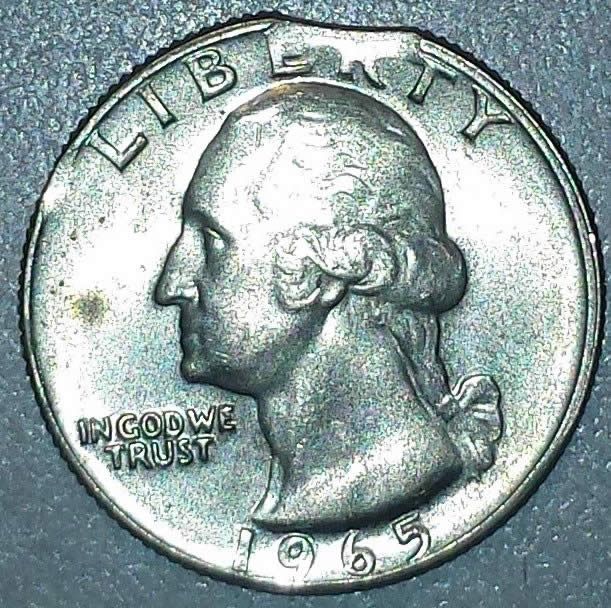 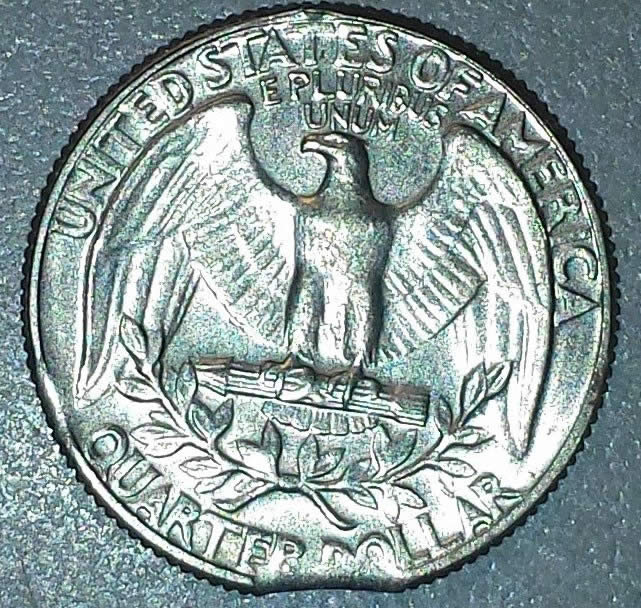 |
|
Pillar of the Community
 United States
5828 Posts |
Awesome find  |
|
Bedrock of the Community
United States
62064 Posts |
It is a double clip incomplete planchet.
|
|
Moderator
 United States
23522 Posts |
Second small clip at 10:00 obverse.
|
|
Pillar of the Community
United States
5196 Posts |
|
|
Pillar of the Community
United States
740 Posts |
Oh yea, I didn't notice that second clip in the pictures from the original post.. Even better ; )
|
|
Bedrock of the Community
United States
12921 Posts |
|
|
Pillar of the Community
United States
740 Posts |
CelticKnot: Notice the area near the '9' in "1965" on the obverse and the second T in "STATES." Also, on the reverse you see "ER DO" in "QUARTER DOLLAR" is flowing towards the clip.
|
|
Bedrock of the Community
United States
12921 Posts |
I see it, thanks, BlueSolo. So this is a term related to specific clips or general behavior exhibited by clips?
And who's Blakesley?
|
|
Moderator
United States
23522 Posts |
Quote:
Blakesley effect?
The Blakesley Effect, named for the guy who originally studied it, is an effect of uneven pressure during the rim upset because one side is missing due to the clip. In the majority of clips, the opposite rim will be weak. It's pretty clear on the big clip here. The small clip was small enough to complete the rim, if weakly, so no Blakesley Effect. |
|
Bedrock of the Community
United States
12921 Posts |
Thanks, BlueSolo and SsuperDdave for the info.
With some easy research I discovered that this kind of error is a result of a planchet manufacturing error.
Anyone know who this "Blakesley" fellow is?
|
|
Valued Member
United States
77 Posts |
|
|
Bedrock of the Community
United States
62064 Posts |
Quote:
The Australian Coin Collecting Blog
The Blakesley Effect
Named after the American numismatist that first identified it, the Blakesley Effect can be the most powerful identifier of a genuine clipped planchet error. The effect is characterised by rim weakness directly opposite the missing portion of a clipped planchet error coin. This effect is a result of the rimming process that is used on most coin blanks to form a coin planchet. The rimming process rolls the coin blank along its edge under high pressure between a roller and a fixed edge, as it is rolled around the full circumference the edge is raised. When an incomplete blank rolls around this edging press the pressure is relieved when the missing portion contacts either the fixed edge or the rimming roller. The result is that no rim is formed opposite the missing portion of the coin blank.
When an incomplete coin planchet is struck the missing raised rim opposite the clipped region is typically very weakly struck simply because the rim is not raised. An excellent example of the Blakesley Effect is shown in Figure 2. It is important to realise that the Blakesley Effect will only be seen on coins that have been through the coin rimming process.
http://www.australian-threepence.co...is-real.htmlEdited by coop
09/29/2015 5:57 pm
|
|
Page 2 of 2
|
Replies: 18 / Views: 4,169 |
Page 2 of 2
|





 First Page


 Posted 04/03/2015 07:31 am





