| Author |
 Replies: 142 / Views: 23,033 Replies: 142 / Views: 23,033 |
|
|
|
|
Pillar of the Community
 United States
3363 Posts |
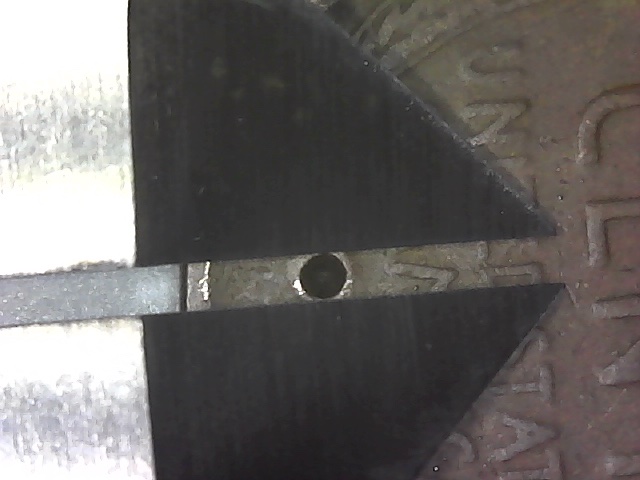
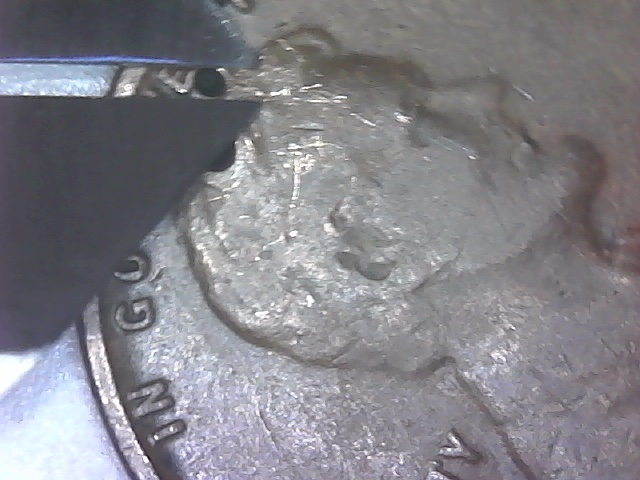
Martin D86 thanks for posting! While it is intriguing, I think it does not qualify because of the pressure ridges near 4k and from about 7k to 10k. In addition, the rounded surface is not completely smooth and the bump near the bottom should not be there with a RTM. I was recently disappointed to hear from Mike Diamond who just examined the coin I featured in my paper as having likely RTM. He said "Upon examination under high magnification, a (sic) was able to detect a very subtle, very diffuse pressure ridge around each circular pit." I am waiting for him to return the coin now and plan an attempt to see what he is talking about. The marks (there were 2 of them on my coin) must have been subtle indeed, because he also said that they were too subtle to capture digital images! I am not going to give up the search even though I think that my chances of winning the Lottery would be better than finding a RTM!!  I have established a couple of data bits about RTM  The mint scraps all planchets which have been tested, so it would be less likely one would escape and go into production. The fact that they scrap the tested planchets illustrates their determination that, depending on the orientation of the planchet in the striking chamber, the RTM could survive the pressure of the strike. Were dies to have a RTM on the face of the die, the coin struck would have a raised bump. However this cannot happen, because the dies are tested on the neck of the die and not the face. |
|
Pillar of the Community
United States
3003 Posts |
|
|
Valued Member
United States
164 Posts |
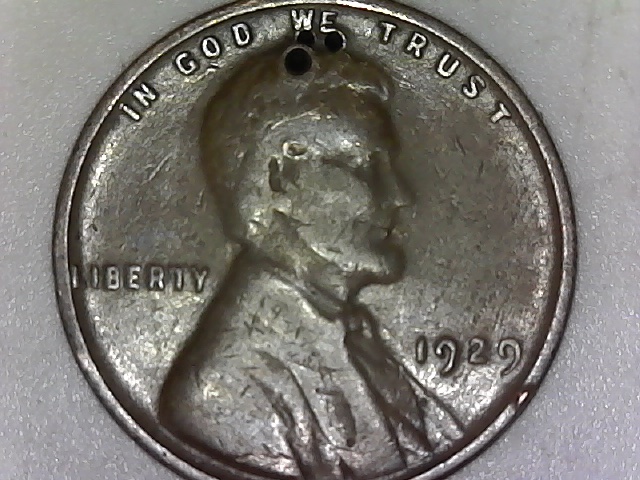
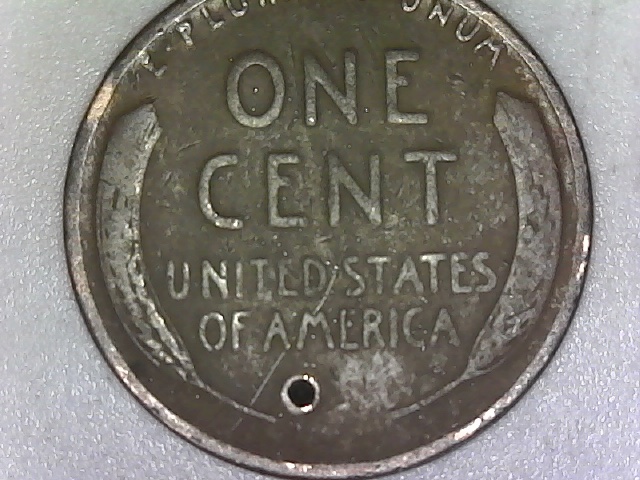
Yes this rockwell deal is a bugger..sense I found this penny ive been reading more and more about it as years went by..back in2014 there wasnt much on it..thanx to the people looking into this more is being cleared up..hopefully someday they can somehow test the testmarked penny..mine does have a bump bottom ridge but in its defense it devoloped..its a plate blister..may not beleave me..maynot be a test mark..but like you prolly feel about your coin..mine brought me on this quest and if not for the spot id of never known about testmarks..and wen I pulled it in 2014....first thing I said was...it has to be some kinda test mark..id just gone through 2 full boxes of all 2014..i was upset the bank gave me.. I'm also in contact with coneca about mine..they will most likely say its not..i will let you know what they say
|
|
Valued Member
United States
485 Posts |
|
|
Pillar of the Community
United States
3363 Posts |
Quote:
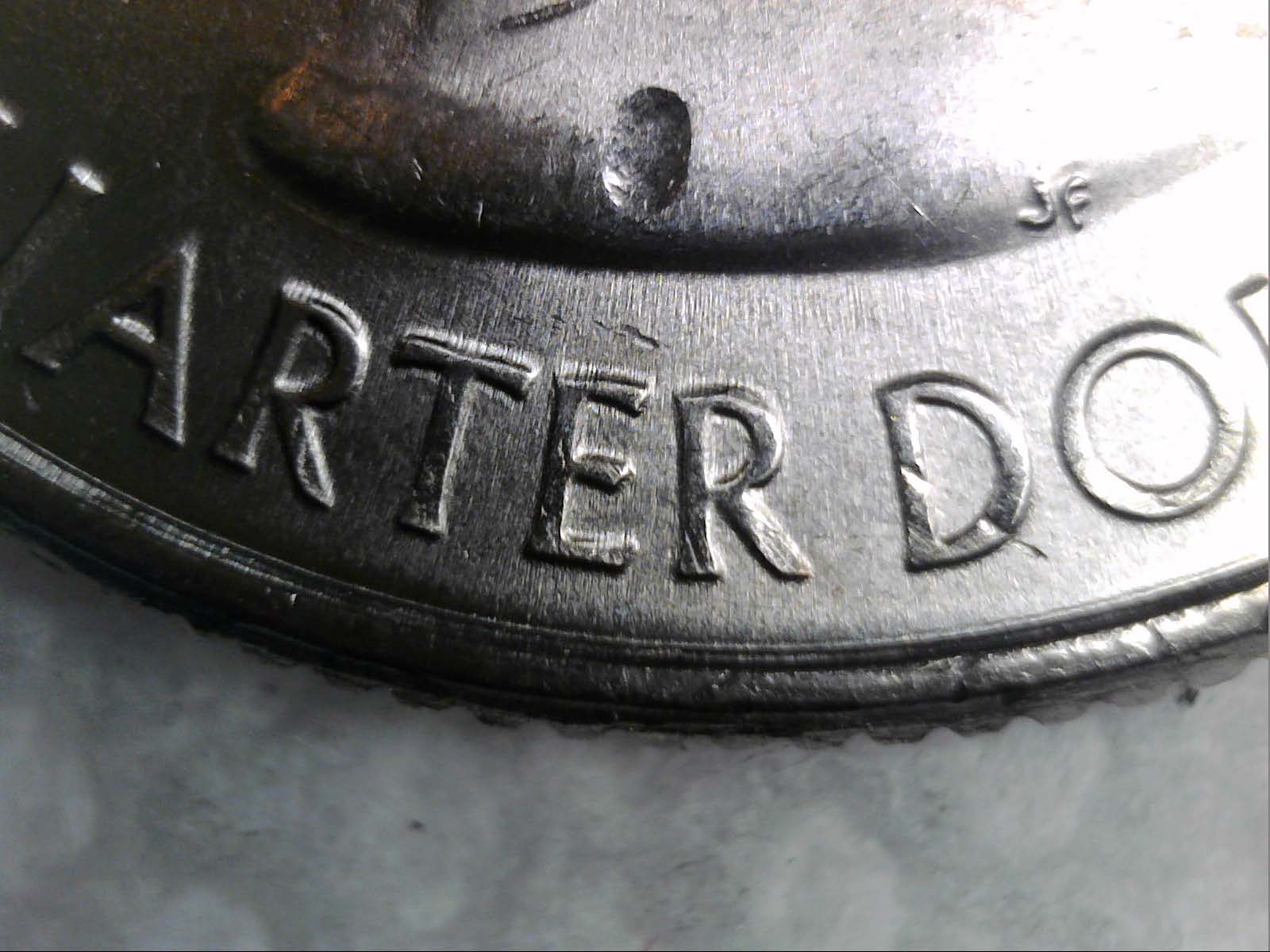
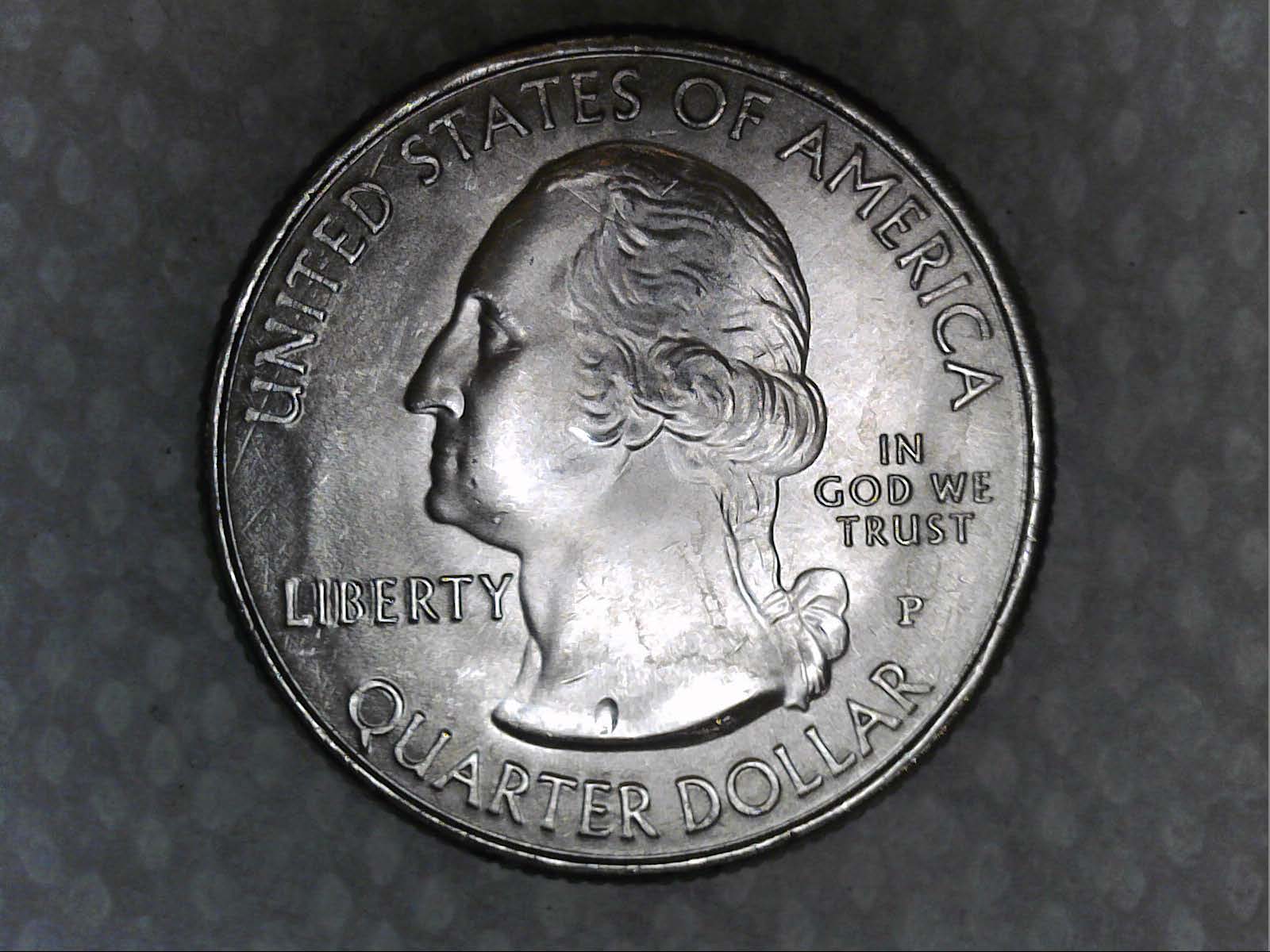
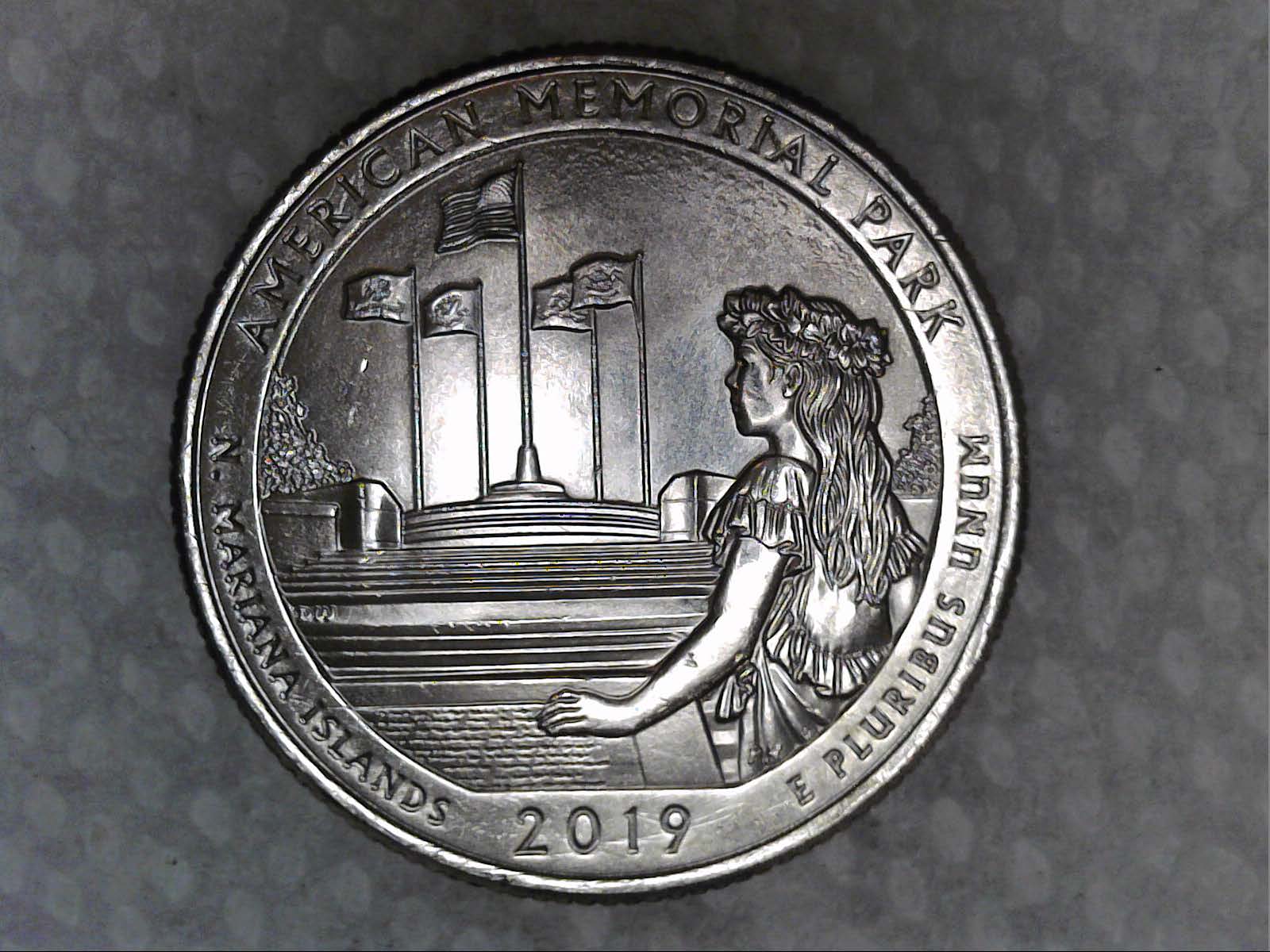
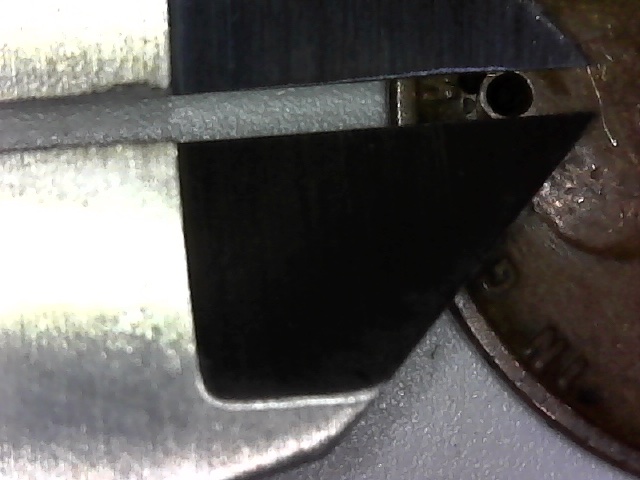
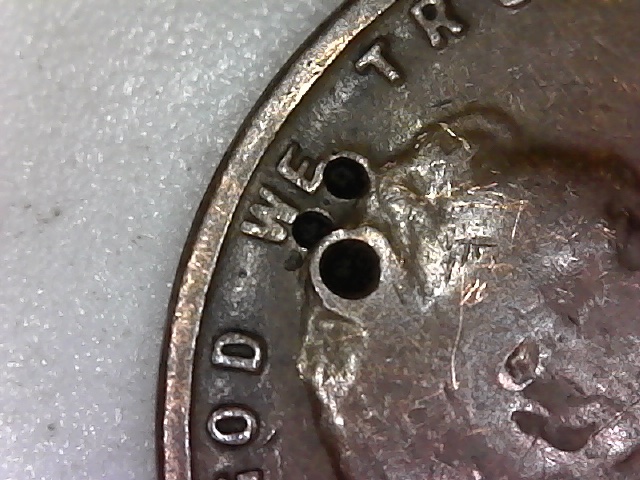
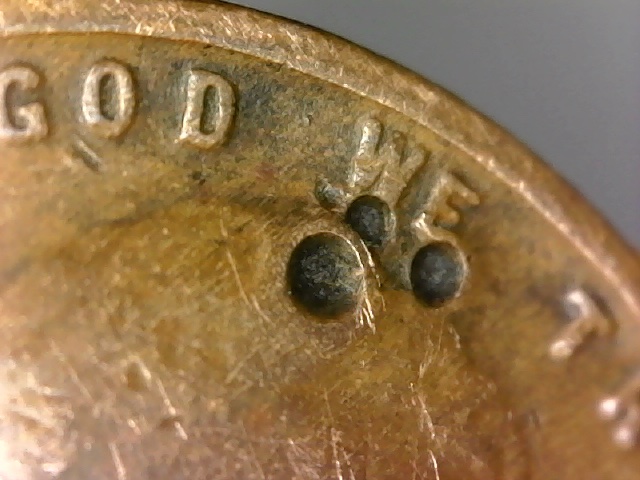
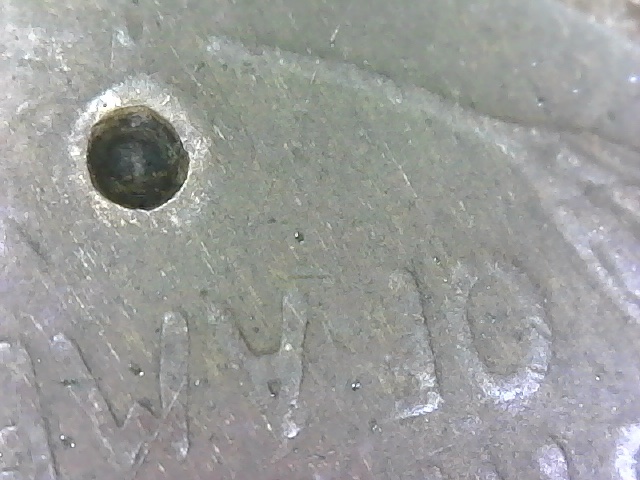
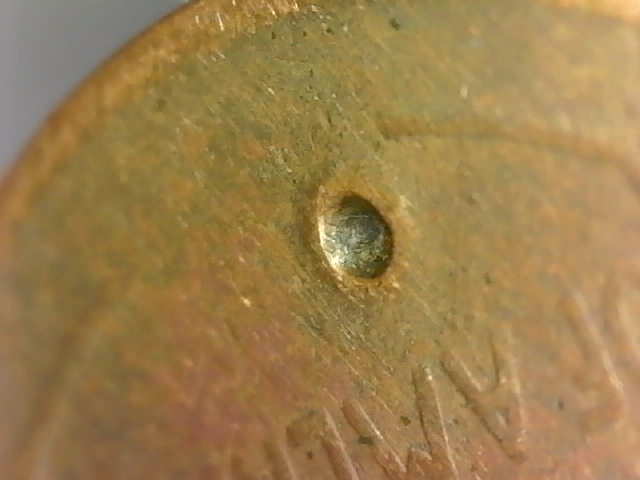
The two smaller depressions measure .73mm and the one bigger one on the obverse measures 1.0mm also the one on the reverse is 1.0mm Thank you for posting these. They appear to be damage to the coin. The pressure ridge around the depressions is a primary diagnostic for damage. |
|
New Member
United States
11 Posts |
|
|
Pillar of the Community
United States
3363 Posts |
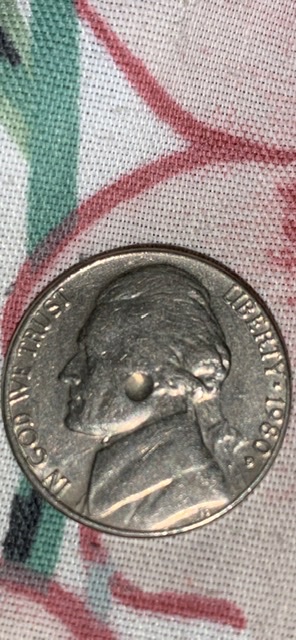
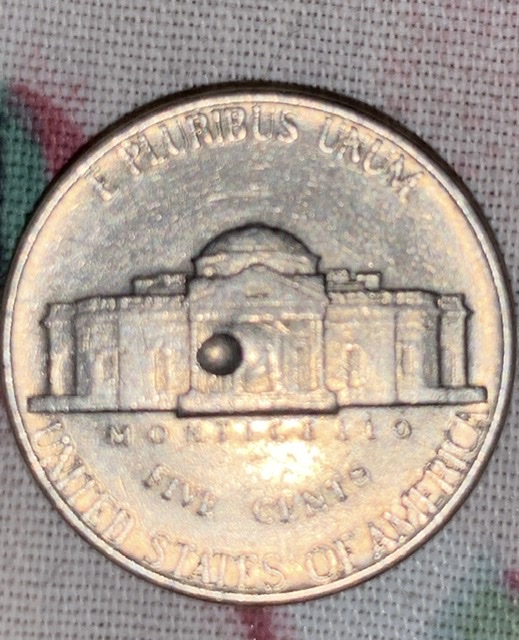
This 1980-D Nickel appears to be damaged and not a test mark.
|
|
Pillar of the Community
 United States
5897 Posts |
The test that is applied to the surface of the coin: is it done before or after the strike?
(I'm thinking before since there is no pressure ridge surrounding the depression.)
Words of encouragement are one of the major food groups.
We need to consume them regularly to thrive and grow.
|
|
Bedrock of the Community
United States
19613 Posts |
All interesting, but somehow depressing.
|
|
Pillar of the Community
United States
3363 Posts |
These photos are too out of focus to determine the existence of a pressure ridge. A pressure ridge may only appear microscopely.
The test is before the strike. These indentions are too large to have been done by a Rockwell 15T test.
|
|
Valued Member
Hong Kong
155 Posts |
That Rockwell Test Mark also happened in 1977 Hong Kong 50 cents   |
|
Pillar of the Community
United States
3363 Posts |
Quote:
That Rockwell Test Mark also happened in 1977 Hong Kong 50 cents I am convinced that these marks on the 1977 Hong Kong 50 cents are damage, evidenced by pressure ridges around a portion of the circumferences. One diagnostic for damage is if there is a small (even microscopically small) pressure ridge of pushed up metal anywhere on or beside the feature. If the feature was there before or during the strike, the strike would flatten that ridge. A strike eliminates a pressure ridge because the striking pressure is enormous. For US coins, pressures used today are 35 tons for cents and dimes, 50 tons for nickels, 60 tons for quarters, 120 tons for half-dollars and 85 tons for dollar coins. I now have some new information: Rockwell Test Mark - Ability to survive a strike. We know that the US Mint performs hardness tests on cent planchets as a part of its quality control. A key question pertains to the survivability of the resulting test mark through the striking process. Ken Potter is currently striking medals to commemorate his 50th Anniversary of Serving Collectors. During the striking of one of the medals, a cent (First photo in the attached composite) which I had submitted for a Rockwell Test (Result 59.1 15T) was placed in the striking chamber on one of the planchets intended for the medal and struck with dies used to strike the medals. The second photo shows the test mark after being struck. Results showed the diameter of the test mark was reduced somewhat by the strike and the internal conformation was significantly altered with the shape of the indentation becoming shallower and losing its smooth surface. I am also enclosing a composite of photos with sizes adjusted to bring dates and the test mark areas to approximately equal sizes for comparison. The third photo shows the raised area from the test mark on the host after the strike. , I would conclude that it is impossible to affirm the existence of a test mark on a coin, since the remnants of the mark likely will not exhibit consistent identifiable characteristics from one coin to the next. My original research may be read here: https://conecaonline.org/rockwell-h...ncoln-cents/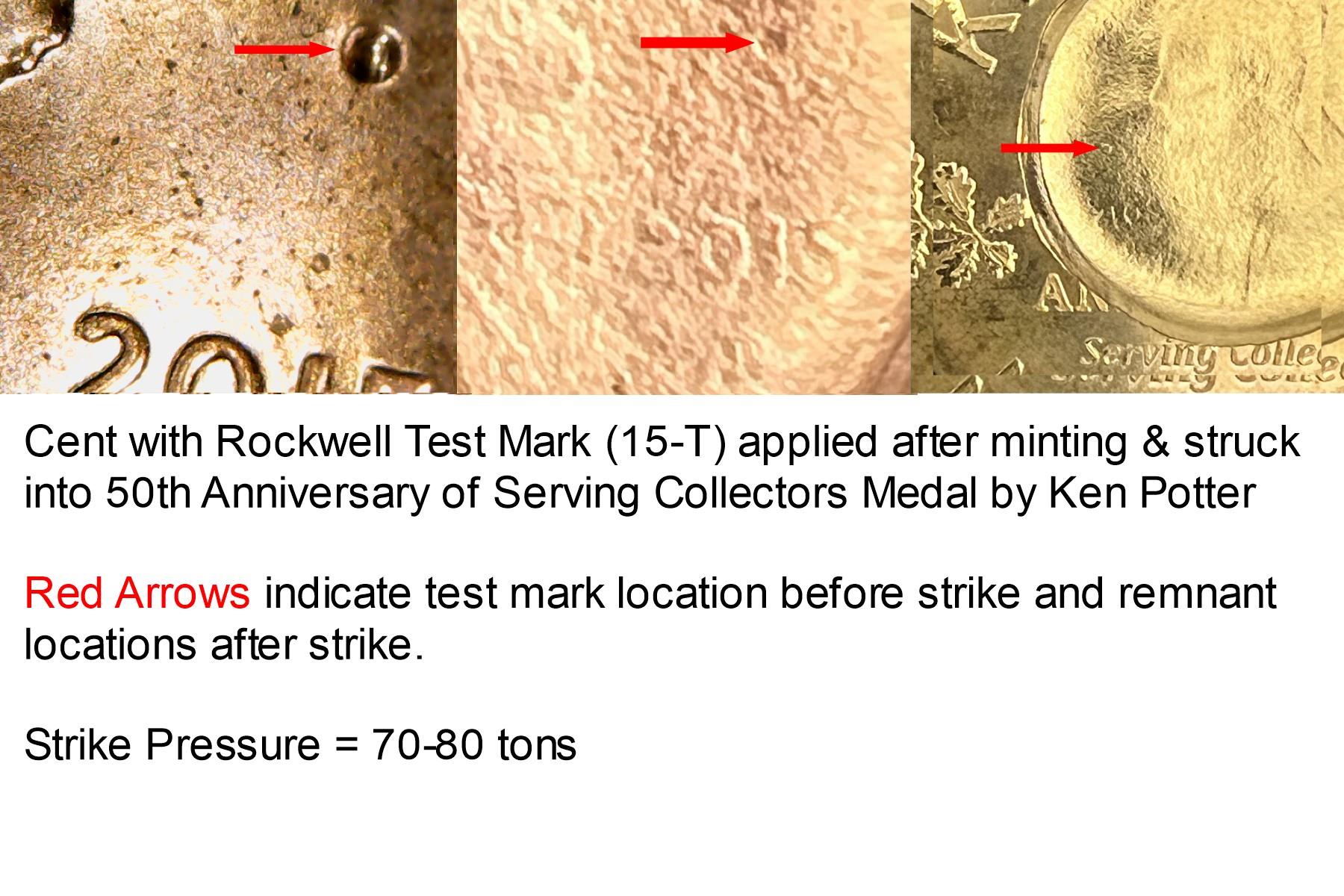 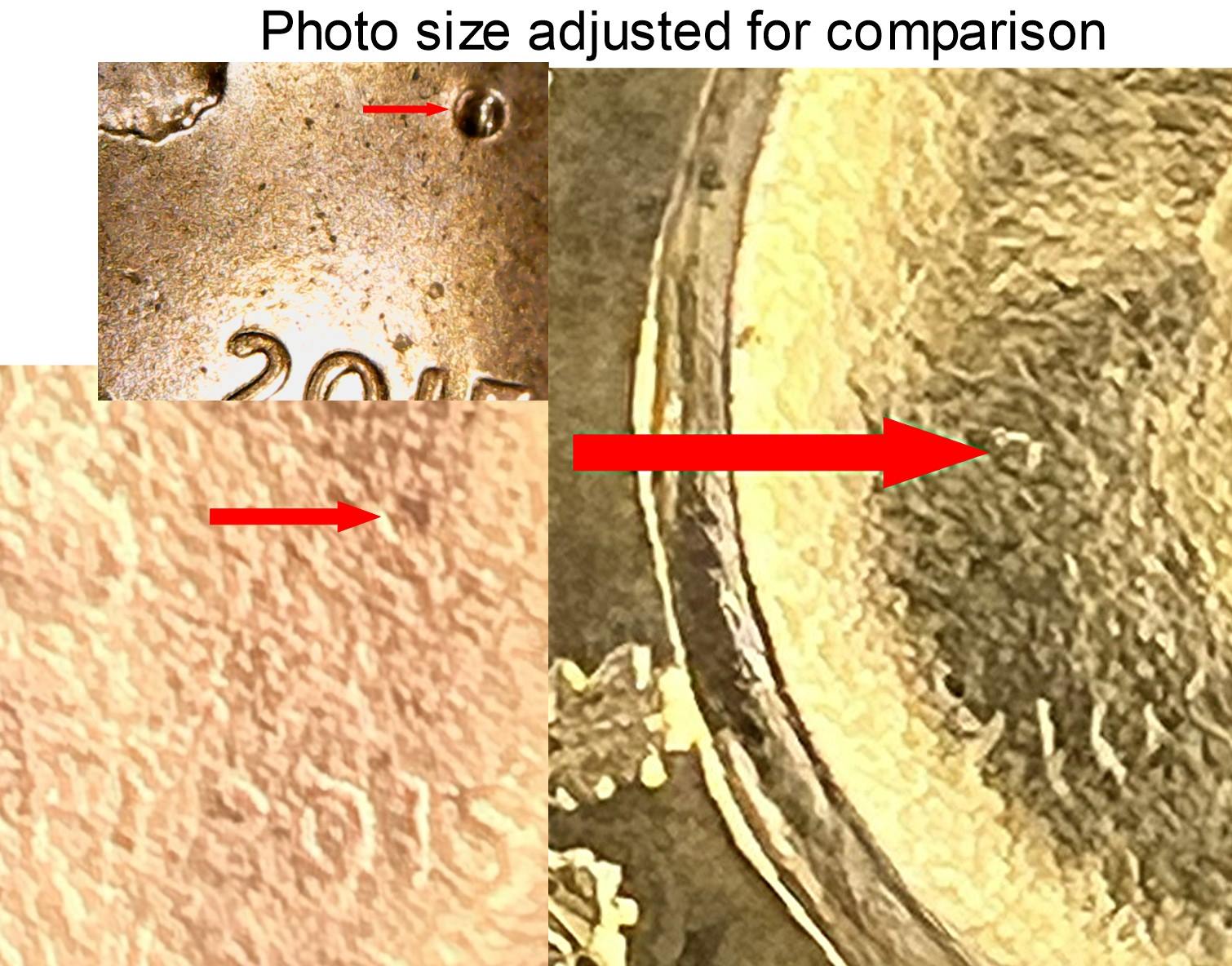 Edited by Pete2226
05/18/2024 06:37 am
|
|
Moderator
United States
107820 Posts |
Well this is a very interesting topic. (10 pages or looking and reading)
|
|
Pillar of the Community
United States
2752 Posts |
Here's a mint set quarter with hundreds of circular and oval depressions. They're struck-through errors and they appear on both faces. More details in my next Collectors' Clearinghouse column. 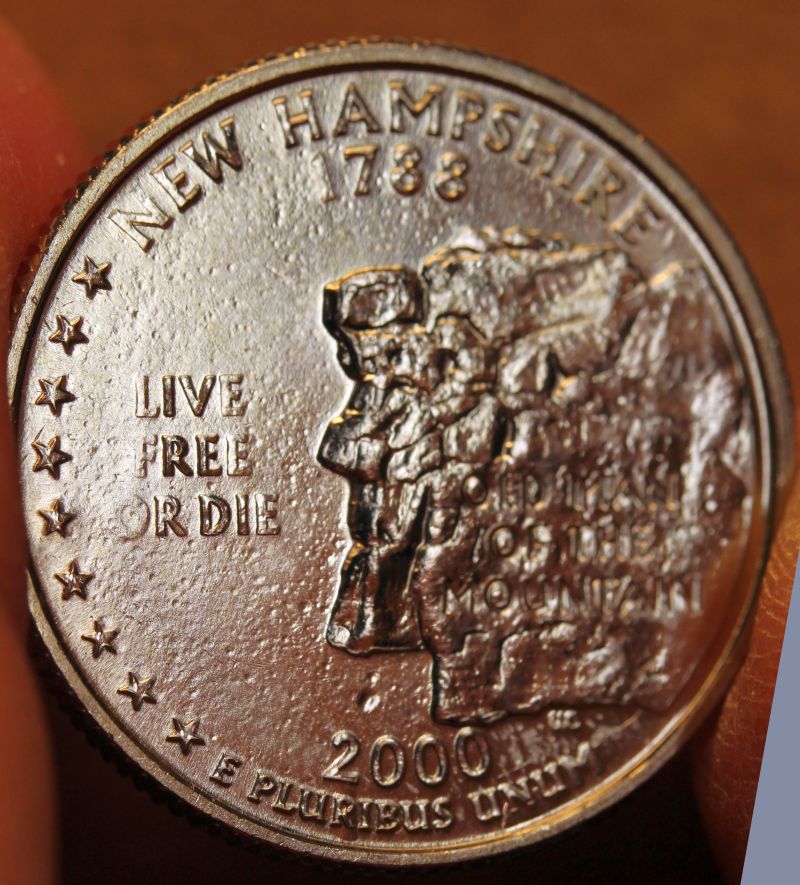 Error coin writer and researcher.
|
|
Valued Member
Hong Kong
155 Posts |
|
|
|
Replies: 142 / Views: 23,033 |
|







 First Page
 Previous Page


 Posted 06/29/2019 1:55 pm