| Author |
 Replies: 55 / Views: 7,504 Replies: 55 / Views: 7,504 |
|
|
|
|
Valued Member
 United States
397 Posts |
Hello everyone, Hope everyone had an enjoyable holiday season.Been awhile since I posted here. I was getting a bit frustrated with me. So I step away for a while and spent some time practicing. Here are a couple areas I need some guidance with. Quote:
Metering is the process of measuring the amount of light reflecting off the surface of your image, and then using that to set the camera's f-stop, shutter speed and ISO to create the image. DaveM Quote:
The image is downsized or it would be very large, more than double the size of the screen. I assume you're uploading to CCF for hosting? The downsizing must be done in that process. I don't trust such methods to do what I want so I downsize images myself using DPP "Batch" tool, then host the images from photobucket or my own web page. rmpsrmps Here are a couple of my latest pictures. 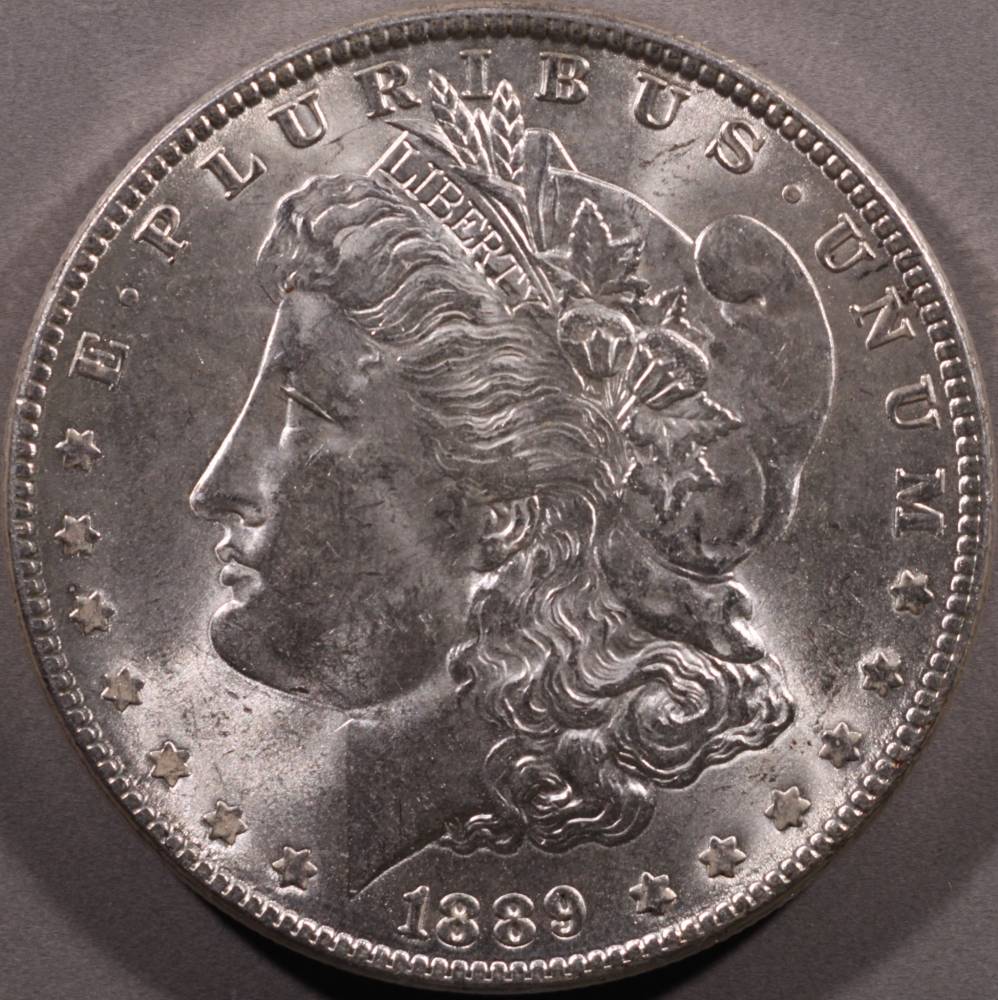 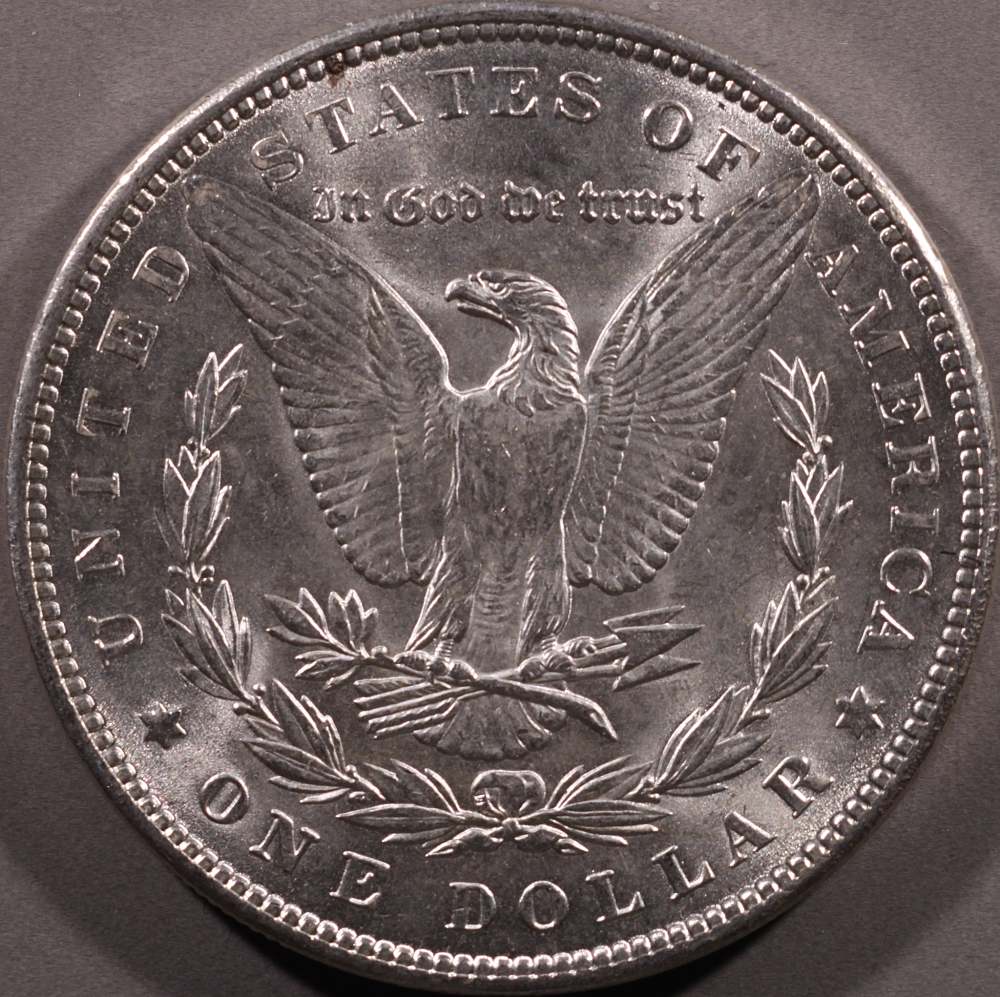 |
|
Valued Member
United States
67 Posts |
I'm not sure what the question is regarding metering, but I'm glad to clarify. I would be using manual settings on the camera, and setting exposure based on the lighting provided by your setup, rather than the auto settings then adjusted by exposure compensation or post processing.
It does seem that the general method espoused on this forum is to adjust from auto settings, and I don't want to get you confused by suggesting manual settings (which of course I believe is better) if that's not what you're prepared to do.
|
|
Pillar of the Community
 United States
4051 Posts |
|
|
Valued Member
United States
67 Posts |
Let me compare manual to automatic.
For manual:
Set a gray card in your shooting frame and turn on your lights.
Set F/8, ISO 100, and adjust shutter speed so that meter measures to zero.
Write down this setting, it will be used for ALL coins
Put a coin in, focus, shoot
Put another coin in, focus, shoot
For automatic (correct me if I have this method wrong)
Put a coin in the shooting frame
Set f/8, ISO 100, and AV mode (you have now lied to your camera and told it that the coin is 18% gray when it is not)
Shoot
Examine image, see whether you think brightness is correct, and either adjust exposure compensation and re-shoot, or adjust in post
For another coin, restart at top of process
The flaw is having your camera map the image to an average 18% gray (which is what it does in auto) when you know it's not. You have the opportunity to actually show it an 18% gray card once, and only once unless you change your lighting. Since many coin images will be shot using the same lighting setup, you can save all these adjustments by setting the exposure manually, once.
Sure, a periodic exposure compensation may still be of use, but far less than if you start every shoot by forcing the coin to 18% gray.
|
|
Pillar of the Community
United States
4051 Posts |
Being an absolutist with regards to exposure in coin photography leads to some coins being very under-exposed and some being very over-exposed. Coins are not flat surfaces like the 18% gray card that can be scientifically exposure-calibrated. They have specular reflections that cause highlight issues, and crevices that cause shadowing issues. Small movement of lights in angle or position make a huge difference in whether a coin is exposed properly or not, yet make no difference at all to the exposure of a graycard calibration.
I suppose it's OK also for a fashion photographer to put an 18% gray card where his model's face is, dial in the exposure, and then take whatever he gets? I'm not sure how long he'd stay in business doing that.
|
|
Valued Member
United States
67 Posts |
And being an absolutist telling your camera that all of your coins are 18% gray will guarantee they are all exposed wrong. See the many pewter-colored silver coins posted in this and other threads on this site as an example. I don't think either of us is recommending an absolute fixed exposure setting though; it's a matter of getting the starting point much closer to correct.
|
|
Pillar of the Community
United States
4051 Posts |
Some coins, primarily circulated ones and especially heavily-circulated, are OK to use the 18% gray method. Their surface reflectivities are quite low, more similar to the gray card itself. But coins with significant specular/reflective surfaces (BU and especially proofs) are completely inappropriate for this method. Each coin must be metered individually, monitoring the highest reflective points, to ensure there is minimal sensor saturation. It is the coin photographer's job to adjust lighting using diffusion and positioning to minimize over-exposure while ensuring shadows are properly illuminated, all the while giving proper presentation to the coin's luster and color qualities. It is a tough job! The one-size-fits-all 18% manual method you are advocating fails miserably when it comes to photography of any but the most dull of coins.
You also say that your 18% manual method is not recommending an absolute fixed exposure setting, yet your procedure belies that statement:
For manual:
Set a gray card in your shooting frame and turn on your lights.
Set F/8, ISO 100, and adjust shutter speed so that meter measures to zero.
Write down this setting, it will be used for ALL coins
Put a coin in, focus, shoot
Put another coin in, focus, shoot
Ask any coin photographer on this forum or any other forum if this method would work for them, and you will get a "no way" answer. It would be nice if coin photography was as simple as that, but unfortunately it is not.
Edited by rmpsrpms
01/06/2016 11:19 am
|
|
Valued Member
United States
67 Posts |
You conveniently omit my qualification: Quote:
Sure, a periodic exposure compensation may still be of use, but far less than if you start every shoot by forcing the coin to 18% gray.
I have no reason to debate this anymore, folks can make their own call. |
|
Pillar of the Community
United States
4051 Posts |
I omitted your qualification because you did not include it in your process! If you would add it to the manual process, and describe when and why it is appropriate to do exposure compensation, then the process will be more complete. However, I suspect it will then look a lot more like the automatic process you describe...
This debate is important as lighting is THE most difficult aspect of coin photography. I have often espoused using 18% gray as a background for exposure calibration through post-processing. I think this method sort of blends what you're trying to do, which is to make sure the overall exposure of the coin is accurate and thus gives a more accurate representation of the brightness or darkness of the coin. Is this correct? If so, then by using an 18% gray background, levels adjustment in post-processing can be used to bring the background to 18% (46,46,46) and the coin will then be represented correctly. Of course a nonlinear adjustment is necessary to achieve this so that shadows are not too dark and highlights not too bright, but the overall level can still be correct.
I may take some pics tonight with several methods to show the differences. Debate is fun but actual results are far more interesting.
|
|
Valued Member
United States
67 Posts |
The gray background *may* help a bit. Most automatic exposure programs are set to favor the center of the image (worst case "spot metering") so the part of the image with the coin in it is liable to get most of the metering weight unless folks are also adjusting the metering style. 18% gray will be around (120,120,120) to (124,124,124) ( https://en.wikipedia.org/wiki/Middle_gray)I look forward to your images. |
|
Pillar of the Community
United States
9395 Posts |
I actually shoot most raw coins while sitting on a 18% gray card (useful for setting auto white balance, after a few tries). Based on this discussion, I went back to look at how bright that card is in the various processed shots. There's actually a tremendous variation between shots. Here is a dark 1610 double Tournois, where Photoshop reports that the 18% gray card is over (200, 200, 200) in most places: 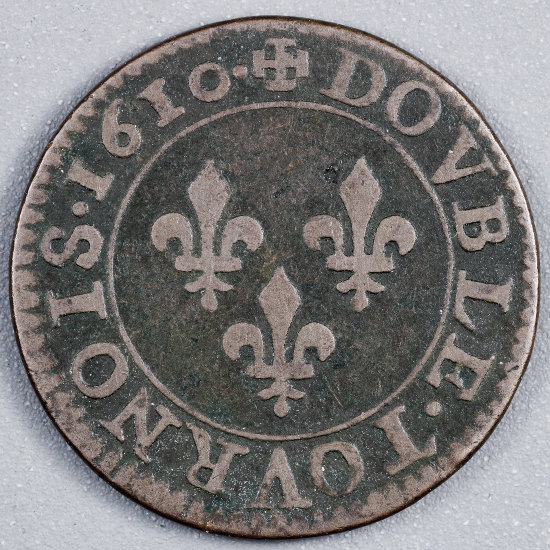 Here is a bright 1945 50 peso coin, where Photoshop reports that the gray card is less than (16, 16, 16) in most places: 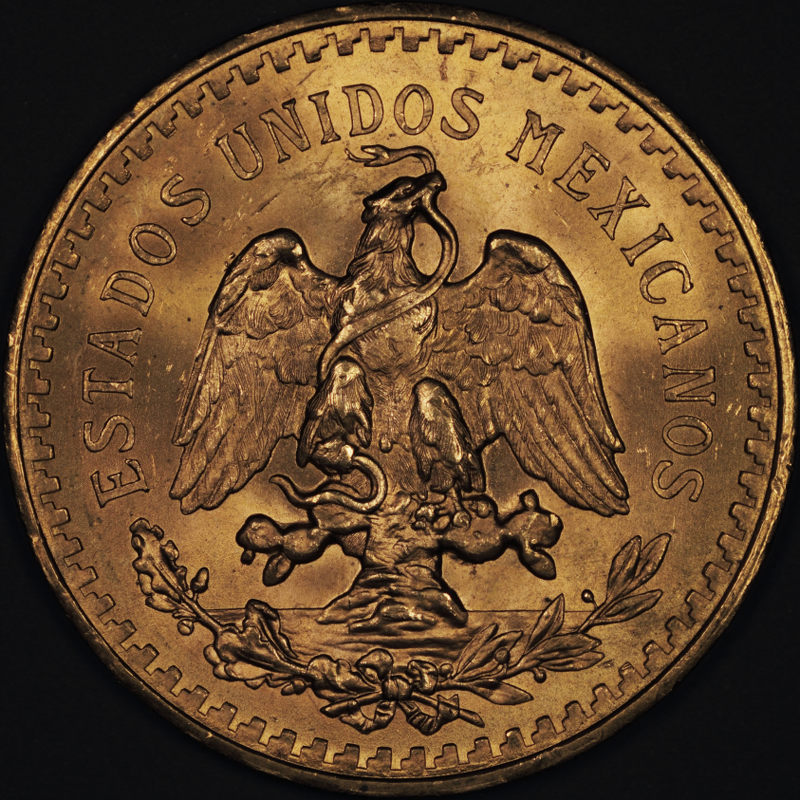 (Note that the highlights are actually burned out in this shot, so it probably needs to be darker.) BTW, I do use manual exposure. I set the Canon to Time priority (Tv) rather than M to avoid a bug where the live view is much darker than the uploaded image. I can't claim that these photos are properly exposed, but it doesn't seem that they're off by a factor of more than 10x. |
|
Valued Member
United States
67 Posts |
TV is not a manual mode on any Canon I know of. It's commonly called "semi-automatic" in that you select the shutter speed while the camera figures out the aperture (and possibly the ISO as well). I have to guess that gold coin is far brighter in hand than in the image you're showing? Hard for me to guess, but certainly a Manual setting to 18% gray would not have turned your gray background essentially to black. I just did some comparison shots. The most dramatic of course are going to be the ones where the coin is far away (in color lightness) from gray. Here's a bronze coin that is an old dark chocolaty color. The darker one (Manual) is much closer to accurate than the lighter one (AV). Other than resizing and cropping, I've made no adjustments. Manual exposure against 18% gray  AV Auto exposure  I will say that for the majority of my non-dark coins, putting them on an 18% gray background and allowing the meter to include the background in the image evaluation does get them fairly close. The differences are within a stop in most instances (in my case I'm shooting at 1/15sec, and the AV mode is selecting anywhere from 1/8 to 1/20sec). When I shoot them against a black background, it gets worse. I didn't try white, but would expect worse in the other direction. By the way I should note that the background I'm using is not actually 18% gray. I did measure and set exposure against 18%, but didn't have something large enough to be the background of all these shots, so I used a gray folder. Edited by Dave M
01/06/2016 3:08 pm
|
|
Pillar of the Community
United States
9395 Posts |
Quote:
TV is not a manual mode on any Canon I know of. It's commonly called "semi-automatic" in that you select the shutter speed while the camera figures out the aperture (and possibly the ISO as well) I attach the Canon T6s to an Olympus bellows, with a manual Olympus bellows lens. The camera may try to set the aperture electrically, but it can't. The "Tv" sets the shutter speed manually, and the lens aperture is effectively set by the ring on the lens. Of course, Tv won't work like a manual mode if you use a Canon EOS lens. |
|
Valued Member
United States
67 Posts |
|
|
Pillar of the Community
United States
4051 Posts |
I shot a gray card such that its exposure was middle gray, and then used the exposure settings for a couple of BU Lincoln Cents. One Cent is a fairly darkly toned 46-S, while the other is a brilliant 57-D. Lighting was with 2 diffused Jansjos at 10 and 2 about 6" above the coin and perhaps 75deg vs horizontal. Here are the 3 shots:    The darker coin is a bit under-exposed, though within the acceptable range. The brighter coin is significantly over-exposed due to reflections off the highlights. This is a completely unacceptable photo of this coin. |
|
|
Replies: 55 / Views: 7,504 |
|





 First Page
 Previous Page

 Posted 01/05/2016 7:36 pm


