| Author |
 Replies: 21 / Views: 6,121 Replies: 21 / Views: 6,121 |
Page 2 of 2
|
|
|
|
Pillar of the Community
United States
7629 Posts |
Easiest coins on which to find hub doubling...
proof cents and nickels from the early 1960s. You're almost guaranteed to find at least minor hub doubling on one of ten coins searched.
You want to find doubled dies? Get some 1962 or 1964 proof cent rolls ($20 or under usually) and start searching.
|
|
Pillar of the Community
United States
5318 Posts |
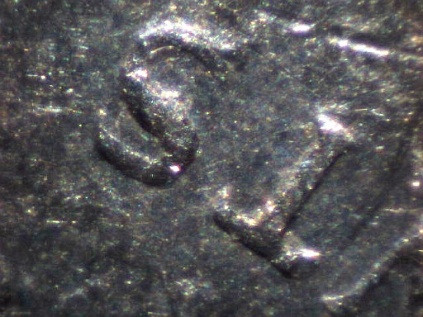
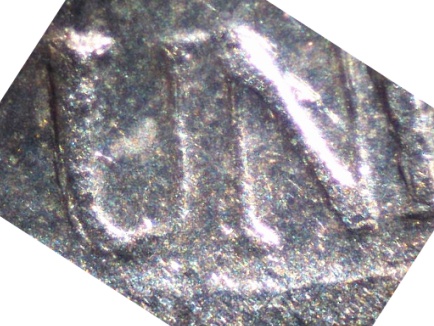
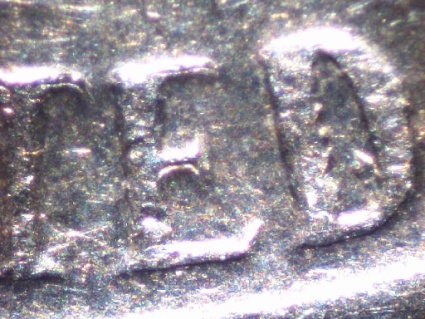
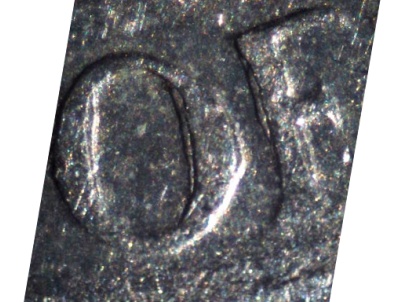
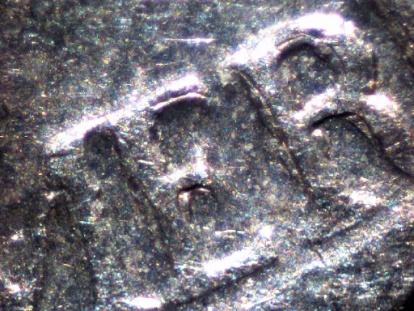
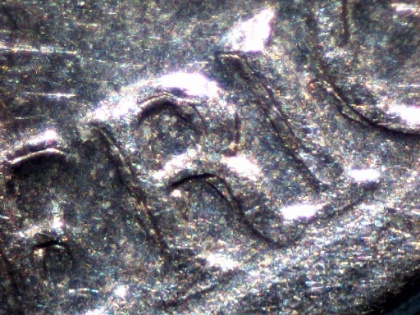
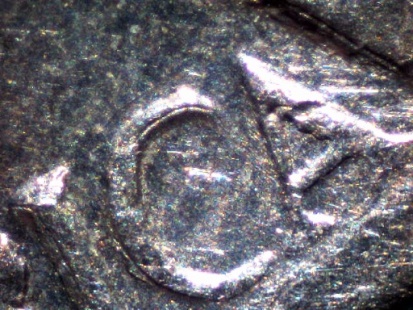
One thing that helps me discern Die Deterioration from DD is irregularity of the secondary impression. It's especially noticeable in "OF", and a DD would more closely resemble the stronger impression. |
|
Valued Member
138 Posts |
Nice Minor Rotated Hub Doubling, You should be able to pick up a few dollars for it, leave no dollar unearned. Error coin enthusiast never leave out the other denominations.
Edited by Homer1
02/13/2008 2:58 pm
|
|
Pillar of the Community
United States
3507 Posts |
There is no rotated hub doubling on the nickel shown. Die Deterioration Doubling can mimic hub doubling on nickels even to where the serifs seem split. I have several from the early 1980s especially from the Denver Mint that can drive you nuts. The coins still were not struck by doubled dies. It is worth five cents plus the education received by finding it:-) The longer you hang on to these, the more the buying power goes down:-) Spend it soon, you'll see hundreds of others over time:-) |
|
Valued Member
United States
288 Posts |
Often pondered this type of doubling. My guess as to how this happens is that a worn hub gets replaced by a newer hub while the die is in the process of being made. In effect it is worn hub doubling but I believe that it is also a doubled die. In this case the die is made using different hubs. The different hubs cause the die to double. I call that a double die. (Then again, there is always the possibility of a slightly different design hub being used with a more normal hub. Still a double die). However you look at it, it is a die variety and should be treated as such. Keep the coin. In time people will recognize them. Die Deterioration may not be quite correct. The die is new and being made. It is more likely the Hub that deteriorated and was replaced. G. |
|
Pillar of the Community
United States
3507 Posts |
No, It's not a die variety. The die gets worn, the metal around the lettering on the die becomes distorted.
Their is no rehubbing of worn dies with a different design.
There is no incidence of "worn hub doubling" known to my knowledge. I have seen hundreds and hundreds of nickels with doubling that looks like this. I hve sen quarter dollars and dimes like this as well. It is purely a function of the dies becoming worn out.
|
|
Pillar of the Community
United States
7629 Posts |
A healthy dose of misinformation going on here. There is no hub doubling on this coin, and there is no variety here. Anyone who actually knows what they are talking about would call this Die Deterioration Doubling and nothing else. It's die wear. |
|
Valued Member
United States
288 Posts |
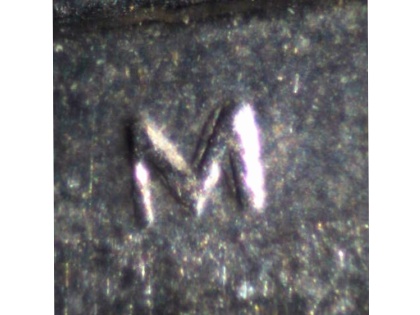
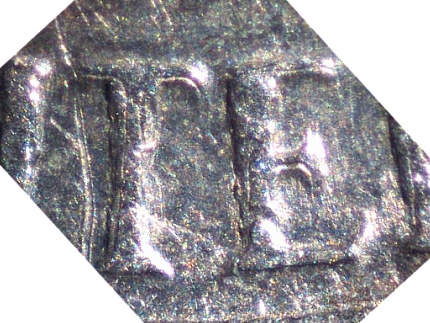
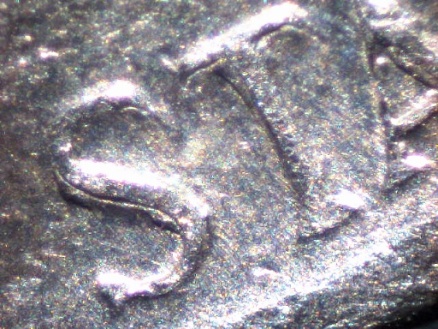
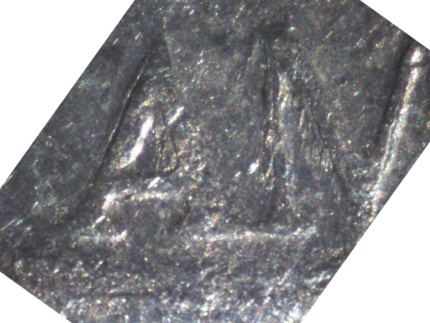
OK. I would think that any Die Deterioration would show up more like Machine Doubling with evidence of the metal looking pushed. Shelf doubled. Dies do in fact wear out to be sure. They show a more muddled or widening or fattening of the designs, letters, ect. in the lower areas of the coin near the planchet do to the die stretching at its face. Usually you can see doubling all around any given letter. This appears to happen here. Look at the picture of the M. But, is that all that is happening? Hubing can look similiar. I would imagine that worn hubs sometimes do get used on any given die. Sometimes before and sometimes after a good hub was used. But remember, the mint does not get busy and certainly does not make mistakes. Hubs do in fact wear out. That is why dies go to the ovens to soften their metal. It prolongs the life of the Hub and also protects the die. Imagine a hub being used over time. Eventually it is probably going to expand outwards from all that pressure. Take that worn Hub and press a die a couple times. Then replace the hub with a newer non worn hub and press the die a few more times. What do you suppose happens to that die? Ya get a variety. The low relief areas should be wider than the high relief of the design elements. Kinda like Die Deterioration. Think that it does not happen just because the coin is a nickel? As to design hub changes not happening, Ever heard of a die that was hubbed by both proof and business strike hubs. Who thinks that hub design changes do not happen? Ever look at a 1878 7/8 tailfeather coin? How about a 1942/1 dime? No hub change? Look closely at the above pictures. Certainly looks like something else could be going on here other than just Die Deterioration. I really like the picture of the T. I also think that I see some split serifs. Keep the coin anyways, it still is a variety. If a die gets messed up enough while producing coins it can make all kinds of varieties...Die clashes, die breaks, relaps, Die Cuds, filled dies ect. This is beginning to be appreciated more and more with the seated coinages. Check out some of their values now. I suppose the confusion stems from the fact that Die Deterioration shows up a lot on nickels. Nickel trashes dies. Sometimes tho, I just wonder about it all. More so when there is evidence of a split serif. If the coin is radical enough to be of obvious interest, who is to say what is collectible or valuable? Beauty is in the eye of the beholder. Perhaps die variety is a subjective concept. Good answers folks. I am sure that it helps collectors learn. G. |
|
Pillar of the Community
United States
7629 Posts |
All due respect, "die variety" is a term given to specific things, it is NOT a subjective concept. You tell me to go out to your car and there's nothing but trucks outside, I'd be confused. A truck is NOT a car and a car is NOT a truck...no different than die wear and minor die damage are NOT die varieties.
|
|
Valued Member
United States
288 Posts |
CC..The way I see it all coins are die varieties... of a sort. There is the die and the first coin struck. That coin I refer to as the mate. Once the first coin is struck, the die changes ever so slightly...usually. Another words, it varies from the original coin struck. Thusly you a get a Variety. Now does that fall into the Who Gives A S*** category, probably, unless we are talking seriously Deep Black and White Ultra Heavy Frosted Cameo coins, or major double dies. In that case one can find themselves counting planchet die stirations around the inside rim of the coin to determine striking order and/or looking for signs of die wipe to determine EDS. (Same basic idea) Usually one would only care about this to determine VVEDS or When looking for the first coin struck... the Mate. The coin pictured here is still major enough to warrant collector interest and further research. I am not suggesting going out and paying a fortune for one. But, if ya can gets one for common money, why not? This is not to say that I believe that these coins do not have their own rightful place or value. I have handled very many of these types of coins for over 50 years. Suffice to say that when I read of them being referred to as Die Deterioration, I have always questioned the correctness of that statement, and still do. So, let me ask this. Does anyone know if the die steel use to produce nickel coins is the same as all other die steel used for different material coins? Or, is the die steel (or hub steel) treated (hardened) by the addition of agents such as titanium to make it harder? If the die steel is harder it is possible to wear out the hub faster causing hub distortion. Perhaps it is time to reconsider these coins and how they really are made. Is it not possible to have distorted (worn) Hub doubled dies? We all know what distended hub doubling is, (Expanded hub doubling) however we call it. The hub stretches outward from wear. Perhaps you can let us know of any in depth studies that can resolve this issue. Someone may have proof of this via overlays and the study of specific dies for any given year. I really like the T on this coin. Look at how thin and well defined the uppermost t on the t is. That looks to me like the last pressing of the die, he deepest point in the die. The edges look sharp and well defined. To me that is suspect. Lastly, how many coins are made that look like the one pictured here? I believe that I may even have one put away somewhere. If there are quite a few made, how can that not be a variety as opposed to an error? Does the coin not look radical enough? Thanx for response. I still be Willing, Learning and Enjoying it all....G. P.S. If I sent you out to my brothers car and the lot was full of trucks would you be able to get to my brothers car? It is a 1969 Ford Ranchero with a 428 SCJ engine. Now, is that a variety or what? Edited by gusp
02/17/2008 12:30 pm
|
|
Pillar of the Community
 United States
609 Posts |
|
|
Pillar of the Community
United States
609 Posts |
Was also wondering::: If a doubled die can also show Machine Doubling, why can't a doubled die also be deteriated? |
|
Valued Member
United States
288 Posts |
WAL....I like the coin. Very cool. Them mint boys sure know how to mess up a nickel. Gusp
|
|
Pillar of the Community
United States
3507 Posts |
One thing to add here is that coins struck where nickel is used, ( a very hard metal used in five-cent coins, dimes, quarters and halves) creates a whole different ball game where it comes to seeing doubling on the finished coins. Especially seen on five-cent coins, Die Deterioration wreaks havoc on the finished product. The nickel used for the planchets is so hard that it wears out the dies very quickly. It distorts the details horribly. Metal is moved around like crazy and often the details become so distorted that they look doubled. Sometimes you can even see what looks like the kind of notches we want to see on a doubled die. They are not notches though. It is not doubling caused by hubbing a die and therefore not a variety. It is also common and if you look through 20 rolls of nickels in one sitting, you will be amazed at the effects that Die Deterioration has on nickel and nickel-clad coins. I find it difficult to find nickels that don't show the results of some form of Die Deterioration. It can drive you nuts. Edited by foundinrolls
02/18/2008 11:58 pm
|
|
Valued Member
United States
288 Posts |
For general principle and info, C.C. and F.I.R. are correct to explain that these types of coins are not generally considered to be anything more than Die Deterioration. That is generally accepted information. Again, I have seen certain coins that I believe warrant further study and research. The posted coin being one. I see more possibilities with this type of coin. Hub double, die double, Die Deterioration, die or hub fatigue, ect. I keep some of these coins anyways.I think that they look cool. Sometimes I even buy them just to study. As to variety, the marketplace tends to give merit to certain types of coins that are generally accepted as or called varieties. This is well established and time honored. I just like to keep an open mind and eye. C.C. and F.I.R. have very good knowledge of coins. Their comments are great, and a real help to the coin community. I thank them and all others for sharing. Gusp |
|
Page 2 of 2
|
Replies: 21 / Views: 6,121 |
Page 2 of 2
|




 First Page


 Posted 02/13/2008 12:47 pm