| Author |
 Replies: 24 / Views: 2,920 Replies: 24 / Views: 2,920 |
Page 2 of 2
|
|
|
|
Bedrock of the Community
United States
20042 Posts |
|
|
Bedrock of the Community
United States
12437 Posts |
Magic? I just see PMD. There may be some die abrading but the majority is PMD caused by a wire brush or similar mechanical action. There are numerous prominent scratches on top of the design elements, something that would not occur with normal die polishing/abrading. |
|
Pillar of the Community
Australia
7096 Posts |
If the lines on the coin are incused then it is PMD, If the lines are raised then it is die polishing  |
|
Moderator
 United States
56855 Posts |
I looked at ALL (12) the pics again and now I am on the fence,PSD or mint abrasion or both. We need coop or mike. John1  |
|
Bedrock of the Community
United States
62064 Posts |
When a die is polished, only the fields are usually directly affected. Sometimes some shallow die devices may show some scratches. Thus when you see the die scratches, they appear to go behind devices. On this coin the scratches are on the tops of the devices. So I would rule out die polishing. On Die Deterioration that usually starts affecting the devices that face the rim, in that direction. I see evidence of the that on some of the reverse devices, but that would not explain the over all damage that is on this coin. So I would rule out Die Deterioration. So I'm also learning towards the alteration of this coin perhaps with a wire brush. The would also leave lines, but most of these lines would be incuse making some appear as raised and others incuse because of the number of scratches on the coin. So I'm thinking PSD. With it being a Zincoln, they die take some care polishing the coin. (to not go through the plating) Edited by coop
07/26/2016 12:27 pm
|
|
Bedrock of the Community
United States
17884 Posts |
The lines are on the fields AND the devices including those areas that would be the deepest recesses in the die. Typically polishing or stoning work done to the dies is just done to the fields and sometimes shows in the shallow ares of the die, not the deep areas. Going just on what I see here I would say PSD. |
|
Valued Member
Canada
192 Posts |
I'll make a wager; my money (sorry) is on somebody with the nervous habit of rubbing two coins together having had their hands on this penny at some point.
|
|
Pillar of the Community
United States
2403 Posts |
While I am in the PSD camp as well, for some of the lines. Having said that it does look like some of the lines on Lincolns bust are raised to me. So a VVLDS LMC with PSD? |
|
CCF Advertiser
United States
1533 Posts |
Its not whizzing. Whizzing is much better done than this. The lines are much finer and run in a circular pattern. This is someone that tried to shine up a penny and use a Brillo pad or something similar to do it.
|
|
Pillar of the Community
United States
3552 Posts |
Quote:
I'm thinking PSD I do not want to waiver too much off base here but since PSD has emerged as newbie lingo in my personal glossary it's worth clarifying up front(at least for me) its applicability for 'all' US coins. For instance, would the PSD acronym still apply if the alteration happened before the creation of the lettering but post strike? I'm specifically referring to edge lettering similar to the E PLURIBUS UNUM found on a $20 Gaudens double gold eagle through 1933. I don't believe these letters are technically 'struck'. 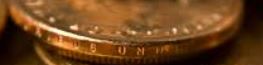 Because of this coin's uniqueness I didn't think it would be worth creating a separate thread. |
|
Valued Member
 United States
96 Posts |
Once again thanks. Seems coins go through alot. Always open to learning.
|
|
Bedrock of the Community
United States
62064 Posts |
On the proof dollars there is a die that strike the edge with the strike of the coin. 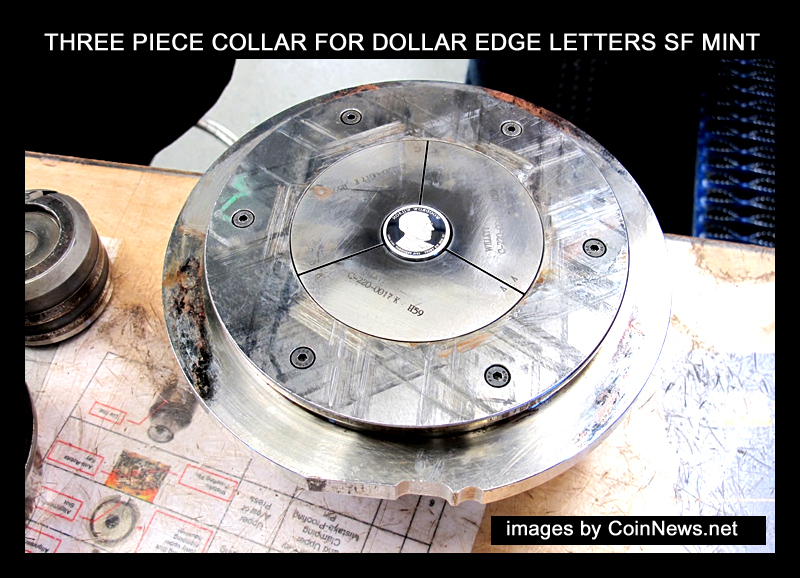 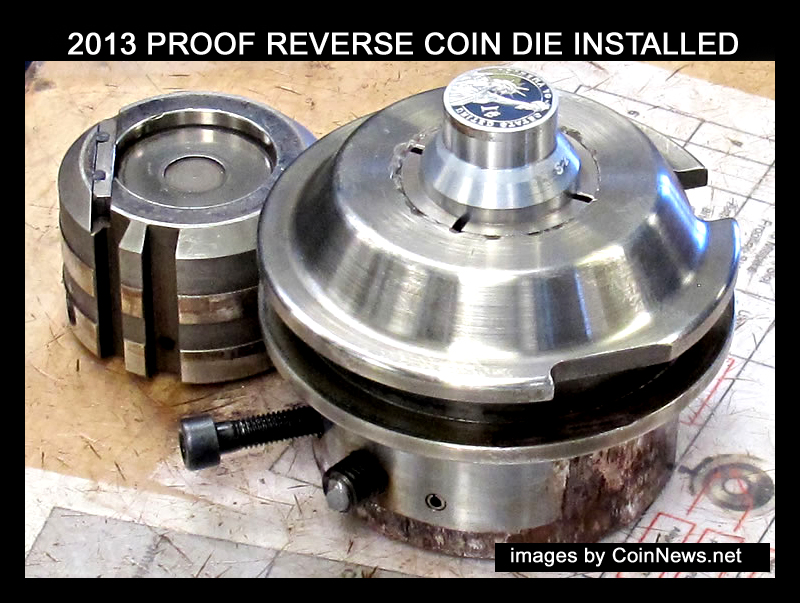 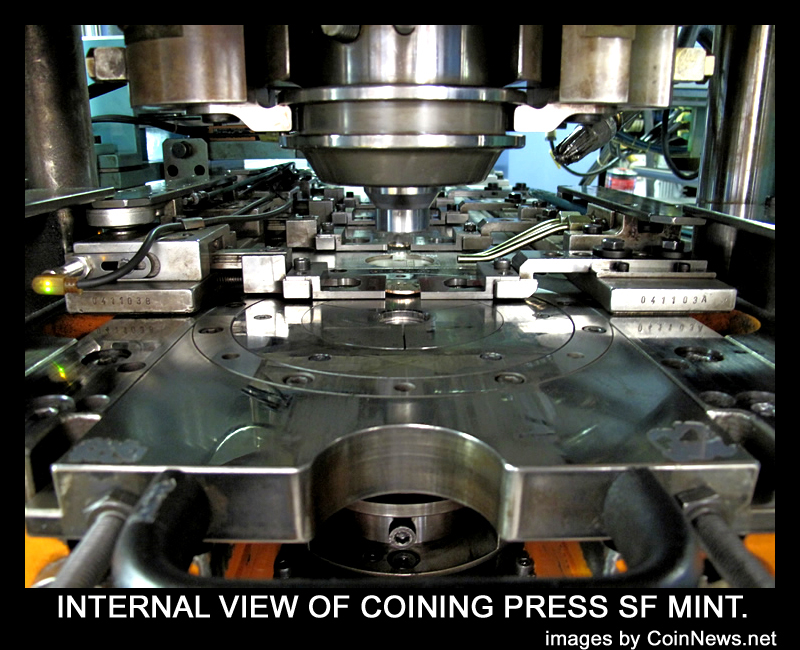 But the business strike ones can be added before or after the strike. Because you can find them in either direction with the obverse and reverse and edge lettering in line with the OBV or REV side up. |
|
Bedrock of the Community
United States
17884 Posts |
Quote:
I'm specifically referring to edge lettering similar to the E PLURIBUS UNUM found on a $20 Gaudens double gold eagle through 1933. I don't believe these letters are technically 'struck'. Actually they are, the edge letter on the double eagle are created during the striking of the coin by a three piece collar similar to the one the use on the proof president and NA dollars. (Business strike President and NA dollars get their edge lettering in a separate step, as do early half dollars and dollars. In the case of the early halves and dollars the edge lettering is applied sirst and then the coin is struck. On the President and NA dollars the coin is struck then the edge is lettered.) |
|
Pillar of the Community
United States
3552 Posts |
Do you remember when I wrote: Quote:
I don't believe these letters are technically 'struck'. I should have delineated the time period better when the terms 'striking' and 'milling' may or may not have been synonymous depending upon a coin's stage in the minting sequence. Here are the results of my voyages back into the annals of the past: https://goccf.com/t/266015 |
|
Bedrock of the Community
United States
17884 Posts |
Yes I remember it, but the edges on the Saint-Gaudens eagle and double eagle aren't formed by milling, they are formed by striking.
|
|
Page 2 of 2
|
Replies: 24 / Views: 2,920 |
Page 2 of 2
|







 First Page


 Posted 07/26/2016 11:36 am





