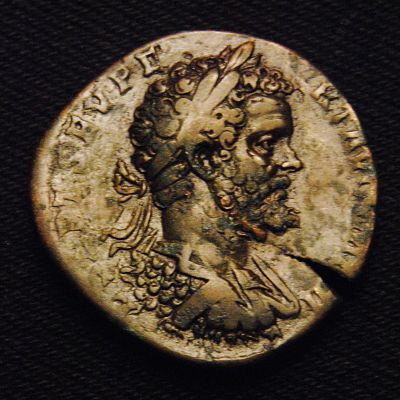
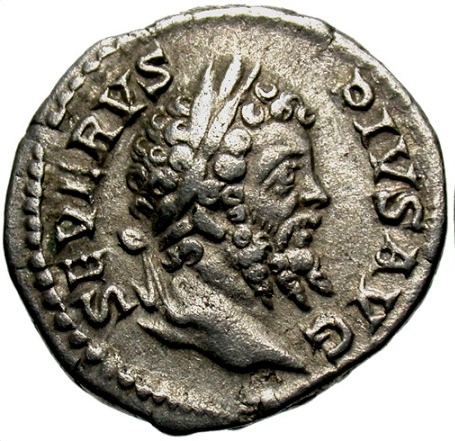
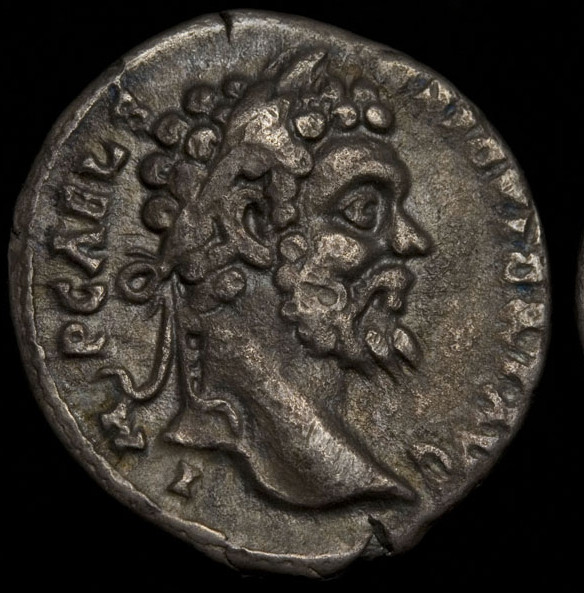
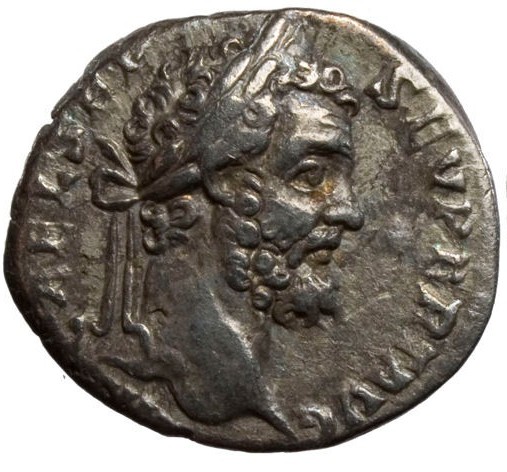
Ok. So time for the reveal. I am glad to say that one person got it correct.
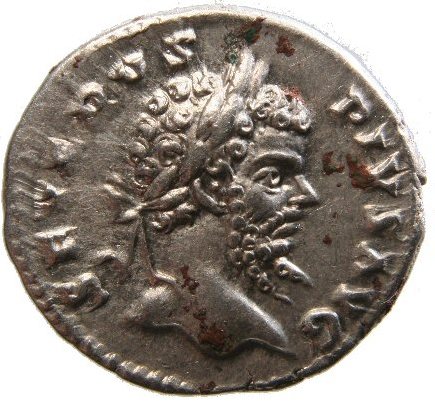
I would disagree with the "I see this can't be done just on the basis of style differences" as I would be able to place one coin as coming from Laodicea-ad-Mare in A.D. 202 from these images alone and be able to identify the reverse type. THat is because this is a coin from the final issue from Laodicea-ad-Mare which only occured with this single reverse type.
Coin 2Septimius Severus denarius
Obv:- SEVERVS PIVS AVG, Laureate head right
Rev:- COS III P P, Victory advancing left, holding wreath and palm
Minted in Laodicea-ad-Mare, A.D. 202
Ref:- RIC 526 (look on page 163). BMCRE 732-733 (page 299)

The other three coins come from Rome mint and show that the style of Rome is not quite as homogenous as one might think.
It is thought that by about A.D. 198 there was training of the engravers fro Laodicea-ad-Mare by those at Rome as the quality and consistency of their output though the eastern output still developes a different style. This style is quite distinct from any of the earlier issues from "Emesa" or "Laodicea-ad-Mare".
Now comes the hard part. There are no specific "tells" but I will do my best to describe things. I will admit that it took me about 2 years of studying and buying coins of the family of Septimius to be able to know for sure. These later issues (A.D> 198-202) are probably the ones that causes some people (including many dealers) the most confusion and not helped by some online resources such as Wildwinds still having some mis-attributed coins. I should probably go through them all and inform Dane.
The portraits tend to be slightly smaller but this is not instantly obvious unless they are side by side with others. The eyebrow tends to be this small crescent curve from the bridge of the nose to. The eyes are "different" bit I struggle to put it into words. The beard has the same point nature but the pointy curls tend to be tighter, thinner and curve slightly upwards.
Here is a coin from a slightly earlier issue. I hope you can see the similarity in this bust to 2 avove
Septimius Severus denarius
Obv:- L SEPT SEV AVG IMP XI PART MAX, laureate head right
Rev:- IVST-ITIA, Justitia (Justice) seated left with patera & scepter
Minted in Laodicea-ad-Mare. A.D. 199-202
Reference:- RIC 505. RSC 251

There is still variation in style. Studying as many correctly attributed examples as possible and them comparing with a similar obverse legend from Rome is the best way to learn.
Here is a XI PART MAX from Rome as a comparison
Obv:- L SEPT SEV AVG IMP XI PART MAX, Laureate head right
Rev:- MARTI VICTORI, Mars standing right, holding spear and leaning on shield set on helmet
Minted in Rome, A.D. 198-200
References:- RIC 134, RSC 321a

I suspect that this exercise might not have been as useful as the Alexandrian example.
Anyone want more?






 First Page


 Posted 03/07/2017 2:19 pm