| Author |
 Replies: 18 / Views: 9,495 Replies: 18 / Views: 9,495 |
Page 2 of 2
|
|
|
|
Pillar of the Community
United States
4212 Posts |
I believe that's the right side of the dome appearing in that mess, meaning one was placed on top of another,
then sqaahed, hammered, etc
|
|
Pillar of the Community
United States
7597 Posts |
|
|
Bedrock of the Community
United States
62064 Posts |
The yellow area looks like a grease prevention issue. Red, glue issue. I don't feel it was damaged as the transfer design in not a match.
|
|
Bedrock of the Community
United States
79404 Posts |
It looks like Post Strike Damage to me. That means that it happened after it left the U.S. Mint.
Errers and Varietys.
|
|
Pillar of the Community
  United States
8056 Posts |
Thanks for all the responses thus far. Looks like on balance, most responders are leaning toward post strike damage. A couple of follow up questions, and some additional observations from my side (please hang in there with me). Quote:
The fields and both sides of the building are showing heavy die flow lines. (thus the whiter color) Can anyone explain why this happens during a coin strike? And why Jeffersons seem especially prone to it? To me, this means the metal is not "flowing" (technically, I suppose the better term is deforming) as it should in order to give a smooth surface. More friction at die surface? Inadequate stamping force? Also, Crazyb0, thanks for pointing out that the strike is slightly tilted or off center (though the flow lines still seem to be symmetric about the center of the coin, showing above the dome, on both wings of the building, and below "FIVE CENTS") Here are two things I see on my original photos which have not received comment yet: - the area on the cupola outlined in red looks like delamination to me. - please look at the areas outlined in orange. The shape of this part of the building on the right is different; a corner has been displaced in a major way. Is this consistent with PSD or with a die or strike issue? 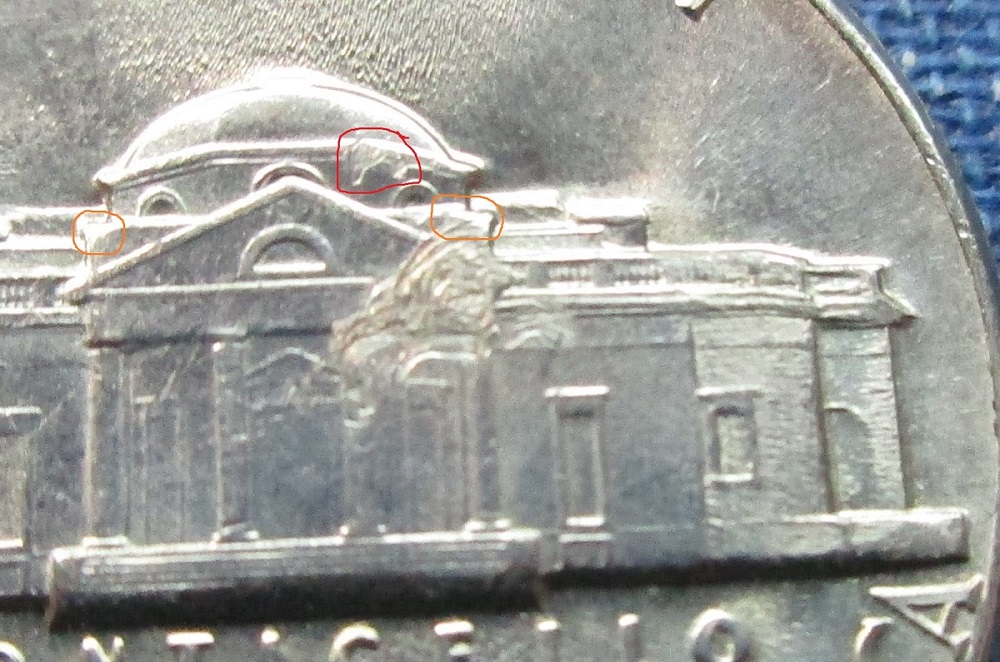 ANd finally, I went back and looked at a photo I took ata a very shallow angle to try and determine whether the ugly area was raised. I hadn't looked very closely before, but it looks like the C in MONTICELLO sits amid or atop this mess. I know that sometimes an odd photograpic angle can give an artifact, but this seems like too well formed to be an artifact. 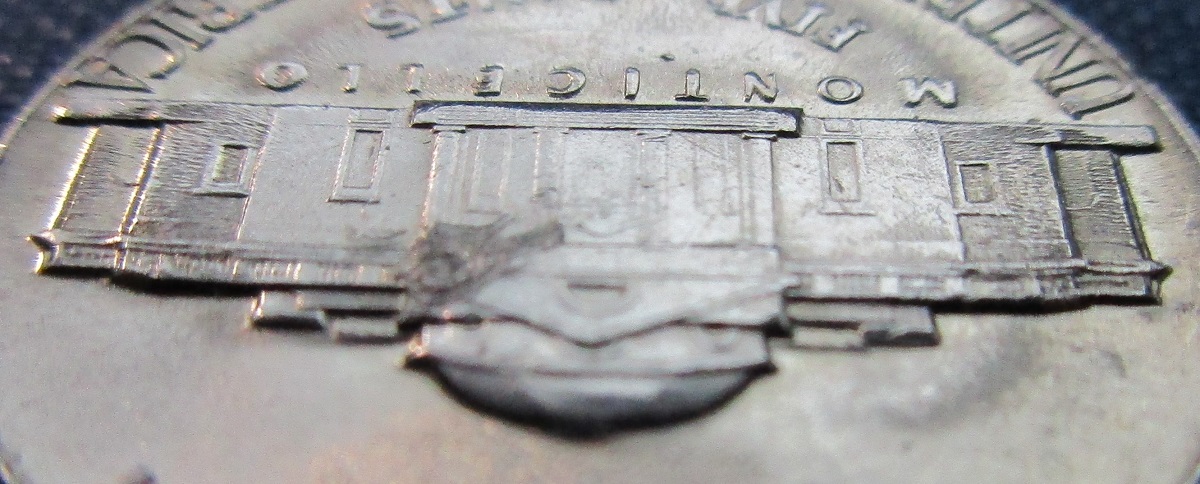 Edited by tdziemia
08/08/2018 10:08 am
|
|
Bedrock of the Community
United States
10284 Posts |
I take back my wrapper theory. Maybe it is a struck through lamination from another nickel. I do see the "C".
|
|
Pillar of the Community
United States
7597 Posts |
I am not sure about being a Lam issue. After looking at the very last picture it does look like glue as Coop said.
|
|
Pillar of the Community
United States
8056 Posts |
Quote:
Maybe it is a struck through lamination from another nickel. I do see the "C". I was wondering if such a thing could happen. Of course, the addition of a bit of unwanted metal might also cause die to tilt during striking (Crazyb0 suggestion upthread) and/or flow problems, I would guess? If I wanted to check for glue, I suppose I can see if dissolves in acetone? |
|
Bedrock of the Community
United States
79404 Posts |
Could it be Die Damage? Did something brittle get into the striking chamber and damaged the reverse die?
Errers and Varietys.
|
|
Pillar of the Community
United States
8056 Posts |
Well, I'm at least glad to have posted something that's a little difficult to diagnose  When I saw the image of a C in the last photo, I did wonder if a lamination from an earlier strike could have carried over to this coin (not being experienced enough in this area to know if that's possible). This coin also has a small lamination on the cupola (I think), so maybe there was batch of flawed metal running through the mint at the same time. I suppose that doesn't explain why a corner of the building also got knocked off (the bit circled in orange). That sounds more like die damage? Finally (again, my ignorance of Jeffersons is showing), the last O in MONTICELLO is completely different from the first. I don't see that on the small number of photos I have of other Jefferson nickels (though they are all earlier dates). Edited by tdziemia
08/08/2018 1:39 pm
|
|
Bedrock of the Community
United States
79404 Posts |
Errers and Varietys.
Edited by Errers and Varietys
08/08/2018 1:52 pm
|
|
Pillar of the Community
United States
8056 Posts |
Thanks very much, EandV. Certainly that looks closest to the irregular pattern on mine (even if mine isn't as catastrophic ... even minus the Cud). |
|
Bedrock of the Community
United States
79404 Posts |
You're very welcome! That's just a well thought guess. I did contact Mike Diamond (coin expert), so he can look at your coin and assess what happened to it.
Errers and Varietys.
|
|
Bedrock of the Community
United States
62064 Posts |
[quote] tdziemia asked: Can anyone explain why this happens during a coin strike? And why Jeffersons seem especially prone to it? To me, this means the metal is not "flowing" (technically, I suppose the better term is deforming) as it should in order to give a smooth surface. More friction at die surface? Inadequate stamping force? [quote] During the strike the metal is being moved around. Making some parts higher and reducing others to make them lower. After several hundreds of strikes, the lower field areas on the coin, start showing die flow lines. Keep in mind they usually do not use lubrication on the dies. This leaves a residue on the coins. It also gets into the devices and prevent the full strike of them. So this metal to planchet wear will make lines form where the metal is moved over and over into the new location. That is what you are seeing on the fields. Note on your coin, they make the fields to look white in color. This is totally normal. The more coins struck with a die, the more the devices breakdown. This affects all the entire die. Then figure in die clashes that transfer the outlines of deeper devices onto the opposite dies. So to remove these, the polish down the fields of the die. (the fields are the outside part of the die) The devices are deeper into the die and are not usually affected during a clash. Usually the bust outlines and the buildings are transferred on cents. 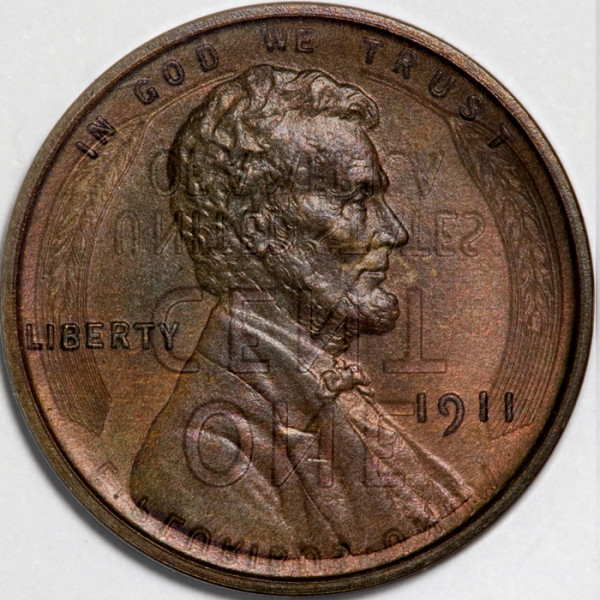 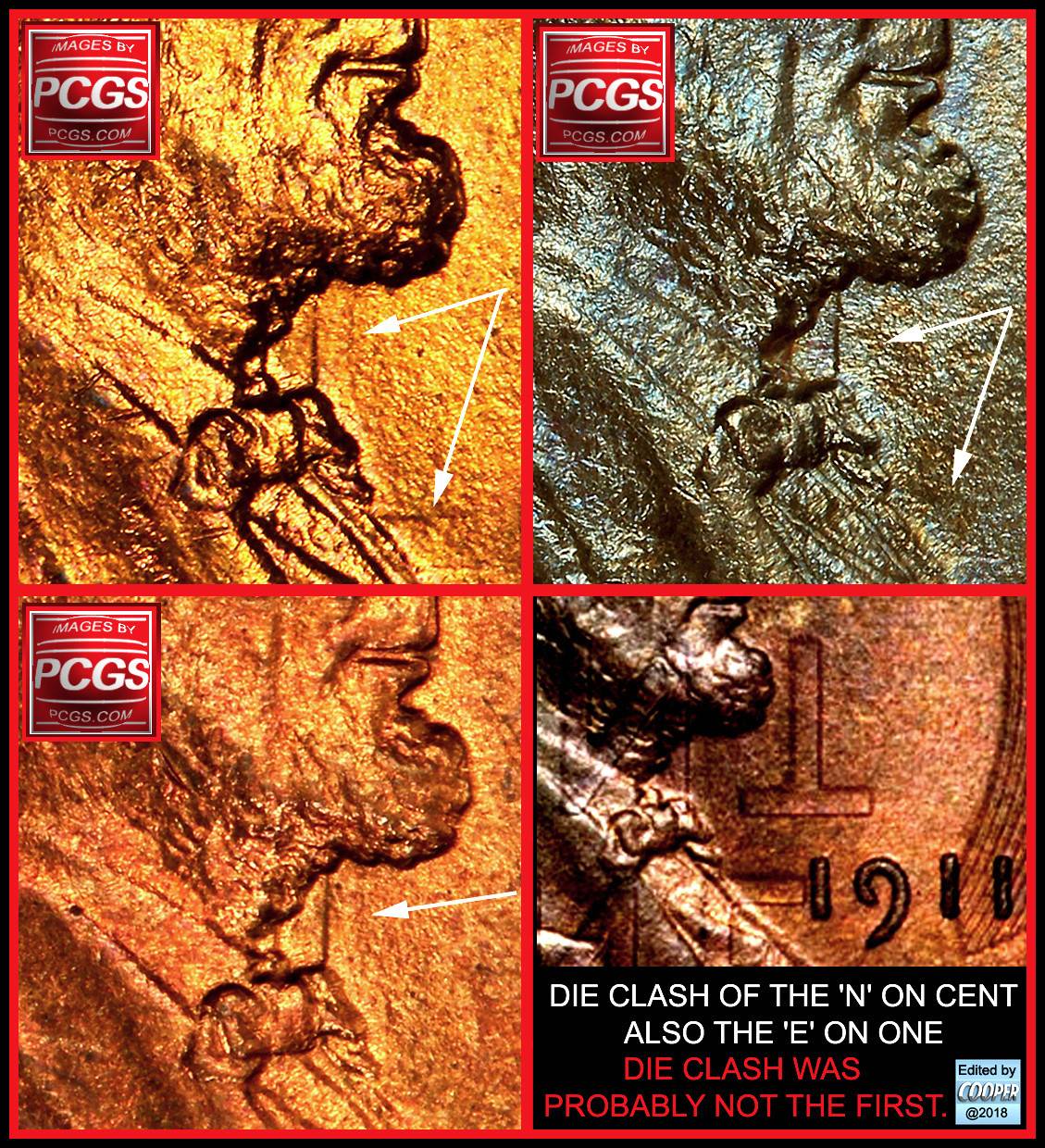 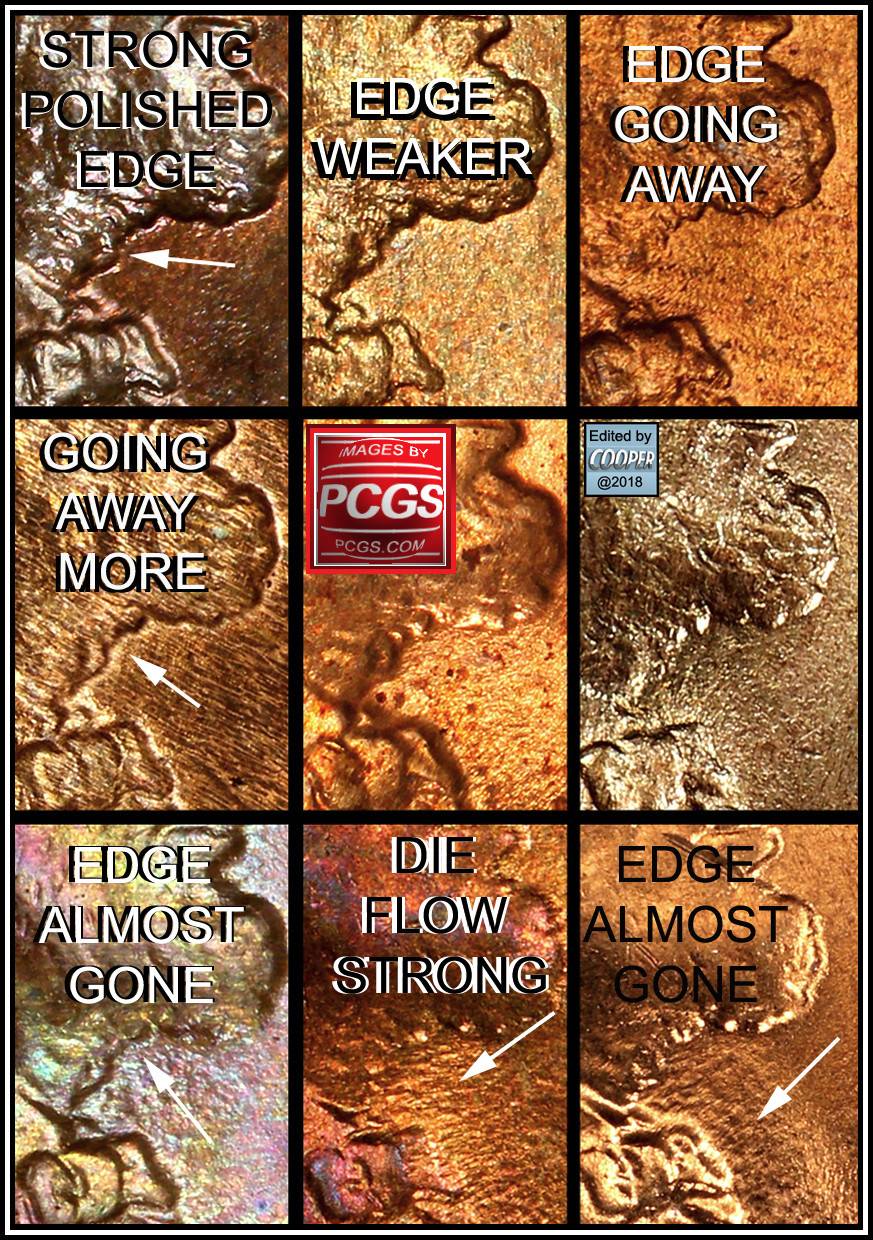 As the die ages and polishing take place, then the die is altered from the fresh die that started out to an aged, altered die that is continued to be used. Die wear is just part of the lifes process for a die. Die events happen and clashes, cracks, chips, breaks and sometimes a Cud can happen before the die is retired. It is doing the job it was made for. |
|
Pillar of the Community
United States
2752 Posts |
It looks like some crud that somebody tried to scrape off, damaging the coin in the process.
Error coin writer and researcher.
|
|
Page 2 of 2
|
Replies: 18 / Views: 9,495 |
Page 2 of 2
|





 First Page


 Posted 08/07/2018 7:17 pm





