| Author |
 Replies: 23 / Views: 4,902 Replies: 23 / Views: 4,902 |
Page 2 of 2
|
|
|
|
Pillar of the Community
 United States
3363 Posts |
Quote:
Copper plated zinc planchets are not annealed before striking. Correct. The zinc used (Zinc Alloy 190) is identified as being "self annealing". Perhaps all zinc is "self annealing"? |
|
Pillar of the Community
United States
3363 Posts |
Quote:
The 1956 lamination is a different type, because the lamination is varied in depth. As a "different type":  Does it have a different name? Does it have a different cause? |
|
Pillar of the Community
United States
2775 Posts |
Pete2226, Excellent research. We can all learn from. That said, I've search and search for the topic that we questioned this 1983P shown from ebay, but failed short. I did save the images back then and thought I'd add here. I still think its either an alloy separation issue or the copper plating has separated in an unusual fashion. First and last I've seen like this. Adding food for thought. Thanks, Doug. 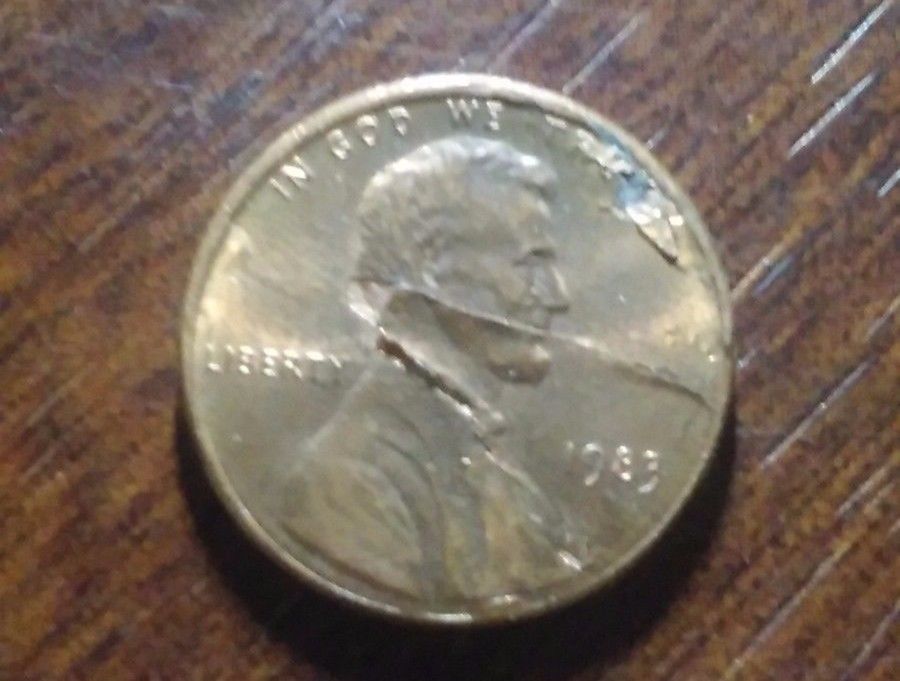 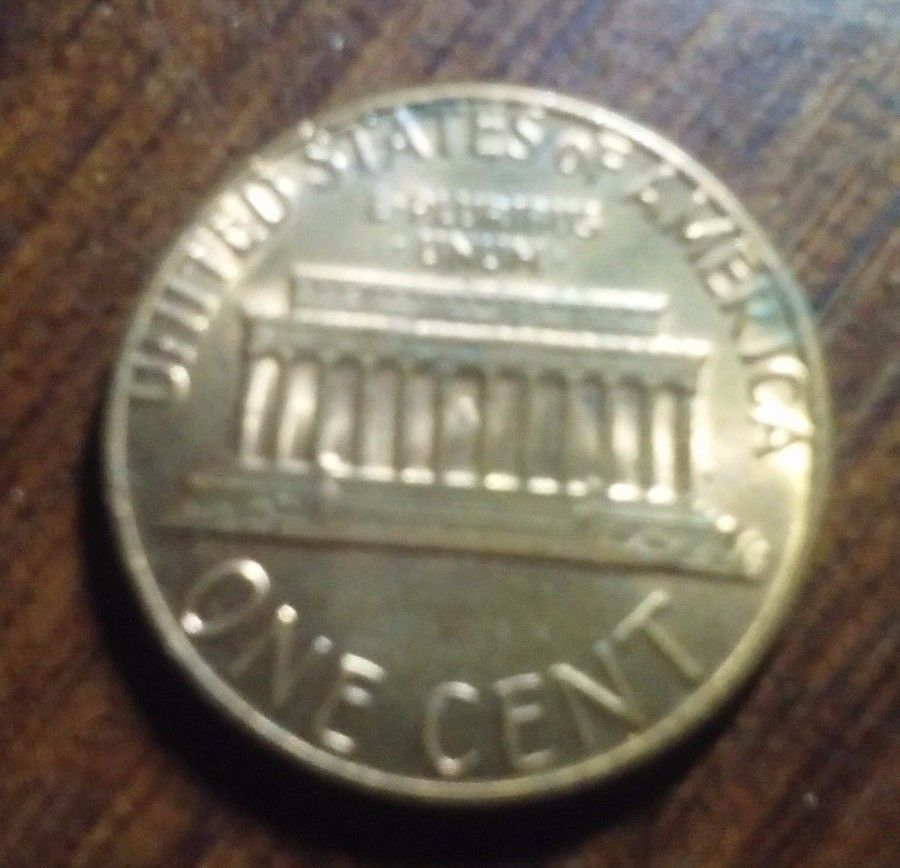 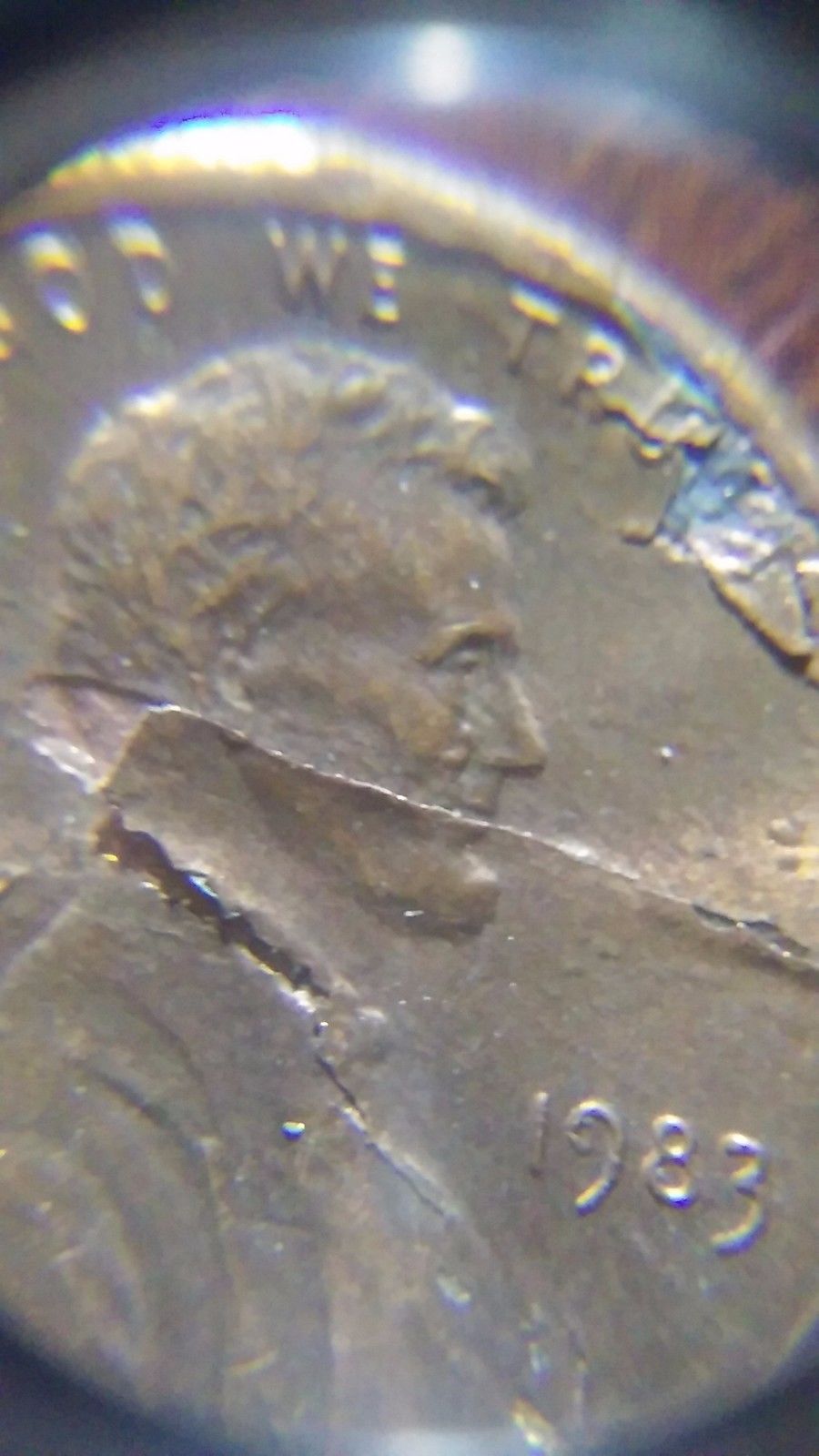 Edited by Halo1st
01/12/2019 11:34 pm
|
|
Pillar of the Community
United States
3363 Posts |
Quote: I've search and search for the topic that we questioned this 1983P shown from ebay, but failed short. I did save the images back then and thought I'd add here. I still think its either an alloy separation issue or the copper plating has separated in an unusual fashion. First and last I've seen like this. Maybe someone can help find the topic again. I wish the photos had better focus. It appears to be plating which is peeling, but looks possibly thicker than 8 microns. Also the area at the back of the neck has the appearance of a lamination. Very interesting. I really don't know what to do with it! Thanks for pointing it out! |
|
Pillar of the Community
United States
2376 Posts |
Plating can split in strange ways. Here is a coin of mine that Mr. Diamond used in one of his articles on split plating. 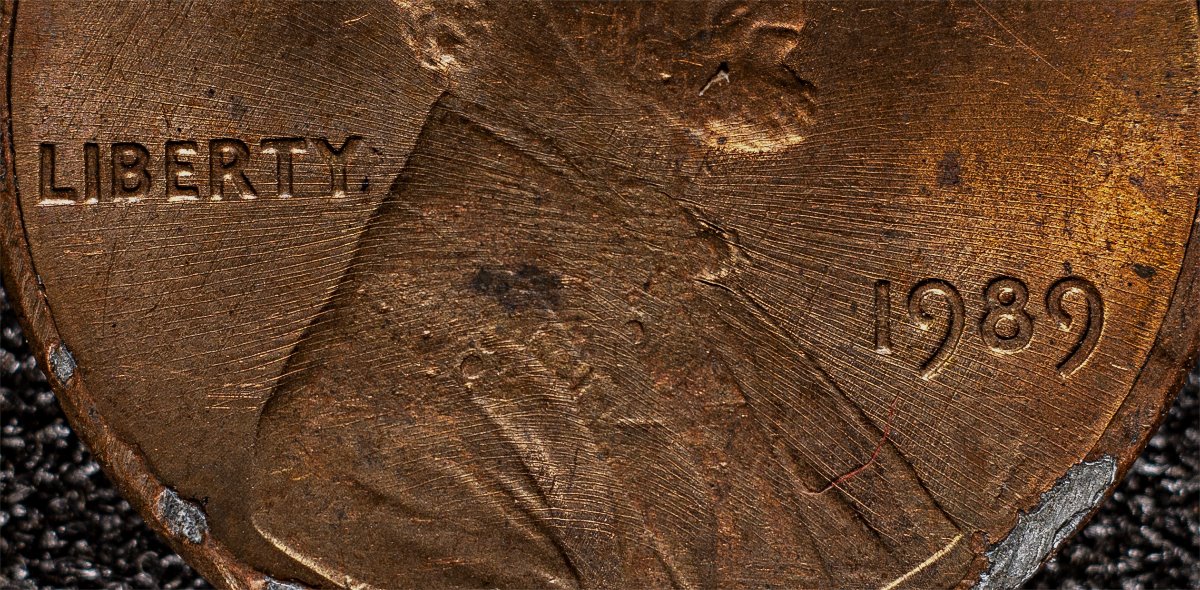 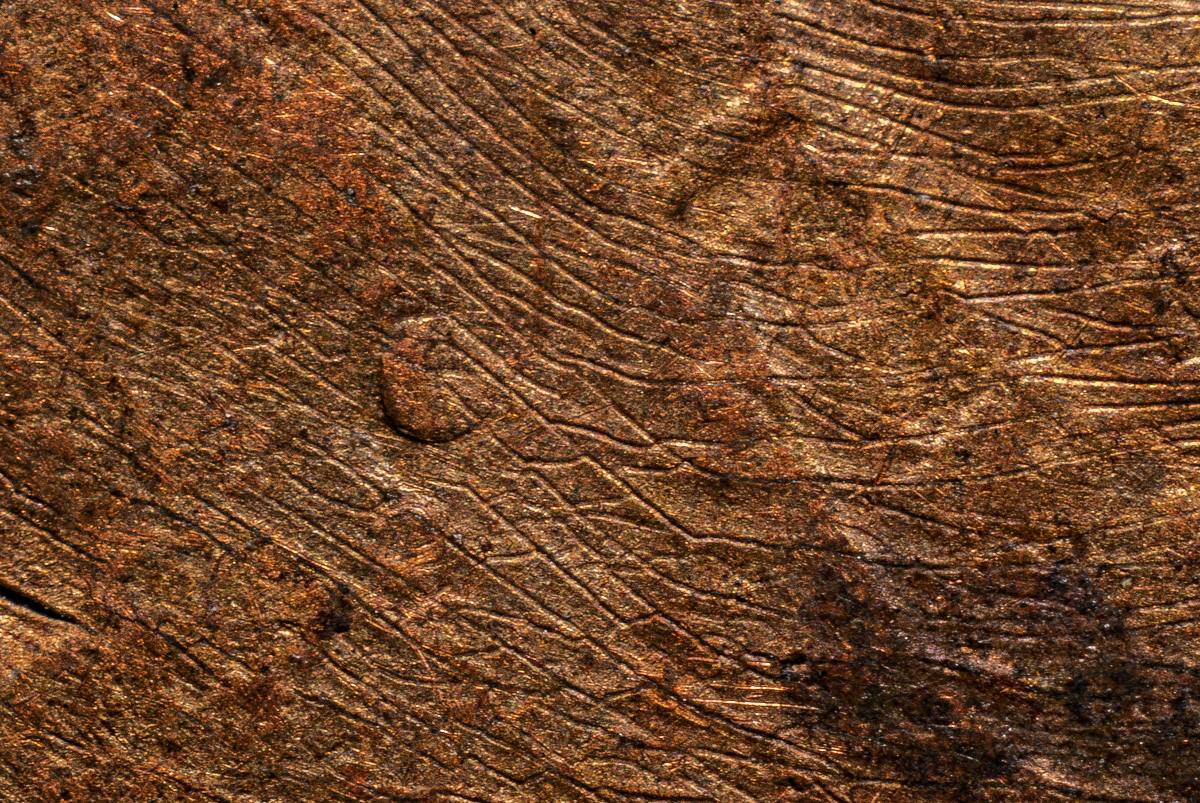 Edited by stoneman227
01/13/2019 10:50 am
|
|
Pillar of the Community
United States
3363 Posts |
Quote:
Plating can split in strange ways. Here is a coin of mine that Mr. Diamond used in one of his articles on split plating. Very interesting! Would you happen to have a link to that article? |
|
Pillar of the Community
United States
2376 Posts |
|
|
Pillar of the Community
United States
3363 Posts |
Quote:If you subscribe to Coin World , you can look it up. It was around December of 2017 I am a CW subscriber, but was not in 2017. Any way you could send me a copy of that article? (Even subscribers cannot access CW archives)! Edited by Pete2226
06/07/2019 2:43 pm
|
|
Pillar of the Community
United States
3363 Posts |
I have stumbled on to another observation which may be relevant, although it seems a bit counter-intuitive. I would be interested in any comments. It is that the lower the Tensile Strength, the less likely a metal is to produce laminations. Here is a summary of that information: Tensile Strength (UTS) Incumbent Materials¹ Cent: Copper Plated Zinc Tensile Strength = 26 ksi** Nickel: Cupronickel Tensile Strength = 96 ksi Quarter: Cupronickel-Clad C110 = 65.5 ksi There is a negative linear relationship between tensile strength and adjusted delamination factor.² 1. ALTERNATIVE METALS STUDY Contract Number: TM-HQ-11-C-0049 FINAL REPORT August 31, 2012 Submitted to: United States Mint 801 Ninth Street, NW Washington, DC 20220 2. https://www.researchgate.net/public...tic_emission |
|
Bedrock of the Community
United States
17884 Posts |
While laminations are seldom seen in modern coins they CAN occur in clad, solid alloy AND plated zinc cents.
|
|
Pillar of the Community
United States
3363 Posts |
Quote:
While laminations are seldom seen in modern coins they CAN occur in clad, solid alloy AND plated zinc cents. I hope someone can provide a photo or a link to an article about lamination on zinc cents. I have seen none, but that does not mean it is impossible! |
|
Bedrock of the Community
United States
62064 Posts |
Halo: That coin was struck through a piece of plating foil. Note under the raised plating, your see copper color, not gray like zinc. 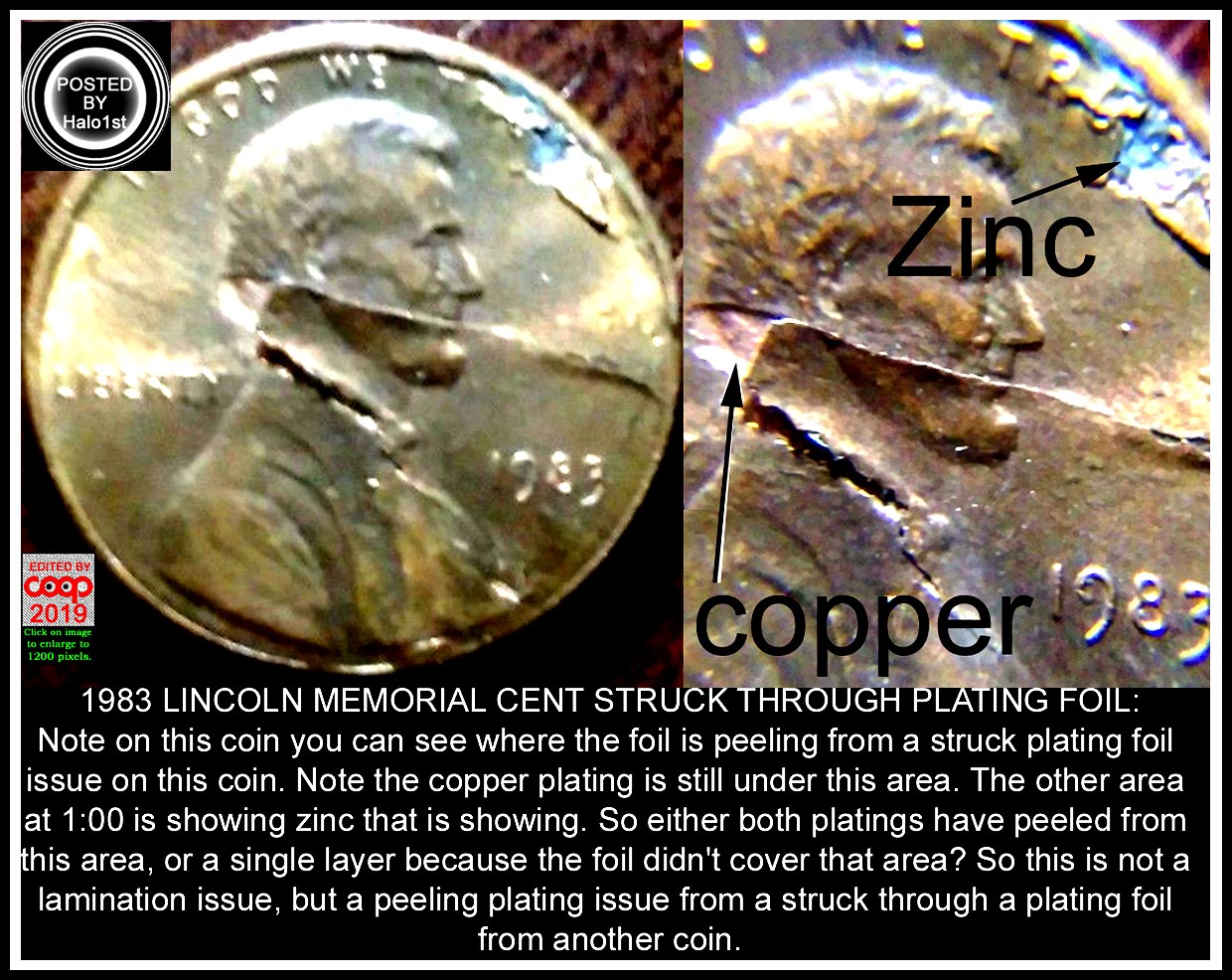 Edited by coop
06/07/2019 2:56 pm
|
|
Bedrock of the Community
United States
62064 Posts |
Stoneman: It looks like letters from a reverse of a quarter/some othercoin on the bust of Lincoln?
|
|
Pillar of the Community
United States
2775 Posts |
Coop, I agree due to the images not showing the under side of the raised section very well. What caught my eye  is the silver piece that seems to be attached to the underside of the raised copper plating. Noted in the center of this cropped image. Thanks, Doug. 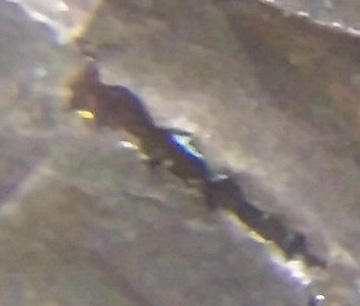 Edit: More food for thought. Seems to display some rigidity exceeding that of a piece of plating foil that's considered to only be (x)-microns thick. Edited by Halo1st
06/07/2019 9:58 pm
|
|
Pillar of the Community
United States
3363 Posts |
Halo - your photo is interesting, but I know of no way to process it that is not subjective. An in focus photo might help. The plating is designed to be 8 microns thick. Some microscopes have the ability to measure which would add an objective interpretation. Plating will show some rigidity when peeling, I think. By the way, I published this paper on another forum and it received a response from Mike Diamond, who said: Quote:I've seen examples where the copper plating is cracking and peeling, but no examples in which copper plating has been deposited on a zinc core which has experienced delamination. I don't see why pure (or nearly pure) discs of zinc shouldn't experience the occasional lamination error. After all, the pure copper Half Cents and large cents of the 19th century certainly had their share. My knowledge base is not the entirely of human experience. Makes me want to double the call for examples! |
|
Page 2 of 2
|
Replies: 23 / Views: 4,902 |
Page 2 of 2
|








 First Page

 Posted 01/12/2019 12:32 pm


