| Author |
 Replies: 18 / Views: 4,009 Replies: 18 / Views: 4,009 |
Page 2 of 2
|
|
|
|
Pillar of the Community
United States
3222 Posts |
Generally, I would prefer to find a variety, rather than an error. I find more errors than varieties.
Edited by Tunnioc
09/13/2019 12:18 am
|
|
Pillar of the Community
United States
1161 Posts |
I think collecting is a personal thing and not something done for money. You may be a coin collector that likes to collect perfect coins that are already slabbed or 1955 errors that unless you have a great deal of money you will never acquire. Others prefer to coin roll hunt and spend some peaceful time going through coins, maybe to find different errors or varieties from a certain decade or something. To each their own, not everyone that collects errors and varieties believes they are going to get rich, maybe they do it because it involves more things then buying a slabbed coin, who knows
|
|
Bedrock of the Community
United States
79796 Posts |
Misinformation and ignorance is a big part of this.
Errers and Varietys.
|
|
Bedrock of the Community
Australia
21794 Posts |
I am thinking that the people who study these things can be valuable (to numismatics).
The effort that error and variety collectors put into their study can turn into a very valuable resource, if they wish to apply their newly acquired skills to other areas of numismatics.
Die linkage studies are critical to determining the sequencing, and therefore the dating of ancient coins.
It is the (sometimes) very minor die differences that are studied and sequenced.
Such is the case of the Athenian tetradrachms (c/- 480BC - c/- 400 BC), and the tetradrachms of Alexander, which were minted over a period of 100 years or so.
Edited by sel_69l
09/13/2019 03:29 am
|
|
Valued Member
United States
256 Posts |
It's the thrill of the hunt! Not so much the numismatic value, but just to find it and identify what you have found!
Edited by Finn70
09/13/2019 01:17 am
|
|
Valued Member
United States
119 Posts |
Honestly, I just think it is fun. I don't plan on getting rich but seeing the details up close and the flaws there are is cool.
|
|
Bedrock of the Community
United Kingdom
18985 Posts |
When I started collecting as a kid (in the late 1960s) error coins in the UK were just considered curiosities. I seem to remember reading an article in a coin magazine that stated that whereas stamp collectors prefer errors, coin collectors always prefer coins that are perfectly struck. In the late 1970s I remember reading a letter in a French coin magazine where someone had sent in a photo of a nicely double-struck coin, and the magazine editor said that it actually made the coin worth less than a well-struck specimen! I agree with Greasy Fingers that YouTube and the Internet have had a big influence in recent years, and not always for the best... I often see British 'error' £1 and £2 coins on ebay with 'the edge lettering upside down'... it can be either way up! I was the only bidder on this clipped flan 2p when it was posted on ebay!   |
|
Pillar of the Community
United States
663 Posts |
I just enjoy the hunt. If the "get rich quick" crowd would stop and think!! If it was so easy to get rich from pocket change don't you think the guys trying to sell you books or get you to buy tapes and making the post on youtube would do it? These guys are trying to make money selling something. If interested in error/variety coins study on you own (on this forum) and let the carnival salesmen go pound sand.
|
|
Pillar of the Community
United States
751 Posts |
I personally collect error variations just for the thrill of finding them. I never plan to make a dime from them, just to see how many I can accumulate. I also do not find much interest is Post 82 cents. I failed to mention I only look for variations of Lincoln One Cent Coins.
Dan
|
|
Pillar of the Community
United States
751 Posts |
I hear the phrase; "Go pound sand" a LOT lately.
All my life I've said; "Go pound Salt in your *** Edited by Staff | The bad word filter is in place for a reason. Bypassing the filter and making the intended word obvious anyway is completely unacceptable. ***".
Dan
|
|
Pillar of the Community
United States
7600 Posts |
Quote:
I don't think that most collectors of minor errors believe these coins have a great deal of value. They've just chosen this relatively inexpensive area of collecting to get involved in. That pretty much sums it up!  |
|
New Member
United States
36 Posts |
I inherited tons of wheat cents and didn't know what to do with them. Started picking through them and found lots of early dates which interest me. As I started looking up the values and putting together albums it was fun. Its fun to find those coins that are a little different too. I'm not doing it to get rich , just trying to learn a little something along the way. |
|
Bedrock of the Community
United States
62064 Posts |
After you've searched a lot of coins, then you start to see that some 'so called error' coins are common. Die breakdown as the die ages. The dies are intended to do one job. To strike coins. All wear out and are eventually retired. So to me getting excited about a die crack, chip, break and other common events, you realize that when these happen in the LDS die state and the die is continued to be used till retirement, a large number of the so called errors, make up a large percentage of the coins. 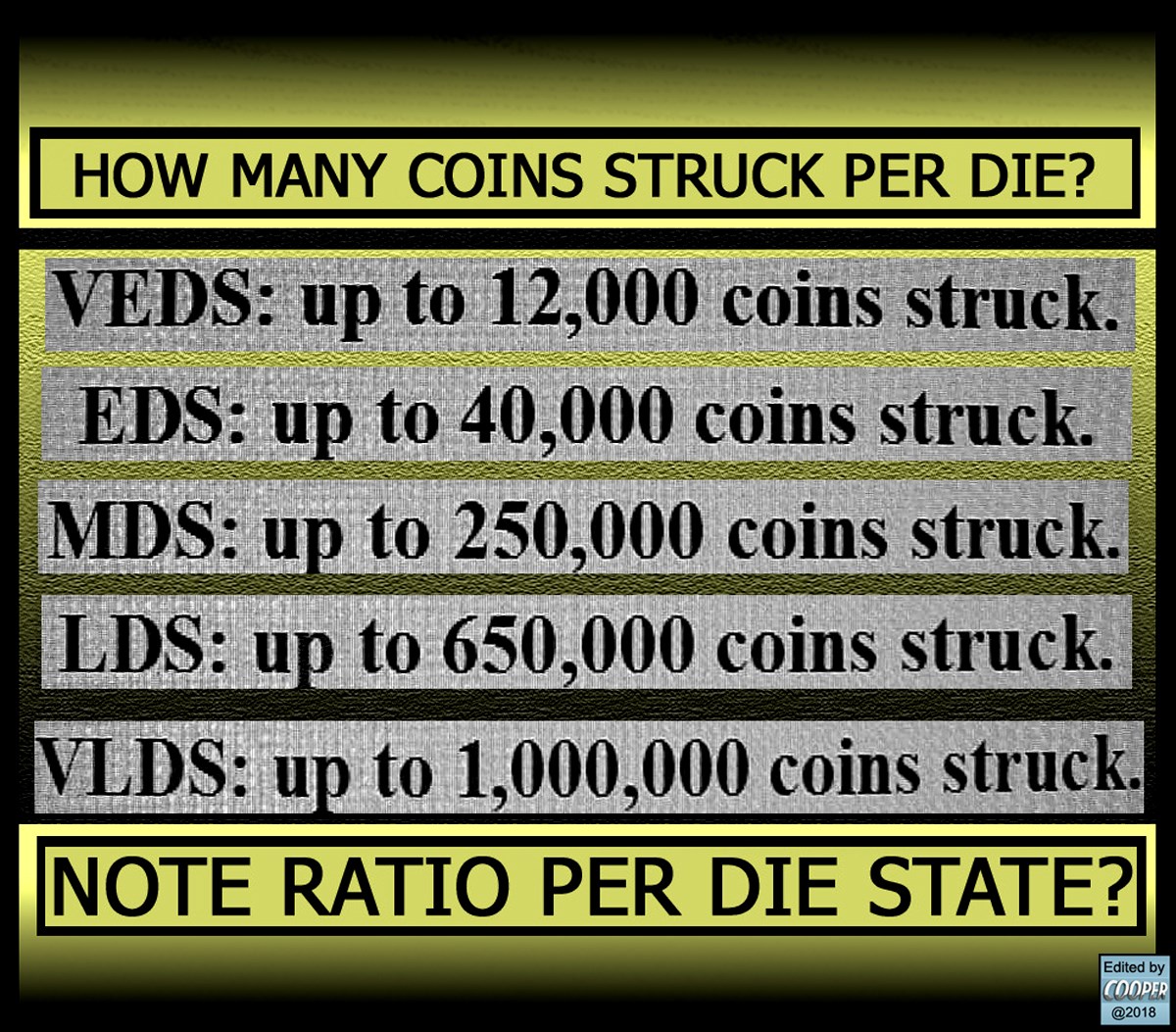 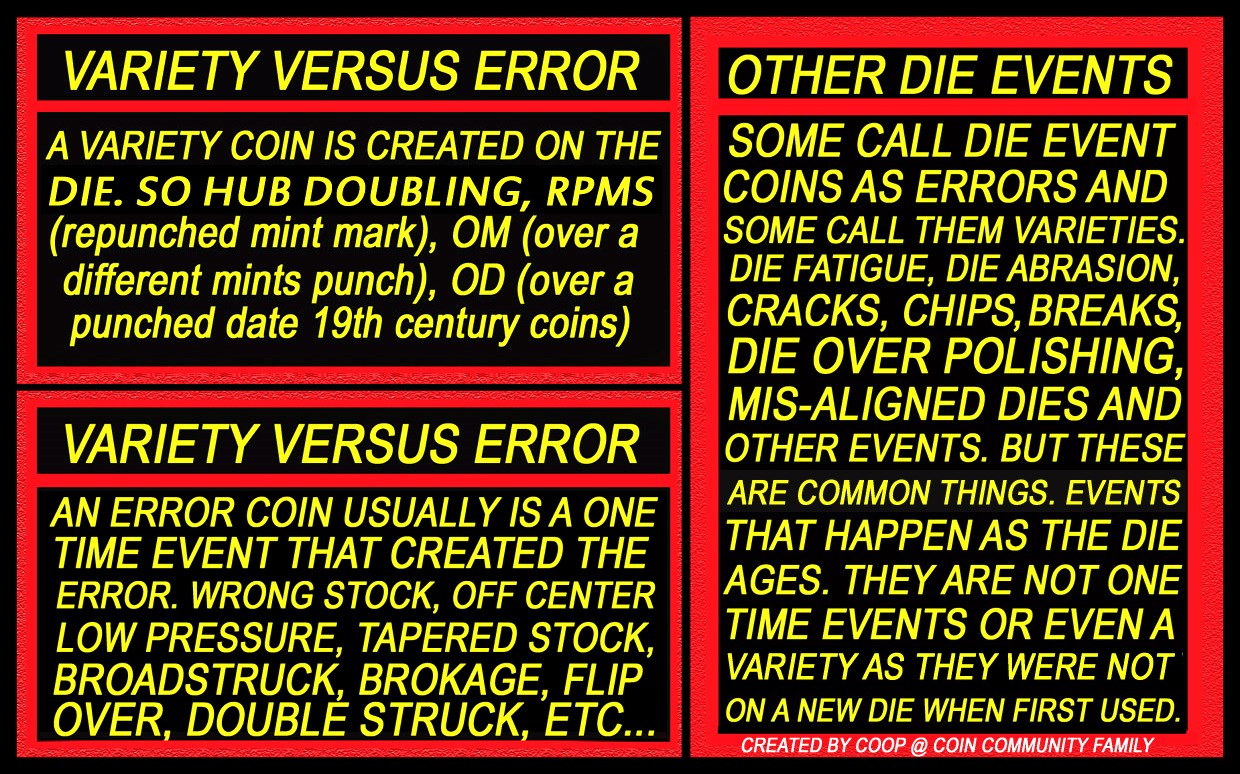 It is often when a Cud develops, then interest should be shown. 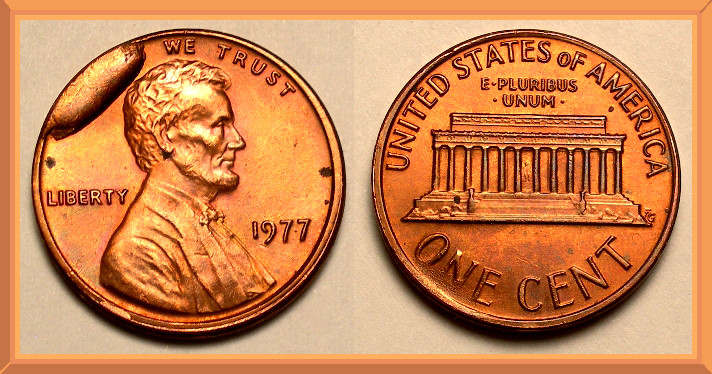 When a die shows a rim to rim crack all the way across a coin, they are just a few of these.  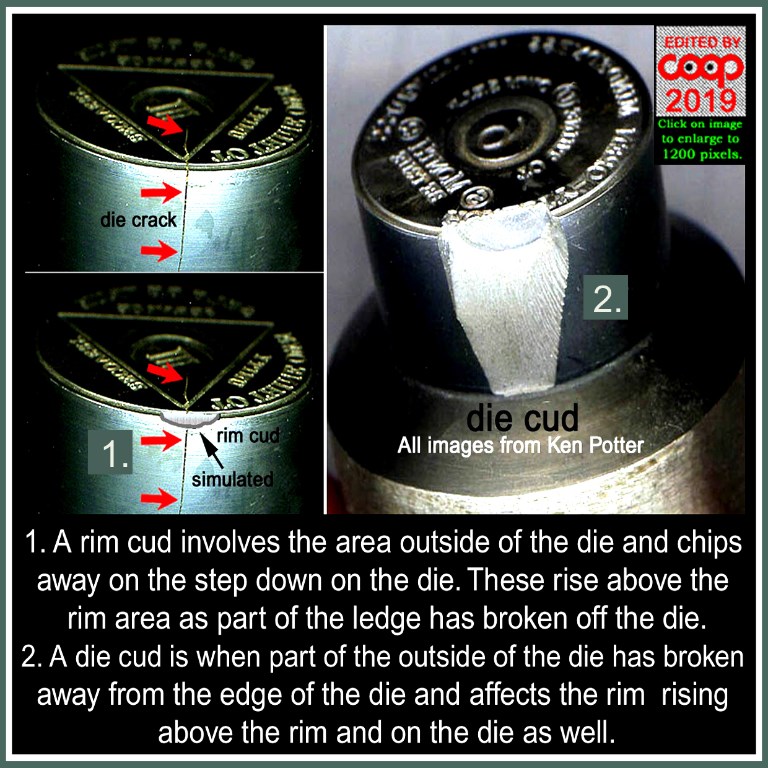 When a die splits, there will only be a few of these as these dies are often retired earlier, and less of these errors are out there.  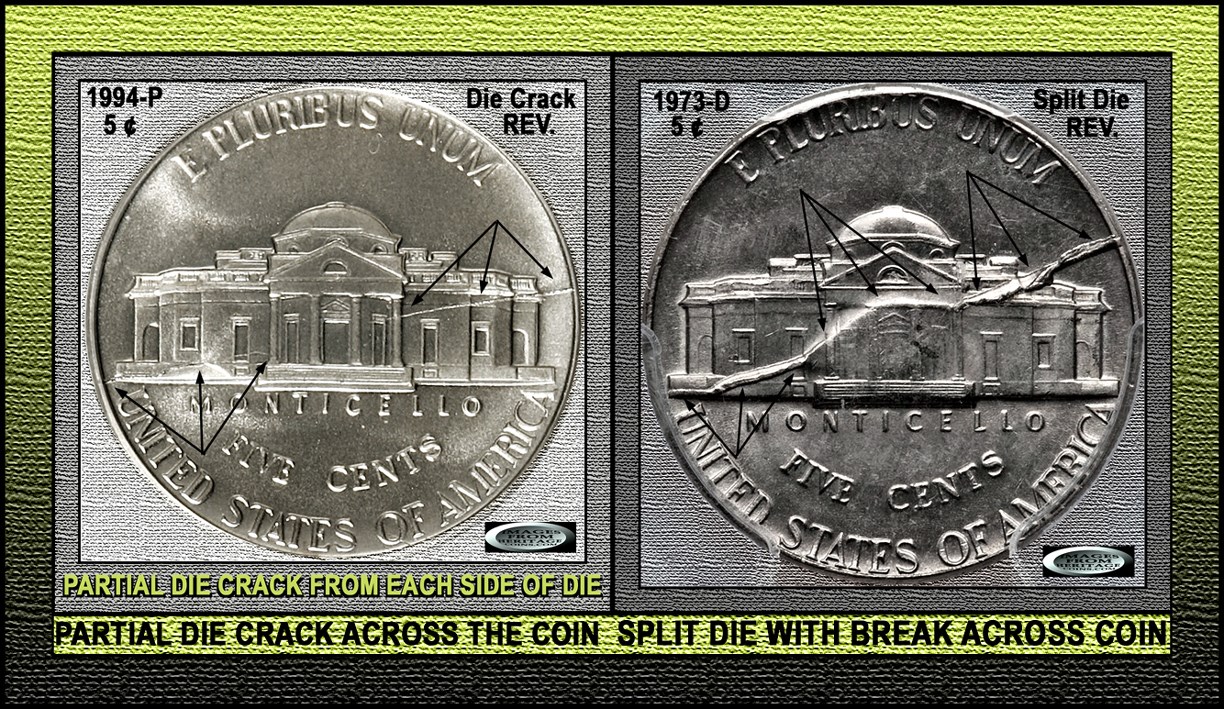 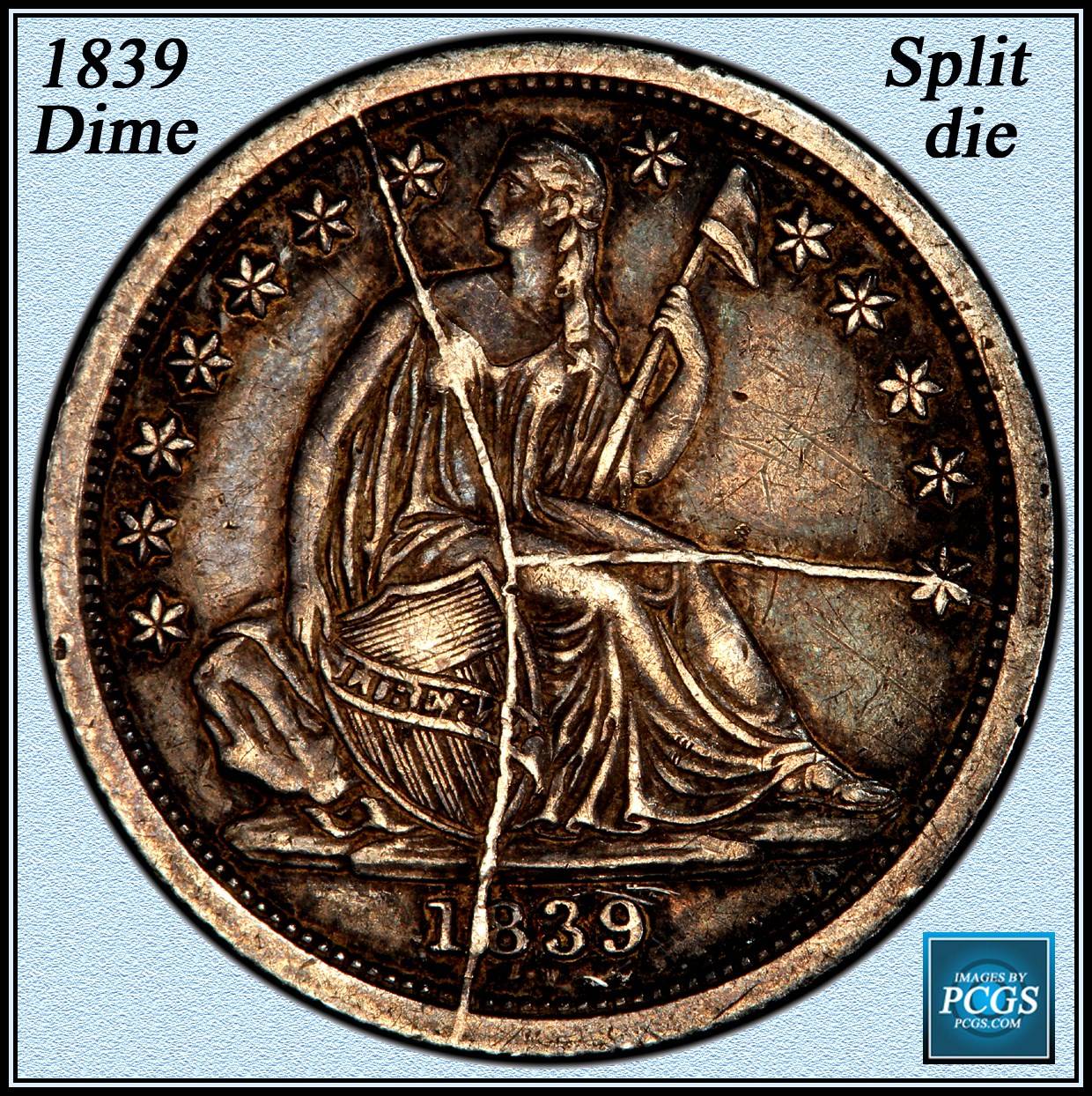 How often does a die split off and is struck into a coin? 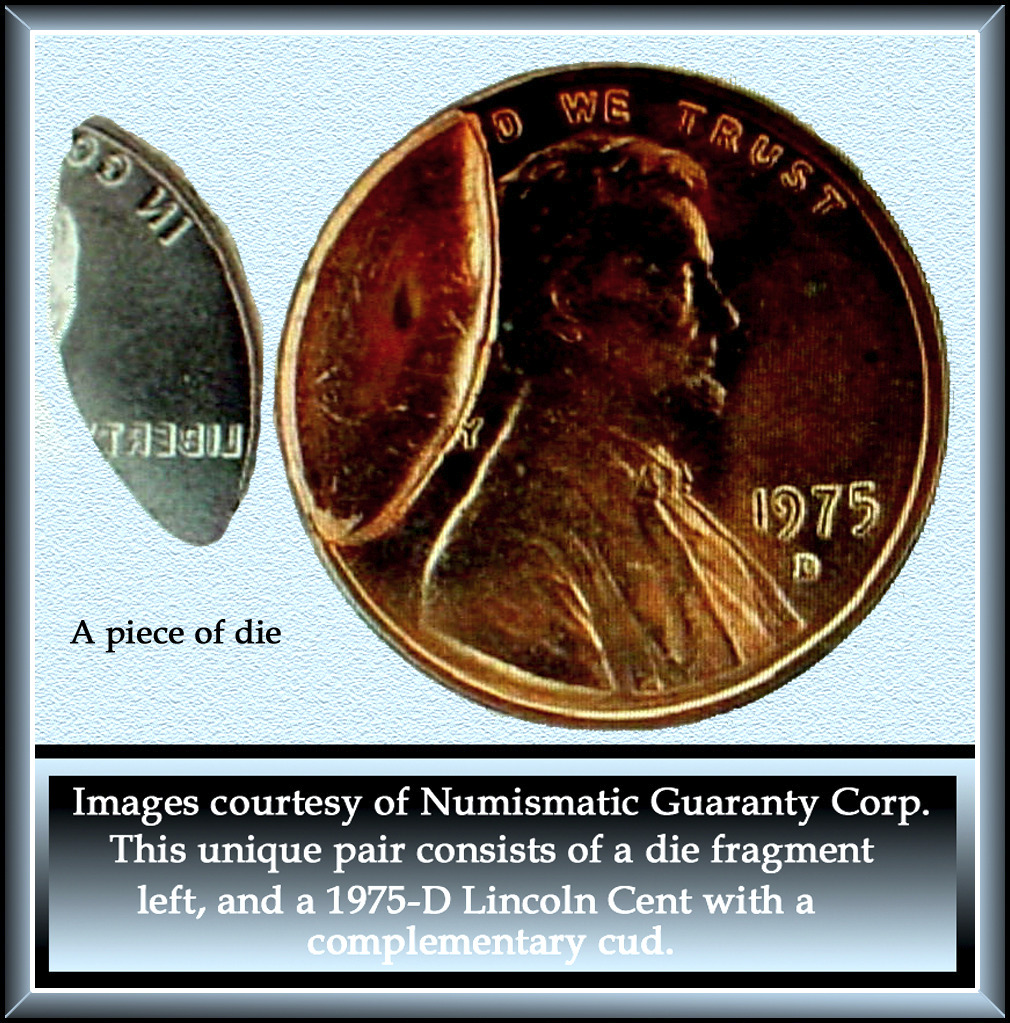 Once. There will be several Cuds struck with this die. But it is often a retirement issue. 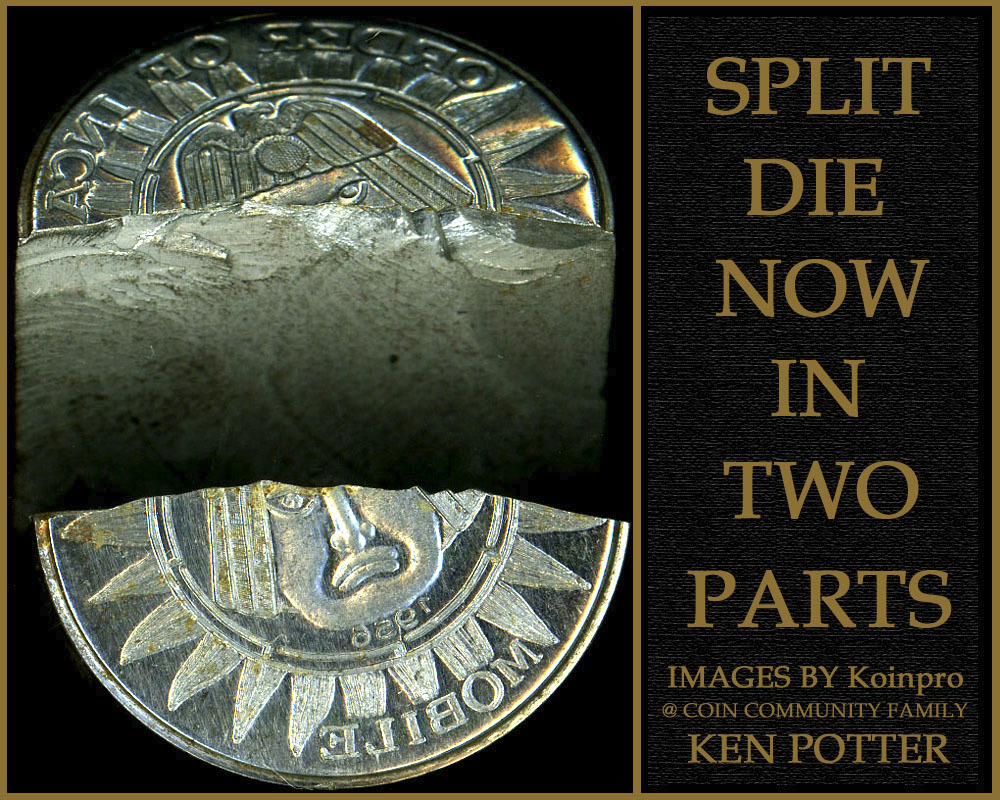 Thus cracks, chips, even some breaks will not retire a die. A die can strike sever hundred thousand more coins before retirement. So some die event coins will be real interesting to new collectors, but seasoned collectors will shun them until they get into a die event worthy of notice. |
|
Pillar of the Community
 United States
5904 Posts |
Thanks Coop for pointing out the difference again between "errors" and Varieties.
I see people confusing the two a lot.
Words of encouragement are one of the major food groups.
We need to consume them regularly to thrive and grow.
Edited by Petespockets55
09/16/2019 09:03 am
|
|
Pillar of the Community
Russian Federation
5186 Posts |
One really common thing that is traditionally considered an error is the die clash; a pair of clashed dies could continue to strike coins for a long time afterwards, sometimes together, sometimes separately.
I estimated at one point (having manually checked several hundred examples) that among post-2007 Russian 10 kopek coins from the Moscow mint about 10-15 percent had a visible die clash; supposedly in some 19th century US issues (3 cent nickels, IIRC?) die clashes were so common that now it's the coins without the clash that are worth more.
|
|
Page 2 of 2
|
Replies: 18 / Views: 4,009 |
Page 2 of 2
|





 First Page


 Posted 09/12/2019 10:41 pm


