| Author |
 Replies: 19 / Views: 5,065 Replies: 19 / Views: 5,065 |
Page 2 of 2
|
|
|
|
Pillar of the Community
United States
3281 Posts |
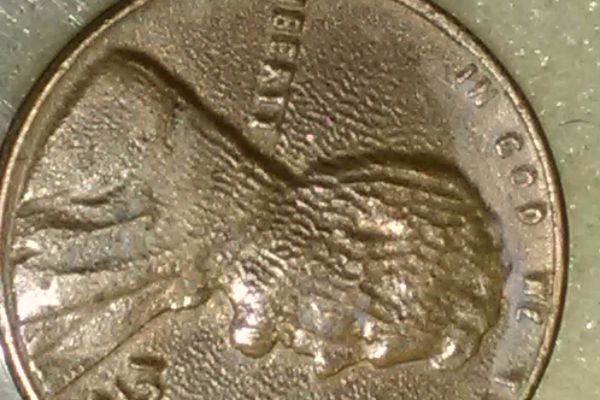
Ah right, I knew it was some type of PMD but I wasn't for sure which. Actually, yes a blow torch is the most accurate I believe. I remember, I've done this myself when melting down a couple of cents for experiments. They gained this ripple effect as the outer plating melted. |
|
Bedrock of the Community
United States
10635 Posts |
I'd like to see the whole coin, if possible.
|
|
Valued Member
 United States
133 Posts |
|
|
Valued Member
United States
133 Posts |
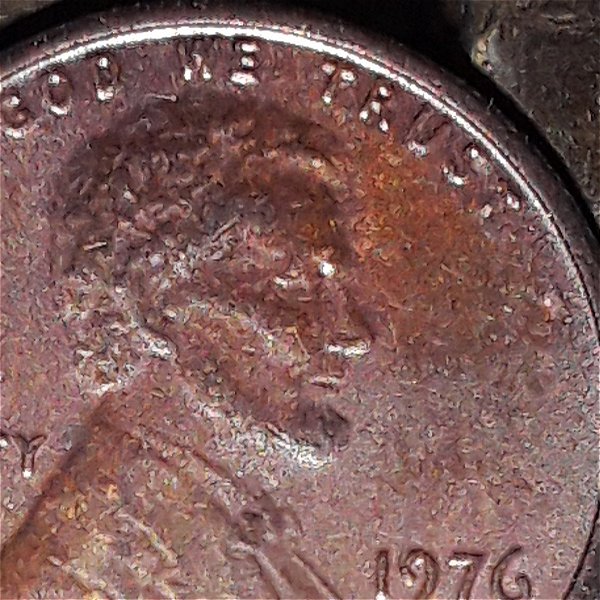
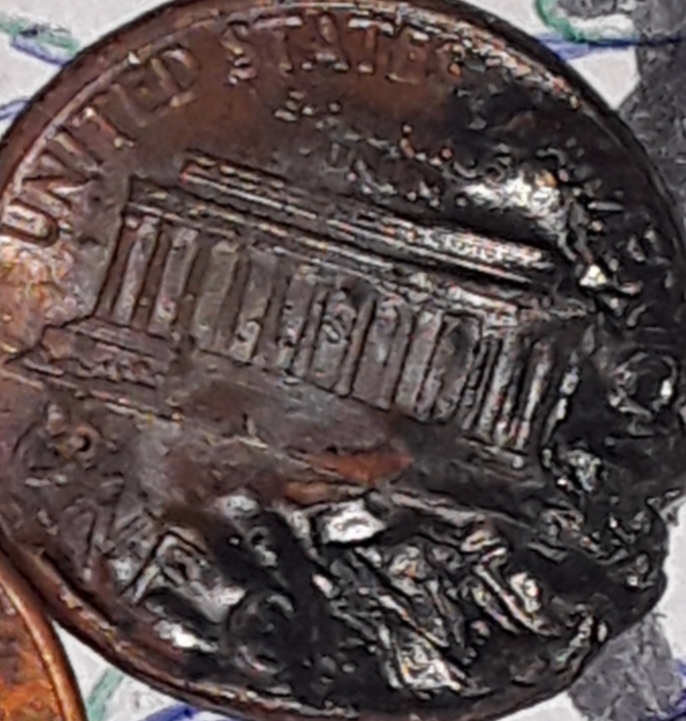
If you notice the ripples on the obverse run sideways and on the reverse they run up and down also notice how the date liberty and the rest of the script seems to have been left alone and if we look at coins differently dose canada have their own grading companies and who decides if a coin in canada is an error or not is it the mint in canada that decides ya or neigh error wise and if canada decided it was an error why couldn't the same thing happen here is canada part of the numismatist society thanks for looking
|
|
Valued Member
United States
133 Posts |
|
|
Pillar of the Community
United States
3281 Posts |
Well whatever it was, probably dipped in acid, it is absolutely worthless and not an error.
I would recommend moving on from this coin.
|
|
Valued Member
United States
133 Posts |
And again I am still curious as to what kind of acid would one use that would make the copper liquify then re solidify? I'm sure you must know what kind of acid I should be looking for so that I could try and duplicate this oddity again thanks for looking
|
|
Pillar of the Community
United States
3281 Posts |
Hydrochloric, sulfuric, or nitric acid.
Oh and for the blowtorched coin, you didn't properly do it. The flame should be moving and not staying in one place, heating up the entire front surface of the coin, not just at one place.
You let the coin burn too long. You want the heat to melt the plating, but not fully melt it and burn it off.
Edited by SilverCents
12/22/2019 9:36 pm
|
|
Bedrock of the Community
United States
10635 Posts |
Please don't go deliberately defacing/destroying coins. And too, it's against the law to do so. Finding an acid defaced coin is just a ruined, damaged coin, it's not an error coin. As long as it's recognized as US coinage, it retains its monetary value. Move on, life is too short, and there's lots of cool finds to be had out there. |
|
Pillar of the Community
United States
3281 Posts |
I agree with merclover. I understand that it is certainly neat to be exploring the scientific properties of the metal in coins, but you're moving onto a different aspect of science. This is a coin collecting forum, not a metal testing property forum.
Sure it can be fun, but as a coin collector, I would advice you to move on and continue coin collecting, find some neat coins, and continue searching, rather than experimenting with the coins and their properties. Well, that is if you want to be a coin collector and continue the hobby.
|
|
Valued Member
United States
133 Posts |
Thanks to everyone for looking and participating and have wonderful holidays
|
|
Valued Member
United States
133 Posts |
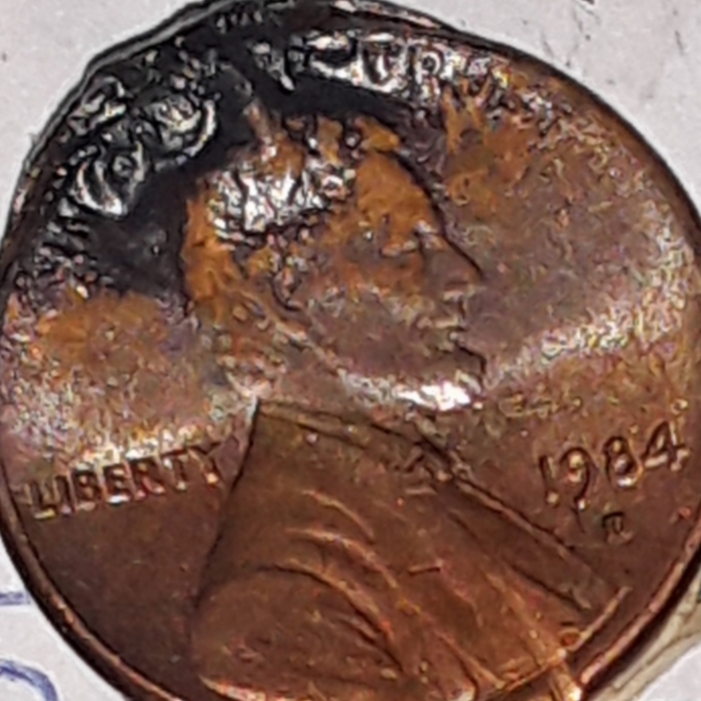
Hello everyone one quick note to silver coin,,you speak as if you have experience ,first that coin isn't even an inch around what makes you think I was doinging it wrong it's not too hard to hear up a penny evenly,I wasnt using a pencil torch and as far as holding the torch in one spot and burning the copper those were zinc cents except the one solid copper as you con see nothing happend to the copper cent but the zinc cents ,the copper never acted like it wanted to start sagging and to heat that penny evenly would make both sides sag the same direction not one side up and down and the other side sideways ,and the coin couldn't have been acid bathed because it weighs 3.1grams there is no copper missing ,and I think by the time you got a penny hot enough to melt that's exactly what's gonna happen it's going to melt,so I dont think I did it wrong and you wouldnt have any idea how I did it or what I used to do it,I'm not some 13 year old kid playing around with money nobody seemed to be willing to show me an example or try to duplicate my coin everyone had great ideas of how this happend but nobody could show me so I experimented my self I may not be the greatest or even considered a good coin collector but I think I know what an acid bath or heat or whatever else everyone said was the cause still nobody could show me and make a believer out of me sorry but it just seems like you like everyone else has the answers but not the proof to tell me I did it wrong and never experiencing it first hand yourself explain exactly how I should heat up something less than an inch around how can anybody learn anything if nobody can show you an example of something that they witnessedpersonallt thanks everyone
|
|
Pillar of the Community
United States
2189 Posts |
The 1984 you torched is a copper plated zinc Lincoln so it's not going to look the same. Quote:
can anyone explain to me how come the Canadian cent is recognized as errors I would like to see an explanation of how and why Canadians think this is an error, In detail |
|
Pillar of the Community
United States
646 Posts |
Coop already showed you another example, and no ones going to recreate it or tell you to because again, that's defacing US currency which is illegal.
|
|
Pillar of the Community
United States
3281 Posts |
Ok buster you need to calm down. Please don't have such a passive aggressive tone with me.
You did not heat up the coin for it to be hot enough for the plating to melt off before the core was ruined.
You burned the coin, you did not melt it. It goes through these stages: burn, melt, and evaporate.
No one has time to prove facts to you. This is simply one of the most useless discussions I've seen on here. This is not relating to coins, and has no meaning. I do not have time to burn a cent, simple as that.
Move on from this topic please and do not assume things.
|
|
Page 2 of 2
|
Replies: 19 / Views: 5,065 |
Page 2 of 2
|






 First Page


 Posted 11/29/2019 03:00 am