| Author |
 Replies: 18 / Views: 2,963 Replies: 18 / Views: 2,963 |
Page 2 of 2
|
|
|
|
Pillar of the Community
United States
7736 Posts |
Books, hand-me-down periodicals like Coin World, Numismatic News And Bank Note Reporter. My Uncle would get his "new" weekly coin paper on Saturday and bring me his old paper to Church on Sunday. Got caught many times reading the coin paper during church services! This was in the 1960's. If you were really lucky you might be able to get a subscription to Coinage or Coins Magazine. If no subscription you'd stand in the grocery store magazine aisle or the drug store magazine aisle and read the latest issues. That was kinda frowned on! |
|
Bedrock of the Community
Australia
21794 Posts |
I am one of the older guys on the Forum.
Printed pricing catalogs have been around for longer that I have been.
The Internet has speeded the research process, but I still use the old Krause catalogs for pictures and pricing history, especially when it comes to World coins.
For ancient coins, reference to Wildwinds and Vcoins is a good research tool as a guide, but I still think carefully in doing such pricing research.
Even now, printed pricing catalogs for ancient coins don't exist, and probably never will.
|
|
Pillar of the Community
 Canada
5422 Posts |
In the old days .......my numismatic Library.
Now for most everything the Net !
|
|
Bedrock of the Community
United Kingdom
19132 Posts |
Krause catalogs for World coins, Seaby's for UK coins, and various coin magazines including the long-defunct UK-published 'Coin Monthly'.
For an unidentifiable ancient or medieval coin, one could even send a letter to the British Museum with a photo or rubbing!
There were also lots more coin shops in those days, so, if you'd bought a strange coin in a flea market, you could take it into your local coin shop and the dealer might be able to identify it (or look it up in his own numismatic library)...
|
|
Bedrock of the Community
United States
20753 Posts |
Way back in the early years for me there was this book called the Red Book by Whitman. I not only started coin collecting but continued collecting that book. Now have them all. 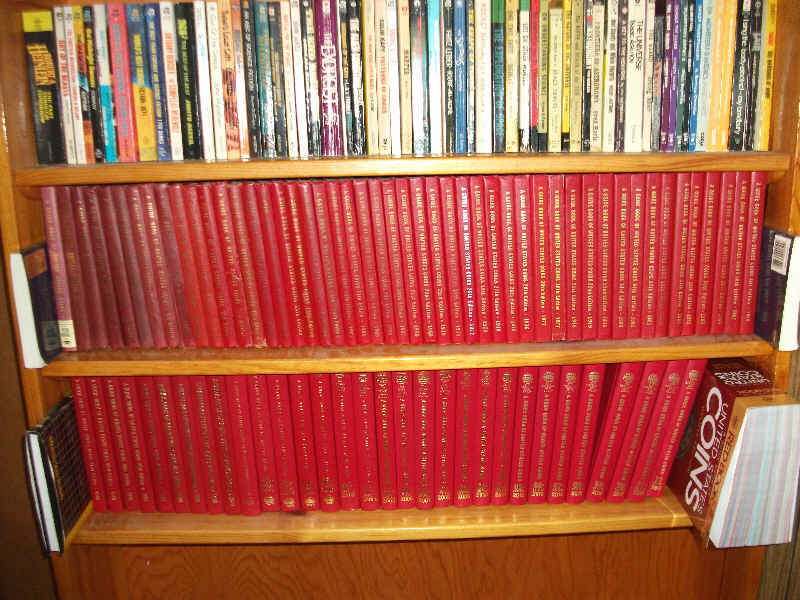 |
|
Rest in Peace
United States
18456 Posts |
Quite a collection of Red Books with a nice value to them !  |
|
Moderator
United States
197800 Posts |
Books and Magazines.  |
|
Pillar of the Community
United States
2748 Posts |
books/library, magazines, LCS & other collectors.
|
|
Bedrock of the Community
13014 Posts |
They had to walk miles uphill both ways barefoot in the snow to get to the library to meticulously comb line by line through books, newspapers, periodicals, and magazines that were all written in cursive by feather pen. Even more impressive after the 18 hour work day  |
|
Pillar of the Community
United States
5029 Posts |
Before the internet was my books, magazines, libraries, other collectors, writing for information. Sounds like a familiar theme. Now, although the internet is good for research, I still use my reference materials. Then I will bring in the internet to further develop (if needed) what I have from my sources.
|
|
Pillar of the Community
United States
789 Posts |
Well, first I memorized the Krause catalog, which wasn't as daunting as it may seem, as there were only a couple dozen coins at the time.
|
|
New Member
 Canada
12 Posts |
I'd imagine things get even weirder when coins do not have the Latin alphabet on them.
I have a few coins like that, and even with the internet things get a little complicated. At least for me, still learning stuff.
|
|
Moderator
Australia
17029 Posts |
The Krause catalogues have a handy "coin identifier" section, where you can compare the writing and symbols on your coins with the ones in the pictures. Very helpful, assuming you know roughly which century your coin comes from. As for the question generally, let me share a story of one of my own pre-Internet researching adventures. In August 1999, I purchased "my first Byzantine coin" from a coin dealer. Unfortunately, it didn't have any identification with it other than "Byzantine asper c.1300", plus one other word I couldn't make out which I assumed was the name of the emperor. I purchased a second-hand (1970 edition) copy of David Sear's Byzantine Coins book, to try to find it. Nope, there's nothing like it in there, at that date or any other date. I finally interpreted the coin dealer's roughly-scrawled word as being "Trebizond". 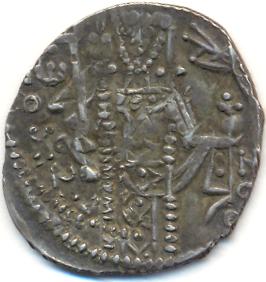 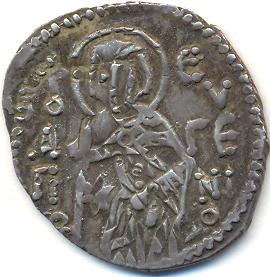 The Empire of Trebizond seceded from the Byzantine Empire in 1204 when the Crusaders invaded. But finding any further information about them than this was tricky; Trapezuntine coins were not listed in the Sear catalogue at the time (though I understand the most recent editions do include them). Even trying to find a list of emperors of Trebizond was next to impossible, as the Encyclopedia Britannica only had a four-line entry acknowledging the Empire's existence. So it was time to get some serious research materials. I had a casual job at the University at the time (I now work there full-time), so I spent several lunch hours in the Social Sciences Library to try to find something on my coin. They had a complete collection of British Museum catalogues of ancient Greek and Roman coins, and of Byzantine coins too, but the British Museum catalogue likewise does not include Trapezuntine coins. I finally found a small volume on the history of Trebizond (from which I gleaned much fascinating-but-largely-useless trivia, such as the correct adjective for "Trebizond" is "Trapezuntine", and that the official title of the emperors of Trebizond was not "Emperor" but "Grand Comnenus"), and was then able to work out that my coin belonged to a Grand Comnenus named John - probably John II, as the book mentioned that John II's reign was the most prosperous of the three Grand Comnenii named "John". From the book, I was also able to discover that the patron saint of Trebizond was Saint Eugenius, and could thus identify the character depicted and named on the reverse. But it took a couple of months to finally reach this conclusion. A few months later, I finally did purchase an actual "first Byzantine coin". Today, of course, my job would have been much simpler: type "Trebizond asper" into Google Image search, and a coin virtually identical to my coin comes up as the number 3 hit, with even better matches at numbers 12 and 13. Research over in 8 seconds. Don't say "infinitely" when you mean "very"; otherwise, you'll have no word left when you want to talk about something really infinite. - C. S. Lewis
|
|
Moderator
Australia
17029 Posts |
Quote:
What was done before collecting coins was popular enough for books to be available? Here you have to go quite far back... because "coin catalogues" go back nearly as far as coin collecting itself. We have never found any evidence of a contemporary ancient Greek or Roman coin catalogue - indeed, in an age when a single silver coin could be a day's wage for a skilled labourer, "coin collecting" was largely an affectation of the idle rich; what evidence we have of coin collectors back then is patchy, and the "collectors" of that age seemed to be more akin to Victorian-age antiquarians: collecting the odd and curious things that came their way, but with no sense of "completing a set" or systematic one-from-every-city collecting. And in an age when owning a coin from a discredited or rival emperor could earn you a death sentence, coin collecting could be a dangerous hobby to indulge in. In ancient China, where coin production and use goes back as far or further than in the West, he have more documentation of coins. Since a typical Chinese bronze coin was (generally) worth a lower value than a typical Western silver coin, coin collecting was more affordable in ancient China, and more people seem to have done it. The earliest surviving Chinese coin catalogue was written by a fellow named Hong Zun, who lived circa 1120—1174, at the height of the Song Dynasty - a period where interest in history and in coin collecting seems to have been quite high, given the number of "sets made for collectors to collect" coin series which the Chinese mints issued at the time. Yet Hong Zun also seems to quote from even earlier catalogues and books, which are now lost - including, apparently, a catalogue written by Sui Dynasty scholar Liu Qian (AD 484—550). In the West, "coin collecting" took off as a "hobby of kings" with the influence of Petrarch (1304-1374), initiator of the Renaissance, who observed that studying the ways of the ancients through their writings and coins could teach a prince how to rule their society better. By the time of the invention of the printing press, coin catalogues for specific collections would have begun to be compiled, though parochialism would have meant that there was minimal effort to compile and collate the catalogues of every collection to try to attain something comprehensive. By the 1700s, cataloguing of the major and most common types of both "modern" and "ancient" coins would have been available, though still very patchy and incomplete by modern standards. Auction catalogues from collections that were sold off provide a good counterpoint to the catalogues of government-held and museum collections. "Regional" catalogues began to be compiled in the mid-1800s, such as Marsden's catalogue of "Oriental Coins" (Asia and the Middle East), dating from 1823 and of which I have a 1977 reprint. However, a "generic" coin collector would have to wait until the 20th century before anything resembling a "world coin catalogue" would appear. Don't say "infinitely" when you mean "very"; otherwise, you'll have no word left when you want to talk about something really infinite. - C. S. Lewis
|
|
New Member
Canada
12 Posts |
That was very interesting to read. Thank you for your info.
|
|
Page 2 of 2
|
Replies: 18 / Views: 2,963 |
Page 2 of 2
|





 First Page


 Posted 01/16/2020 01:03 am


