| Author |
 Replies: 25 / Views: 2,863 Replies: 25 / Views: 2,863 |
Page 2 of 2
|
|
|
|
Pillar of the Community
United States
1359 Posts |
lolol..That was confusing a bit. I seen the good point moved then good point moved back all in the middle of posting ..lolol..and was shifted with the post like a stow away
|
|
Pillar of the Community
 United States
1126 Posts |
Dear Jason, This is close as I can get with the equipment I have at the time. Holding a Loupe over the end of my camera by hand. I am building a stand but it is not quite ready. 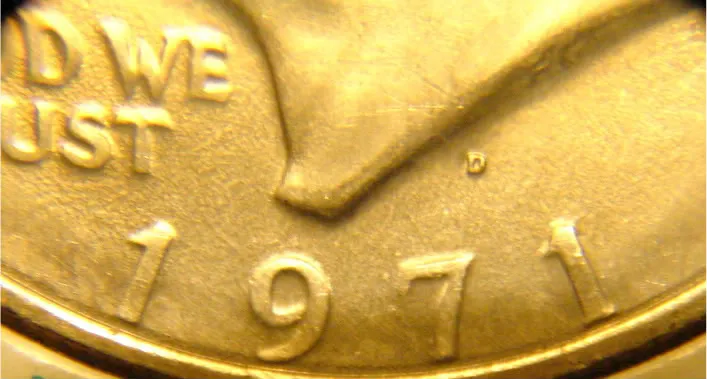 |
|
Pillar of the Community
United States
1126 Posts |
Now I know why it got moved. Dear Moderator Sorry about the Title Issue
Will try to remember that next time.
Thank You
Stewart
|
|
Pillar of the Community
United States
7629 Posts |
I still have no idea what this is, but if you like it...more power to you.
The 'doubling' seen on the date is die wear.
|
|
Pillar of the Community
United States
5700 Posts |
Stewart, thanks for the very informative site, Mike
|
|
Valued Member
United States
295 Posts |
I am intrigued so far, but I am not sure what about? Can you please tell us what is different about this coin compared to others? I would really like to know!
|
|
Pillar of the Community
United States
1126 Posts |
Dear JonS.7070 This is a 1971-D Reverse Die Variety 006 Eisenhower. Among Ike collectors the reverse is a major die variety. there are different parts of the coin that are different than any other reverse of other Eisenhower's. The shape of the shore of the Gulf of Mexico is more rounded. The Earth its self is more rounded. The Eagles eye brow is missing giving the Eagle a friendlier appearance. (Some thought the Eagle looked too aggressive at the time, Cold War)The Eagles Chest feathers are not as flared as the regular die. The separation between the top two tail feathers is missing. The largest crater has two debris flow lines between "N" and "E". The crater over "LL" of "DOLLAR" has longer flow lines that frame the second "L". And Frank Gasparro added a touch to the left of the earth.The design for the Apollo 11 re-entry vehicles con-trail is present. As you can see there are quite a few things that make this variety of Ike quite unique. I have have enjoyed collecting them since I was a kid with the usual kid limited budget, but I liked the large dollars so I collected what I could afford. And still enjoy collecting them to this day. Now my on has started collecting them along with other types. of coins.And I hope to give all of mine to my grand kids some day. |
|
Pillar of the Community
United States
1126 Posts |
Dear Coppercoins
Thank you for the die observations. I was not sure what kind of strangeness was going on with the date but I knew whatever it was it wasn't the important. because it did not meet the characteristics of true doubling. Also I see it quite often on these Ikes primarily around "IN GOD WE TRUST"
|
|
Pillar of the Community
United States
3507 Posts |
Chuck,
Ikes have different reverse dies that were used. Some have different configurations of the Islands on the world, for example.
This one called the "Friendly Eagle" is a die variety that has no major brow ridge over the eye of the eagle.
On the "usual" Ike, there is a ridge over the eye of the eagle that gives it a more "stern" look when compared to the eagle on this die variety.
Thanks,
Bill
|
|
Pillar of the Community
United States
1882 Posts |
My apologies for dragging this one back out...the changes made on this type of Ike are interesting.
Why is this referred to as a "variety" rather than a "type"?
|
|
Pillar of the Community
United States
1126 Posts |
Steve, There was much discussion of that very subject on whether to call the 1971-D RDV-006 a type or a variety and the crew over at the Ike group web site decided on variety.  |
|
Moderator
 United States
197031 Posts |
This is from the CCF Glossary: typeA variation in design, size, or metallic content of a specific coin design. Examples include the Small and Heraldic Eagle types of Draped Bust coinage, Large-Size and Small-Size Capped Bust quarters, and the 1943 Lincoln Cent struck in zinc-coated steel. varietyA coin of the same date and basic design as another but with slight differences. PCGS recognizes all major varieties while there are thousands of minor varieties, most of which have significance only to specialists of the particular series. After hubbed dies, introduced in the 1840s, varieties are mainly variations in date and mintmark size and placement. Edited by jbuck
01/22/2009 11:49 am
|
|
Pillar of the Community
United States
1126 Posts |
Thank You Jbuck that prety much covers it.  my typing is not that good. again Thank You |
|
Pillar of the Community
United States
1882 Posts |
Thanks jbuck and stewart. The application of those definitions seems vague to me. For example, within the Ike series, there are Type I and Type II 1976 coins...where difference is in the style of the lettering on the reverse. Yet the "variety" discussed in this thread has several things about it that are different from the other "varieties". So I find it interesting how some coins become important enough that they get regarded as "types" in publications such as RedBook and by the TGP's. Who knows...maybe someday the friendly eagle will be regarded as a type. |
|
Moderator
United States
197031 Posts |
It is my opinion that "types" are an intentional and easily noticed change to the design; whereas "varieties" are a possibly unintentional and difficult to notice change to the design. I believe the Type II 1976 Eisenhower dollars were created to make the reverse eye appealing and consistent with the obverse. The Type II 1913 Buffalo nickels were created to prevent premature wear of the denomination. The Type II Standing Liberty quarter were created to correct what some called an "offensive" image of Liberty. To sum it up, types are easy to differentiate, varieties are not!  Edited by jbuck
01/22/2009 4:23 pm
|
|
Page 2 of 2
|
Replies: 25 / Views: 2,863 |
Page 2 of 2
|





 First Page


 Posted 12/28/2008 9:38 pm


