| Author |
 Replies: 17 / Views: 3,396 Replies: 17 / Views: 3,396 |
Page 2 of 2
|
|
|
|
Pillar of the Community
United States
4680 Posts |
Why not post a few pics? Depending on the extent of the ED, you may have some luck improving the aesthetics with acetone or xylene as hfjacinto said, though it will likely stay a problem coin. If those two solvents don't work, I'm in the "leave it be" group. "Bright and shiny" doesn't add any value to a problematic coin, and will likely make it worse.
|
|
Pillar of the Community
 United States
4618 Posts |
 to the CCF! My Two Cents worth... Cleaning is not something you want to do, even on coins that are worthless. It's always the responsibility of a numismatist to "Do no harm" to the coins we collect, as we are the custodians of these coins for future generation of collectors. The coin you clean today may happen to be the only example of that coin in 1000 years. Now, on the lighter side...  ANA ID: 3203813 - CONECA ID: N-5637 Clean a coin that may be worth collecting? Please DON'T! When in doubt, leave it dirty!! 
|
|
Moderator
United States
56855 Posts |
Be extra careful with xylene. It is not skin friendly. John1  Edited by John1
08/24/2021 04:32 am
|
|
Pillar of the Community
United States
1173 Posts |
 with Yokozuna, don't do it. |
|
Pillar of the Community
Canada
5297 Posts |
"Cleaning" is not a precise term in numismatics. A dip in acetone could be considered cleaning (that's OK), so could a scrub with abrasive bathroom cleaner (very bad). You really need to show us the item and tell us what you want to do to it. Professional coins grading companies can "conserve" coins, which in my mind is a safe way to clean coins and improve their appearance.
|
|
Bedrock of the Community
United States
19643 Posts |
A photo or two--large and sharp--of the subject coin may reveal something interesting.
|
|
Moderator
Australia
17011 Posts |
Let's post some before and after pictures of coin that I have treated. Case 1: A Tasmanian copper tradesman token I experimented with to try to remove bright green "bronze disease" corrosion. Before (from its appearance it seems a previous owner attempted but ultimately failed to remove the bronze disease): 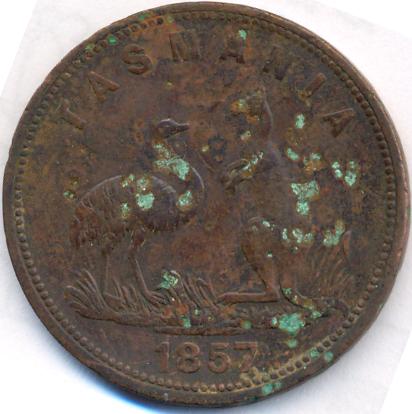 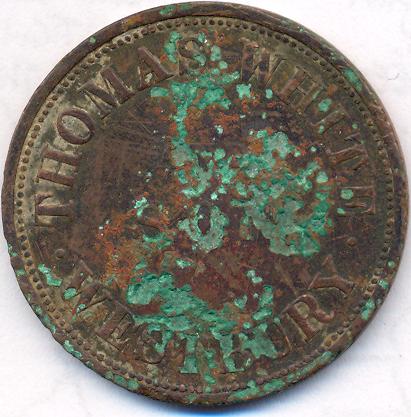 After (numerous cleaning attempts which did nothing, finally with concentrated ammonia): 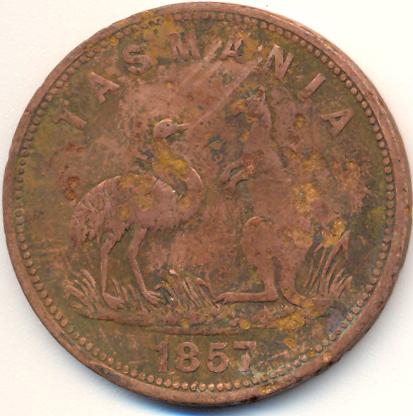 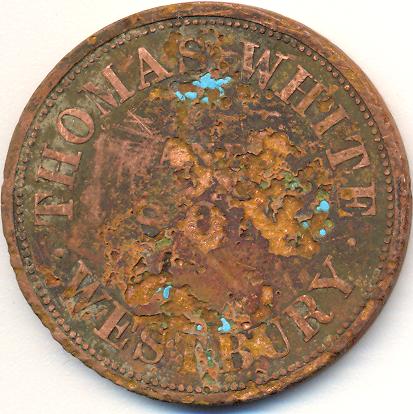 Now, which of these coins would you rather have? Personally, I think it's subjective. The green is ugly, but so is the orange pitting. The coin has since retoned to a more appeasing brown, but of course the moon-crater pitting remains. In terms of resale value, has my cleaning made things better, or worse? I don't think there's actually much difference - I wouldn't say I have improved it to the point where I've increased its value. Now let's look at case 2. This one is a debased-silver coin (50% silver), so it stood a better chance at surviving a harsh cleaning. Before (it appears to be a metal detecting find):  After (1 week soak in EDTA solution): 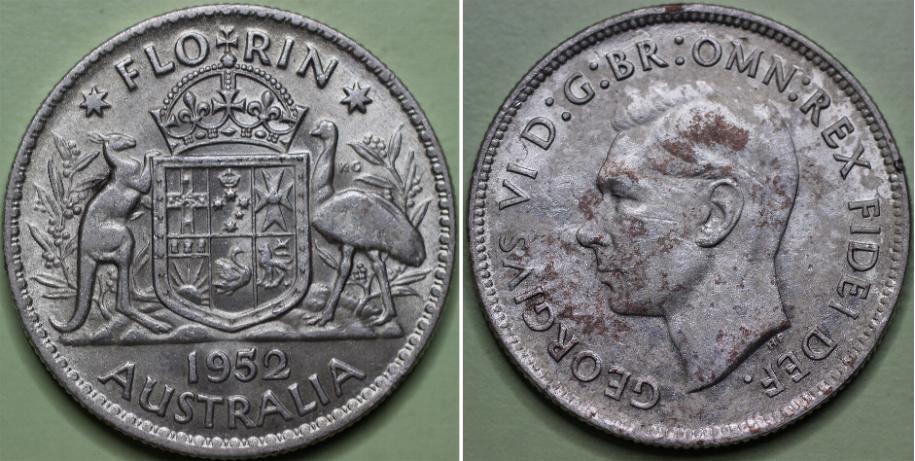 Now, I don't think anyone can argue against that this coin has undergone a positive transformation, from "are you sure that's a coin, it looks like a rock" to "yeah, it's got a couple of issues on the obverse, but it's still in pretty good condition". This treatment has certainly "added value". Finally, the other thing to consider when "Adding value" is the cost of the treatment itself. Cleaning chemicals aren't free, and your time isn't free either. You'd want to be reasonably sure of recouping the cost not only of the original corroded coin, but of the time and chemicals you've put in into trying to improve it. Conclusion: do it for scientific curiosity, or do it in the spirit of trying to "rescue" a coin that would otherwise be condemned for scrap metal. But don't do it for profit; it's a gamble on whether or not you will actually recoup your money. Don't say "infinitely" when you mean "very"; otherwise, you'll have no word left when you want to talk about something really infinite. - C. S. Lewis
|
|
Pillar of the Community
United States
4680 Posts |
Impressive results on that florin @Sap, especially that reverse. Wouldn't have even guessed it to be the same coin!
|
|
Pillar of the Community
United States
2869 Posts |
|
|
Bedrock of the Community
United States
20753 Posts |
Just remember that the coin is yours so do with it as you wish. Only remember to that you may want to sell it someday.
|
|
Bedrock of the Community
Australia
21792 Posts |
Same applies with ancient coins that have been recovered from burial. It is always going to be a gamble, but in most cases, the professional museum curators that clean them,
have learned that in most cases, the gamble will pay off.
Professional experience in this sort of cleaning and preservation is essential.
Cleaning and preservation of detector finds of modern coins is a good place to gain that experience.
|
|
Valued Member
United States
292 Posts |
Just a word of caution with Xylene: Do it outside or under a vent hood. It has a very low vapor pressure and will quickly fume the room and the building you're in. The fumes are also considered toxic.
|
|
Valued Member
United States
292 Posts |
Does EDTA damage the original surface of a coin compared to acid "dips"?
|
|
Moderator
Australia
17011 Posts |
Neutral EDTA (I use disodium EDTA buffered to pH 7.0) won't attack metal or metal oxides or sulfides, only corrosion (metal carbonates, hydroxides, chlorides, etc). It will remove the "metal" that's in the corrosion.
EDTA and similar chelating agents are thus milder than direct acid dips, wheich tend to remove all corrosion byproducts incluing oxides and sulfides, and begin to attack the metal itself. For corroded coins, the "original surface" at the corrosion points is gone, corroded away, but the surrounding area might still be worth saving.
I've found that for a heavily oxidized bronze/copper coin left soaking in EDTA for too long, the oxide layer remains in place, but is weakened and easily dislodged (eg by touching or wiping the surface with fingers). Keeping the "original surface" of the uncorroded areas of copper/bronze coins requires patience and skill. You can't use EDTA as a "magic bath" that makes the corrosion go away but leaves the remaining surface completely undamaged.
Don't say "infinitely" when you mean "very"; otherwise, you'll have no word left when you want to talk about something really infinite. - C. S. Lewis
|
|
Valued Member
United States
292 Posts |
|
|
Page 2 of 2
|
Replies: 17 / Views: 3,396 |
Page 2 of 2
|





 First Page


 Posted 08/23/2021 11:48 pm


