| Author |
 Replies: 20 / Views: 3,222 Replies: 20 / Views: 3,222 |
Page 2 of 2
|
|
|
|
Bedrock of the Community
United States
94367 Posts |
Looks like heat damage among other things. Is it just me, or does that baby's head look like a skull?
|
|
Moderator
 United States
56855 Posts |
Heat damage, PMD. John1  |
|
Pillar of the Community
Canada
6244 Posts |
88.5% Copper, 6% Zinc, 3.5% Manganese and 2% Nickel. Seem to has some acid interferences, and some heat also. Probably was heat and then acid. At the surface left Cu and Zn.
|
|
Pillar of the Community
United States
1648 Posts |
That Sac has had a rough life. PMD - Environmental Damage by some form of heat source causing the bubbling. The coin's physical makeup is a three-layer clad construction - pure copper sandwiched between outer layers of manganese brass which may have been worn away. Seeing a photo of the reverse and also the edge of the coin would help. I also see a mumified corpse for the baby's head similar to what coinfrog sees in a skull if you look at the forehead as the face, and maybe a tumor on the head like they have been exposed to radiation. While its not an error, I always wonder if there are collectors out there who buy or retain these type of oddball coins that come up. Edit: This is all I could find. The Sacagawea dollar may be referred to as manganese-nickel, but it is actually comprised of 88.5 percent copper, 6 percent zinc, 3.5 percent manganese and 2 percent nickel; the copper-zinc-manganese-nickel mix at the surface has significantly less copper than at the core of the planchet. The surface toning that may result could follow the pattern of toning on brass or copper. With improper storage or improper manufacture of the planchets, it is possible the center copper core could "erupt" and react in a similar manner to an ancient silver-coated copper fourree, eventually causing a bubble to rise to the surface of the coin. https://www.PCGS.com/news/color-of-...deeper-tones Edited by datadragon
08/11/2022 8:41 pm
|
|
Moderator
Australia
17007 Posts |
Quote:
...that raise bump can't be done by heat Yes, it can. Clad coinage can form "bumps" and "lumps" exactly like this, when the plating splits away from the core due to the heat and an air bubble trapped between the two layers expands and pushes up the softened metal. The other option is pinhole damage to the clad layer allowing a corrosive substance to seep into the core and corrode it. The end result can look the same - a raised "lump" - only the "lump" in that case would be filled with corroded metal rather than just air. However, I think the first option is more likely in this case. Don't say "infinitely" when you mean "very"; otherwise, you'll have no word left when you want to talk about something really infinite. - C. S. Lewis
|
|
Pillar of the Community
United States
3402 Posts |
It's just a beat up coin...any defiling action was Post Minting Damage ( PMD)...regardless of the actual causation...not sure too many people have a collection of PMD coins...sub-classsified. KK |
|
Moderator
United States
108304 Posts |
Where do (how can) you see an error on this badly beat up coin?
|
|
Bedrock of the Community
United States
19639 Posts |
A full, sharp image of the reverse might tell us more.
|
|
Bedrock of the Community
United States
62064 Posts |
It does happen with being in a fire: 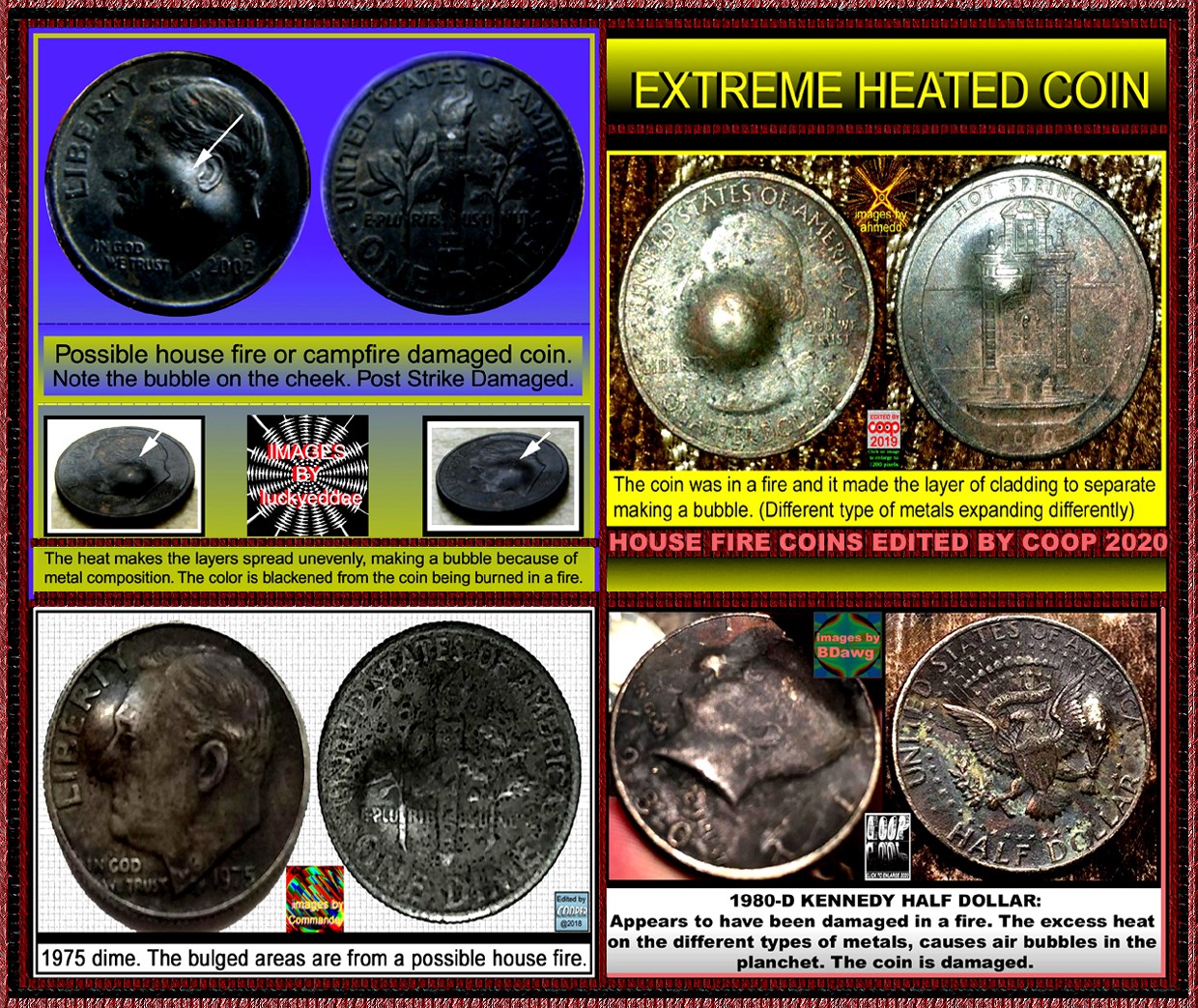 I don't have an image of a Sac one yet. (I will now) But no reverse image? 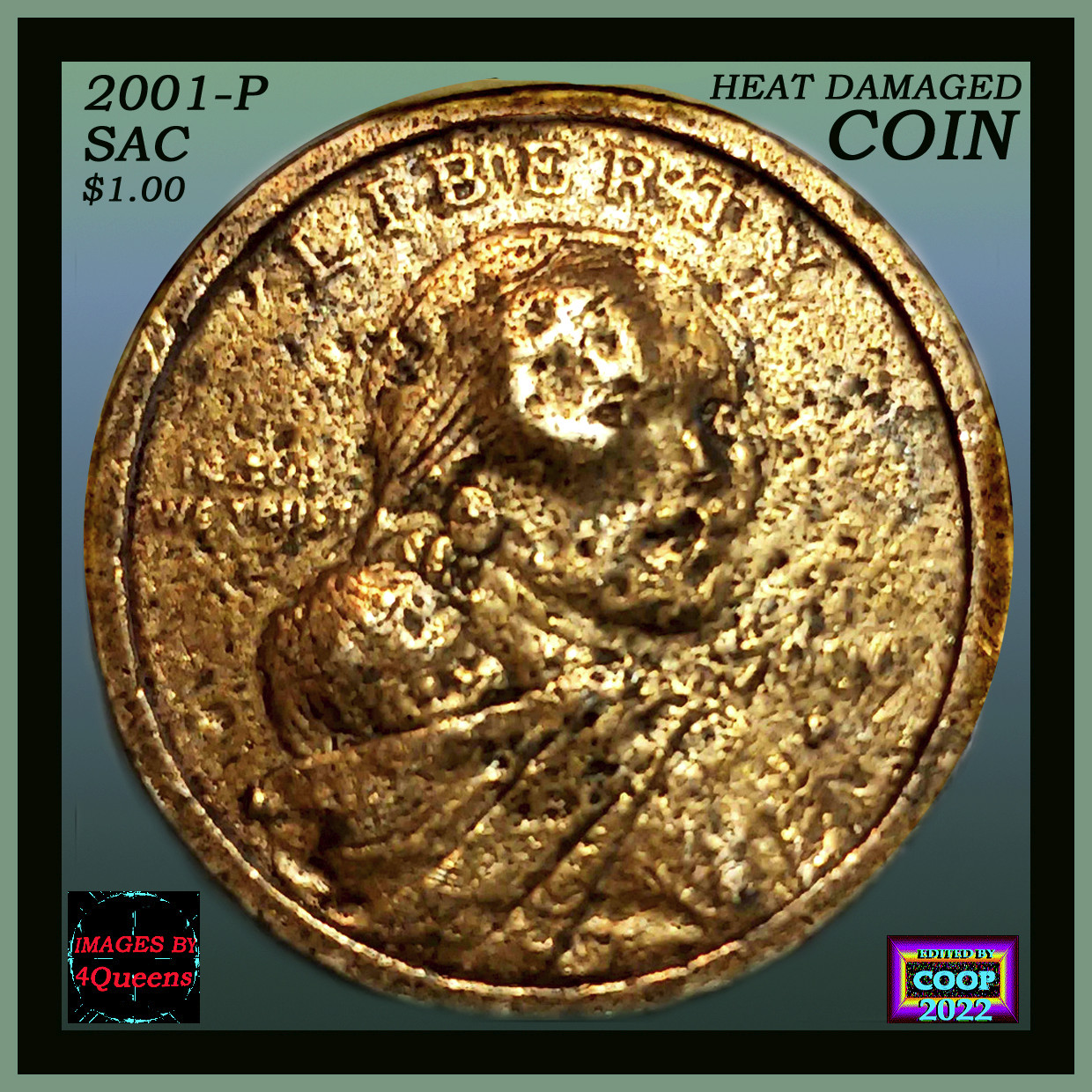 Edited by coop
08/12/2022 2:41 pm
|
|
Valued Member
 United States
79 Posts |
Sorry here is the back of the coin  |
|
Valued Member
United States
79 Posts |
Sorry jimmyD and ijn1944 my bad I uploaded twice one side of the coin SPENCE that question is out to place remember some of us are here to learn not to be judge for what you know or what you don't know and in case you missed it read the entire post I said on the ONE DOLLAR lettets not on the sac forehead
|
|
Pillar of the Community
United States
7174 Posts |
With the first pictures everyone said heat damage. Doesn't matter we didn't have the rev picture you were talking about. If it's heat damage on one side, it's heat damage on the other.
|
|
Pillar of the Community
Canada
6244 Posts |
@CuJohn: Sorry you are complete wrong with this theorems. From 20.000 years the goldsmiths are able to repair the montage of an diamante molding the fingers which keep the stone at 600 deg (molding temperature) without to damage the diamante which at 100 -150 deg crack (is carbon).
This coin it is layouts. The external it is Cooper-Manganese-Zinc. If you apply the heat in angle, the coin will be affected only at the surface. The simply action of the sun passing trough an glass in angle can reach 300 deg at surface without affect the other side. Sorry man, calorimetry effects and exceptions of physical's laws.
Please find others words to say all we are wrong.
Edited by silviosi
08/12/2022 7:45 pm
|
|
Valued Member
United States
79 Posts |
Yes COOP I saw the pics. You posted and there all raise bumps and I understand what you saying but if you show me a pic of a coin damage by heat that shows a raise parallel line ( not a bump )along the ring like mine that shows on the entire letters ONE DOLLAR then I will agree with you
|
|
Pillar of the Community
Canada
6244 Posts |
@4Qeens: You have to understand that you have is not mint error. Is just an PMD. My last post and the 1980-D Coop photo show this. I am sorry is not error in any kind and your coin has no numismatic interest. |
|
Page 2 of 2
|
Replies: 20 / Views: 3,222 |
Page 2 of 2
|







 First Page


 Posted 08/11/2022 6:32 pm





