| Author |
 Replies: 18 / Views: 1,966 Replies: 18 / Views: 1,966 |
Page 2 of 2
|
|
|
|
Moderator
 United States
107907 Posts |
Nice find, but is it the pictures, or does this coin look to be a slight oval - it looks wider E to W in the images.
|
|
Valued Member
 United States
172 Posts |
That's my fault. My USB microscope isn't tall enough to image a quarter fully from a direct overhead shot so it's angled slightly which gives the quarter an oval look. The quarter has the exact same diameter as a normal quarter. I would just need to reset the microscope higher on a platform to show a true overhead.
|
|
Moderator
United States
56855 Posts |
I wonder what Mike would say about this cool coin? John1  |
|
Valued Member
United States
172 Posts |
Yes! I would love to get his opinion on this one. If it turns out to be a legitimate error I was thinking about sending it off to get slabbed. Mostly for preservation sake and because I like to have my most interesting/odd error coins in slabs.
That said, my recent experience with submitting my 1937 cent struck through die cap on a tapered planchet experience (posted about previously) has me much more gun-shy on submitting coins like this.
|
|
Moderator
United States
196342 Posts |
Interesting find!  |
|
Pillar of the Community
United States
4618 Posts |
Very interesting!
"Ladies and Gentlemen, the Eagle has left the building."
ANA ID: 3203813 - CONECA ID: N-5637 Clean a coin that may be worth collecting? Please DON'T! When in doubt, leave it dirty!! 
|
|
Pillar of the Community
United States
2752 Posts |
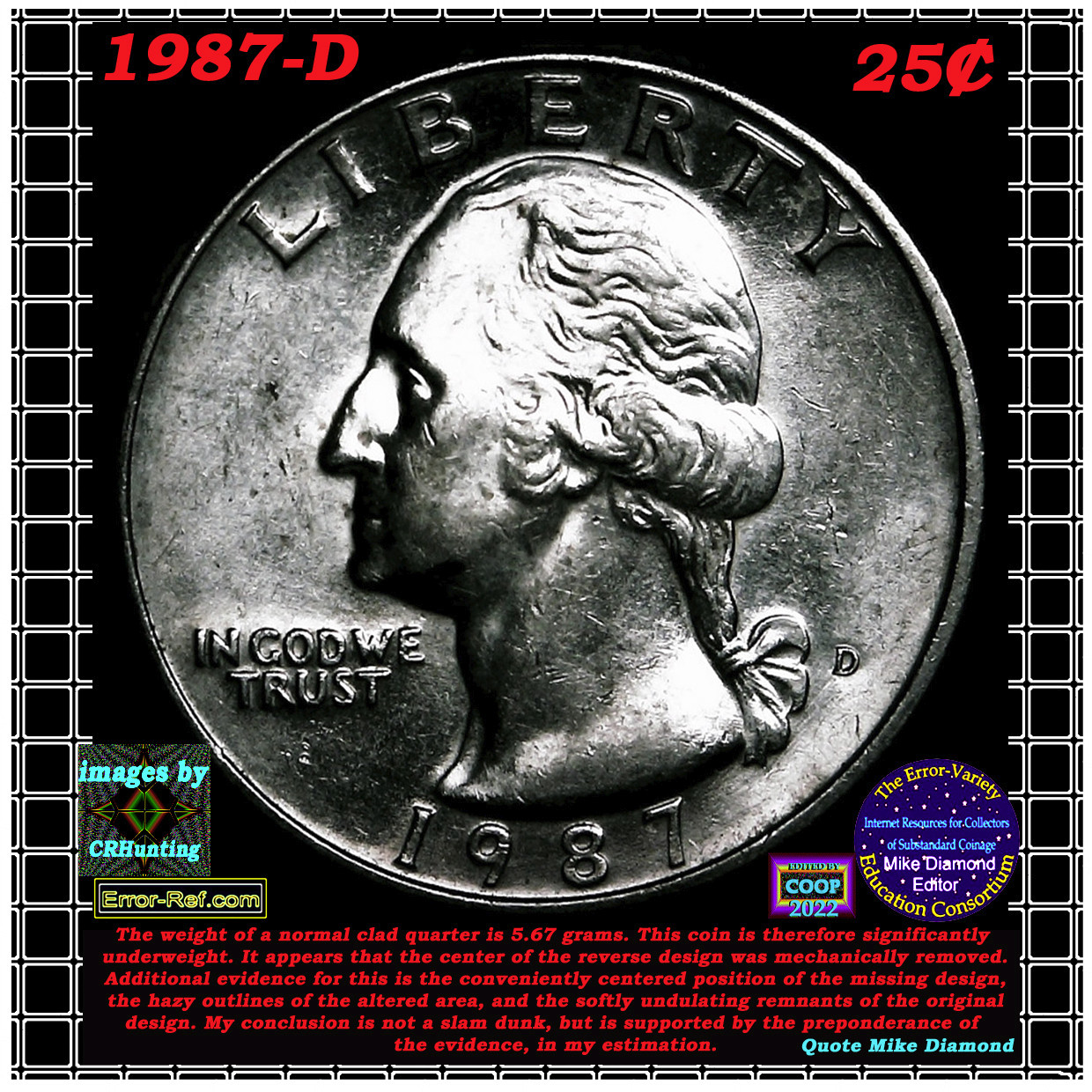
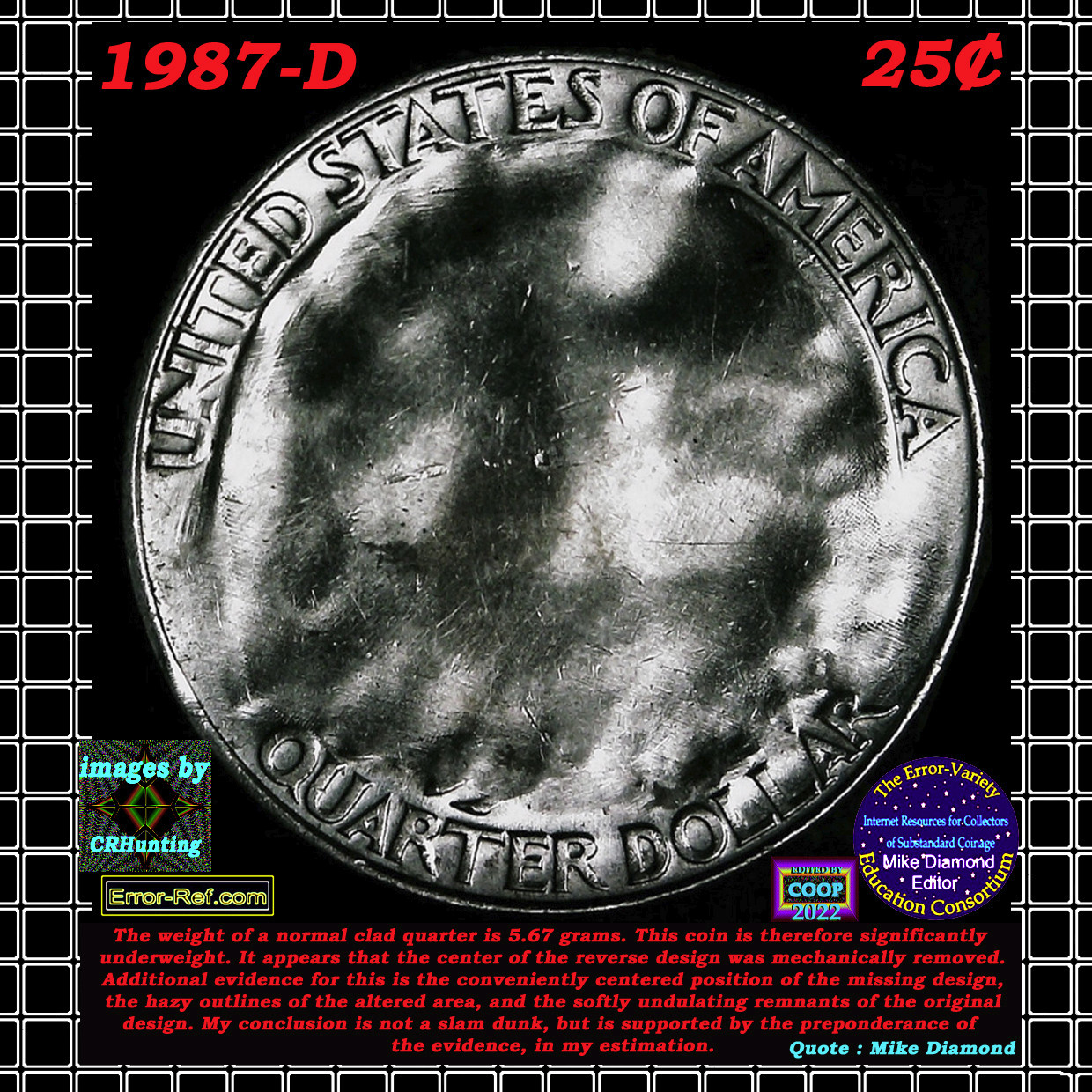
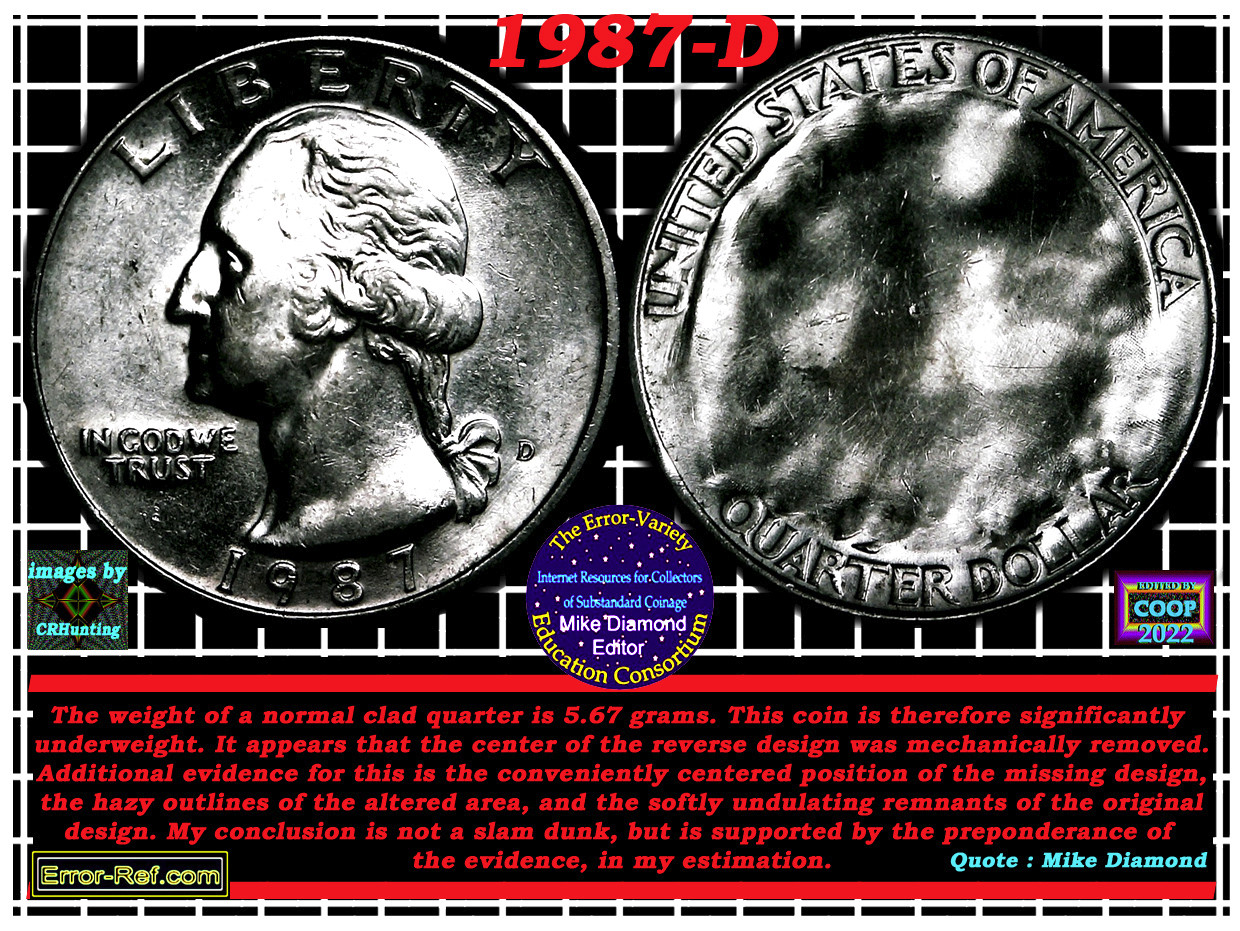
The weight of a normal clad quarter is 5.67 grams. This coin is therefore significantly underweight. It appears that the center of the reverse design was mechanically removed. Additional evidence for this is the conveniently centered position of the missing design, the hazy outlines of the altered area, and the softly undulating remnants of the original design. My conclusion is not a slam dunk, but is supported by the preponderance of the evidence, in my estimation.
Error coin writer and researcher.
Edited by mikediamond
11/05/2022 1:34 pm
|
|
Valued Member
United States
172 Posts |
Hi Mike, Thank you so much for taking the time to review! The weight of the coin being just below the lower bounds of the mint's tolerance was the biggest yellow flag for me as well. I'm not sure if it will help with your analysis but I was able to take better close-up images of the patterned area of the coin. At first I wasn't sure if they were raised or incuse but after reviewing them under higher magnification they are definitely raised elements. In short, the weight makes me lean toward PMD but the raised pattern displays a cross like stitching pattern you'd expect to see in a struck through fabric which is something I feel like would be very difficult to create post-minting. So I'm still a bit on the fence. Have you seen any other PMD coins display this type of fabric-like patterning? Thanks again! 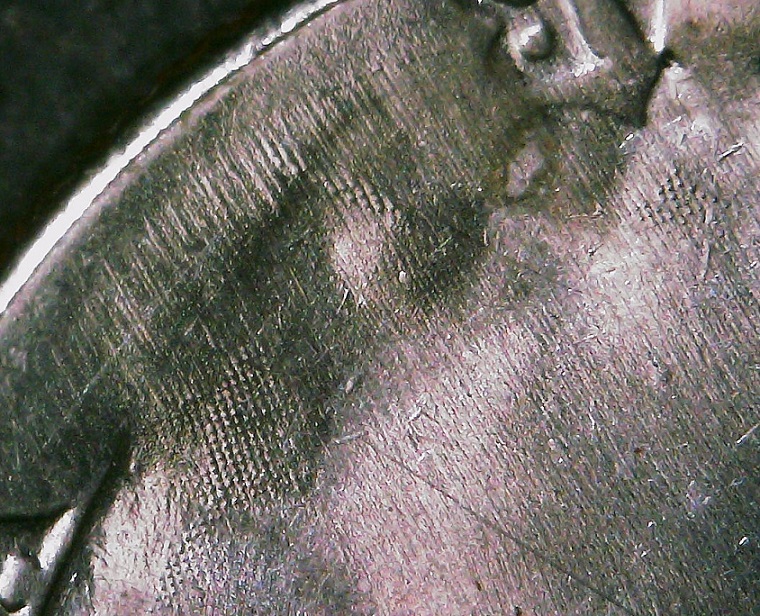 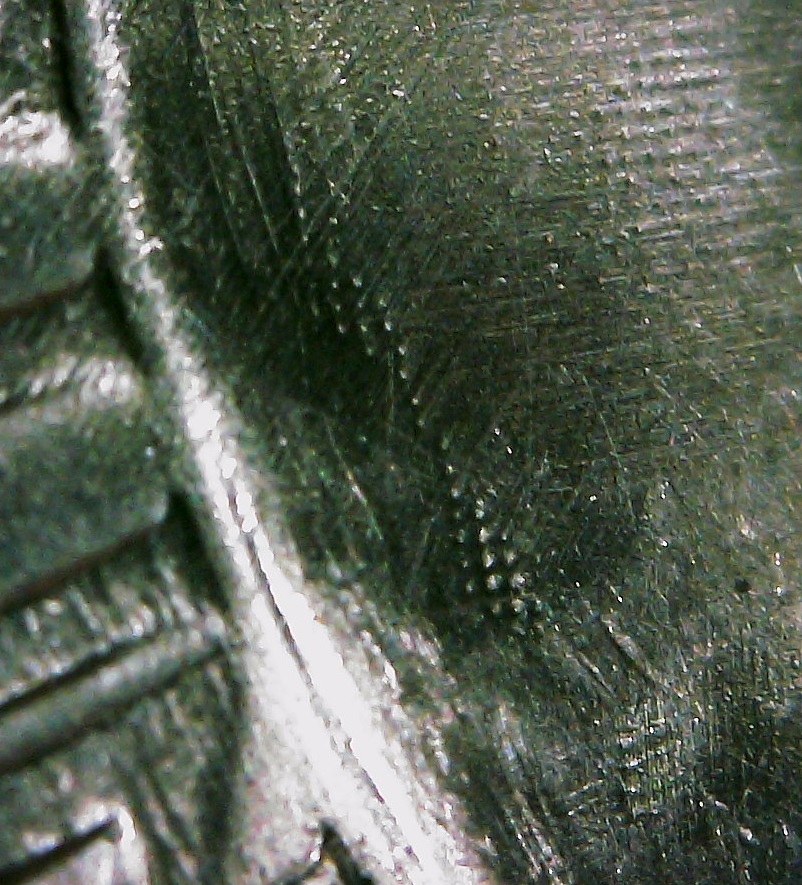 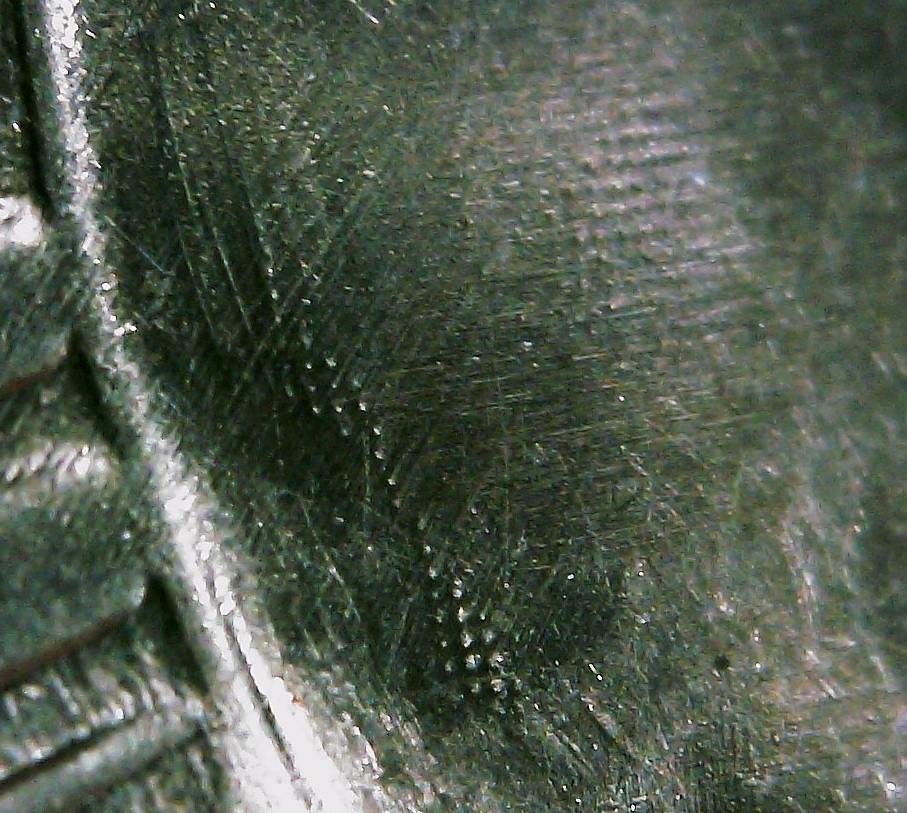 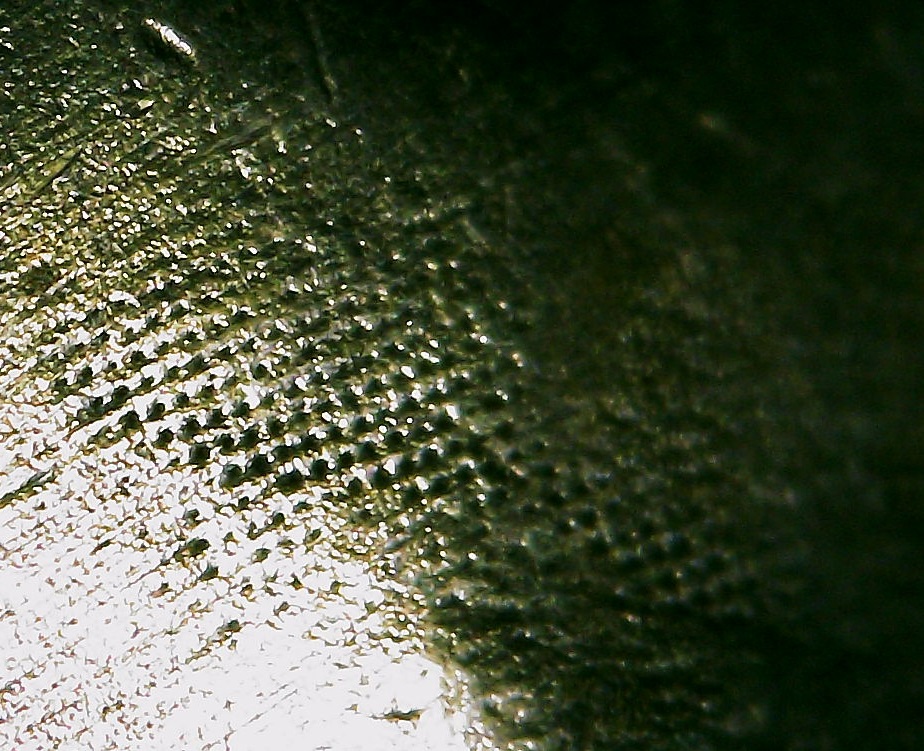 |
|
Pillar of the Community
United States
2752 Posts |
I'm not sure what caused the pitting, but the parallel streaks support the idea that the missing design was abraded away.
Error coin writer and researcher.
|
|
Valued Member
United States
172 Posts |
Also, the only thing I can I think of to explain the centered and circular nature of the anomaly (other than a gigantic and unlikely coincidence) would be if this was done intentionally by a mint employee. Otherwise, this is just a truly phenomenal fake for someone to get those tiny fabric patterns added artificially post-mint and without damaging the obverse of the coin.
|
|
Valued Member
United States
172 Posts |
Ahh sorry I'm struggling with the lighting on these close-ups. It seems more raised than pitted. Either way, it sounds like you're definitely on the side of PMD. Even if this coin does turn out to be PMD I think it's definitely an interesting one for sure. Thanks again for your greatly appreciated input! 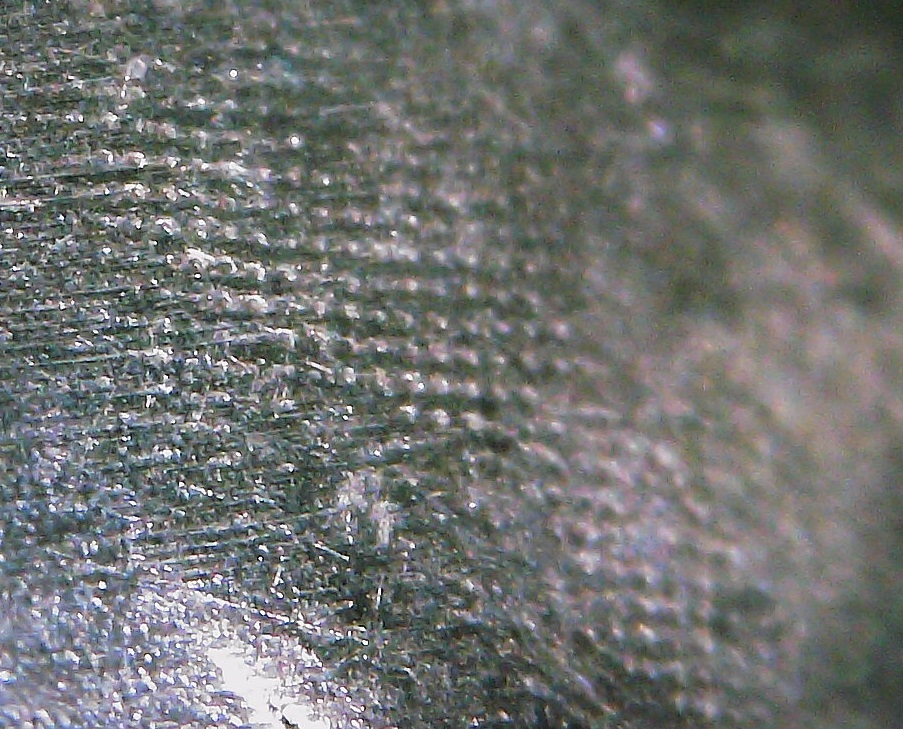 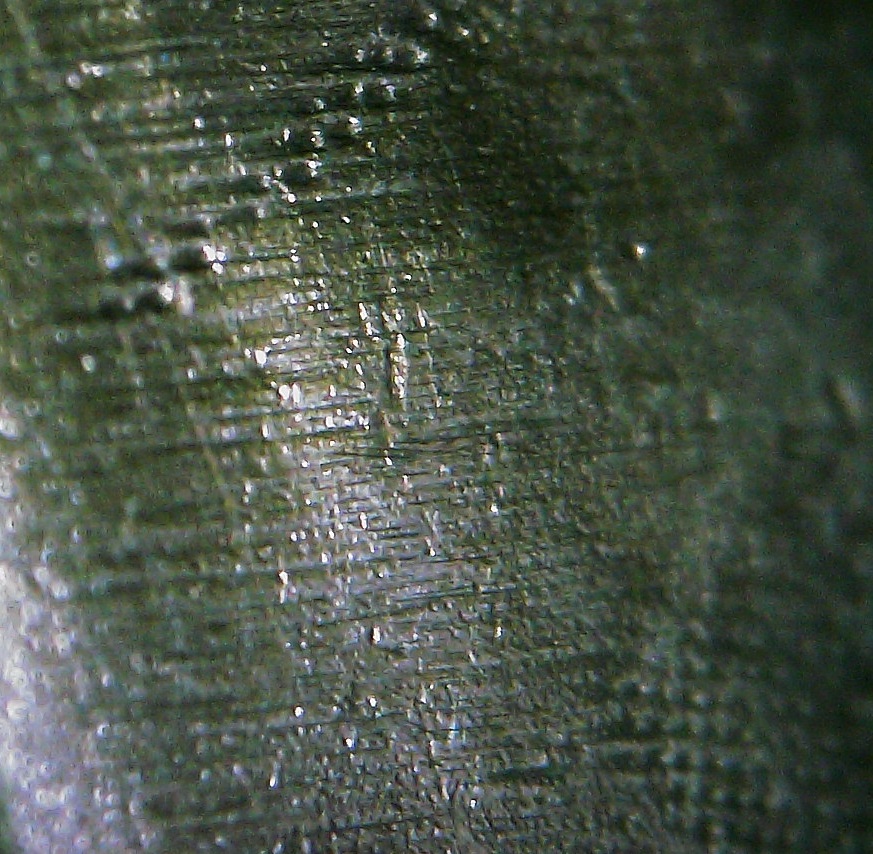 |
|
Bedrock of the Community
United States
62064 Posts |
|
|
Valued Member
United States
172 Posts |
Hey Coop, Thanks for taking a look and for creating the images! Yes, there are reeds on the outside of the coin just like you'd see on a normal coin. I hadn't considered a clad layer falling off post-strike as a potential explanation but it does match what we're looking at. So it sounds like both the clad falling off and the mechanical removal theories are both plausible explanations. Is there anyway to determine which is the more likely cause? Let me know if there are any other images or information I can provide to help. Thanks again! 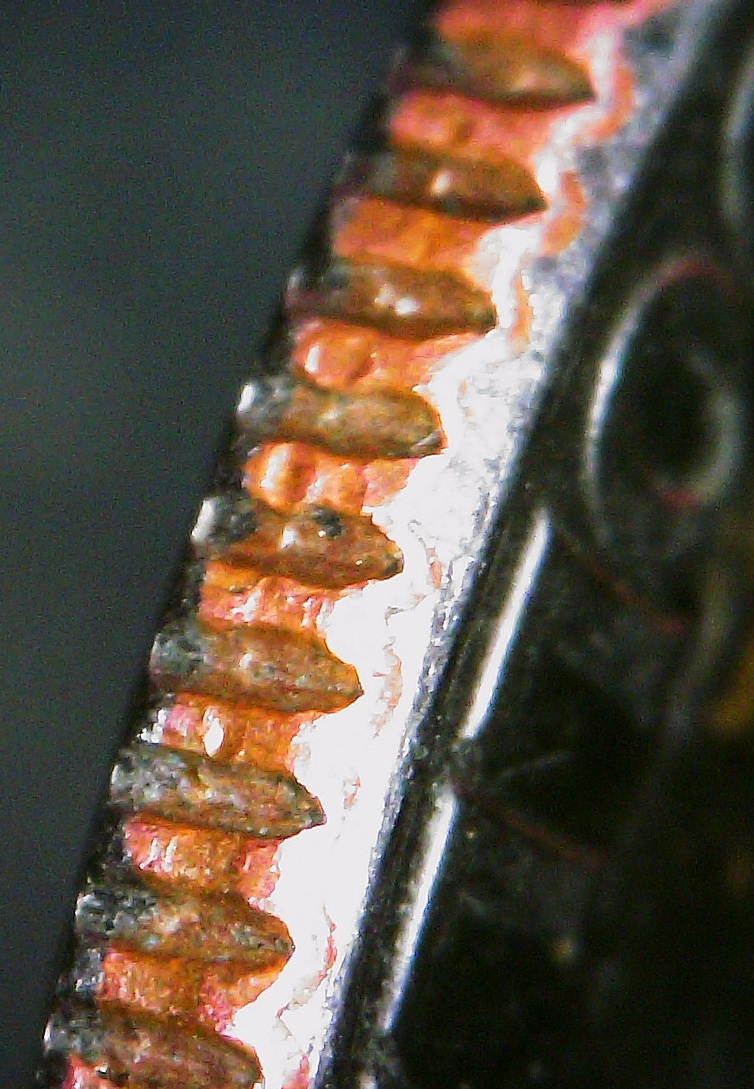 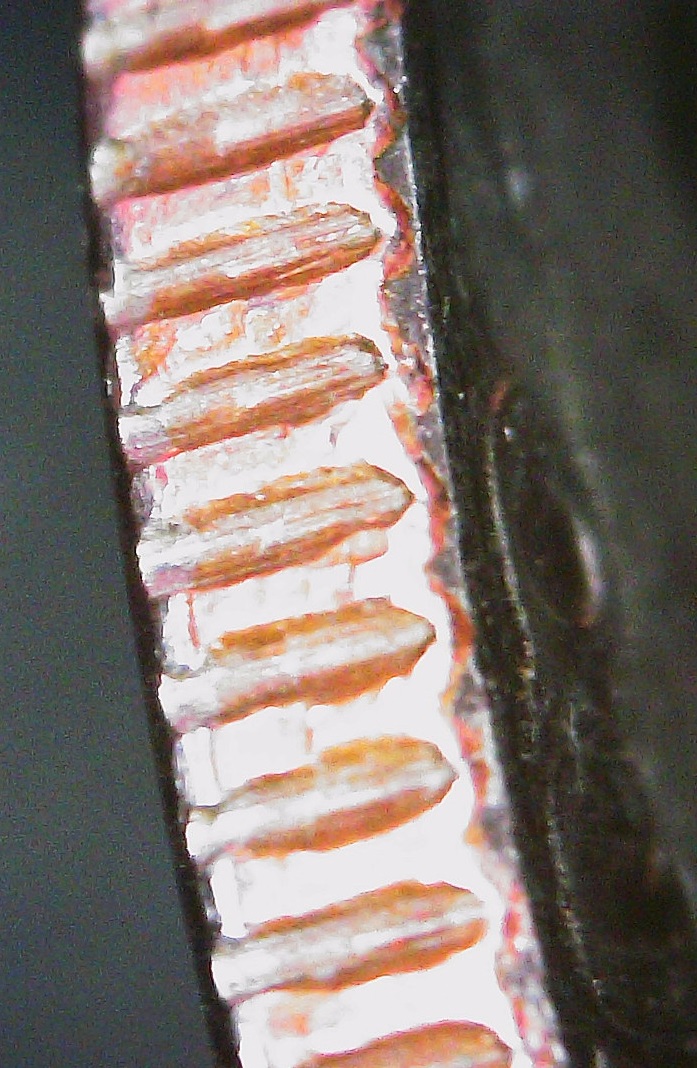 |
|
Pillar of the Community
United States
797 Posts |
|
|
Valued Member
United States
172 Posts |
I agree, it's definitely an interesting one. What's throwing me off is the fabric-like pattern that exists in multiple places around the coin mostly residing very close to the boundaries between the anomaly and the unaffected parts of the coin. If that didn't exist I'd be heavily in favor of the mechanically altered/polished theory. I just wouldn't expect to see that kind of pattern on a coin that was simply polished down. On the other hand, the anomaly being so centered and circular seems like it would have to be incredibly coincidental for it to be a mint error. This one is definitely a head-scratcher for me.
|
|
Page 2 of 2
|
Replies: 18 / Views: 1,966 |
Page 2 of 2
|








 First Page


 Posted 11/04/2022 1:15 pm