| Author |
 Replies: 17 / Views: 383  |
Page 2 of 2
|
|
|
|
Pillar of the Community
 United States
1805 Posts |
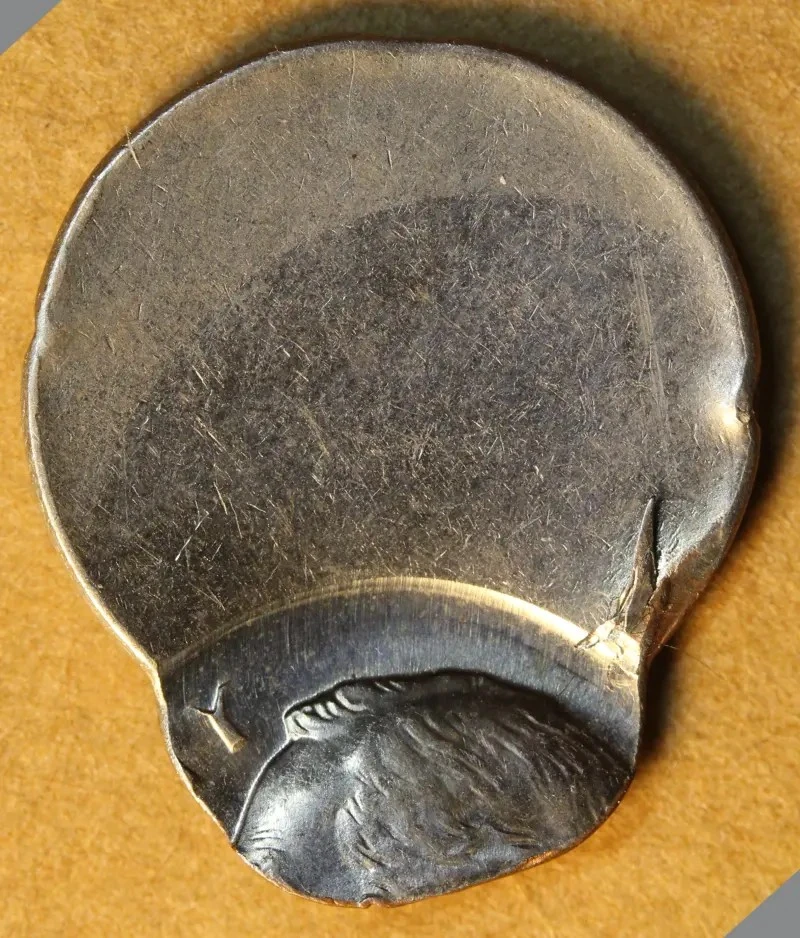
The scrape mark to the right of "Y" in Liberty was caused during the striking process. No PMD damage. The reverse is clean and irrelevant. |
|
Pillar of the Community
United States
2342 Posts |
|
|
Moderator
 United States
113237 Posts |
Interesting.
But to be clear, the image of the cent showing scrapes loo like they were caused by feeder fingers.
|
|
Pillar of the Community
United States
7630 Posts |
I'm sorry this is a pretty confusing topic!
PCGS has identified the important aspect of the error and labled it accordingly , you are tlaking about the scratch on the coin after posting a long statement and also claiming the reverse picture is not relevant( you have enough posts to know that it is a good practice to always provide both images of obverse and reverse) and we also have a picture of a cent with feeder finger marks on it!
so I am not sure what the point of this post is !
Edited by Chase007
Yesterday 5:29 pm
|
|
Pillar of the Community
United States
1805 Posts |
See this computer generated image of the groove area. This is just an illustration but shows my point what I see under 25X-35X under the stereo microscope of the scrape area and the raised lines WITHIN. Ready for more inquires. Reverse is 100% normal. No effect of the obverse to reverse - not even with the reverse motifs. 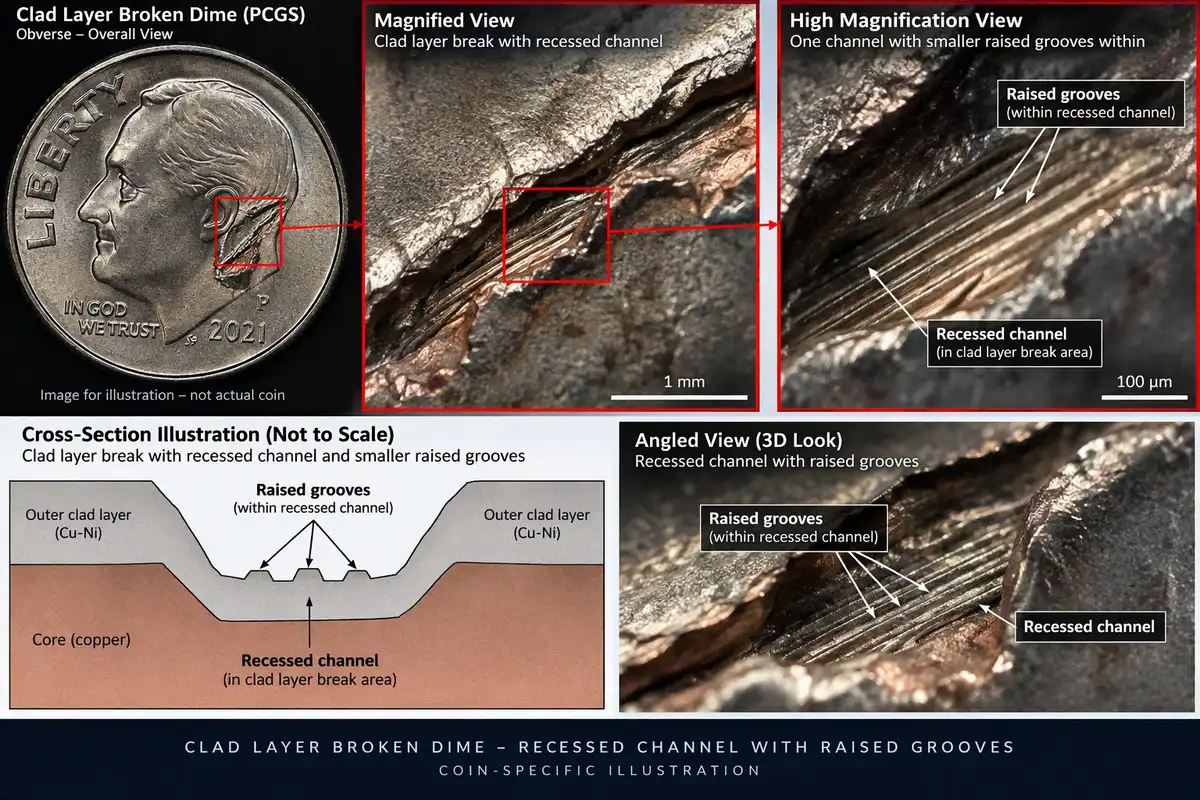 Edited by colonialjohn
Yesterday 5:37 pm
|
|
Pillar of the Community
United States
1805 Posts |
Between the two possibilities, a hard particle or scrap-metal-induced die gouge appears more likely than direct feeder-finger damage. A hard metal fragment trapped between the die and planchet could cut or impress a channel into the die face, producing a damaged recess that contains fine parallel striations. Once the die remained in service, those features would be transferred repeatedly to struck coins as a larger channel containing smaller, uniformly spaced raised lines. By contrast, feeder-finger damage typically produces broader impact marks, scrapes, or irregular gouges and is less likely to create the kind of fine, consistent, parallel micro-ridges seen within a confined channel. The regularity of the internal lines therefore favors a die-damage origin caused by a hard object or metallic fragment, with the resulting damaged die subsequently striking the feature onto the coin.
I have seen this exact feature on a Mexican War of Independence 8 Reales and several other counterfeits. Which is why I refrain from finger feeder damage. Its a tough one ... I agree I was perplexed for awhile when I first saw this type of feature on a coin. A groove into the coin with raised lines as in this illustration just created for educational purposes since I don't have high mag picture taking capabilities - at the moment.
Edited by colonialjohn
Yesterday 5:49 pm
|
|
Pillar of the Community
 United States
9121 Posts |
When you get your new phone/camera it would be nice to have clear full coin shots of the obverse and reverse (regardless of damage or not to the reverse) and some nice clear closeups of the areas in question. It may be exactly as you said but the area at the Y looks like displaced metal from the rim at this point. I would love to revisit this when new, better pics are taken. 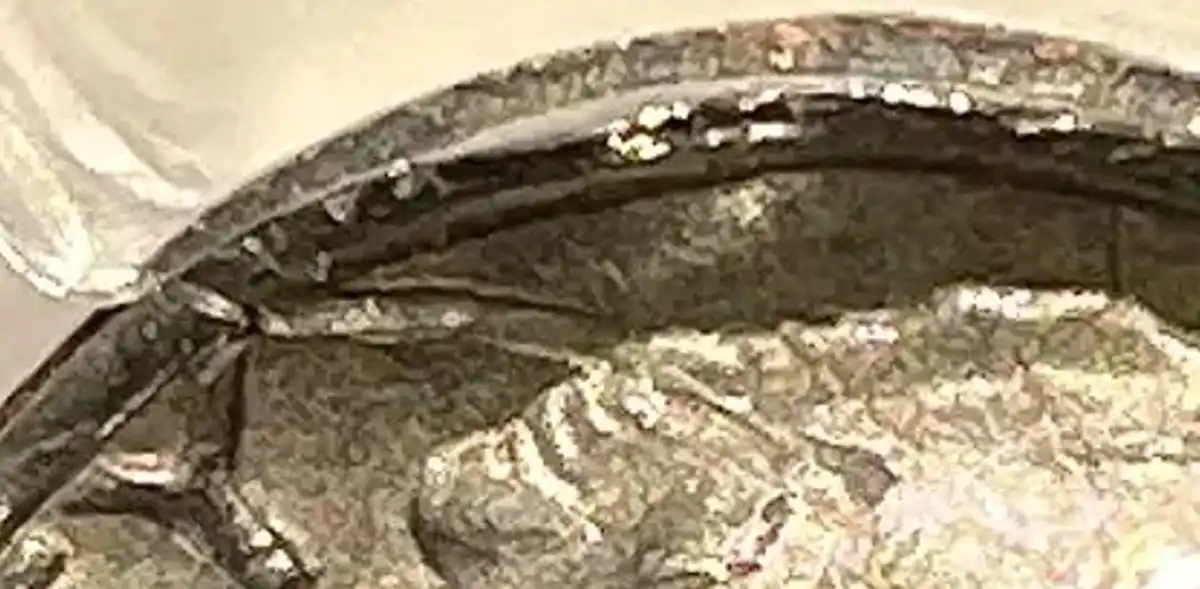 -makecents-
|
|
Pillar of the Community
United States
7630 Posts |
The images you just provided from another Dime and another author ,has no relevance to your post.
I will refrain from further comments.
|
|
Pillar of the Community
United States
1805 Posts |
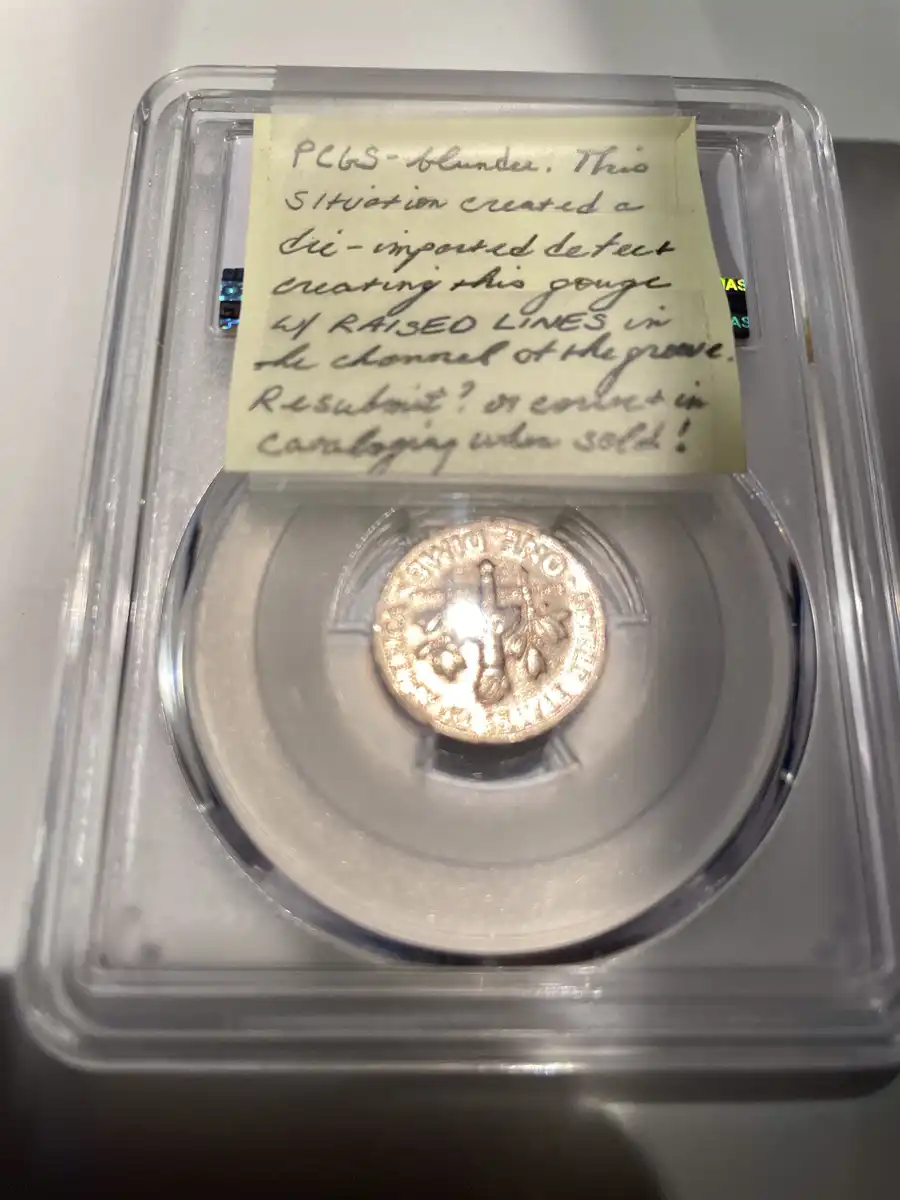 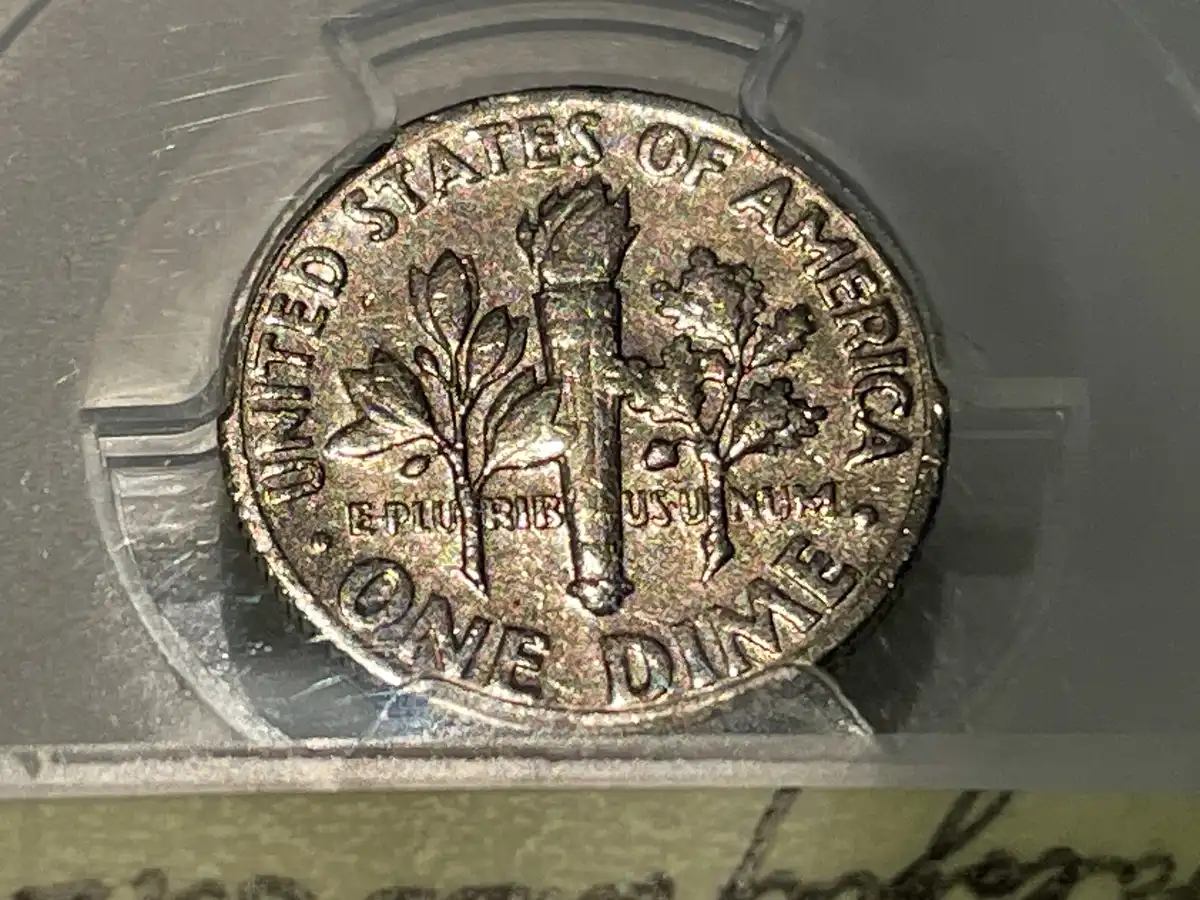 Understood. Was totally surprised of this phenomena on a 20thC U.S. Coin. PCGS saw the gouge. It was either Details or Mint Caused. Probably no one in PCGS has seen this type of surface effect. Even if you thought it was PMD - what could create such a feature? Yes. Besides feeder-finger contact, several Mint-related mechanisms can produce scrape-like or gouge-like features: Hard metal fragments or scrap particles trapped between the die and planchet can gouge the die face, creating permanent striated damage that is subsequently transferred to coins. Clashed or damaged dies can develop scratches, gouges, and abrasions from contact with foreign material or adjacent tooling. Die polishing or die maintenance can leave parallel lines, although these are usually finer and more uniform than a deep gouge. Planchet feeding system contact (feeder fingers, guide rails, chute surfaces, or ejector components) can create scrapes directly on coins, but these are typically irregular and vary from coin to coin. Struck-through debris events can leave unusual channels or impressions if metal fragments are present during striking. For the PCGS clad-layer-broken dime, if the feature consists of a larger channel containing multiple fine, evenly spaced, parallel raised ridges, I would favor a die-damage origin caused by a hard metallic particle or fragment over direct feeder-finger damage. Feeder fingers can certainly scrape coins, but they more often produce irregular drag marks and displaced metal. The regularity and internal structure of the ridges are more consistent with a damaged die that acquired striations from a hard object and then repeatedly impressed those details into struck coins. That explanation better accounts for the organized, parallel nature of the smaller grooves within the larger channel. |
|
Pillar of the Community
United States
5959 Posts |
Quote:
The narrow channel-like feature to the right of the "Y" in LIBERTY is a classic example of a die-imparted defect rather than damage to the struck coin itself. To these eyes, the long channel-like feature with raised parallel "furrows" on each is a classic example of a die scratch. The images provided of a secondary dime has an irregular shaped indent without furrows. Quote:
... Stereomicroscopic examination confirms that the fine linear features within the channel are raised above the surrounding surface, ... This refers to the original coin and needs some clarification please. Are these "fine linear features" raised above the floor of the channel or raised above the surrounding field? EDIT: on a side note, is that a collar clash on the rim @ k3? Words of encouragement are one of the major food groups.
We need to consume them regularly to thrive and grow.
Edited by Petespockets55
Today 9H 56M ago
|
|
Pillar of the Community
United States
1805 Posts |
Are these "fine linear features" raised above the floor of the channel or raised above the surrounding field?
Raised above the floor of the channel - BELOW THE FIELD.
In terms of any die clash remnants at K-3 Obverse I do not see anything. Just circulation marks. It may appear to be an "O" IMO but its not - just photo optics. No carryover motifs from the reverse side seen on entire obverse face and vice versa.
Pete55 - I have seen this type of feature maybe 3-4 times in my life. 1. Mexican War of Independence 8R Restrike (1816-1822 series). Coin in my collection.
2. Two or three English 1/2d Contemporary Circulating Counterfeit British 1/2d (18thC) and this U.S. Modern 10C Error. This is quite a rare surface defect. I am annoyed my camera is old (IPhone 12). In April/May 2027 purchasing the IPhone 18 Pro but that may even fail this level of mag required. What I really need is a Stereo Microscope with picture taking abilities but 20thC Modern errors is just a past time but because of my 2027 papers on IA Papers & Improper Alloy Mix Woodies I am back in the 20thC/21stC field of numismatics - temporarily (<BG>). Really do not need a pic taking Stereo Microscope. JPL
Edited by colonialjohn
Today 8H 40M ago
|
|
Pillar of the Community
United States
5959 Posts |
Thank you for clarifying they are above the floor of the channel. Unless I'm seeing it incorrectly, the anomaly near the "Y" has raised "furrows" parallel to the channel on the coin. I'm not familiar with any way "incuse furrows" on a die can be produced. A scratch to the die face that produced raised furrows would create incuse furrows on the coin. I'm jealous of the imaging abilities of many folks here on CCF. If you are familiar with Ray Parker (rsprpms?) he may be able to help with images, including 3D Quote:
In terms of any die clash remnants at K-3.. Not a die clash but a collar clash showing reeds along the top of the coins rim. Words of encouragement are one of the major food groups.
We need to consume them regularly to thrive and grow.
|
|
Pillar of the Community
United States
1805 Posts |
Edited by colonialjohn
Today 5H 17M ago
|
|
Pillar of the Community
United States
5959 Posts |
Quote:
This illustration I found has a collar clash + funnel with raised channel parallel lines - below the field - with the raised grooves! Really good article but you have shared the wrong image to show a collar clash. The image you shared shows an off-center strike only. The point of this part of the article in the link was to show a collar clash on an anvil die. (The collar clash referenced in the article is on the reverse.) Here is the image of the collar clash on an anvil die. (Hope I shared this properly.) The collar clash is under "ONE". 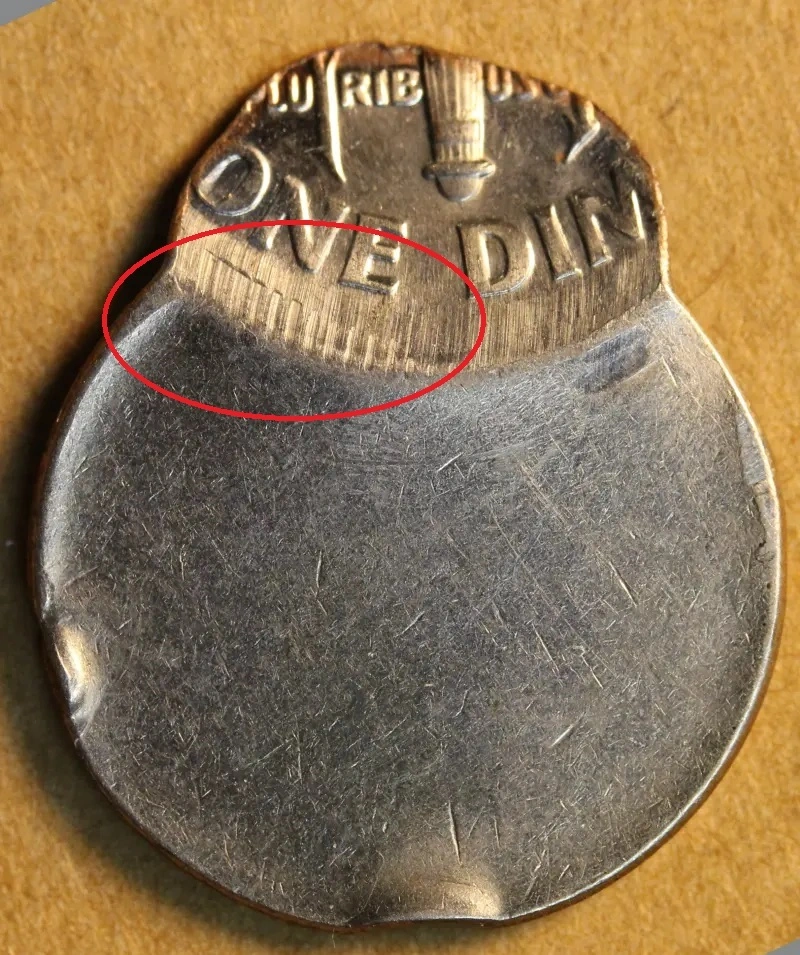 I'm not understanding what you are referring to as a "Funnel" or the rest of the "... raised channel parallel lines ..."? Any other thoughts on the anomaly by the "Y"? Words of encouragement are one of the major food groups.
We need to consume them regularly to thrive and grow.
Edited by Petespockets55
Today 13M ago
|
|
Pillar of the Community
United States
9121 Posts |
Quote:
Any other thoughts on the anomaly by the "Y"? I keep staring at the pic I enlarged and it almost looks like a piece of the slab maybe sheared off. Without better pics I don't know.... -makecents-
|
|
Page 2 of 2
|
Replies: 17 / Views: 383 |
Page 2 of 2
|




 First Page


 Posted Yesterday 3:12 pm