| Author |
 Replies: 20 / Views: 3,623 Replies: 20 / Views: 3,623 |
Page 2 of 2
|
|
|
|
Pillar of the Community
United States
1882 Posts |
I thought that was an indication that the die was getting worn out...there is some Die Deterioration Doubling on the right side of the numbers in the date, too. |
|
Valued Member
 United States
91 Posts |
Quote:I thought that was an indication that the die was getting worn out...there is some Die Deterioration Doubling on the right side of the numbers in the date, too. Let me see if I can get a good picture of the date. Thanks 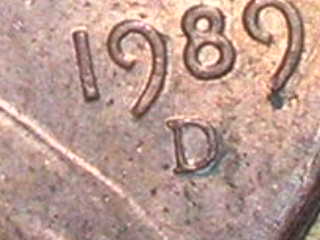 |
|
Pillar of the Community
United States
1882 Posts |
See the faint doubling around the numbers and mint mark? It almost looks like a reflection. Die Deterioration is the cause. Someone throw me out at first if I'm off base. Edited by steve199
04/27/2010 12:03 pm
|
|
Valued Member
United States
91 Posts |
I wish I could get my s**t together today  - that is the wrong dated coin - let me retry. I should have stayed in bed. 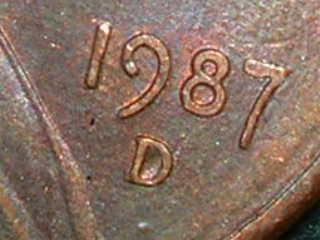 Peace Brent |
|
Pillar of the Community
United States
1882 Posts |
I didn't even notice that was a different coin.  The 1987 still has the effect on the right side of the numbers, although it is more subtle. |
|
Pillar of the Community
United States
4000 Posts |
As I understand it, I have to agree with Steve, I believe it is just a worn out die.
|
|
Bedrock of the Community
United States
62064 Posts |
The mark on the outside edge is where the plating was split during the strike. A some time the area starts raising as the zinc is exposed.
The mark under the mint mark is caused by a rough edge when the die was punched making a fin on the die. After several coins are struck it eventually flattens down in time.
The die isn't worn on this coin. The striking pressure pushes the planchet and makes this appear.
So just a normal coin.
Edited by coop
04/28/2010 09:58 am
|
|
Valued Member
United States
91 Posts |
Thanks all. I new it wasn't anything spiecial, just wanted to understand why it happens. I have a beter understanding now.
Thanks again
Brent
|
|
Pillar of the Community
United States
4000 Posts |
I'm not sure if I'm following you, coop.
What do you mean by the striking pressure pushes the planchet?
I understand the plating splits during the strike, but does it leave the mint looking like the coin above? Or does it leave with just the split plating and begin to raise after time?
|
|
Bedrock of the Community
United States
62064 Posts |
Scooby: I miss read a post back a few days. https://goccf.com/t/63749&whichpage=1The mottling is what I miss read. On the coin example you see the shadowed doubling, but on the last digit of the date there is none. I need to find a couple of examples from the same roll to see if it happens once (mottling) or repeated from die wear. I don't have examples to examine now, but I will be watching for some. |
|
Pillar of the Community
United States
1882 Posts |
Coop, the shadowed doubling also appears on the top of the letters near the rim (top edge of inside of "U", for example). You don't think this is because of Die Deterioration? |
|
Bedrock of the Community
United States
62064 Posts |
From what I see it is just the split plating allowing the zinc to get exposed. The area exposed raises as time goes along.
|
|
Valued Member
United States
91 Posts |
So this would not come out of the mint raised up around the split - over time the zink pushes up and makes these lumps and bunps? I would assume moisture would be a factor in this but then again I don't know.
Thanks all
Brent
|
|
Pillar of the Community
United States
1882 Posts |
Is the zinc exposed between the letters and the rim? I thought that was just too much reflection, just like the light shining of Lincoln's head.
|
|
Pillar of the Community
United States
2752 Posts |
The low swelling just inside the rim is an expression of Die Deterioration. The blisters above the letters are a combination of split plating and subsurface corrosion which has pushed up the copper plating. Error coin writer and researcher.
|
|
Page 2 of 2
|
Replies: 20 / Views: 3,623 |
Page 2 of 2
|







 First Page


 Posted 04/27/2010 11:22 am


